
Grok 4 vs ChatGPT: Which AI Chatbot Wins in 2026?
A data-driven comparison of xAI's Grok 4 and OpenAI's ChatGPT powered by GPT-5.2, covering benchmarks, pricing, features, and real-world performance.
 10 min read
The AI chatbot market in 2026 has two very different contenders fighting for developer and consumer attention. On one side, OpenAI's ChatGPT - powered by GPT-5.2 - commands roughly 900 million weekly active users and the broadest feature ecosystem in the industry. On the other, xAI's Grok 4 has emerged as a genuine challenger, scoring first-ever milestones on reasoning benchmarks and offering something ChatGPT doesn't: native real-time integration with the X platform. If you're trying to decide where to spend your monthly subscription budget or API credits, this comparison lays out the numbers.
TL;DR
- Choose ChatGPT if you need polished output, a massive integration ecosystem, and the strongest coding benchmarks
- Choose Grok 4 if you want real-time information from X, faster inference speed, and lower API costs at scale
- GPT-5.2 leads on SWE-bench (80% vs 69%) and GPQA Diamond (92.4% vs 87.5%), while Grok 4 wins on inference speed (~1,200 vs ~900 tokens/sec) and AIME math (95% vs 100% for different years)
Quick Comparison
| Feature | Grok 4 | ChatGPT (GPT-5.2) |
|---|---|---|
| Provider | xAI | OpenAI |
| Context Window | 256K (up to 2M via API) | 400K tokens |
| Output Limit | Not disclosed | 128K tokens |
| Multimodal | Text + images + video | Text + images + video + audio |
| Real-time Data | Native X/web integration | Web browsing (manual toggle) |
| Consumer Plan | SuperGrok $30/mo | ChatGPT Plus $20/mo |
| Premium Plan | SuperGrok Heavy $300/mo | ChatGPT Pro $200/mo |
| API Input Cost | $3.00/M tokens (standard) | $1.75/M tokens |
| API Output Cost | $15.00/M tokens (standard) | $14.00/M tokens |
| Fast API Tier | $0.20/$0.50 per M tokens | Varies by mode |
| Best For | Real-time research, STEM | Production code, professional work |
Grok 4: The Real-Time Reasoning Machine
Grok 4 arrived in mid-2025 and right away made noise by becoming the first model to break 50% on Humanity's Last Exam (HLE), a benchmark specifically designed to be resistant to AI progress. The Heavy variant - trained on xAI's Colossus cluster of 200,000 GPUs - scored 50.7% on HLE and a perfect 100% on AIME 2025 math competition problems. These aren't gradual improvements; they represent genuine frontier-pushing capability in mathematical and scientific reasoning.
The standard Grok 4 variant handles everyday tasks with a 256K token context window and built-in tool use, while the API exposes a "fast" tier (Grok 4 Fast and Grok 4.1 Fast) at dramatically lower prices - just $0.20 per million input tokens and $0.50 per million output tokens. That pricing makes it one of the most cost-effective frontier-class APIs available.
What makes Grok truly unique is its real-time integration with the X platform. While ChatGPT has web browsing capabilities, Grok pulls live data from X and the broader web natively and continuously, without requiring users to toggle a search mode. For breaking news, trending analysis, and real-time monitoring, this is a material advantage. Check our full Grok 4 review for a deeper dive into the Heavy variant's capabilities.
In February 2026, xAI launched Grok 4.20 beta, introducing a multi-agent collaboration system where four specialized agents work simultaneously on complex problems. Medical document analysis and improved engineering reasoning are the headliner additions, along with a continuously updating capability model - a first for the Grok series.
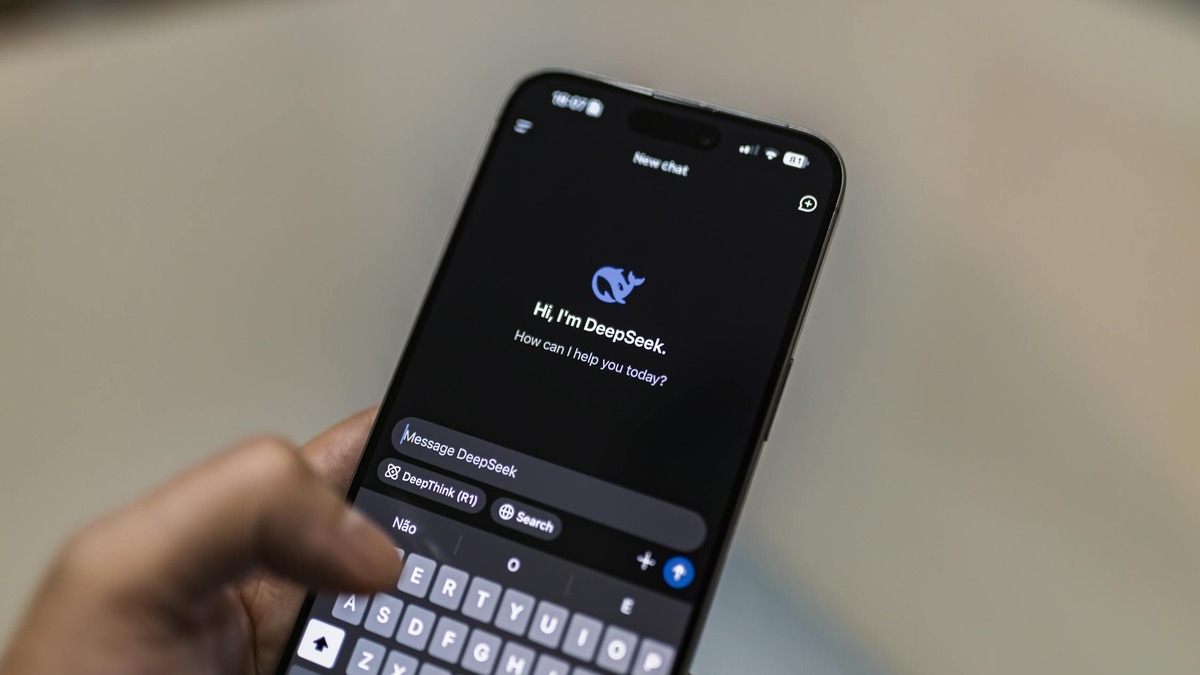 The mobile chatbot experience is where most consumers interact with AI assistants - both Grok and ChatGPT offer polished smartphone apps with distinct design philosophies.
ChatGPT (GPT-5.2): The Generalist Powerhouse
GPT-5.2 launched in December 2025 with a three-mode architecture - Instant, Thinking, and Pro - sharing a 400K token context window and 128K output capacity. The model brought major gains across professional knowledge work, with a hallucination rate reduced to under 1.6% according to OpenAI's internal benchmarks. It was the first model to hit 100% on AIME 2025 in its Pro mode, and it scored 93.2% on GPQA Diamond in science reasoning.
The three-mode system gives users meaningful flexibility. Instant mode is fast and conversational for everyday tasks. Thinking mode engages chain-of-thought reasoning for complex problems. Pro mode allocates extended compute for the hardest queries - and it delivers. Our GPT-5.2 review found Pro mode solving multi-step physics derivations and contract analysis tasks that stumped Thinking mode.
ChatGPT's ecosystem advantage is enormous. With 500+ third-party integrations through Zapier, persistent cross-session memory, Canvas for collaborative editing, Sora 2 for video generation, DALL-E 4 for image generation, and Advanced Voice mode, ChatGPT is effectively an operating system for AI-assisted work. No competitor comes close to this breadth. See our full ChatGPT review for how well these features hold up in daily use.
The $20/month Plus plan is the most cost-effective way to access a frontier model through a consumer subscription. Even the $200/month Pro plan, while expensive, unlocks unlimited GPT-5.2 Pro access plus Sora 2 Pro - a bundle that competes favorably against Grok's $300/month Heavy tier on a feature-per-dollar basis.
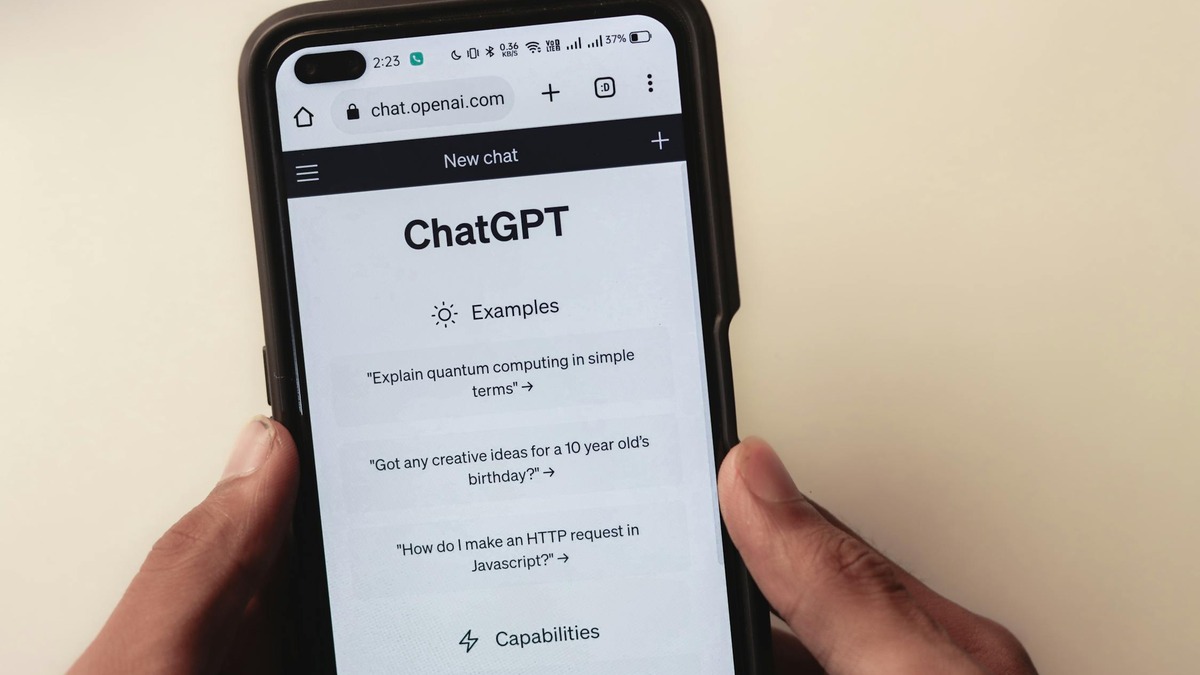 ChatGPT's interface has evolved into a multi-tool platform with Canvas, voice mode, and image generation all accessible from the same conversation window.
Benchmark Comparison
Here's where the rubber meets the road. Both models perform at the frontier, but with different strengths:
| Benchmark | Grok 4 | GPT-5.2 |
|---|---|---|
| GPQA Diamond (science) | 87.5% | 92.4% (Thinking) |
| SWE-bench Verified (coding) | 69.1% (standard) / 72-75% (Code) | 80.0% |
| AIME 2025 (math) | 95% (standard) / 100% (Heavy) | 100% (Pro) |
| HLE (Humanity's Last Exam) | 50.7% (Heavy) | Not officially reported |
| MMMU-Pro (multimodal) | 82.9% | 86.5% |
| ARC-AGI-2 (abstract reasoning) | Not officially reported | 52.9% |
| SWE-bench Pro | Not officially reported | 55.6% |
| Inference Speed | ~1,200 tokens/sec | ~900 tokens/sec |
The pattern is clear: GPT-5.2 leads on software engineering and professional knowledge tasks. Grok 4 is competitive on math and makes its strongest case on Humanity's Last Exam through the Heavy variant. For coding-heavy workflows, GPT-5.2's 80% on SWE-bench Verified versus Grok 4's 69.1% is a meaningful gap. For pure mathematical and scientific reasoning, the two are closer than most marketing materials would suggest.
One important caveat: xAI's official benchmark disclosure for Grok 4.20 was expected mid-to-late March 2026 but hasn't arrived yet. Some of the scores circulating online are community-sourced leaks. I've noted which figures are verified versus reported where possible.
Pricing Analysis
The pricing landscape between these two is more nuanced than the headline numbers suggest.
Consumer Subscriptions
| Tier | Grok | ChatGPT |
|---|---|---|
| Free | Limited (requires X account) | Limited GPT-5.2 |
| Standard | SuperGrok: $30/mo | Plus: $20/mo |
| Team | X Premium+: $40/mo | Team: $25-30/user/mo |
| Premium | SuperGrok Heavy: $300/mo | Pro: $200/mo |
ChatGPT Plus at $20/month is the best value in consumer AI subscriptions right now. SuperGrok at $30/month is 50% more expensive for a narrower feature set, though it does include Grok 4 access and unlimited real-time search. The Heavy tier at $300/month - which even Grok itself has reportedly called "prohibitively expensive" - is hard to justify unless you need the absolute deepest reasoning capability on the market.
API Pricing
| Model | Input (per M tokens) | Output (per M tokens) |
|---|---|---|
| Grok 4 (standard) | $3.00 | $15.00 |
| Grok 4 Fast / 4.1 Fast | $0.20 | $0.50 |
| Grok Code Fast 1 | $0.20 | $1.50 |
| GPT-5.2 | $1.75 | $14.00 |
This is where the picture flips. Grok 4 Fast at $0.20/$0.50 is dramatically cheaper than GPT-5.2 for high-volume API workloads, though the "fast" variants trade off some reasoning depth for speed. At the standard tier, GPT-5.2 is actually cheaper on input ($1.75 vs $3.00) while they're close on output. For developers building applications at scale, Grok 4 Fast's pricing is compelling - xAI claims users save $1,000+ per month at 100M tokens compared to GPT-5.1. New xAI API users also get $25 in free credits plus $150/month through the data sharing program.
For a broader look at how API costs compare across all major providers, see our cost efficiency leaderboard.
 For developers building with AI APIs, the pricing gap between Grok 4 Fast and GPT-5.2 can translate to thousands of dollars in monthly savings at scale.
Grok 4: Strengths
- Real-time X integration is genuinely useful for trend analysis, breaking news monitoring, and social media research - no other model matches it
- Inference speed of ~1,200 tokens per second makes it one of the fastest frontier models available
- API pricing at the Fast tier ($0.20/$0.50) is among the cheapest frontier-class options
- Multi-agent system (Grok 4.20) lets four specialized agents work complex problems in parallel
- Fewer content restrictions than ChatGPT - approximately 20% fewer refusals on sensitive queries
- Humanity's Last Exam first - the Heavy variant's 50.7% on HLE is a genuine milestone
Grok 4: Weaknesses
- X platform dependency means outages take Grok's live features offline with them
- Smaller ecosystem compared to ChatGPT's 500+ integrations and plugin framework
- Content moderation concerns - image generation tools were used to create harmful content in late 2025, leading to investigations in seven countries
- Benchmark-to-reality gap - some users report coding output that's incomplete or error-prone despite strong benchmark scores
- Rate limits frustrate premium users - the free tier offers just 2 prompts every 2 hours, and even Premium+ caps at ~100 prompts every 2 hours
- Potential bias - responses on politics, social media regulation, and cryptocurrency appear to reflect Elon Musk's publicly known positions
ChatGPT (GPT-5.2): Strengths
- Broadest feature set in the industry - code execution, DALL-E, Sora, voice mode, Canvas, Deep Research, and memory all in one product
- Strongest coding performance with 80% on SWE-bench Verified and 55.6% on the harder SWE-bench Pro
- Lowest hallucination rate at under 1.6%, making it the most reliable for professional use in regulated fields
- 400K context window with 128K output capacity handles massive documents and codebases
- Persistent memory across sessions for personalized, context-aware responses
- Ecosystem dominance with 500+ integrations and the largest developer community
ChatGPT (GPT-5.2): Weaknesses
- Overly cautious safety filters refuse roughly 20% more queries than Grok, which can frustrate creative and research workflows
- Tone regression - Sam Altman acknowledged the team "screwed up" language capabilities in GPT-5.2, with users reporting flatter tone, worse translations, and inconsistent Instant mode
- No native real-time social data - web browsing requires manual activation and feels slower than Grok's live feed
- Potentially premature release - reports suggest OpenAI shipped an "early checkpoint" under competitive pressure from Google's Gemini 3 launch
- Pro plan cost at $200/month is expensive, even if cheaper than Grok Heavy
- Hallucination persistence - despite the low overall rate, users still catch GPT-5.2 confidently fabricating academic references and misstating dates
Verdict
Neither Grok 4 nor ChatGPT is the clear winner across all use cases, and anyone telling you otherwise is selling something.
Choose ChatGPT if you need the safest, most polished AI assistant for professional work. Its coding benchmarks are stronger, its hallucination rate is the lowest in the industry, and its feature ecosystem - from Canvas to Sora to persistent memory - is unmatched. The $20/month Plus plan is the best value in consumer AI. For teams in regulated industries (healthcare, legal, finance), ChatGPT's consistency and safety posture make it the default choice.
Choose Grok 4 if real-time information is a core part of your workflow. Journalists, social media analysts, traders tracking sentiment, and researchers who need live data will find Grok's native X integration truly useful in ways ChatGPT can't match. The Fast API tier is also hard to beat for developers building high-volume applications where cost matters more than maximum reasoning depth.
Choose either if you mainly use AI for general knowledge questions, brainstorming, or light writing tasks. Both models are more than capable for everyday use, and the difference comes down to personal preference - ChatGPT's polished professionalism versus Grok's edgier, faster personality.
The real story in 2026 is that the gap between these models is narrowing. Grok 4's reasoning breakthroughs are real, and xAI's aggressive pricing on the Fast tier signals a company willing to compete on cost. But OpenAI's ecosystem moat - the integrations, the developer tools, the 900-million-user network effect - remains formidable. For most users, ChatGPT is still the safer bet. For a growing niche of power users who value speed, live data, and fewer content restrictions, Grok 4 is making a strong case.
For how these models compare against Google's offering, check our Gemini 3.1 Pro model page and benchmark leaderboards.
Sources:
- Grok 4 - xAI Official Announcement
- Introducing GPT-5.2 - OpenAI
- GPT-5.2 Benchmarks Explained - Vellum
- xAI Models and Pricing
- OpenAI API Pricing
- I tested ChatGPT-5.2 vs Grok 4.1 with 7 challenging prompts - Tom's Guide
- Grok vs ChatGPT in 2026: Benchmarks, Pros & Cons - Coursiv
- SuperGrok Heavy Review - Is $300/Month Worth It? - VidPros
- GPT-5.2 vs Grok 4 - Yahoo Tech
- Grok 4.20 Beta Is Live - xAI's Rapid-Learning AI - Adwaitx
