
Codex vs Claude Code: Agentic Coding Tools Compared
A head-to-head comparison of OpenAI Codex and Anthropic Claude Code covering benchmarks, pricing, features, and real-world performance for agentic coding workflows.
 9 min read
OpenAI's Codex and Anthropic's Claude Code are the two leading agentic coding tools, and developers are constantly asking which one to use. They take different approaches to the same problem: giving AI agents the ability to read codebases, write code, run commands, and ship changes with minimal hand-holding. After testing both extensively and reviewing every benchmark, pricing page, and user report available, the answer depends on what you care about most - code quality, cost efficiency, or workflow flexibility.
TL;DR
- Choose Claude Code if you want the highest code quality, extended thinking for complex architecture work, and a terminal-native workflow
- Choose Codex if you need multi-agent orchestration, GitHub-native automation, and lower per-task costs through better token efficiency
- Claude Opus 4.6 leads coding benchmarks (1552 ELO, 80.8% SWE-bench Verified); GPT-5.3-Codex leads terminal/tool-use tasks (77.3% Terminal-Bench 2.0)
- Codex uses 3-4x fewer tokens per task, making it cheaper in practice despite similar base rates
Quick Comparison
| Feature | OpenAI Codex | Claude Code |
|---|---|---|
| Provider | OpenAI | Anthropic |
| Primary model | GPT-5.3-Codex | Claude Opus 4.6 |
| Context window | 400K tokens | 200K (1M beta) |
| Platforms | macOS, Windows, Linux (CLI), web | macOS, Linux, Windows (CLI) |
| Desktop app | Yes (macOS + Windows) | No |
| IDE extensions | VS Code, Cursor, Windsurf, JetBrains | VS Code, Cursor, Windsurf, JetBrains |
| Multi-agent | Parallel agents with cloud sandboxes | Subagents with dependency tracking |
| GitHub integration | Native Action, auto-review, auto-fix CI | Via MCP servers |
| MCP support | Limited | 3,000+ integrations |
| Pricing (subscription) | $20-200/mo | $20-200/mo |
| Open-source CLI | Yes (62K stars) | Yes (71K stars) |
| Best for | Orchestration, automation, CI/CD | Architecture, refactoring, code quality |
Codex: The Orchestration Engine
Codex isn't a single tool. It's an ecosystem: a CLI, a desktop app, IDE extensions, a web interface, and a GitHub Action, all powered by GPT-5.3-Codex. The unifying concept is multi-agent orchestration. You can run several agents simultaneously on the same repository, each in its own git worktree, without them colliding.
The desktop app (macOS and Windows as of March 4, 2026) is the clearest expression of this vision. You create projects, spin up threads, and each thread runs an independent agent that reads code, writes changes, and executes terminal commands. As our Codex app review found, the workflow is closer to managing a team than pair-programming with a bot.
Automations
The feature that separates Codex from everything else is automations. You define recurring tasks - issue triage, CI failure summaries, dependency checks, daily release briefs - and schedule them to run on a cadence. Results land in a review queue. OpenAI uses this internally for their own development workflow.
The Skills library provides pre-built integrations for Figma, Linear, Cloudflare, Vercel, and other tools, giving agents structured knowledge about specific services. Combined with the GitHub Action (openai/codex-action@v1), Codex can automatically review PRs, fix CI failures, and gate merges on quality checks - all without a human in the loop.
 The Codex desktop app provides a visual management layer for multi-agent orchestration across repositories.
Source: openai.com
The Codex desktop app provides a visual management layer for multi-agent orchestration across repositories.
Source: openai.com
Token Efficiency
One underappreciated advantage: Codex uses significantly fewer tokens per task than Claude Code. A comparison by MorphLLM found that for a Figma plugin implementation, Claude Code consumed 6.2 million tokens while Codex used 1.5 million for the same task. That 3-4x difference in token consumption translates directly to cost savings, and it means the 400K context window goes further than the raw number suggests.
Claude Code: The Quality Leader
Claude Code takes the opposite approach to Codex. Instead of building a management layer above the terminal, it stays inside it. There's no desktop app, no visual agent management, no scheduled automations. You open a terminal, run claude, describe what you want, and the agent does it. The simplicity is deliberate.
What Claude Code trades in workflow features, it makes up in raw capability. Claude Opus 4.6 is the strongest coding model available by multiple measures, and the terminal-first workflow aims to let that capability speak for itself. As our Claude Code review noted, the delegation model works because the model truly understands codebases at an architectural level.
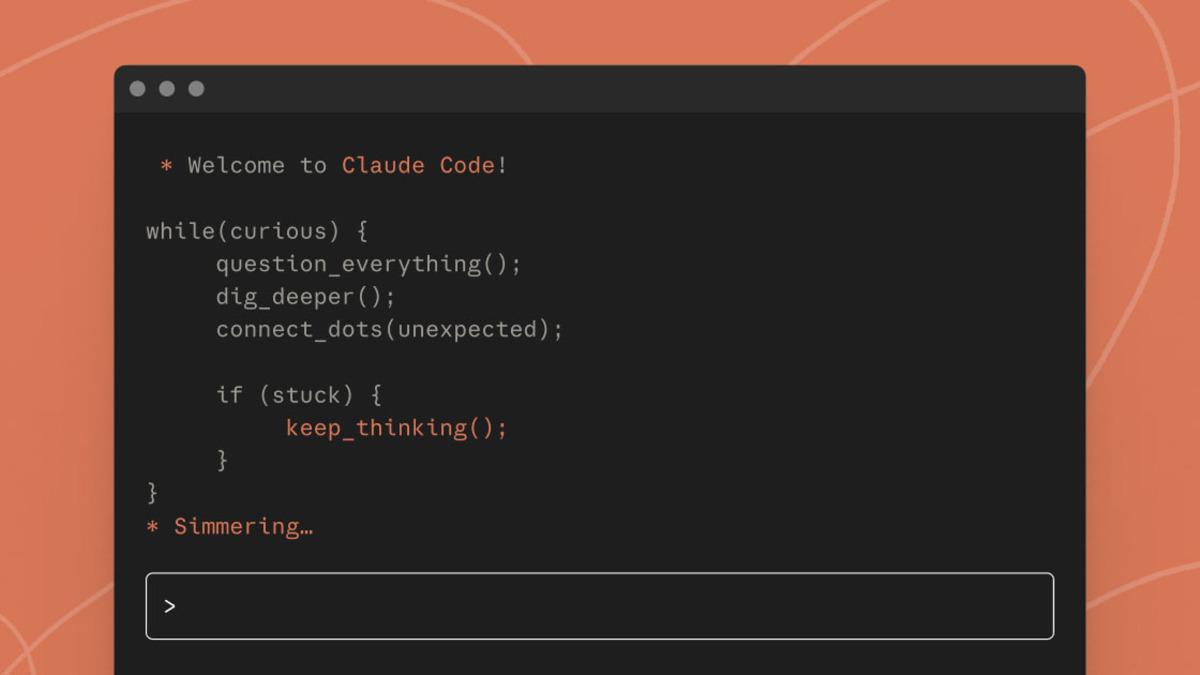 Claude Code's terminal-first interface - no desktop app, no visual chrome, just a prompt and your codebase.
Source: anthropic.com
Claude Code's terminal-first interface - no desktop app, no visual chrome, just a prompt and your codebase.
Source: anthropic.com
Extended Thinking
Extended thinking is enabled by default in Claude Code and it's a meaningful differentiator. Before producing code, the model reasons through the problem in a chain-of-thought process that considers dependencies, edge cases, and architectural effects. The result is code that feels considered rather than reactive. For complex refactors spanning dozens of files, this extra reasoning step produces noticeably better results than models that jump straight to generation.
MCP Ecosystem
Claude Code's other structural advantage is MCP (Model Context Protocol) support with over 3,000 integrations. Where Codex relies on its Skills library and GitHub Action for tool connectivity, Claude Code can connect to databases, Sentry, Jira, Slack, and basically any API through MCP servers. For teams with complex toolchains, this extensibility matters. Developers can also build custom hooks that trigger on lifecycle events - tool execution, session boundaries, context compaction - giving fine-grained control over agent behavior.
Benchmark Comparison
The benchmarks tell a split story. Claude leads on code quality and general coding tasks. Codex leads on terminal operations and tool use.
Coding Quality Benchmarks
| Benchmark | Claude Opus 4.6 | GPT-5.3-Codex | Leader |
|---|---|---|---|
| SWE-bench Verified | 80.8% | ~80.0% (GPT-5.2) | Claude |
| SWE-bench Pro (custom scaffolding) | 59.0% | 56.8% | Claude |
| Chatbot Arena Coding ELO | 1552 | 1460 (GPT-5.4) | Claude |
| HumanEval | 92.0% | 90.2% | Claude |
Terminal and Tool-Use Benchmarks
| Benchmark | Claude Code | Codex (GPT-5.3) | Leader |
|---|---|---|---|
| Terminal-Bench 2.0 (as product) | 58.0% | 77.3% | Codex |
| Terminal-Bench Hard | - | 53.0% | Codex |
The Terminal-Bench gap deserves context. Claude Opus 4.6 powering third-party agents like ForgeCode scores 81.8% on Terminal-Bench 2.0 - higher than GPT-5.3-Codex. But Claude Code as a packaged product scores only 58.0%. The difference is in the agent scaffolding, not the model. Codex's agent harness is better optimized for terminal operations than Claude Code's current implementation.
On pure code quality, Claude has a wider lead. MorphLLM's blind comparison found Claude Code winning 67% of head-to-head evaluations. The Chatbot Arena coding ELO gap (1552 vs 1460) is sizable - roughly the difference between a strong grandmaster and an international master in chess rating terms.
Pricing Analysis
Both tools offer subscription tiers and API access. The headline prices look similar, but actual costs diverge significantly due to token efficiency differences.
Subscription Plans
| Plan | OpenAI Codex | Claude Code |
|---|---|---|
| Free | Limited access | Limited Sonnet (no Claude Code) |
| Standard ($20/mo) | Plus: 45-225 messages/5hr | Pro: Sonnet 4.6 access |
| Mid-tier ($100/mo) | - | Max 5x: Opus 4.6, 1M context |
| Power ($200/mo) | Pro: 300-1,500 messages/5hr | Max 20x: maximum priority |
| Team | $30/user/mo | $25-150/user/mo |
| Enterprise | Custom | Custom |
The critical difference: Codex Pro users report almost never hitting rate limits. Claude Code users on Max plans frequently bump against ceilings during intensive sessions. If you're doing heavy, continuous agentic work, Codex's limits are more generous in practice.
API Token Pricing
| Model | Input (per 1M) | Output (per 1M) |
|---|---|---|
| GPT-5.1-Codex-Mini | $0.25 | $2.00 |
| GPT-5.2-Codex | $1.75 | $14.00 |
| Claude Haiku 4.5 | $1.00 | $5.00 |
| Claude Sonnet 4.6 | $3.00 | $15.00 |
| Claude Opus 4.6 | $5.00 | $25.00 |
Per-token, Codex's budget model (GPT-5.1-Codex-Mini) is the cheapest option. But per-token pricing is misleading for agentic coding because the tools consume wildly different amounts of tokens. Codex's 3-4x token efficiency advantage means a task costing $1.50 in Codex tokens might cost $6.00+ in Claude Code tokens. For teams running thousands of agent tasks monthly, this difference compounds into real budget impact.
Claude offers a 50% batch API discount and aggressive prompt caching (90% discount on cache hits) that can narrow the gap for repetitive workflows.
Codex: Strengths
- Multi-agent orchestration with parallel cloud sandboxes - truly unique capability
- Automations for scheduled background tasks (CI triage, dependency updates, release briefs)
- Native GitHub Action for automated PR review and CI fix
- 3-4x better token efficiency means lower actual costs per task
- Desktop app provides visual management for complex multi-agent workflows
- Open-source CLI (62K GitHub stars)
- Faster inference (1,000+ tokens/sec on Cerebras hardware)
Codex: Weaknesses
- Lower code quality in blind evaluations (33% win rate vs Claude Code)
- Weaker on ambiguous, open-ended tasks - needs clear, scoped objectives
- macOS/Windows desktop app only - Linux support still promised
- Plus tier limits (45-225 messages/5hr) are restrictive for heavy use
- Skills library is smaller and less flexible than Claude Code's MCP ecosystem
- GPT-5.3-Codex not yet available as a standalone API model
Claude Code: Strengths
- Highest code quality of any agentic coding tool (67% win rate, 1552 coding ELO)
- Extended thinking produces architecturally sound code on complex tasks
- 200K context (1M beta) holds entire projects in working memory
- MCP ecosystem with 3,000+ integrations for any toolchain
- Hooks system for fine-grained lifecycle control
- Works in any terminal, any editor - no special IDE required
- Available on AWS Bedrock, Vertex AI, Microsoft Foundry
Claude Code: Weaknesses
- No desktop app, no visual agent management
- No automations or scheduled tasks
- Higher token consumption (3-4x more than Codex per task)
- Rate limits hit frequently even on Max plans
- Subagent system is less mature than Codex's multi-agent orchestration
- No native GitHub Action for CI integration
- Opus 4.6 API pricing ($5/$25 per MTok) is expensive for high-volume use
 Many developers are running both tools in parallel - Claude Code for architecture, Codex for automation and review.
Source: unsplash.com
Many developers are running both tools in parallel - Claude Code for architecture, Codex for automation and review.
Source: unsplash.com
Verdict
The honest answer: most serious teams will end up using both.
Choose Codex if your workflow centers on GitHub, you need automated code review and CI integration, you run multiple agent tasks in parallel, or cost efficiency matters more than peak code quality. Codex is the better choice for teams that want an orchestration layer over their development process - something that runs in the background, triages issues, reviews PRs, and handles routine maintenance without being asked.
Choose Claude Code if you're doing complex architecture work, large-scale refactors, or tasks where code quality is the primary concern. Claude Code's extended thinking and superior model capability produce better results on hard problems. It's also the better choice if your toolchain extends beyond GitHub - the MCP ecosystem connects to services that Codex's Skills library doesn't cover.
Use both if you can afford to. The most productive workflow we've seen pairs Claude Code for planning, architecture, and complex implementation with Codex for review, automation, and CI integration. They complement each other well because their strengths don't overlap. Claude Code writes better code. Codex manages the workflow around it more effectively.
For a broader view of AI coding tools, see our best AI coding assistants and coding benchmarks leaderboard.
Sources:
✓ Last verified March 13, 2026

