
Best ChatGPT Alternatives in 2026
Eight ChatGPT alternatives compared on pricing, context limits, and real-world performance - from Claude and Gemini to DeepSeek and self-hosted setups.
 9 min read
ChatGPT no longer has a monopoly on capable AI assistants. The performance gap between it and its closest competitors has narrowed to the point where switching costs are often the only thing keeping users locked in. Whether your issue is pricing, context limits, data privacy, or simply wanting a tool that handles your specific workload better, 2026 offers a stronger field of alternatives than any previous year.
This comparison covers eight options - from paid frontrunners to genuinely free services and self-hosted setups. All pricing is verified against official sources as of May 2026. Every claim about features and specs comes from documented sources, not vendor press releases.
TL;DR
- Best overall: Claude Pro at $20/month delivers the strongest general reasoning and coding performance with 200K token context
- Best free option: DeepSeek offers unlimited free access with no daily caps and competitive coding and math performance
- Biggest differentiator: Perplexity is the only tool here built around real-time web citations on every response - it handles research workflows that general-purpose assistants don't
Quick Comparison
| Tool | Free tier | Paid plans | Context window | Best for |
|---|---|---|---|---|
| Claude | Yes (limited) | $20-$200/mo | 200K tokens | General tasks, coding |
| Google Gemini | Yes | $19.99/mo | 1M tokens (Pro) | Google Workspace |
| Microsoft Copilot | Yes (M365) | $20/mo personal | Varies | Office users |
| Perplexity | Yes (~5 Pro searches/day) | $20/mo | Varies | Research, citations |
| Grok | Via X.com | $30/mo | 2M tokens | Large documents |
| Mistral Le Chat | Yes (25 msg/day) | $14.99/mo | Varies | European/GDPR |
| DeepSeek | Yes (no daily cap) | Free | 64K tokens | Cost-conscious |
| Ollama + Open WebUI | Free (self-hosted) | Infrastructure cost | Model-dependent | Privacy-first |
 Comparing AI assistants requires testing them across your actual workloads, not just marketing claims.
Source: unsplash.com
Comparing AI assistants requires testing them across your actual workloads, not just marketing claims.
Source: unsplash.com
Claude (Anthropic)
Claude is the most direct like-for-like replacement for ChatGPT. The free tier exists but hits daily limits fast under any serious workload. Claude Opus sits at the top of the model stack, and Claude Pro at $20/month ($17/month billed annually) opens up the full model roster along with projects, the Research feature, and Claude Code access.
The context window is 200K tokens - large enough for full codebases, lengthy research documents, or extended multi-turn sessions. Where Claude consistently pulls ahead of competitors at the same price is instruction-following. It handles complex multi-step prompts reliably and produces cleaner, more structured code outputs.
One concrete limitation: real-time web search on the base Pro plan is restricted to the Research feature, which isn't available in all workflows. If web citations on every response is your priority, Perplexity handles that better.
Max plans at $100/month (5x Pro usage) and $200/month (20x) add priority access. For teams, the $25/user/month Team plan includes Claude Code integration - useful if you're routing engineering workflows through the subscription.
Google Gemini
Google has reorganized its AI offerings into three tiers. The free plan gives access to Gemini 2.5 Flash with 15 GB of storage and 100 monthly AI credits. Google AI Pro at $19.99/month steps up to Gemini 3.1 Pro, with a 1M token context window, 20 Deep Research sessions per day, and 2 TB of Google One storage. Google AI Ultra runs $249.99/month and adds Gemini 2.5 Deep Think and Veo 3.1 video generation.
The 1M token context window at the Pro tier is truly useful for large document analysis - it's 5x Claude's 200K. Twenty Deep Research sessions per day is also generous; most users won't hit that cap.
Gemini's clearest advantage is integration depth. It's woven into Docs, Sheets, Gmail, and Meet at the Pro tier. For teams already paying for Google Workspace, this offsets any modeling differences and makes it the rational choice even if standalone alternatives score slightly higher on benchmarks.
The Ultra tier at $249.99/month is hard to justify for most individual users. The jump from $19.99 to $249.99 is steep for features that matter mainly to video creators and power researchers.
Microsoft Copilot
Copilot isn't a standalone AI assistant competing directly with Claude or Perplexity - it's an AI layer built over Microsoft 365. That framing matters for understanding its pricing. Copilot Chat ships free with eligible Microsoft 365 subscriptions. Copilot Pro for individuals costs $20/month. Business plans split into Copilot Business at $18/user/month (promotional rate through June 2026, rising to $21/month) and Copilot Enterprise at $30/user/month. Both business tiers require an underlying M365 license - Copilot can't be purchased standalone.
If your team's primary environment is Word, Excel, PowerPoint, and Outlook, Copilot is worth evaluating seriously. It handles drafting, summarization, and spreadsheet analysis without requiring copy-paste between applications. Outside that Microsoft stack, it's less competitive than Claude or Perplexity - the product is designed for specific integrations, and the seams show when you try to use it as a general chatbot.
Perplexity AI
Perplexity is the right tool if web research is your primary workload. Every response cites sources by default, and the model selects from the web in real time rather than relying on a training cutoff. The free tier limits Pro Search (its deeper research mode) to roughly five queries per day, which constrains the most useful workflows quickly.
Perplexity Pro at $20/month ($200/year) removes that cap and adds access to multiple underlying models, including GPT and Claude variants, plus unlimited file uploads and $5/month in API credits. A Max tier at $200/month gives 10,000 monthly credits and the full model stack - aimed at users running research-intensive tasks continuously.
For a direct performance breakdown against OpenAI's flagship, see Perplexity vs ChatGPT. The short summary: Perplexity's citations make it substantially more trustworthy for anything requiring source verification. The trade-off is that it's weaker than Claude for pure coding tasks and extended single-session reasoning.
Grok (xAI)
Grok runs on Elon Musk's xAI infrastructure and comes bundled with X Premium or as a standalone SuperGrok subscription at $30/month. Access gives you Grok 4 - and the standout spec here is the 2M token context window.
That's the largest consumer-available context window by a considerable margin. For tasks like analyzing a full codebase, processing long legal documents, or working through a large dataset in a single session, 2M tokens changes what's practical. No other tool in this comparison gets close to that at any consumer price point.
API pricing runs $3 per million input tokens and $15 per million output tokens for the full Grok 4 model. Grok 4 Fast is priced at $0.20/$0.50 per million tokens for lower-stakes tasks. Those rates are competitive but not the cheapest option on the API market.
See the Grok 4 vs ChatGPT comparison for benchmark details. One thing to factor in: Grok's responses on topics touching current events or social issues carry a detectable perspective shaped by its training distribution, which is worth testing before committing to it for those use cases.
Mistral Le Chat
Le Chat carries a quiet but important advantage over every US-based alternative: it runs under French jurisdiction with GDPR compliance built into the product. For European teams with data residency requirements, that matters more than any benchmark number.
The free tier allows 25 messages per day - more restrictive than DeepSeek's no-cap free access but sufficient for light use. Le Chat Pro costs $14.99/month, making it the cheapest paid plan among the full-featured options here. Team pricing runs $24.99/user/month. Mistral's API platform starts at $0.02 per million tokens for lighter models and scales to $2.00 per million for Mistral Large 3.
Performance on coding and general reasoning is competitive with mid-tier plans from Anthropic and OpenAI, though not at the top of current public benchmarks. What strengthens the value proposition is the combination of pricing, GDPR compliance, and the fact that Mistral publishes open-weight versions of its models. That transparency around the model stack is rare among major providers.
DeepSeek
DeepSeek is a Chinese AI lab that has attracted attention with model efficiency research, and its web interface is genuinely free with no daily caps on basic usage. Among the tools covered here, that's unique - no credit system throttling your queries, no hitting a wall mid-project.
The trade-off is data sovereignty. DeepSeek V4 runs on infrastructure in China, which creates concerns for sensitive or proprietary workloads. For personal coding tasks, math problems, and general research where data privacy isn't a constraint, the price - zero - is difficult to argue against.
Context window sits at 64K tokens, adequate for most single-session tasks but well below the large-context options. Coding and math benchmarks have been strong enough to place DeepSeek near the top of several open evaluations, which makes the free access more notable than it'd be for a weaker model.
Ollama + Open WebUI (Self-Hosted)
If data privacy is non-negotiable, self-hosting is the only option that actually delivers it. Open WebUI is the most widely launched front end for local models, with over 282 million Docker pulls as of May 2026. Paired with Ollama as the inference backend, it lets you run models like Llama 4, Mistral's open-weight releases, or Qwen 3 completely on your own hardware, with no data leaving your infrastructure.
The cost is hardware. Running 32B+ parameter models well requires 32-64 GB of VRAM, which means a workstation GPU in the $1,000-$3,000 range or cloud GPU instances. Smaller 7B-14B models run on consumer hardware with 8-16 GB VRAM and handle many coding and drafting tasks capably. Open WebUI supports multiple backends, function calling, RAG pipelines, and web search plugins - it's a complete platform, not just a chat UI.
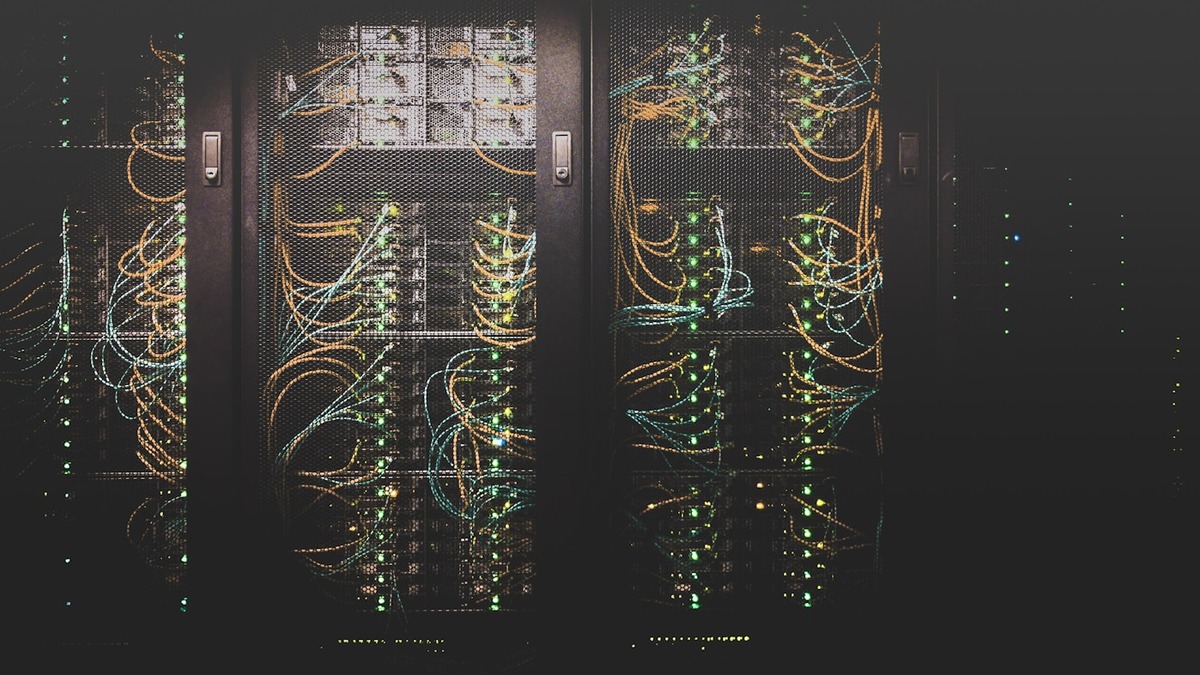 Self-hosted AI keeps your data on your own infrastructure - at the cost of hardware and maintenance overhead.
Source: unsplash.com
Self-hosted AI keeps your data on your own infrastructure - at the cost of hardware and maintenance overhead.
Source: unsplash.com
For teams with sensitive data and the engineering capacity to maintain the stack, self-hosting is the path that doesn't require trusting a third-party with your inputs. For everyone else, it's a meaningful operational overhead that the hosted alternatives eliminate.
Which One to Use
For most individual users, Claude Pro at $20/month is the strongest general-purpose option. The instruction-following quality and code output are consistently above peers at the same price, and the 200K context handles real workloads without constant workarounds.
If research and source verification are your primary tasks, Perplexity Pro at $20/month handles that better than any general-purpose assistant. The citation model isn't a feature bolt-on - it's the core of how the product works.
For Google Workspace teams, Google AI Pro at $19.99/month earns its place through integration alone. The Gemini 3.1 Pro model is competitive, and having AI in your existing tools beats context-switching to a separate app.
DeepSeek wins on cost when your workload doesn't touch sensitive data. Free with no caps beats every other option in this comparison on price, full stop.
Grok's SuperGrok at $30/month is justified specifically for large-context tasks. No other tool at any consumer price gives you 2M tokens, and that window matters for a specific class of use cases.
For a full head-to-head on the top three mainstream options, see Claude vs ChatGPT vs Gemini.
Sources
- Anthropic Claude Pricing
- Google AI Plans - Google One
- Google Gemini Subscriptions
- Gemini Pricing 2026 - Screenapp
- Microsoft Copilot Pricing Guide - Copilot Experts
- Microsoft Copilot Cost Per User 2026 - Copilot Experts
- Perplexity Pricing 2026 - Screenapp
- Perplexity Pricing in 2026 - Finout
- Open WebUI GitHub
- Claude Pricing Guide - Finout
✓ Last verified May 18, 2026

