
Best AI Tools for Writers in 2026: May Update
The best AI tools for writers in May 2026 - covering prose quality, editing, grammar, transcription, and fiction platforms with current pricing.
 9 min read
Three things shifted the AI writing tool landscape in spring 2026. Claude Opus 4.7 widened its lead on long-form prose quality. ProWritingAid raised its annual price by 52%. And Jasper moved its entry plan from $24 to $39 a month. If you set up your writing stack before March, these changes are worth revisiting.
TL;DR
- Claude is the best general AI for prose quality and long-document work; ChatGPT wins on brainstorming and multimodal features
- Grammarly ($12/mo annual) is the fastest grammar layer for writers who switch between many tools; ProWritingAid ($10/mo annual) gives more craft depth for dedicated authors
- Sudowrite ($10/mo annual) remains the top pick for fiction writers; see the Best AI Tools for Fiction Authors roundup for that category in depth
- Jasper ($39/mo Creator) targets content marketers and agencies, not individual writers
What Changed in Spring 2026
ProWritingAid's annual subscription jumped from $79/year to $120/year - a 52% increase that happened quietly in early 2026. The lifetime license ($399) looks more attractive now than it did before the increase, but it's a steeper upfront commit than most casual writers want.
Jasper's Creator plan moved from $24/month to $39/month. That changes the value math for solo freelancers who were using it for its brand voice and templates. At $39/month you're now paying double what Claude Pro or ChatGPT Plus cost for a tool that's narrower in scope.
On the model side, Claude Opus 4.7 landed in April 2026 and extended Claude's lead on SWE-bench coding, but the change that matters for writers is prose quality: Claude's output at the Opus tier is now measurably more natural and less formulaic than GPT-5.5 across long-form assignments.
General AI Assistants for Writing
The biggest shift in AI for writers over the last two years is that general-purpose models now produce prose that can truly substitute for a first draft. The question in 2026 is not whether they can write - it's which one fits your workflow.
Claude
Claude is the better writing model for most prose tasks. Independent testing puts Claude ahead of ChatGPT on long-form tone consistency - it maintains voice across thousands of words without the structural drift that affects other models. For writers working on essays, long reports, or extended narrative non-fiction, the 200K token context window in standard Claude chat (1M via API) means it can hold an entire document in context without losing the thread.
Claude's output tends to vary sentence structure more naturally, adjusts register to context, and is more likely to flag a better approach rather than just completing the literal instruction. It also scores lower on prompt injection vulnerability (4.7% attack success rate vs. higher rates for GPT models), which matters for writers who upload their own drafts and don't want the model hallucinating based on embedded adversarial content.
What Claude doesn't have: native image generation, voice input, and a plugin ecosystem. If your writing workflow involves creating images for your content or using third-party apps through a unified interface, ChatGPT has more built in.
Pricing: Pro at $20/month, Max 5x at $100/month, Max 20x at $200/month.
ChatGPT Plus
ChatGPT's main advantage for writers is breadth. At $20/month, Plus includes DALL-E image generation (useful if you're producing content with accompanying visuals), Advanced Voice Mode (useful for dictation workflows or voice-first content), Canvas collaborative editing mode, and Deep Research for sourcing-heavy pieces.
Claude wins on prose quality and long-document consistency. ChatGPT wins when your workflow spans writing, image generation, and research in the same session.
For brainstorming, ChatGPT produces more ideas more quickly - the output is wider if sometimes shallower. For quick ideation sessions before writing, that volume is useful. For the actual drafting, Claude tends to produce better first-pass material that needs less revision.
ChatGPT's memory feature is also meaningful for writers with recurring work: it stores your genre preferences, style notes, and recurring topics across sessions, so you don't re-explain your voice every time you open a new chat.
Pricing: Free (GPT-5.3, limited), Plus $20/month, Pro $200/month.
Grammar and Editing Tools
Writing assistants handle drafting. Grammar checkers handle the layer beneath - consistency, correctness, and style mechanics. The two categories don't substitute for each other.
Grammarly
Grammarly's practical advantage is ubiquity. Install the browser extension and it works across Gmail, Google Docs, LinkedIn, Notion, Slack, and almost any web-based text field. For writers who switch between platforms constantly, not having to export and check is truly useful.
Accuracy is strong: independent testing catches 96% of grammar errors vs. ProWritingAid's 91% in the same documents. GrammarlyGO (included in Pro) adds AI-assisted rewriting, tone adjustment, and paraphrasing - it's evolved from a basic writing aid into a co-author layer.
 Grammarly's browser extension covers nearly every writing surface - from Gmail to Notion to CMS platforms - without requiring you to copy text into a separate tool.
Source: unsplash.com
Grammarly's browser extension covers nearly every writing surface - from Gmail to Notion to CMS platforms - without requiring you to copy text into a separate tool.
Source: unsplash.com
The Pro plan includes unlimited plagiarism checks, which matters for freelancers and researchers. The free plan gives 100 AI prompts per month and basic grammar coverage.
Pricing: Free, Pro $12/month (annual) or $30/month (monthly), Business custom. The annual plan's $12/month rate represents good value if you write across many platforms daily. See the Best AI Grammar Checkers 2026 roundup for a detailed comparison with alternatives.
ProWritingAid
ProWritingAid is the better tool for writers who want to improve their craft rather than just catch errors. Its 20+ writing reports cover sentence variety, pacing, dialogue tag repetition, readability, overused words, and structural patterns - the kind of analysis that explains why something reads awkwardly, not just flags that it does.
The 2026 price increase changes the calculation. At the old $79/year rate it was an obvious recommendation for dedicated writers. At $120/year ($10/month) it's still good value relative to ProWritingAid's capabilities, but the gap between it and the $144/year Grammarly Pro (annual) has narrowed. The lifetime license at $399 makes sense for writers who plan to use it for 3+ years.
ProWritingAid's weakness is integration coverage. Grammarly works everywhere; ProWritingAid has a browser extension and integrations for Word, Scrivener, and Google Docs but not the same breadth. If you write in a lot of different tools, Grammarly's omnipresence is the practical winner.
Pricing: Free (500-word limit), Premium $10/month (annual)/$30/month, Premium Pro $12/month (annual)/$36/month, Lifetime $399.
Fiction Writing Platforms
Fiction writing has its own category of purpose-built tools - platforms designed around the specific challenges of long-form narrative: maintaining character consistency across 80,000 words, managing scene structure, and producing prose that matches genre conventions.
This category is covered in depth in the Best AI Tools for Fiction Writers roundup. The short version for 2026:
Sudowrite at $10/month (annual) is the top pick for most fiction writers. Its custom-trained Muse model produces prose that reads like published fiction rather than AI output - better dialogue cadence, sensory detail, and genre awareness than you get from ChatGPT or Claude in a standard chat interface.
NovelCrafter at $8/month+ suits writers who want structure and lore management - its Codex system maintains character histories, world rules, and plot logic across a long manuscript.
NovelAI is the choice for writers working with sensitive content that would be filtered by Claude or ChatGPT.
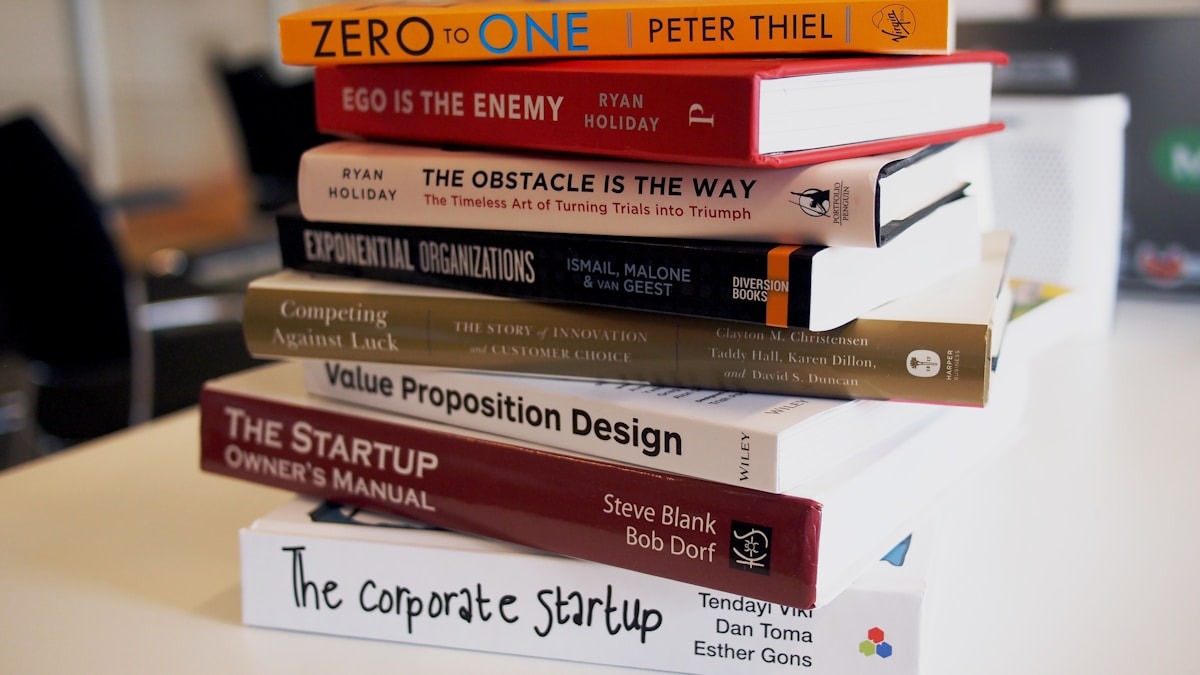 Fiction writing platforms like Sudowrite and NovelCrafter are designed for manuscript-length work - with tools for maintaining character consistency and prose style that general-purpose LLMs don't provide.
Source: unsplash.com
Fiction writing platforms like Sudowrite and NovelCrafter are designed for manuscript-length work - with tools for maintaining character consistency and prose style that general-purpose LLMs don't provide.
Source: unsplash.com
Content and Marketing Writing
Jasper
Jasper is built for content teams and agencies producing high-volume marketing copy: blog posts, social copy, email sequences, ad variants, and brand-consistent content at scale. Its Brand Voice feature analyzes your existing content and applies that voice consistently across new material - useful when multiple writers need to stay in one brand register.
The Creator plan ($39/month) covers one brand and unlimited words with no monthly cap. The Pro plan ($59/month) handles multiple brands and team collaboration. Enterprise pricing is custom.
At $39/month for an individual, Jasper's value case is narrower than it was at $24. If your workflow is mainly blog posts and essays, Claude Pro or ChatGPT Plus at $20/month produces comparable output with more flexibility. Jasper earns its price for teams that need the Brand Voice system and template library at scale, and for agencies managing multiple client voices who need guardrails around AI-generated output.
Transcription Tools for Interview-Based Writers
Journalists, oral historians, podcast producers, and non-fiction writers who work from interviews need transcription - and AI-powered transcription in 2026 is fast enough that most writers aren't manually transcribing anymore.
Otter.ai is the standard recommendation for most writers. The free tier gives 300 transcription minutes per month, which covers occasional interviews. Pro at $8.33/month (annual) raises that to 1,200 minutes (about 20 hours) and extends the per-conversation limit from 30 to 90 minutes - the right plan for anyone doing regular interview-based work.
For writers who need to edit audio or video alongside their transcripts, Descript adds a multimedia editing layer where you can edit the media file by editing the text transcript. It's more expensive and complex than Otter, but for podcast and video content creators, the combined workflow saves significant time.
Pricing Comparison
| Tool | Free Tier | Individual | Team |
|---|---|---|---|
| Claude | Yes (limited) | Pro $20/mo | Teams $25/user/mo |
| ChatGPT | Yes (GPT-5.3, limited) | Plus $20/mo | Business $30/user/mo |
| Grammarly | Yes (100 AI prompts/mo) | Pro $12/mo (annual) | Business custom |
| ProWritingAid | Yes (500 words) | Premium $10/mo (annual) | - |
| Sudowrite | Trial (no card) | Hobby $10/mo (annual) | - |
| Jasper | 7-day trial | Creator $39/mo | Pro $59/mo |
| Otter.ai | 300 min/mo | Pro $8.33/mo (annual) | Business $19.99/user/mo |
Which Tool Fits Which Writer
For bloggers and content writers: Claude Pro or ChatGPT Plus at $20/month for drafting, Grammarly Pro at $12/month (annual) as the editing layer. That's a $32/month stack that covers most workflows.
For fiction authors: Sudowrite at $10/month (annual) handles fiction-specific drafting. Add ProWritingAid at $10/month (annual) for manuscript-level editing. Total: $20/month. See the full fiction tools roundup for how these compare on specific manuscript tasks.
For journalists: Otter.ai Pro at $8.33/month covers transcription. Claude Pro or ChatGPT Plus covers research synthesis and structural drafting. Most working journalists use both LLMs for feedback on structure rather than as content generators - the hallucination risk in factual reporting makes full AI drafting unreliable.
For content marketing teams: Jasper Pro at $59/month if your team needs Brand Voice consistency and multi-brand management. Otherwise, ChatGPT Teams at $25/user/month or Claude Teams at $25/user/month are broader tools at lower cost per seat.
For academic writers: ProWritingAid over Grammarly - the craft-focused reports and discipline-specific checks serve academic writing better than Grammarly's business-oriented suggestions. The lifetime license at $399 amortizes well over years of research writing.
The Jasper price increase is the one concrete re-evaluation point for anyone already on that platform. If you're paying $39/month as an individual writer for blog posts, the gap between Jasper and Claude/ChatGPT at $20/month has gotten harder to justify unless you're specifically using Brand Voice and the template library at volume.
Sources
- Sudowrite Pricing 2026 - Costbench
- Jasper AI Pricing Plans 2026 - demandsage.com
- ProWritingAid vs Grammarly 2026 - manuscriptreport.com
- ProWritingAid Pricing 2026 - saaspricepulse.com
- Grammarly Pricing 2026 - costbench.com
- Claude vs ChatGPT for Writing 2026 - digitbin.com
- Claude vs GPT for Writing 2026 - vertu.com
- Otter.ai Pricing 2026 - get-alfred.ai
- Sudowrite vs NovelCrafter 2026 - sudowrite.com
- Best AI Writing Tools 2026 - emailvendorselection.com
✓ Last verified May 21, 2026

