
Best AI Tools for Doctors and Physicians in 2026
Seven AI tools for doctors compared on task fit, pricing, and clinical accuracy - from OpenEvidence and Glass Health to UpToDate Expert AI and Freed.
 12 min read
Two categories of clinical AI have matured to the point where they're worth serious evaluation. The first is ambient scribing - tools that listen to patient encounters and produce structured notes without manual input. The second is clinical decision support (CDS) - tools that help physicians answer evidence questions, build differentials, and check drug interactions faster than flipping through references.
Those categories have started to converge. Glass Health offers both in one subscription. Heidi Health launched an evidence module with its scribe. Doximity bundled a verified clinical AI with its existing platform. The net effect: physicians who bought a scribe last year may now have half a CDS platform sitting unused in the same subscription.
TL;DR
- OpenEvidence is free, used by 65% of US physicians, and gives evidence-grounded answers from peer-reviewed literature only - the fastest path to a verified clinical reference without a subscription
- Glass Health's combined CDS plus ambient scribe (free to $200/month) beats buying these tools separately for most individual and small group practices
- UpToDate Expert AI at $500+/year remains the gold standard for depth and CME credit integration, but its cost is only justified if your institution doesn't already subsidize it
This comparison covers seven tools across both categories, organized by what each one specifically does well. Tools are assessed on verified pricing, actual clinical capabilities, and the limitations that matter in practice. Tools covered by existing site articles - Abridge, Nuance DAX Copilot, Nabla, Suki AI - are excluded here; this focuses on the individual physician market and CDS platforms that those articles didn't address.
Quick Comparison
| Tool | Category | Pricing | Best for |
|---|---|---|---|
| OpenEvidence | CDS | Free | Literature-grounded clinical Q&A |
| Glass Health | CDS + Scribe | Free-$200/mo | Combined CDS and documentation |
| Doximity Clinical AI | CDS + Scribe | Free (verified US MDs) | Physicians on the Doximity platform |
| UpToDate Expert AI | CDS | $500+/year | Depth, authority, CME credit |
| AMBOSS | CDS | ~$9-14/mo (AMA rate) | Residents and early-career clinicians |
| Heidi Health | Scribe + Evidence | Free / $150/mo | Solo and small practices |
| Freed | Scribe | $99/mo | Solo practices, pure documentation |
Ambient scribe tools for enterprise health systems (Abridge, Nuance DAX) are covered separately in best AI healthcare documentation tools in 2026.
OpenEvidence
OpenEvidence is the quiet market leader in physician-facing AI. By April 2026, the platform was used across roughly 27 million clinical encounters per month and had reached roughly 65% of US physicians, according to NBC News reporting. That growth happened almost completely through word of mouth.
The model is straightforward: physicians enter clinical questions, and OpenEvidence searches peer-reviewed literature - with partnerships at The New England Journal of Medicine, JAMA, and the National Comprehensive Cancer Network - then returns a summarized answer with direct links to the source papers. If the literature is inconclusive on a question, the platform doesn't create an answer. That non-response is a deliberate design choice to limit hallucinations in clinical contexts.
OpenEvidence handled 27 million clinical encounters in April 2026. It runs free for physicians and funds itself through pharmaceutical advertising - a model with no direct precedent at this scale.
The pricing is free for verified US healthcare professionals. OpenEvidence funds itself through pharmaceutical and medical device advertising shown alongside search results - a business model the company's CEO has been transparent about, and one that raises an obvious question about editorial independence. The platform's answer is that only content, not answers, is sponsored; advertisers don't influence what clinical evidence surfaces.
The limitation is scope. OpenEvidence answers clinical questions from the literature. It doesn't do differential diagnosis, assessment-and-plan generation, ambient scribing, or drug interaction checking. For clinicians who need a fast literature reference point, it's hard to beat. For clinicians who need a complete clinical workflow tool, it's a starting point.
OpenEvidence has embedded directly in Epic's EHR at select major health systems, which means physicians at those institutions can access it from within their charting workflow rather than switching tabs.
Glass Health
Glass Health is the most complete single-platform alternative for individual physicians who want both CDS and ambient scribing without buying two separate subscriptions. The platform combines three-tier differential diagnosis (Most Likely, Expanded, and Can't Miss categories), assessment-and-plan generation, real-time encounter insights, clinical Q&A with citations, and ambient documentation.
Pricing: Lite tier is free. Starter at $20/month handles individual use without EHR integration. Pro at $90/month adds expanded clinical Q&A and more documentation features. Max at $200/month supports Epic, eClinicalWorks, and Athena clinical workflow integration and is the tier for active practice use with EHR push-to-chart.
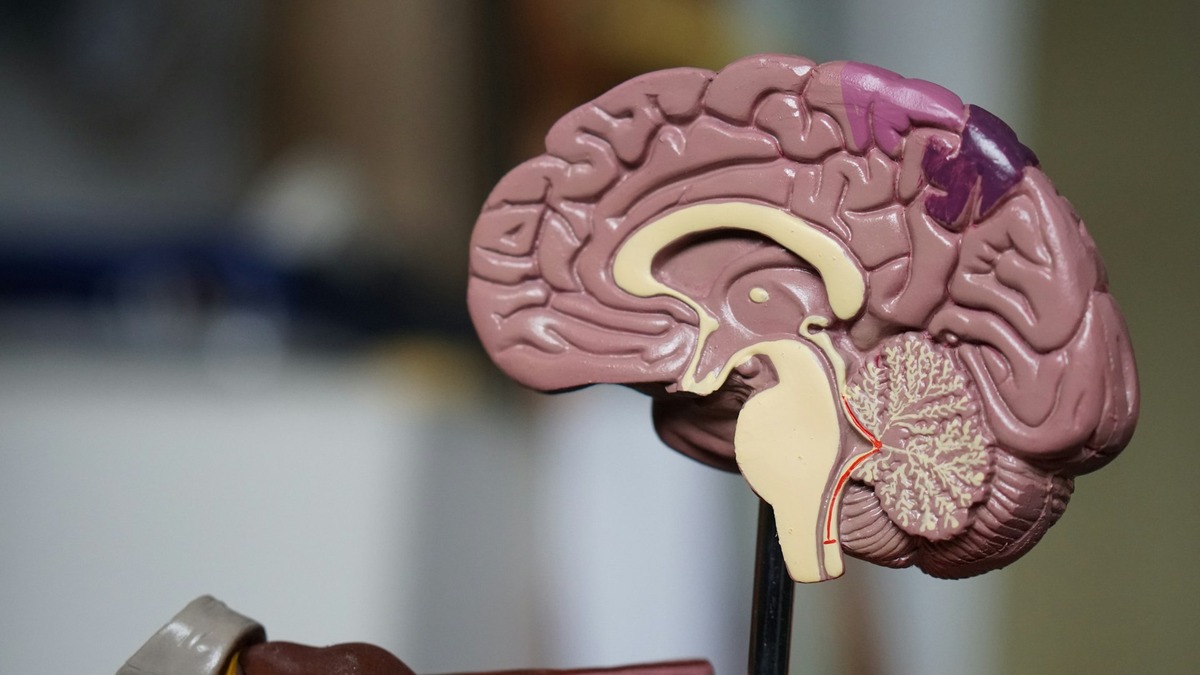 Clinical decision support tools like Glass Health and OpenEvidence handle reference questions that previously required switching between UpToDate, a drug database, and a separate note-taking workflow.
Source: unsplash.com
Clinical decision support tools like Glass Health and OpenEvidence handle reference questions that previously required switching between UpToDate, a drug database, and a separate note-taking workflow.
Source: unsplash.com
The CDS design is physician-specific in a way general-purpose AI tools aren't. When a clinician inputs a chief complaint and history, Glass doesn't just return a differential - it structures the output by probability and flags the diagnoses that can't be missed even if they're statistically unlikely. The assessment-and-plan generation then gives a problem-oriented output ready for review and editing, not a paragraph that needs to be restructured into clinical format.
Glass Health received a 3.8/5 in Clinical AI Report's 2026 evaluation, which noted the free beta status as a significant access advantage over UpToDate and DynaMed. The honest gap: Glass doesn't have the depth of expert-curated content that UpToDate's 7,600+ physician authors have built over 30 years. For uncommon presentations and off-guideline clinical questions, the more established CDS platforms still beat it.
For practices that want the CDS plus scribe combination without enterprise pricing, Glass Health's Pro tier at $90/month covers both workflows.
Doximity Clinical AI Suite
Doximity reaches 85% of US physicians as a platform - more than any other medical network. The Clinical AI Suite builds on that base with three integrated tools: Ask (formerly DoxGPT), Scribe, and Dialer.
Ask is the clinical decision support component, powered by a physician-verified question-and-answer system. After Doximity acquired Pathway Medical for $63 million in August 2025, DoxGPT gained access to 3,200+ drug monographs and evidence-based clinical answers verified through Doximity's PeerCheck program, which had over 10,000 physician expert reviewers as of early 2026.
Scribe handles ambient documentation - live transcription of patient visits with AI-produced smart summaries. Physicians can save custom templates by specialty or visit type. The original audio is discarded after summary generation, which addresses the most common privacy concern with ambient scribing tools.
All of this is free for verified US physicians, nurse practitioners, and physician assistants. That's the key factor. A physician who already uses Doximity for professional networking or telehealth gets a clinical AI assistant and ambient scribe without adding a subscription.
The limitation is geography. Doximity's free tier applies to verified US clinicians. International physicians need to find alternatives. And while DoxGPT performs well for common clinical questions, independent benchmarks haven't placed it at the level of UpToDate on depth and comprehensiveness across rare conditions.
UpToDate Expert AI
UpToDate is the standard reference tool at 70% of US hospitals and has 7,600+ physician authors across 25+ specialties contributing to its content library. Expert AI is the generative layer added on top of that corpus - a conversational interface that answers clinical questions from within the UpToDate content rather than from the broader web.
The practical difference from OpenEvidence or DoxGPT is depth. When a clinician asks a question on a complex, multi-system presentation or a rare diagnosis, UpToDate's expert-curated content produces a more complete and nuanced answer than tools that draw from general medical literature. That depth comes from 30 years of editorial curation, not just retrieval from indexed papers.
Expert AI is included in UpToDate personal trainee subscriptions and Pro Plus subscriptions in the US. Individual subscriptions run $500+/year, with exact pricing varying by country and tier. Most clinicians access it through institutional subscriptions - the majority of teaching hospitals and academic medical centers provide it at no cost to affiliated clinicians and residents.
CME/CE/CPD credit integration is a genuine differentiator. Physicians can earn credits directly within the Expert AI interface as they ask clinical questions and apply what they find, with credits redeemable through the platform. For physicians managing annual credit requirements, that integration saves dedicated study time.
The honest case against it: if your institution provides UpToDate access, the individual subscription cost isn't justified. And if your institution doesn't provide it, $500+/year is difficult to sustain for many solo practitioners when free alternatives from OpenEvidence and Doximity cover a sizable portion of daily reference needs.
AMBOSS
AMBOSS sits in a different segment than the other tools here. It started as a medical licensing exam preparation platform and expanded into a clinical reference library for practicing physicians and residents. The Library covers 1,400+ clinical topics peer-reviewed by a team of 50 physicians, with clinical calculators, drug dosages, management checklists, and differential diagnosis tables.
The AI component is LiSA 1.0, AMBOSS's clinical AI mode. In the Stanford-Harvard NOHARM study, LiSA ranked first for clinical care safety among evaluated platforms - a meaningful data point from an independent academic evaluation rather than vendor marketing.
 Clinical AI platforms like AMBOSS and UpToDate Expert AI build AI layers on top of curated medical knowledge bases - the key distinction from tools that draw from general web sources or raw literature.
Source: unsplash.com
Clinical AI platforms like AMBOSS and UpToDate Expert AI build AI layers on top of curated medical knowledge bases - the key distinction from tools that draw from general web sources or raw literature.
Source: unsplash.com
Pricing through the American Medical Association membership discount brings AMBOSS Knowledge Library to around $9-14/month depending on the plan, making it the most affordable full clinical reference on this list. Without AMA membership, standard pricing is higher - check AMBOSS.com directly for current rates, which vary by region.
The honest limitation is depth of AI integration compared to Glass Health or UpToDate Expert AI. AMBOSS's AI features are still developing; its core value is the curated content library and clinical reasoning support tools, with AI adding conversational access to that content rather than replacing it. For residents and early-career physicians who also need board preparation tools alongside clinical reference, AMBOSS's breadth across both use cases is the strongest argument for it.
Heidi Health
Heidi Health started as an ambient AI scribe and has expanded into a broader clinical AI platform. The free tier includes unlimited basic consults and dictation with 10 "Pro Actions" per month - enough to assess output quality across different visit types. The paid Clinician plan at $150/month when billed annually removes the Pro Action limit, adds unlimited custom templates, priority support, and full access to advanced features.
Heidi Evidence, launched in February 2026, adds a clinical decision support layer built on Anthropic's Claude models. The Evidence module has content partnerships with NICE, BMJ Group, HealthPathways, EMGuidance, and MIMS, which means guideline coverage reflects regional standards rather than drawing only from US sources. No pharmaceutical advertising funds the platform - Heidi uses enterprise revenue to subsidize individual clinician access, making Evidence free within the existing Heidi subscription.
The multilingual documentation support - 110+ languages - is the clearest differentiator for practices serving varied patient populations. No other tool on this list matches that language coverage.
At $150/month, Heidi is priced at the higher end of the individual scribe market. The value case depends on whether the Evidence module is meaningfully useful for your practice - if you need both documentation and a non-ad-funded CDS reference, the combined cost undercuts buying separate tools. If you only need documentation, Freed at $99/month is a cleaner fit.
Freed
Freed is a pure documentation tool. No CDS, no clinical Q&A, no drug database - just ambient scribing optimized for solo practitioners and small group practices. The model is intentionally narrow: physicians record their patient visit, Freed transcribes and structures it into a clinical note, and the physician reviews and approves.
Pricing is $99/month for the Pro plan, with tiers starting at $39/month. No enterprise minimums, no per-seat multiplication for small teams.
The value proposition for solo practitioners is specific. Freed doesn't require any training on specialist terminology or visit types beyond what the physician provides in the first few sessions. The output format is customizable to match existing note conventions, which matters for physicians whose EHR or billing requirements have specific documentation structure demands.
For the physician whose primary pain point is documentation time rather than clinical reference, Freed's focused scope is an advantage. The $99/month cost is recoverable from the first month if the tool saves 3-4 hours of documentation time.
The limitation is obvious: Freed doesn't help with clinical decisions. It handles what happens after the clinical decision is made. Practices that want AI assistance on both sides of the encounter will find Glass Health or Heidi Health a better fit, even at higher price points.
Which One to Use
For literature-grounded clinical Q&An at no cost, OpenEvidence is the starting point. The peer-reviewed sourcing and 65% physician adoption give it credibility that general-purpose AI tools lack. The pharmaceutical advertising model is worth knowing about.
For combined CDS and ambient scribing in a single subscription, Glass Health Pro at $90/month gives differential diagnosis, assessment-and-plan generation, clinical Q&A with citations, and ambient documentation. For individual and small group practices that don't want to manage two separate tools, that coverage at that price is the best option on this list.
For physicians already on Doximity, the Clinical AI Suite at no additional cost covers a sizable share of daily clinical reference and documentation needs. The PeerCheck-verified answers and integrated scribe work well for common clinical questions. For uncommon presentations, supplement with UpToDate or OpenEvidence.
For deep clinical reference with CME credit integration, UpToDate Expert AI is the established choice. Verify institution access before purchasing individually - most academic and teaching hospital affiliations include it.
For residents and early-career clinicians who need both board prep and clinical reference, AMBOSS at $9-14/month via AMA membership covers both use cases in a single subscription. The LiSA AI mode's performance in the NOHARM study is the strongest independent benchmark result on this list.
For multilingual documentation with a non-ad-funded evidence module, Heidi Health at $150/month handles both scribing and clinical reference. The NICE/BMJ content partnerships make it the strongest option for practices outside the US or serving multilingual patient populations.
For pure documentation at a solo practice, Freed at $99/month handles ambient scribing without the overhead of features you won't use. The ROI is direct: measure hours saved on documentation in the first month against the subscription cost.
For enterprise health system tools - Abridge, Nuance DAX Copilot, Augmedix, and the ambient scribes with Epic system-wide integrations - best AI healthcare documentation tools in 2026 covers that market with verified pricing and deployment data.
Sources
- OpenEvidence - NBC News, Most US doctors are quietly using this AI tool
- OpenEvidence adoption: 65% of US physicians - AI2Work
- Glass Health pricing and features - glass.health
- Glass Health Medical AI Tools resource - glass.health
- Clinical AI Report: Glass Health Review 2026 - clinicalaireport.com
- Doximity Clinical AI Suite - blog.doximity.com
- Doximity State of AI in Medicine 2026 - doximity.com
- UpToDate Expert AI - wolterskluwer.com
- UpToDate Pro Plus pricing - wolterskluwer.com
- Best clinical AI for doctors 2026 - iatrox.com
- AMBOSS AI principles and LiSA - amboss.com
- AMBOSS pricing - amboss.com
- Heidi Health launches Evidence, acquires AutoMedica - heidihealth.com
- Heidi Health pricing 2026 - healos.ai
- Freed AI pricing 2026 - getfreed.ai
✓ Last verified May 19, 2026

