
Best AI Tools for Logistics 2026
A hands-on look at the best AI tools for freight brokerage, customs compliance, and supply chain visibility for SMBs in 2026 - with real pricing and honest assessments.
 11 min read
If you read our Best AI Logistics Tools roundup covering fleet management, last-mile delivery, and warehouse automation, you'll know the logistics AI market has more depth than any single article can cover. This companion piece focuses on three underserved areas: freight brokerage and capacity management, customs and trade compliance, and supply chain visibility built for SMBs rather than Fortune 500 IT departments.
TL;DR
- Best freight brokerage AI: Parade for brokerages already running a TMS; Loadsmart if you want a digital brokerage that includes the freight itself
- Best customs compliance AI: iCustoms for UK/EU operations with complex HS classification needs; KlearNow.AI for US importers focused on clearance speed
- Watch Flexport's 2026 Winter Release - its new AI-native customs auditor is the most practically useful new feature in the supply chain visibility space this year
The tools in the first roundup - Samsara, Onfleet, Blue Yonder, project44, Gather AI - are well known. The ones in this piece are less obvious choices but filling real gaps in the market.
What I Looked At
Six tools across three categories. I didn't have access to all of them for hands-on testing, so I cross-referenced G2 and Capterra user reviews, vendor documentation, analyst coverage, and recent product announcements. Every pricing figure here comes from a traceable source. Where vendors don't publish pricing, I say so clearly.
The six tools:
- Parade - AI capacity management for freight brokerages
- Loadsmart - digital freight brokerage with AI load matching
- iCustoms - AI trade compliance for UK, EU, and global trade
- KlearNow.AI - AI customs clearance for US importers
- Flexport - supply chain management platform with 2026 AI agents
- Wisor - AI revenue and quoting platform for freight forwarders
Freight Brokerage and Capacity Management
The freight brokerage AI market has matured fast. A year ago the pitch was "AI will automate your load matching." In 2026, the better tools are doing something more specific: automating carrier outreach, managing inbound quote traffic, and turning historical lane data into dynamic pricing recommendations. That's a different value proposition - and a more defensible one.
Parade - Capacity Management and Carrier Automation
Parade is purpose-built for freight brokerages and 3PLs. It doesn't replace your TMS; it sits on top of it and automates the carrier-facing side of your operation. The core product has two components: Capacity Intelligence, which helps teams find and reuse carriers based on live capacity signals across your network, and CoDriver, an AI agent that handles inbound carrier calls and emails.
CoDriver is the part worth understanding in detail. When a carrier calls or emails with an available load, CoDriver qualifies the opportunity, captures the quote, and syncs structured data back into Parade without a human touching it. Parade reports that customers who enable CoDriver see 4x the quote volume from the same carrier rep headcount. The newer CoDriver Voice 2.0 delivers 27% more quotes from the same call volume and roughly doubles weekly hours saved, according to Parade's own metrics.
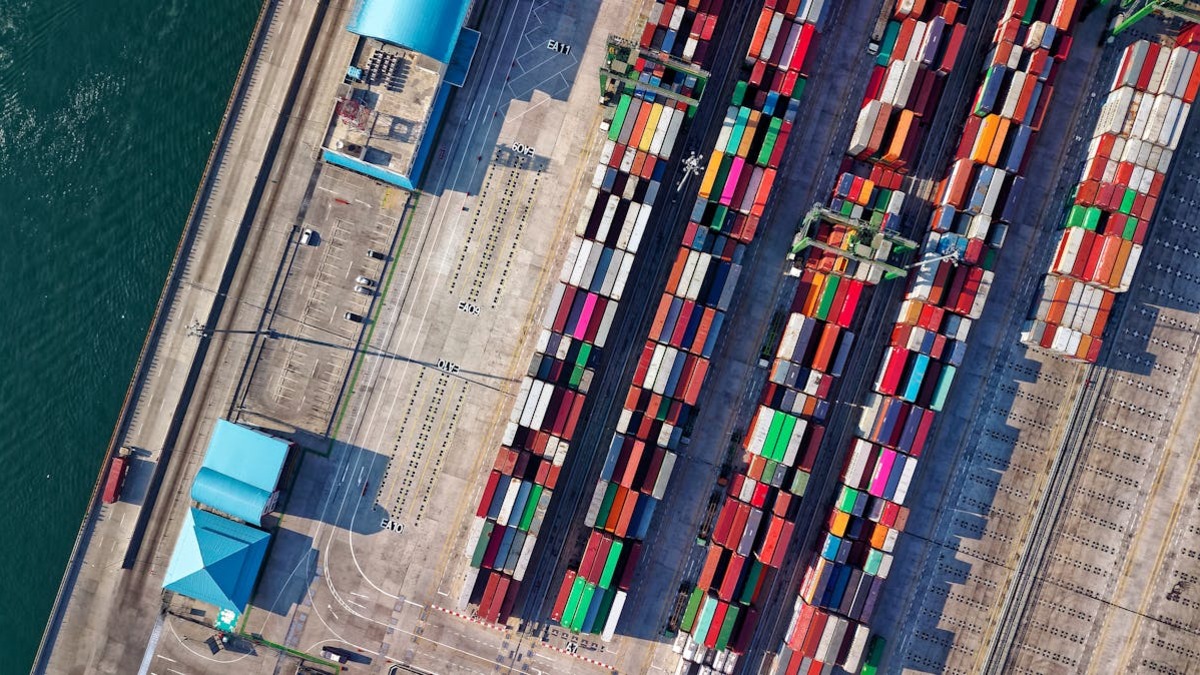 AI freight brokerage tools like Parade and Loadsmart reduce manual carrier sourcing by automating inbound quotes and load matching.
Source: pexels.com
AI freight brokerage tools like Parade and Loadsmart reduce manual carrier sourcing by automating inbound quotes and load matching.
Source: pexels.com
The platform has processed 12 million AI conversations and $40 billion in freight transacted. Parade has also raised $17M from I Squared Capital specifically to expand its AI capabilities.
Pricing: Not publicly disclosed. Parade is enterprise-facing and requires a sales conversation. Given the TMS integration requirement and enterprise customer base, expect custom per-seat or per-load pricing.
Best for: Freight brokerages and 3PLs with an existing TMS and enough carrier volume to make automation pay for itself - typically 50+ loads per day. If you're a small regional broker, the ROI math gets harder.
Loadsmart - Digital Freight Brokerage
Loadsmart takes a different approach. It isn't just a tool you overlay on your existing operation - it's an actual freight brokerage that uses AI for load matching, pricing, and carrier management. Shippers work with Loadsmart as their carrier, and the AI handles the back-end matching.
The platform covers FTL, LTL, partial truckload, and drayage. Its dynamic pricing model - called Reliable Contracts - promises 100% primary tender acceptance regardless of market conditions. The underlying machine learning matches loads to available carriers in seconds and adjusts pricing based on current market signals rather than fixed contract rates.
FreightIntel AI is the analytics layer. Connect your historical freight data and it delivers recommendations framed around cost reduction and carrier performance, similar to how a seasoned transportation manager would analyze lanes. Loadsmart claims up to 20% freight cost reduction for shippers who move from legacy brokerage arrangements to its dynamic pricing model.
Pricing: Not publicly listed. Loadsmart operates as a managed transportation partner, so costs depend on freight volume, lanes, and service level. Contact their sales team for a quote.
Best for: Mid-market shippers looking for a managed freight solution rather than software they have to run themselves. Particularly useful for companies that don't have a dedicated transportation function.
Customs and Trade Compliance
Customs compliance is one of the most document-intensive, error-prone parts of logistics. The manual process - reading invoices, looking up HS codes, preparing declarations - is exactly the kind of work AI handles well. The tools in this category are reducing a 30-minute manual filing to under five minutes and claiming accuracy rates that beat human operators.
That accuracy claim matters. A wrong HS code means duties assessed at the wrong rate, potential compliance flags, and sometimes shipment holds. The bar for AI in customs is higher than in routing or demand forecasting, because the errors have direct regulatory consequences.
iCustoms - AI Trade Compliance Platform
iCustoms is the most complete customs AI platform I found for UK and EU operations. Its modular architecture covers intelligent document processing (iDP), product classification (iClassification), duty calculations (iZap), security screening, and country-specific filing systems for UK CHIEF/CDS, Irish AIS/AES, and EU submissions.
 AI customs platforms like iCustoms and KlearNow.AI cut declaration preparation time from 30+ minutes to under five minutes.
Source: pexels.com
AI customs platforms like iCustoms and KlearNow.AI cut declaration preparation time from 30+ minutes to under five minutes.
Source: pexels.com
The numbers iCustoms publishes are specific: 99% declaration accuracy, coverage across 28+ countries, and processing time reduced from 30 minutes to 3 minutes per entry. Users report recovering up to 25 hours per person per week from eliminated manual data entry. The company also claims 50-70% cost savings and 100% customer retention, which is a strong signal for a compliance-category product where switching costs are high.
The iClassification module covers HS code selection for 32+ countries - that's a meaningful breadth for importers dealing with multiple customs authorities. The security screening component runs sanctions checks against OFAC, UN, and EU watchlists in real time, which matters for any company shipping dual-use goods or trading with higher-risk counterparties.
Pricing: Subscription-based, starting from £1,000/month. Custom pricing based on business size and transaction volume.
Best for: Customs brokers, freight forwarders, and large importers/exporters in the UK and EU with significant declaration volumes. The pricing makes sense at 100+ entries per month; below that, the ROI becomes less clear.
KlearNow.AI - Customs Clearance for US Importers
KlearNow.AI focuses on the US import clearance process specifically, rather than the global coverage approach iCustoms takes. It connects importers, freight forwarders, and customs brokers on one platform and automates the documentation processing and entry preparation workflow.
The platform is trusted by 2,000+ importers and uses AI to automatically ingest trade documents, digitize them, and prepare customs entries for ACE/ABI submission. One published case study showed a company processing 300 entries per year hitting 30% cost savings per entry plus additional features.
KlearNow.AI introduced a fixed pricing model - removing the per-entry uncertainty that's common in customs brokerage billing. The platform also includes drayage marketplace functionality, connecting importers with drayage providers after goods clear customs. That pairing is genuinely useful: clearance and last-mile port drayage handled by the same system reduces coordination friction.
Pricing: KlearNow.AI uses a fixed pricing model rather than per-transaction billing. Specific rates aren't public - request a quote through their site.
Best for: US importers, freight forwarders, and customs brokers who want predictable clearance costs and don't need the global declaration coverage that iCustoms provides. Strong choice for companies with regular import volumes who've been burned by variable brokerage fees.
Supply Chain Visibility for SMBs
Most supply chain visibility platforms were built for enterprises. Project44 starts around $6,250/month. Blue Yonder starts at $100K annually. For SMBs - companies shipping 50 to 1,000 containers a year, running lean procurement teams - the market has historically been thin.
That gap is closing. Two platforms stand out in 2026 for SMB-accessible visibility.
Flexport - AI-Native Supply Chain Platform
Flexport occupies an interesting position. It started as a tech-enabled freight forwarder, and it's now moving into a full supply chain operating platform with AI at the core. The 2026 Winter Release is the most ambitious product update the company has done.
The headlining feature is Customs Auditor - an AI agent that reviews all past customs entries to identify errors, compliance mistakes, and opportunities for duty refunds. Flexport claims an entry error rate of 0.2%, which it says is 10x better than the industry average. For any company that's been using a legacy customs broker and hasn't audited its past entries, running this retrospective audit could recover real money.
Other Winter Release additions: AI Search for natural-language querying of your shipment data, Freight Optimization that evaluates every booking against live FCL, LCL, and consolidation options with claimed savings up to 10% per shipment, and Flexport Atlas, a real-time ocean network model that gives you forward visibility before you book.
The Digital Routing Guides feature automates enforcement of your own shipping rules - if your preferred carrier is unavailable, the system routes to your backup per your pre-defined rules, no manual intervention needed.
Pricing: Not publicly disclosed for most modules. Flexport acts as both broker and software provider, so pricing depends on whether you're moving freight through them or using the platform only. Their Winter Release features are described as no-cost additions for existing customers.
Best for: SMBs and mid-market companies already using or considering Flexport for freight forwarding who want AI-powered visibility without standing up a separate TMS. Also worth assessing for companies with legacy customs brokers who want to audit historical entries.
Wisor - AI Quoting and Revenue Platform for Freight Forwarders
Wisor is narrower than Flexport but solves a specific problem well: the manual, slow quoting process that most freight forwarders still run. A forwarder receiving a door-to-door quote request typically has to pull rates from multiple carrier contracts, calculate routing options, and build a proposal - a process that takes 30+ minutes. Wisor cuts that to 60 seconds.
The platform's Ignite feature is an AI agent embedded into Outlook and Gmail. It reads inbound quote requests, pulls relevant rates from your contract database, and drafts a complete response without leaving your email client. The rate management module centralizes carrier contracts and FAKs (Freight All Kinds rates), connects to your TMS or ERP, and keeps pricing current automatically.
Wisor claims a 85% reduction in quote turnaround time. The efficiency argument is about winning more business from the same sales headcount, not just reducing back-office cost.
Pricing: Not publicly disclosed. Demo-based sales process suggests custom enterprise pricing.
Best for: Freight forwarders with active sales operations who are losing deals because competitors quote faster. Also useful for forwarders managing complex multi-modal rate structures across many carrier contracts.
Head-to-Head Comparison
| Tool | Category | Pricing | Target User | Key AI Feature |
|---|---|---|---|---|
| Parade | Freight brokerage | Custom (enterprise) | 3PLs and brokerages with TMS | CoDriver: automated carrier call/email handling |
| Loadsmart | Digital freight | Custom (volume-based) | Mid-market shippers | Dynamic load matching and pricing |
| iCustoms | Customs compliance | From £1,000/month | Customs brokers, freight forwarders | HS classification across 32+ countries |
| KlearNow.AI | Customs clearance | Fixed pricing (custom) | US importers | Fixed-fee entry automation and ACE/ABI filing |
| Flexport | Supply chain visibility | Custom | SMBs and mid-market | Customs Auditor retrospective compliance review |
| Wisor | Freight quoting | Custom (enterprise) | Freight forwarders | AI quoting from email inbox in 60 seconds |
Best Pick Recommendations
Best freight brokerage AI overall: Parade. The CoDriver product is solving a real operational problem - carrier outreach is one of the highest-labor activities in a brokerage, and automating quote intake at 4x volume without adding headcount has a clear ROI. Requires an existing TMS.
Best for shippers who don't want to manage a broker: Loadsmart. You get digital freight brokerage with AI-driven pricing built in. If you're managing freight through a traditional broker relationship and losing on price transparency, Loadsmart's 100% primary tender acceptance model is worth assessing. Check out the best AI manufacturing tools and best AI procurement tools roundups for adjacent tooling that integrates with these platforms.
Best customs compliance tool: iCustoms for UK/EU-heavy operations with high declaration volumes. KlearNow.AI if you're an US importer who wants fixed-fee clearance and drayage in one platform.
Best emerging supply chain AI: Flexport's Customs Auditor. Retrospective customs entry auditing is an obvious application of AI that nobody had built well until now. The 0.2% claimed error rate versus the industry average benchmark is the kind of specific claim I can work with - if it holds up under independent review, this changes how companies think about their customs broker relationships.
One thing cuts across all six tools: none of them replace your need for operational data. The AI compounds what you already have - more carrier relationships, cleaner historical freight data, better HS code libraries. If your underlying data is poor, the AI outputs will be poor. Fix the data first.
Sources
- Parade: Capacity Management for Freight Brokerages - parade.ai
- Parade secures $17M from I Squared Capital - FreightWaves
- Loadsmart: Freight Brokerage and Software for Shippers - loadsmart.com
- iCustoms: AI Trade Compliance Software - icustoms.ai
- KlearNow.AI: Digital Trade Transformation - klearnow.ai
- Flexport 2026 Winter Release - flexport.com
- Wisor: AI Freight Forwarding Revenue Platform - wisor.ai
- Top Customs Compliance Software for Global Companies 2026 - getsphere.com
- KlearNow.AI Reviews 2026 - sourceforge.net
- Flexport Winter Release 2026: New tools that reduce risk - sourcealliance.net
✓ Last verified April 25, 2026

