
Best AI Security Scanning Tools 2026
A hands-on comparison of the top AI-powered security scanning platforms in 2026: Snyk, Semgrep, Aikido, Checkmarx One, GitHub Advanced Security, and ZeroPath - ranked by false positive rates, pricing, and real-world detection accuracy.
 10 min read
AI-generated code now appears in 93% of enterprise development workflows. About 45% of that code introduces known security flaws, and attacks exploiting application vulnerabilities rose 44% in 2026 according to a Veracode analysis. Security scanning tools have had to evolve fast to keep up - not just scanning faster, but understanding code semantics well enough to catch what AI coding assistants produce.
TL;DR
- Snyk is the strongest all-in-one pick for teams that want SAST + SCA + container + IaC in one platform with a free tier that actually covers solo developers
- Semgrep at $30/contributor/month beats Snyk on false positive reduction for pure SAST, and the open-source engine stays free with no contributor cap
- GitHub Advanced Security is the obvious choice if your team is already on GitHub Enterprise - native Copilot Autofix integration closes the scan-to-fix loop without extra tooling
Traditional SAST tools were producing false positive rates between 30% and 70% as recently as 2024. That's a lot of noise for security engineers who are already stretched thin. The 2026 generation of AI-native scanners uses semantic code understanding and data-flow analysis to cut those numbers dramatically - Semgrep claims 98% false positive reduction on high-severity dependency findings, Cycode logged a 2.1% false positive rate on the OWASP Benchmark.
I've spent time with each of these platforms across real codebases. The picks below are based on verified pricing, published benchmark scores where available, and what customers report shipping to production.
Pricing Snapshot
| Tool | Free Tier | Paid Start | Enterprise |
|---|---|---|---|
| Snyk | 200 OS tests/month, 100 SAST | $25/dev/month (Team) | Custom |
| Semgrep | 10 contributors, 50 repos | $30/contributor/month | Custom |
| Aikido | Free plan (limited) | $314/month flat | Custom |
| Checkmarx One | No | Custom only | Custom |
| GitHub Adv. Security | No (GitHub Free) | $30/committer/month | Included in Enterprise |
| ZeroPath | 1 repo, free forever | $200/month (Core) | Custom |
Snyk - The Platform Play
Snyk covers the most ground of any tool in this comparison. Five products ship under one platform: Snyk Code (SAST), Snyk Open Source (SCA), Snyk Container, Snyk IaC, and Snyk Cloud. The underlying engine for SAST is DeepCode AI, a hybrid that combines symbolic analysis with ML trained on 25 million data flow cases across more than 19 supported languages.
What the Numbers Say
Snyk claims OWASP Benchmark scores 20 percentage points above competitors, with auto-fix accuracy around 80%. The independent academic picture is less flattering - one published benchmark found Snyk Code had the lowest detection rate among four tools tested. Vendor benchmarks and independent studies don't always agree, which is worth knowing before you take the OWASP marketing at face value.
Pricing
The Free tier gives unlimited contributing developers with meaningful test limits: 200 Open Source tests/month, 100 Snyk Code tests/month, and unlimited IaC tests. That's genuinely usable for individual developers and small open-source maintainers.
The Team plan runs $25/developer/month (minimum 5 developers, max 10). The newer Ignite plan at $1,260/year per contributing developer unlocks unlimited tests, 10 DAST targets, and advanced analytics - this is where the full SAST + SCA + IaC + Container bundle becomes practical for commercial teams under 50 developers. Enterprise is custom.
Best For
Teams that need a single vendor covering code, dependencies, containers, and IaC across a mixed stack. The platform breadth is hard to match at the Team price point.
Semgrep - Developer-Centric SAST
Semgrep takes a different architectural bet. The open-source core is a pattern-matching engine that runs locally or in CI - no data leaves your environment. Semgrep Assistant adds LLM-powered triage, noise filtering, and remediation guidance on top of the static analysis results. The result is a stack that separates detection (open-source engine, always free) from AI-assisted prioritization (paid).
What the Numbers Say
Semgrep's reachability-based analysis reduces false positives by up to 98% on high-severity dependency vulnerabilities, according to the company's documentation. AppSec teams using Semgrep report triaging 80% fewer false positives across SAST and SCA. These figures come from Semgrep's own reporting, so treat them as upper-bound estimates - your mileage will vary by language and codebase structure.
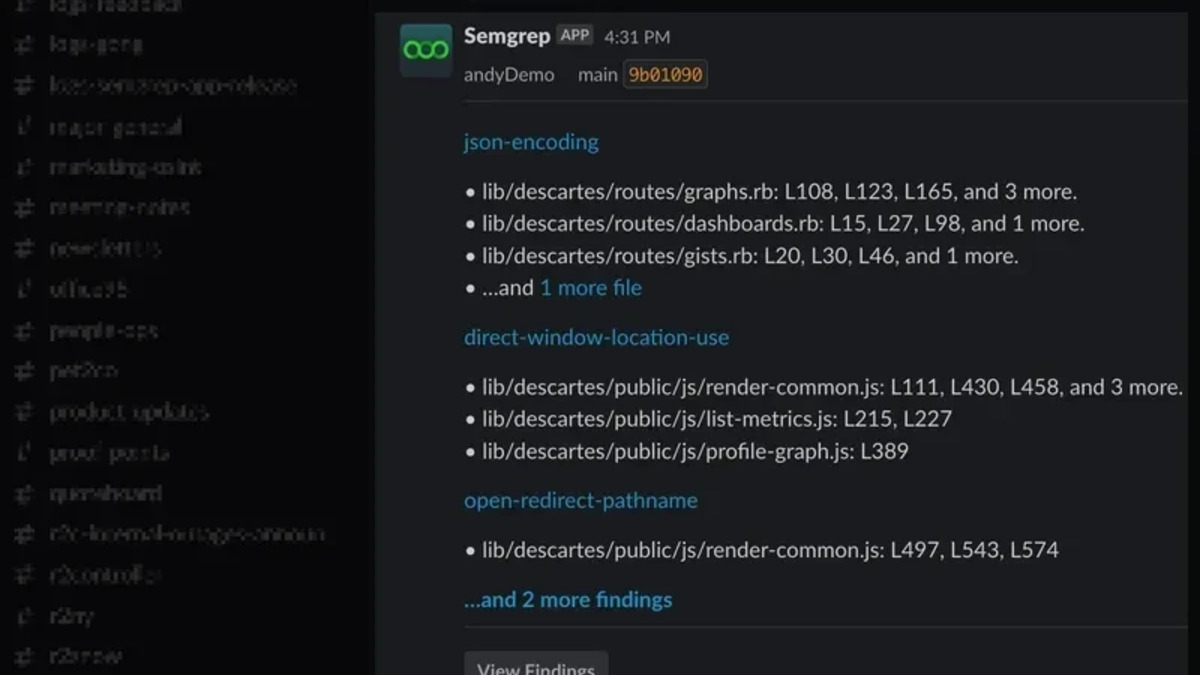 Semgrep's AppSec Platform combines the open-source static analysis engine with AI-powered triage via Semgrep Assistant.
Source: semgrep.dev
Semgrep's AppSec Platform combines the open-source static analysis engine with AI-powered triage via Semgrep Assistant.
Source: semgrep.dev
Pricing
Free tier: 10 contributors, 50 repos, including cross-file analysis with Pro rules and AI-powered triage. That's a real free tier, not a 14-day trial.
Teams plan: $30/contributor/month, which bundles Code, Supply Chain, and Secrets. Individual modules are $15/contributor/month each. Enterprise adds on-prem SCM support, custom CI/CD integrations, and unlimited repositories at custom pricing. Based on Vendr transaction data, multi-year enterprise deals commonly negotiate 20-30% below list.
Best For
Security teams that want transparency in how detection works and need the flexibility to write custom rules for proprietary code patterns. The open-source engine is also a strong choice for teams with strict data residency requirements.
Aikido Security - The Developer-First Bundle
Aikido's pitch is consolidation: 15-plus security scanners (SAST, SCA, secrets, container, IaC, DAST, and malware detection in dependencies) in one interface, with AI-powered AutoTriage and AutoFix to cut noise. The platform claims 95% noise reduction and 10-plus hours saved per developer per week.
Architecture Notes
AutoFix generates reviewable pull requests across code, dependencies, infrastructure, and containers. That's meaningful - the fix workflow being native to the platform (rather than requiring a separate PR in another tool) speeds up actual remediation. The IaC scanning covers Terraform, CloudFormation, and Kubernetes configurations.
Pricing
Aikido uses flat-rate pricing rather than per-developer billing. A free-forever developer plan exists with limited features. The Basic plan starts at $314/month, Pro at $629/month, both on annual billing. Scale pricing is custom. Startups under $1.5M in funding can get up to 30% off.
Exact per-feature pricing isn't published on their site - the page directs you to contact sales for specifics beyond the tier labels. That's a minor friction point, but the flat-rate model does make budgeting more predictable than per-developer pricing once you're past the 15-20 developer mark.
Best For
Small to mid-size teams that want broad coverage across the SDLC without managing multiple vendor contracts. The bundle pricing beats assembling equivalent point solutions separately.
Checkmarx One - Enterprise ASPM
Checkmarx is the incumbent in enterprise SAST, and Checkmarx One brings that heritage into a cloud-native ASPM platform covering AI SAST, DAST for AI, AI supply chain security, IaC, and SCA. The Checkmarx Assist family - Developer Assist, Triage Assist, and Remediation Assist - embeds security intelligence across the development lifecycle, from code review through production deployment.
Differentiators
Checkmarx One covers AI-created code as a specific threat surface, not just applying existing SAST rules to AI-generated files. The platform includes dedicated scanning for AI-specific attack patterns and supply chain risks from AI models and libraries. For organizations with a formal AppSec program that needs to report on coverage and compliance, the ASPM layer provides portfolio-wide visibility that simpler tools don't offer.
The incremental scanning mode (only scanning changed code) meaningfully speeds up CI/CD feedback loops in large monorepos.
Pricing
Checkmarx publishes no list pricing. Costs are per contributing developer and vary by modules selected, deployment model (SaaS vs. self-hosted), and contract length. Multi-year commitments normally unlock 15-30% lower annual pricing. Budget from mid-market upward - this isn't a tool you buy on a credit card.
Best For
Enterprise security programs that need ASPM, compliance reporting, and coverage across AI-created code at scale. The pricing model makes it a poor fit for teams under 50 developers.
GitHub Advanced Security - Platform-Native Choice
If your team is on GitHub, GitHub Advanced Security (GHAS) is worth evaluating before anything else. CodeQL powers the SAST layer, running dataflow analysis on compiled or interpreted code to find taint paths from user input to dangerous sinks. Secret scanning covers 200-plus token types from 150-plus service providers with push protection to block commits before secrets land in the repo.
Copilot Autofix
The killer feature in 2026 is Copilot Autofix, which generates fix suggestions directly in the pull request interface when CodeQL or secret scanning flags something. The scan-to-fix loop stays inside GitHub - no context switching to a separate security portal. That workflow integration alone drives adoption in teams that have historically ignored security scanner output because acting on it required too much effort.
 GitHub Advanced Security surfaces code scanning alerts inline in pull requests, with Copilot Autofix creating remediation suggestions without leaving the review interface.
Source: github.com
GitHub Advanced Security surfaces code scanning alerts inline in pull requests, with Copilot Autofix creating remediation suggestions without leaving the review interface.
Source: github.com
Pricing
Code Security (CodeQL scanning, dependency review, Copilot Autofix) costs $30/active committer/month. Secret Protection (secret scanning, push protection, custom patterns) costs $19/active committer/month. Billing is per "active committer" - anyone who pushed at least one commit in the last 90 days, not per seat. GHAS is bundled in GitHub Enterprise plans.
Best For
Teams already on GitHub Enterprise. The native integration removes setup friction and the per-active-committer billing model is friendly for teams with variable commit volume.
ZeroPath - AI-Native Challenger
ZeroPath is the newest entrant in this comparison, reaching Top 10 Finalist at RSAC 2026 Innovation Sandbox. The platform claims 2x more vulnerabilities detected with 75% fewer false positives compared to pattern-based SAST. The focus is on vulnerability classes that pattern matchers methodically miss: authentication bypasses, IDORs, and business logic flaws.
Technical Approach
ZeroPath builds a semantic model of what the code is doing rather than matching syntax patterns. That semantic understanding is what catches logic bugs - if a developer forgot to check ownership before returning a database record, a pattern matcher won't catch it because there's no "bad pattern" to match. A semantic model that understands data flow and access control intent can.
Pricing
ZeroPath has a free personal plan (1 repo, unlimited PR scans). Core is $200/month for up to 25 repos. Team runs $1,000/month base plus $60/developer/month. Enterprise is custom. A 14-day free trial is available on Team.
Best For
Security-conscious development teams building APIs or applications where authorization logic is complex. If your threat model centers on IDOR and broken access control, ZeroPath's detection approach is better suited than pattern-based SAST.
How to Pick
No single tool wins across all criteria. The clearest decision tree:
Already on GitHub Enterprise? Start with GHAS. The Copilot Autofix integration closes the loop faster than any third-party tool, and the per-active-committer pricing is predictable.
Solo developer or small open-source project? Snyk Free covers the basics across SAST, SCA, and container with no time limit. Semgrep Free is a strong alternative if you want a pure SAST tool with more granular rule control.
Team of 5-30 developers, mixed stack? Snyk Team at $25/developer or Semgrep Teams at $30/contributor. Snyk wins on breadth; Semgrep wins on false positive rates for pure SAST.
Need all-in-one coverage on a flat fee? Aikido's bundle pricing makes more sense than assembling point solutions once you're covering 5-6 different scanning categories.
Enterprise AppSec program with compliance requirements? Checkmarx One is the incumbent for a reason. The ASPM layer and compliance reporting depth isn't matched by the developer-focused tools above.
Authorization logic is your primary threat surface? ZeroPath's semantic approach to IDOR and business logic detection justifies the $200-$1,000/month price range for teams where that vulnerability class is high-stakes.
If you're assessing these tools against your CI/CD pipeline, check our best AI DevOps CI/CD tools piece for how they slot into deployment workflows. Teams using AI coding assistants should also read our best AI code review tools comparison - scanning and review are different workflows that work best in parallel.
Sources
- Snyk AI Security Fabric - Plans and Pricing
- Snyk DeepCode AI - Technical Overview
- Semgrep Pricing and Plans
- Semgrep: 9 Best SAST Tools in 2026 - Accuracy, Speed, and Noise Compared
- Aikido Security - Top AI Security Tools
- Checkmarx One - AI-Powered Application Security Testing Platform
- Checkmarx One - ASPM Packaging and Pricing
- GitHub Advanced Security - License Billing Documentation
- ZeroPath - 7 Best SAST Tools in 2026
- Cycode - Next-Generation SAST and 2.1% False Positive Rate
- DAST Tools: Complete Buyer's Guide 2026
- Veracode - AI-Generated Code Security Risks
- GitHub About GitHub Advanced Security - Docs
✓ Last verified April 25, 2026

