
Best AI Fine-Tuning Platforms in 2026
A data-driven comparison of 14 managed and open-source fine-tuning platforms, with verified pricing, supported methods, and a decision matrix to pick the right tool for your workload.
 17 min read
Fine-tuning used to mean renting an 8x A100 cluster for a week and praying your training run converged. That changed fast. In 2026 you can start a LoRA job on a 7B model for under $2, deploy the resulting adapter in under a minute, and serve it at standard inference rates with no extra hosting fees. The tooling sprawl that followed is real, though - there are now at least a dozen legitimate options and picking the wrong one costs money, time, or both.
TL;DR
- For managed cloud with no GPU ops, Together AI and Fireworks offer the lowest per-token training costs ($0.48-$0.50/M for 8B models) with clean APIs and fast serving integration
- Unsloth is the fastest open-source LoRA library - 2x speed and ~70% less VRAM than vanilla HuggingFace training on the same hardware
- Proprietary model fine-tuning is split: OpenAI supports SFT and DPO on GPT-4o-mini ($3/1M training tokens); Anthropic only offers Claude 3 Haiku fine-tuning through Amazon Bedrock, not via their native API
How We Picked These
The metric that matters most for fine-tuning platforms is total cost of a completed run - not the advertised per-token or per-GPU-hour rate, but what you actually pay including failed jobs, misconfigured runs that burn compute before erroring out, and the serving costs that follow once the adapter is deployed. Several platforms look cheap on training costs and expensive on inference; others do the inverse. We modeled both components for realistic dataset sizes before ranking anything.
For managed cloud platforms, we verified pricing against official documentation in April 2026 and ran test jobs where free tiers or trial credits allowed it. For open-source libraries, we cross-referenced published benchmarks on memory usage and training speed, and specifically looked for independent measurements rather than the numbers on the project's own README. Vendor claims about "2x speedup" were traced back to their methodology and hardware configuration before being cited.
We excluded platforms in closed beta, tools that only support a single proprietary model family with no portability, and wrappers that add a UI over existing libraries without meaningful infrastructure value. We did not include platforms where pricing required contacting sales without any public rate card - if you can't evaluate cost without a call, it doesn't belong in a comparison guide.
Fine-tuning costs and model support change frequently - Anthropic's fine-tuning availability, for instance, was in flux throughout Q1 2026. Treat the pricing table as an April 2026 snapshot and verify current rates before starting a job.
This article covers 14 platforms split across three groups: managed cloud services (where you pay per token or per GPU-hour), open-source frameworks (where you bring your own hardware), and DIY GPU cloud (where you rent raw compute and assemble the stack yourself). I'm not going to declare a single winner because the right pick depends entirely on your model choice, budget, and whether you have an ML team.
Before choosing a platform, it helps to understand the cost tradeoffs involved. Our fine-tuning costs comparison breaks down GPU-hour math vs per-token pricing at different dataset sizes - worth reading before you commit to a pricing model.
The Comparison Table
| Platform | Model Support | Methods | Training Cost (8B LoRA) | Free Tier | Serving Integration |
|---|---|---|---|---|---|
| OpenAI | GPT-4o, 4o-mini, GPT-4.1 | SFT, DPO | $3.00/1M tokens | No | Yes, same endpoint |
| Vertex AI (Gemini) | Gemini 2.0/1.5 Flash, Pro | SFT, RLHF | $3.00/1M tokens | No | Yes, same pricing |
| Together AI | 100+ open models, Llama 4, Qwen3 | SFT, LoRA, Full FT, DPO | $0.48/1M tokens | No | Yes, serverless |
| Fireworks AI | 400+ open models | SFT, DPO, LoRA, RFT | $0.50/1M tokens | No | Yes, base model pricing |
| OpenPipe | Llama 3.1/3.3, Qwen 2.5 | SFT (LoRA) | $0.48/1M tokens | 30-day trial | Yes, hosted endpoints |
| Predibase | 50+ open models | SFT, LoRA, Turbo LoRA | ~$0.50/1M tokens | 1M tokens/day free | Yes, LoRAX server |
| HF AutoTrain | Any HF Hub model | SFT, LoRA, VLM, tabular | Compute cost only | Local: free | No (download and self-serve) |
| Databricks Mosaic AI | Open models + custom | SFT, RLHF, pre-training | DBU-based (~$0.07+/DBU) | No | Yes, Unity Catalog |
| Lamini | Llama 3.1, Mistral, Phi 3 | SFT, LoRA (MoME) | $0.50/1M tokens | $300 credits | Yes, Lamini API |
| Modal Labs | Any (bring your own) | Any (you configure) | ~$1.10/hr (A10G) | $30/month credits | Serverless functions |
| RunPod | Any (bring your own) | Any (you configure) | $0.34/hr (RTX 4090) | No | Self-deploy on pods |
| Replicate | FLUX, Llama, select others | LoRA (FLUX focus) | GPU-hour billing | No | Serverless, fast-boot |
| Unsloth | 500+ models (local) | LoRA, QLoRA, SFT, GRPO | Hardware cost only | Open-source | No (export to vLLM, etc.) |
| Axolotl | Any HF model | SFT, LoRA, DPO, ORPO, RLHF | Hardware cost only | Open-source | No (export and self-serve) |
| LLaMA Factory | 100+ LLMs + VLMs | SFT, DPO, PPO, KTO, ORPO | Hardware cost only | Open-source | OpenAI-compatible API |
Anthropic's native API doesn't currently offer fine-tuning. Claude 3 Haiku fine-tuning is available via Amazon Bedrock (US West Oregon only).
Managed Cloud Platforms
OpenAI Fine-Tuning - Best for GPT-4o-mini Production
OpenAI's fine-tuning API is the easiest path if you're already using their models. Training is priced at $3.00/1M tokens for GPT-4o-mini and GPT-4o, and the new GPT-4.1 family drops training to roughly $0.80-3.00/1M tokens depending on variant. GPT-3.5 Turbo remains at $8.00/1M training tokens, which makes it hard to justify over newer options.
Supported methods include supervised fine-tuning and DPO (Direct Preference Optimization), which was added in late 2024 and remains one of the few managed platforms where you can do preference-based alignment training without writing your own reward model code. Vision fine-tuning is also supported on GPT-4o.
The catch is model lock-in. You're training on OpenAI infrastructure, the weights stay there, and your fine-tuned model runs at inference rates that are higher than open-weight alternatives at the same capability tier. The formula is: total training cost = training tokens x epochs x price/token. For a 50K-row instruction dataset at 512 tokens/row, 3 epochs on GPT-4o-mini runs about $23. Serving that fine-tuned model costs $0.30/1M input and $1.20/1M output - compare that to Together AI's fine-tuned Llama 3.1 8B at $0.18/1M in/out.
No free tier. OpenAI does offer an inference discount if you opt into data sharing during job creation.
Vertex AI (Gemini Tuning) - Best for GCP-native Stacks
Google's fine-tuning story runs through Vertex AI and currently covers Gemini 2.0 Flash ($3.00/1M training tokens), Gemini 2.0 Flash Lite ($1.00/1M training tokens), and older 1.5-generation models. Supervised fine-tuning for Gemini 3.x is not yet available as of April 2026, per Google's own developer forum.
The serving economics are good: tuned models run at base model inference rates with no markup. A fine-tuned Gemini 2.0 Flash costs $0.15/1M input and $0.60/1M output - competitive for a managed proprietary model. Training costs are calculated the same way as OpenAI: total tokens x epochs.
Vertex is the right choice for teams already on GCP who want to avoid managing extra infrastructure. The data governance story through BigQuery and Unity Catalog-adjacent tooling is also a practical selling point for regulated industries. For teams outside GCP, the complexity of Vertex IAM, project setup, and service accounts adds friction that Together AI or Fireworks doesn't.
Together AI - Best Price-per-Token for Open Models
Together AI's fine-tuning pricing is the most competitive for open-weight models. LoRA on models up to 16B is $0.48/1M training tokens. Full fine-tuning on the same size is $0.54/1M - a small premium worth paying if you need to update all parameters. Larger models scale to $1.50/1M (17B-69B) and $2.90/1M (70B-100B) for LoRA.
Model support is the broadest of any managed platform. The supported list covers Llama 4 (including Maverick and Scout), Qwen3 and Qwen3.5 (including MoE variants), Gemma 3, DeepSeek R1 and V3, Kimi K2, and others. They add new open-source models within days of release, which matters when you're trying to fine-tune the latest architecture rather than last year's.
Full fine-tuning on dedicated 8xH100 hardware is available at $12/hr for Llama 8B and $22/hr for 70B. This is for teams that need full parameter updates rather than LoRA adapters.
Fine-tuned models deploy to Together's serverless inference, so you get one workflow from training to serving. No cold-start billing penalties.
Fireworks AI - Best for RL Fine-Tuning
Fireworks AI matches Together's per-token rates for LoRA ($0.50/1M for sub-16B models) and adds one capability that stands out: Reinforcement Fine-Tuning (RFT) as a first-class product. RFT is billed at on-demand deployment rates per GPU-hour rather than per token, so it suits agentic workloads where you want to optimize for outcome-based rewards rather than next-token prediction.
The full pricing grid by model size and method is thorough: LoRA SFT at $0.50/1M, LoRA DPO at $1.00/1M, full parameter SFT at $1.00/1M, full parameter DPO at $2.00/1M - for sub-16B. Prices roughly double at 16B-80B and again at 80B-300B. No free fine-tuning tier, but fine-tuned models serve at base model pricing, same as Together.
Fireworks hosts 400+ models and normally adds new releases within days. Vision model fine-tuning uses the same token-based pricing, which simplifies budgeting for multimodal tasks.
OpenPipe - Best for Prompt-to-Fine-Tune Pipelines
OpenPipe's model is different from the other managed platforms. Rather than uploading a static training dataset, you wrap your existing API calls with the OpenPipe SDK, which logs all your production prompts and completions. You then create a training job from that logged traffic.
This makes OpenPipe unusually effective for the most common real-world scenario: you're running GPT-4 in production for a well-defined task (extraction, classification, rewriting), you want to replace it with a cheaper fine-tuned model, and you don't want to manually curate training data. The SDK captures it automatically.
Training costs: $0.48/1M for 8B and smaller, $1.50/1M for 14B, $1.90/1M for 32B, $2.90/1M for 70B+. Inference on OpenPipe-hosted models runs $0.30/$0.45 per 1M in/out for Llama 3.1 8B. Hourly compute units are available for lower-volume deployments.
No free tier currently - OpenPipe offers a 30-day free trial instead. The GitHub repo shows active development toward RL-for-agents capabilities, which positions it as more than a fine-tuning wrapper long-term.
Predibase - Best LoRA Adapter Serving
Predibase's technical differentiation is LoRAX, their open-source multi-LoRA inference server that can serve hundreds of fine-tuned adapters on a single GPU by dynamically swapping them. This matters when you're building multi-tenant systems or A/B testing many task-specific adapters without spinning up separate endpoints.
Predibase was picked up by Rubrik in June 2025 and has pivoted toward "agentic AI governance" positioning. The fine-tuning product still functions but the company's roadmap is now more broadly focused. Worth monitoring how this affects standalone fine-tuning support.
Pricing: serverless inference is free up to 1M tokens/day and 10M tokens/month. Training cost is competitive with Together and Fireworks. The Turbo LoRA variant - a proprietary method that improves inference throughput by up to 3.5x for single requests - is priced at 2x standard fine-tuning rates.
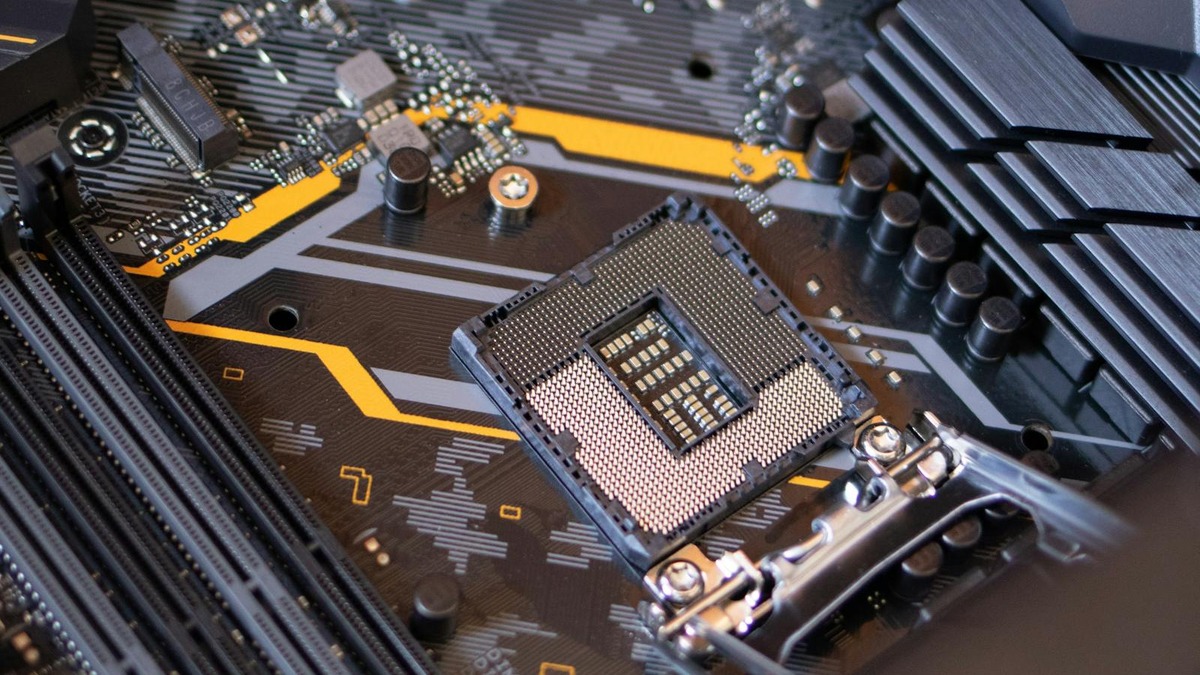 Fine-tuning costs trace directly to GPU compute. Managed platforms abstract this, but the hardware bill ultimately determines your per-token economics.
Source: pexels.com
Fine-tuning costs trace directly to GPU compute. Managed platforms abstract this, but the hardware bill ultimately determines your per-token economics.
Source: pexels.com
Databricks Mosaic AI - Best for Enterprise Data Governance
If your training data lives in Databricks or your compliance requirements demand tight lineage tracking, Mosaic AI Training is the serious answer. It handles full fine-tuning and pre-training from scratch (on 3,000+ GPUs for large runs), integrates with Unity Catalog for data governance, and supports Agent Bricks for synthetic data generation and automated eval.
Pricing is DBU-based, which makes direct comparison tricky. DBU rates for AI workloads start at $0.07/DBU for foundation model serving. The infrastructure abstraction is high: Databricks manages the distributed training orchestration so you don't have to configure FSDP or Megatron-LM yourself.
Not the right tool for a small team doing one-off fine-tunes. The overhead of the Databricks platform is real. But for enterprises that already pay for a Databricks contract and have compliance requirements around where training data goes, it's the most integrated option.
Lamini - Best for Private Deployment
Lamini charges $0.50/1M inference tokens and $0.50 per tuning step (with linear scaling for multi-GPU runs). New users get $300 in free credits. The platform supports a "Memory Tuning" approach that creates MoME (Mixture of Memory Experts) models - a technique Lamini developed internally for reducing hallucination on factual tasks.
Self-managed deployment is available for teams that need to run the platform on-premise, in their own VPC, or in air-gapped environments. This per-GPU licensing model makes Lamini competitive for enterprises that can't send training data to third-party clouds.
Open-Source Frameworks
Unsloth - Fastest LoRA on Consumer Hardware
Unsloth is the fastest open-source library for LoRA and QLoRA fine-tuning, reaching roughly 2x faster training than vanilla HuggingFace/PEFT pipelines with approximately 70% less VRAM through custom CUDA kernels and memory-efficient attention. A 7B model with QLoRA fits in 8 GB VRAM; a 70B fits in 46 GB on a single A100.
The library supports 500+ models including text, vision, and audio, and covers training objectives from basic SFT to GRPO (Group Relative Policy Optimization) for reasoning tasks. Unsloth Studio - a no-code web UI for model loading, dataset setup, and live training monitoring - runs locally on Linux, Windows, macOS, and WSL.
One practical note on LoRA vs QLoRA: LoRA uses 16-bit precision and is faster and more accurate but uses 4x more VRAM than QLoRA. QLoRA's 4-bit quantization gives up a small amount of accuracy in exchange for fitting larger models on smaller GPUs. Unsloth's dynamic 4-bit quantization reduces the accuracy gap to near-negligible levels for most tasks.
No managed endpoint - you train locally and export to GGUF, Safetensors, or LoRA adapter format, then deploy via vLLM, llama.cpp, or another inference server.
Axolotl - Best for Multi-GPU Production Pipelines
Axolotl is the go-to framework for teams that want YAML-configured training pipelines with full distributed training support. Its v0.8.x release supports FSDP2 with Fully Sharded Data Parallelism, Tensor Parallelism, and Context Parallelism that can be composed across nodes. ScatterMoE LoRA enables LoRA directly on MoE expert weights using custom Triton kernels.
Recent 2026 additions include support for Qwen3.5, Mistral Small 4, GLM-4.7-Flash, and GLM-4.5-Air, plus the Distributed Muon Optimizer for FSDP2 pretraining. Setting up an 8x H100 fine-tuning run is a YAML config away.
Axolotl supports SFT, LoRA, DPO, ORPO, KTO, PPO, and full RLHF reward modeling - the most comprehensive method support of any open-source framework. Databricks recently published a guide using Axolotl on their serverless GPU compute, which shows how it layers well onto cloud infrastructure.
The learning curve is real. Axolotl expects you to know what you're doing with dataset formatting, model sharding strategy, and gradient checkpointing. It's not a beginners' tool.
LLaMA Factory - Best for Quick Experiments with a Web UI
LLaMA Factory (presented at ACL 2024) is the most accessible open-source fine-tuning framework. Its LlamaBoard web UI covers the full workflow - model selection, dataset formatting, hyperparameter configuration, and training monitoring - without writing a line of code.
The supported method list is wide: SFT, DPO, PPO, KTO, ORPO, reward model training, and recent additions including OFT and OFTv2 (Orthogonal Fine-Tuning, a parameter-efficient method that constrains updates to an orthogonal subspace). The framework exports to Hugging Face Hub directly or serves via an OpenAI-compatible API with vLLM or SGLang backends.
Supports 100+ models including Llama, Mistral, Qwen, Gemma, Baichuan, ChatGLM, Phi, and multimodal variants. Experiment tracking integrates with TensorBoard, WandB, MLflow, and SwanLab.
LLaMA Factory is where most practitioners start before moving to Axolotl when they need distributed training or Unsloth when they need speed. It's the Swiss Army knife for local experimentation.
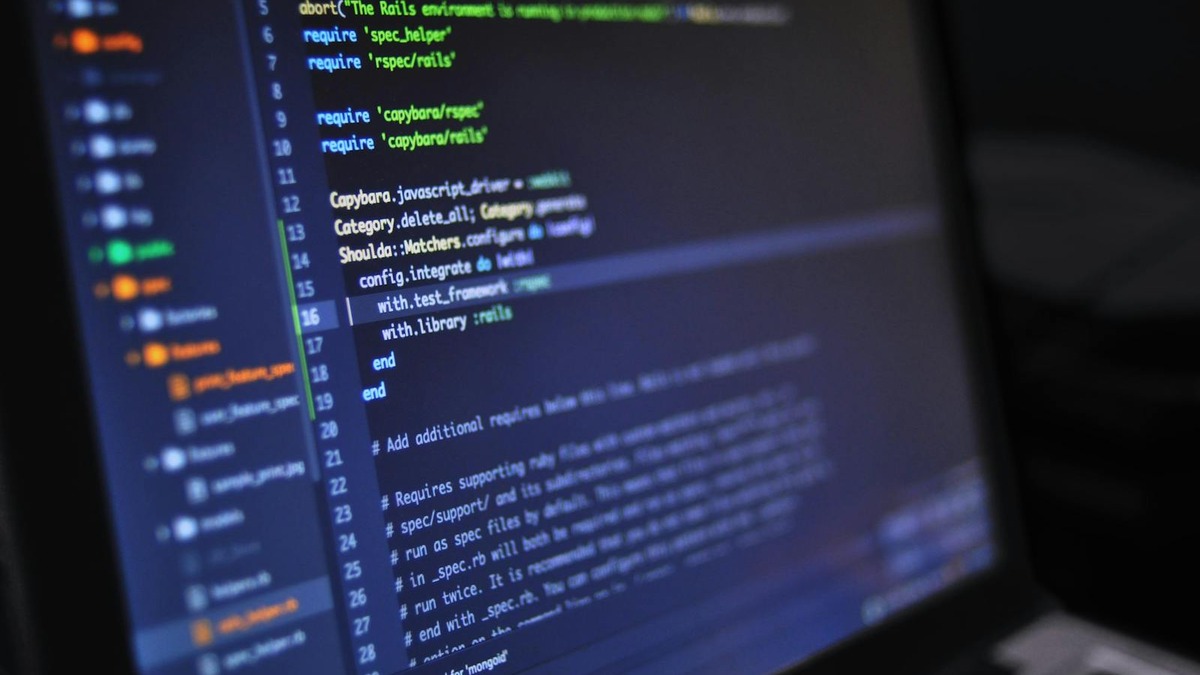 Open-source frameworks like Axolotl and LLaMA Factory require comfort with Python config files and training loop debugging - the tradeoff for zero platform costs.
Source: pexels.com
Open-source frameworks like Axolotl and LLaMA Factory require comfort with Python config files and training loop debugging - the tradeoff for zero platform costs.
Source: pexels.com
DIY GPU Cloud
Modal Labs - Serverless GPU for Fine-Tuning
Modal charges per second of GPU use: H100 at $3.95/hr ($0.001097/sec), A100 80GB at ~$2.50/hr, A10G at ~$1.10/hr. The Starter plan includes $30/month in free credits; Team plan ($250/month) bumps that to $100/month. Graduate students and researchers can apply for up to $10,000 in free credits.
The value is the serverless model. Modal spins up containers on demand, charges only for active time, and integrates Axolotl natively (their llm-finetuning repository is the reference implementation). You write Python, Modal handles the Docker packaging and GPU allocation. Multi-node clusters are supported for larger runs.
Not a fine-tuning platform per se - it's a compute substrate. You bring your framework (Axolotl, Unsloth, TRL) and Modal runs it. This is the right move for ML engineers who want cost efficiency without managing a GPU cluster.
RunPod - Cheapest H100 Access
RunPod offers the most accessible pricing for raw GPU compute. Community Cloud RTX 4090 from $0.34/hr, A100 80GB from $0.89/hr, H100 at $2.69/hr as of March 2026. Secure Cloud is higher (A100 from $1.89/hr) for workloads that need dedicated hardware guarantees.
There's no fine-tuning platform - you get a persistent pod or serverless container and run your own training stack. Community templates exist for common setups (vLLM, Stable Diffusion, PyTorch) but LLM fine-tuning templates vary in quality and freshness.
A 24-hour Axolotl run on an A100 costs about $21 on Community Cloud. The same job on AWS p4d.24xlarge costs over $88. If cost is the primary constraint and you're comfortable setting up your own training environment, RunPod is hard to beat.
Replicate - Simplest API for LoRA Fine-Tuning (FLUX focus)
Replicate's fine-tuning story in 2026 centers on FLUX image models. LoRA fine-tuning for FLUX.1 is available via a single API call - upload images, define your trigger word, and Replicate handles the training job. Fast-booting fine-tunes charge only for active processing time, not idle time.
LLM fine-tuning on Replicate is more limited. The platform uses standard hardware billing ($0.000225/sec for T4 up to $0.011200/sec for 8x A100) and you build on top of community-maintained training templates. Compared to Together AI or Fireworks, it's a more manual path for language model fine-tuning. Where Replicate excels is for image generation teams who want a managed LoRA training API that integrates directly with their existing Replicate inference workflow.
HuggingFace AutoTrain - Best No-Code Option for Broad Task Types
AutoTrain is free when run locally. When run in HuggingFace Spaces, you pay for compute by the minute based on hardware tier. You keep ownership of all trained models.
Supported tasks go beyond LLMs: text classification, token classification, seq2seq, image classification, visual language models, and tabular data. For a beginner who wants to fine-tune a small model for a classification task without writing Python, AutoTrain is the fastest path. For production-scale LLM fine-tuning, the lack of multi-GPU support in the Spaces UI and the limited method selection (mostly SFT, basic LoRA) makes it less suited than Axolotl or Together AI.
Best For X - Decision Matrix
Pick the right tool for your situation
| Goal | Recommended |
|---|---|
| First fine-tune, minimal setup | OpenPipe or Together AI |
| Cheapest production LoRA on open models | Together AI or Fireworks |
| Fastest local training, consumer GPU | Unsloth |
| Multi-GPU distributed training | Axolotl + Modal or RunPod |
| GPT-4o-mini task specialization | OpenAI Fine-Tuning |
| Enterprise data governance | Databricks Mosaic AI |
| LoRA adapter serving at scale | Predibase (LoRAX) |
| FLUX image model fine-tuning | Replicate |
| No-code experiments, beginners | LLaMA Factory (local) or HF AutoTrain |
| Reinforcement fine-tuning / RLHF | Fireworks RFT or Axolotl |
A note on proprietary vs open-weight: if you fine-tune OpenAI or Gemini models, you're locked into their serving infrastructure and pricing. Fine-tuning an open-weight model through Together AI or Fireworks, then serving it on the same platform, usually runs 3-10x cheaper at inference time while matching or passing task-specific performance on narrow benchmarks. Our small language model leaderboard tracks post-fine-tune benchmarks for 7B-14B models if you want to verify that claim against your task type.
For a deeper look at the methodology behind SFT vs DPO vs LoRA and when each technique applies, see our fine-tuning and distillation guide.
Sources
- OpenAI Fine-Tuning DPO Guide - OpenAI Cookbook: SFT and DPO methods, pricing formula, and training token calculation
- Together AI Fine-Tuning Pricing - LoRA and full fine-tuning rates by model size
- Together AI Supported Fine-Tuning Models - Complete model list with method support
- Fireworks AI Pricing - SFT, DPO, and RFT pricing grid by model size
- Vertex AI Generative AI Pricing - Gemini fine-tuning training and inference costs
- OpenPipe Pricing Documentation - Training and inference costs by model size
- Predibase LoRA Documentation - Turbo LoRA and adapter types
- Hugging Face AutoTrain Cost Documentation - Pricing model and free tier details
- Modal Labs Pricing - Per-second GPU rates, free tier credits
- RunPod GPU Pricing - Community and Secure Cloud GPU rates
- LLM Fine-Tuning Pricing 2026 - Cross-provider training cost comparison
- Axolotl Distributed Training Documentation - FSDP2, ND Parallelism, supported methods
- Unsloth Documentation - Speed benchmarks, VRAM requirements, supported models
- LlamaFactory Paper and Documentation - Supported models, training methods, ACL 2024 paper
✓ Last verified April 19, 2026

