
Best AI Customer Success Tools 2026 - 6 Compared
A data-driven comparison of six AI customer success platforms including Gainsight, ChurnZero, Vitally, Planhat, Totango+Catalyst, and Custify, covering pricing, health scoring, churn prediction, and who each tool fits.
 10 min read
Customer success platforms had a rough 2024. Budgets tightened, CS teams shrank, and every vendor rushed to slap "AI" onto features that had existed for years. Now it's 2026 and the market has shaken out into two camps: legacy platforms adding AI layers on top of decade-old architectures, and a newer set of tools built around AI-first workflows from the start.
TL;DR
- Gainsight wins on enterprise depth but the total cost - license, implementation, and admin headcount - routinely passes $100K in year one
- Vitally is the fastest path to a working CS stack for mid-market SaaS; 2-4 weeks to go live, UI that teams actually use
- ChurnZero's AI Agents (launched late 2025) are the most mature autonomous CS automation outside Gainsight, and it costs less
The stakes are real. Picking up a new customer costs five to seven times more than retaining one, and Forrester's 2025 analysis found that AI-powered customer success platforms reduce churn by 34% on average when teams actually integrate the alerts into their workflows (not just dashboards nobody checks). Getting the platform wrong adds another 6-12 months of migration pain.
I spent two weeks running down pricing, reading G2 and Gartner Peer Insights reviews, and going through documentation from each vendor. This article covers six platforms worth assessing. I left out tools that are mainly support ticketing systems (Zendesk, Freshdesk) or product analytics tools (Pendo, WalkMe) - those solve different problems.
How AI Actually Works in These Platforms
Before getting into specific tools, it helps to understand what "AI" means in this context. Most platforms do three things with AI: predict which accounts are at risk of churning (health scoring), automate outreach or tasks when risk thresholds are crossed (playbooks/agents), and summarize account context so CSMs spend less time reading notes (copilots).
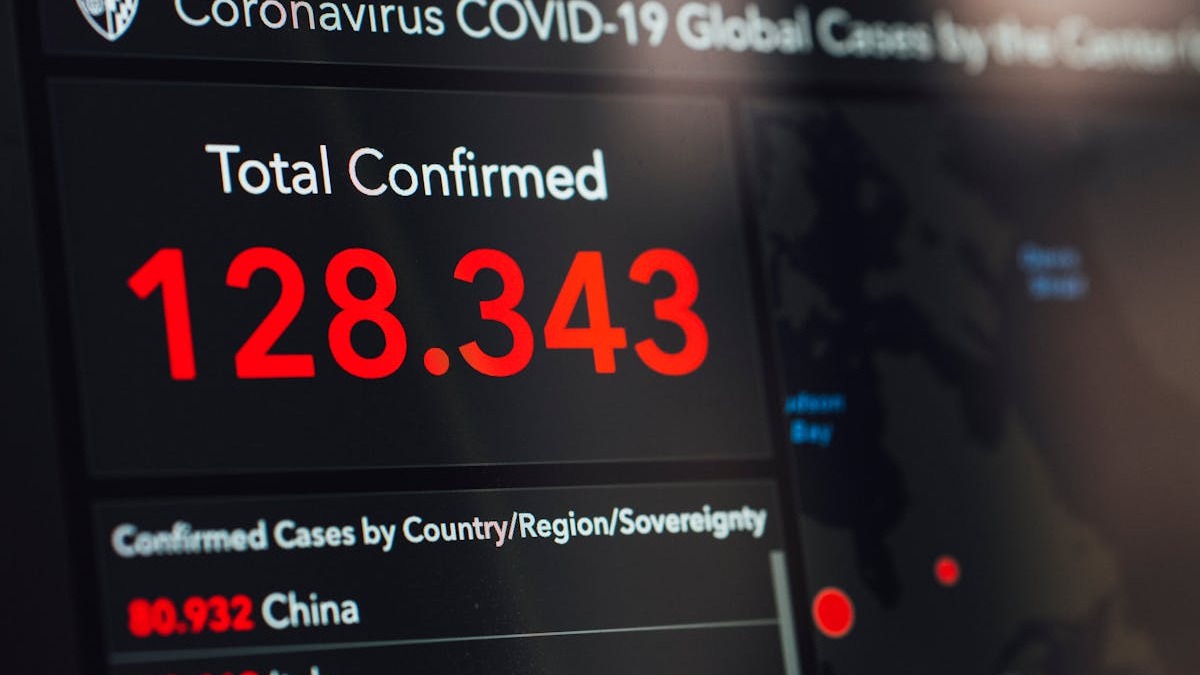 A typical CS platform dashboard showing account health scores and churn signals across a portfolio.
Source: pexels.com
A typical CS platform dashboard showing account health scores and churn signals across a portfolio.
Source: pexels.com
The generational difference is how much of that actually runs on autopilot. First-generation tools generate alerts; someone has to see them and act. Second-generation tools trigger automations, but a human configures every rule. Third-generation platforms - a handful of which are now in production - have agents that decide which accounts need attention, draft the outreach, and close the loop without a CSM manually clicking through queues.
The Six Platforms
1. Gainsight
Gainsight is the market leader by revenue and mindshare. Its 34+ modules cover every conceivable CS use case: health scoring, journey orchestration, in-app product engagement, digital-touch programs, NPS, and a native Salesforce integration that does bidirectional real-time sync on standard and custom objects.
The AI story centers on Copilot, which shipped at no extra cost in May 2025. Copilot is a conversational interface that answers questions about customer health ("which accounts scored red this week?"), generates QBR summaries, and surfaces scorecard data without requiring a CSM to build custom reports. The Insight Agent (a paid add-on) automates health scoring adjustments based on live signals, but it requires clean data pipelines to work reliably - expect several weeks of data hygiene work before it fires accurately.
Pricing: Gainsight doesn't publish rates. Third-party data from Vendr and TrustRadius puts costs at $2,400-$4,200 per user per year, with implementation fees ranging $30K-$120K depending on complexity. A 25-user Essentials deployment normally runs around $60,000 per year in license fees alone. Budget $90K-$140K all-in for year one on a 10-person CS team.
Implementation: 6 weeks on the short end, 6 months for large deployments.
Best fit: Enterprise (1,000+ customers) with dedicated CS Ops resources. Not for teams without someone whose full job is administering the platform.
2. ChurnZero
ChurnZero earns its 4.7-star Gartner Peer Insights rating (177 reviews, as of April 2026) by doing one thing exceptionally well: stopping churn before it happens. Its proprietary ChurnScore algorithm is the most configurable health scoring engine in this price tier, pulling in usage data, survey responses, lifecycle stage, and support ticket volume to produce scores that CS teams actually trust.
In October 2025, ChurnZero announced a suite of autonomous AI Agents - Engagement AI and Snapshot AI - that move beyond alerts into action. Engagement AI drafts and sends personalized outreach based on account signals without a CSM queuing up emails manually. Snapshot AI creates account context summaries on demand. Both operate within rules the admin sets, but the shift from "alert CSM to act" to "agent acts" is meaningful.
Customer outcomes from ChurnZero's own case studies include 60% churn reduction and a 13x increase in CSM account coverage, though those numbers come from ChurnZero's website, not independent audits.
Pricing: Custom, no public rates. Starting packages reportedly run around $12,000/year for basic plans; standard packages land around $16,000/year plus per-user fees. Full deployments for mid-market teams usually run $30,000-$50,000 annually.
Implementation: 4-12 weeks; integrates with 50+ tools including Salesforce, HubSpot, Slack, and Snowflake.
Best fit: Mid-market SaaS (100-1,000 customers) where retention is the whole job. Renewal motions and at-risk saves are where ChurnZero is strongest.
3. Vitally
Vitally is where teams point when they need to get a CS stack live fast and have it actually adopted. Implementation runs 2-4 weeks on average - compared to 6+ months for Gainsight - and the UI is genuinely modern. G2 reviewers consistently mention that CSMs choose to use it rather than treating it as an obligation.
The feature set covers the core: health scoring, account 360 views, workflow automation, and collaborative workspaces that let CSMs and AEs work on accounts together. The AI additions include a Meeting Recorder that transcribes and summarizes customer calls, an AI Copilot for account-level risk surfacing, and AI-created task suggestions based on account activity.
The catch is pricing. Vitally doesn't publish rates, but teams report $400-$800+ per user per month for full deployments, with AI features as add-ons priced above what G2 reviewers describe as "industry standards." The "All Features, All Plans" positioning is somewhat misleading once AI capabilities are factored in. Multiple G2 reviewers in 2025-2026 flagged AI add-on costs as the main blocker for expansion.
Pricing: Undisclosed; three tiers (Tech-Touch, Hybrid-Touch, High-Touch) based on CS model. Quotes required.
Implementation: 2-4 weeks.
Best fit: Mid-market SaaS teams that focus on usability and fast deployment over feature depth. Works well for 50-500 customer accounts.
4. Planhat
Planhat sits in an interesting position: strong with European CS teams, recognized as a Gartner Magic Quadrant Leader in 2025, and truly good at unifying messy data from product, CRM, support, and billing into clean account views.
The AI layer focuses on automating the work nobody wants to do: summarizing sentiment from customer interactions, preparing QBR decks, and flagging accounts that need attention based on cross-signal analysis. Planhat's pitch is that it creates a data foundation solid enough for reliable prediction - a fair criticism of competitors whose health scores collapse when underlying data is inconsistent.
Mid-market pricing runs $25,000-$45,000 annually for the Professional tier; large enterprise deployments can hit $60,000+. Implementation takes 4-8 weeks.
The downsides are real. Multiple G2 reviewers describe the data model as unusually complex. One Gartner Peer Insights reviewer described it as "the most bizarre data model I've faced." Documentation is reportedly outdated, and there are persistent bug reports around integrations.
Best fit: Data-driven CS teams with engineering resources to configure the platform properly. Strong for European markets.
5. Totango + Catalyst
This is actually two companies that merged in February 2024. Totango brought enterprise scale, governance, and SuccessBLOC templates (pre-built playbooks for common CS motions). Spark brought a cleaner UI and stronger workflow capabilities. The combined platform now has roughly 600 organizations.
The merger makes sense on paper. Totango's enterprise hierarchy health scoring combined with Catalyst's ROI-based scoring gives CS teams two views of account health that previously required two separate tools. AI capabilities include account summaries and advanced analytics powered by what the company calls "AI functionality to fully understand customers."
In practice, the integration work is ongoing and some users report data inconsistencies between the two halves. The free Community edition is a real differentiator for small teams, but the full platform uses quote-based pricing averaging around $50,000/year, which is on the expensive side given the current integration state.
Best fit: Teams that were already on Totango or Catalyst pre-merger, or enterprise teams that want SuccessBLOC templates as a shortcut to structured CS workflows.
6. Custify
Custify is the most accessible platform in this comparison. It targets B2B SaaS SMBs that need health scoring, lifecycle automation, and NPS/CSAT tracking without the enterprise price tag or implementation overhead.
The AI features are newer but real: AI-generated playbook suggestions, automated account summaries, churn risk analysis, and sentiment trend tracking in real time. Implementation can happen in days, not weeks - a genuine advantage for small teams that need to show results quickly.
Pricing reportedly starts around $499-$999/month, making it the only platform here with a sub-$10K annual entry point. Custify's Slack-based support (versus dedicated CSMs at higher-end platforms) is either a feature or a bug depending on your team's expectations.
The limitations are equally real. The email module is outbound-only. Analytics depth is thin compared to Gainsight or ChurnZero. The UX gets mixed reviews - "not very intuitive" appears in multiple G2 reviews from 2025-2026.
Best fit: Early-stage SaaS companies or SMBs with under 200 customer accounts and a lean CS team.
Comparison Table
| Platform | Best For | Pricing (est. Annual) | Implementation | AI Agents | G2 / Gartner Score |
|---|---|---|---|---|---|
| Gainsight | Large enterprise | $60K-$140K+ | 6 weeks - 6 months | Copilot (free), Insight Agent (add-on) | 4.1 stars (Gartner, 33 reviews) |
| ChurnZero | Mid-market retention | $30K-$50K | 4-12 weeks | Engagement AI, Snapshot AI | 4.7 stars (Gartner, 177 reviews) |
| Vitally | Fast-moving SaaS | Quote only | 2-4 weeks | Meeting Recorder, AI Copilot | 4.5 stars (G2) |
| Planhat | Data-driven teams | $25K-$60K | 4-8 weeks | QBR automation, sentiment AI | Magic Quadrant Leader 2025 |
| Totango+Catalyst | Enterprise playbooks | ~$50K | 4-8 weeks | Account summaries, AI analytics | 600+ customers |
| Custify | SMB SaaS | $6K-$12K | Days to weeks | Playbook AI, churn risk AI | Mid-tier reviews |
What the Market Gets Wrong
A lot of evaluation guides focus on feature checklists. The more important variable is total cost of ownership, which includes the admin headcount the platform requires to function.
Gainsight at $60K in license fees is really $90K-$140K in year one once you account for implementation and the CS Ops person needed to keep it configured. ChurnZero at $35K is closer to $65K. Vitally's lower implementation burden is part of why mid-market teams increasingly prefer it even when the per-user sticker is higher.
The other blind spot: AI features that exist in a demo but require 6 months of clean data before they work accurately. Health scoring built on incomplete or inconsistently formatted CRM data produces scores that CSMs learn to ignore - at which point you've paid for a very expensive dashboard that nobody trusts.
 Customer success teams increasingly need platforms that surface insights proactively rather than requiring manual portfolio reviews.
Source: pexels.com
Customer success teams increasingly need platforms that surface insights proactively rather than requiring manual portfolio reviews.
Source: pexels.com
Best Pick Recommendations
Best for enterprise: Gainsight, if you have CS Ops, Salesforce dependency, and a mature renewal process. Accept the TCO and the implementation timeline.
Best for mid-market speed: Vitally, for teams that need adoption fast and can tolerate AI add-on costs. Goes live in under a month.
Best for churn prevention focus: ChurnZero. The AI Agents launched in late 2025 are the most production-ready autonomous CS automation at this price point, and the Gartner scores back it up.
Best on a tight budget: Custify. The analytics depth is limited, but it covers the core workflows at a price that doesn't require board approval.
Best if you're European or data-heavy: Planhat. The data model complexity is a real tax, but the reporting and multi-region support justify it for the right team.
For teams already deep in the HubSpot ecosystem, HubSpot Service Hub's Breeze AI ($0.50 per resolved conversation as of April 14, 2026) is worth assessing as a lower-friction alternative to a standalone CS platform, though it lacks the dedicated health scoring and churn prediction depth of purpose-built tools.
One thing worth noting: this market is adjacent to both AI CRM tools and AI customer support platforms. If your team is assessing all three, start with the customer success layer first - it defines what data the other tools need to produce.
Sources
- Oliv.ai: Best Customer Success Platforms 2026 - 10 Tools Tested and Scored
- Gainsight Copilot Overview - Official Documentation
- Gainsight Features 2026: Health Scores, Playbooks and Hidden Costs
- Velaris: Gainsight vs Totango vs ChurnZero - Features and Pricing Compared 2026
- ChurnZero: AI Agents for Customer Success
- Velaris: How AI Is Impacting Customer Success in 2026
- Planhat: AI in Customer Success - Ultimate Guide
- HubSpot Shifts Breeze AI Agents to Pay-per-Result Pricing
- Forrester: AI-Powered Customer Success Platforms Reduce Churn 34%
- Totango and Catalyst Merge - TechCrunch
✓ Last verified April 25, 2026

