
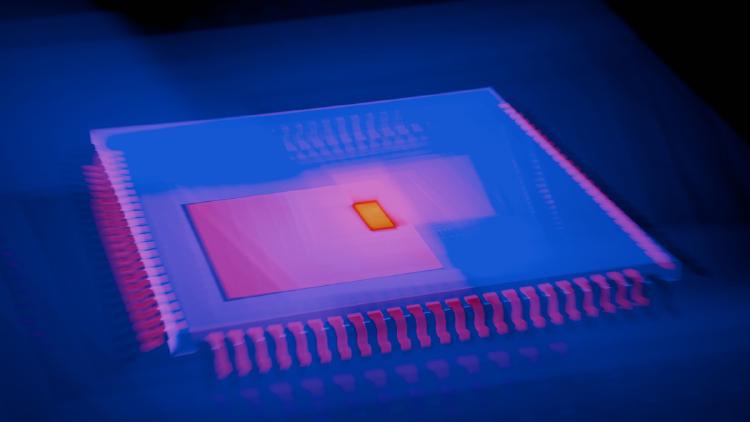
DeepSeek-R1
DeepSeek-R1 is the 671B-parameter open-weight reasoning model that matched OpenAI o1 on math and coding benchmarks and triggered a $589 billion single-day drop in Nvidia's market cap in January 2025.
They summarize our coverage. We write it.
Newsletters like this one rebroadcast our headlines - often without the full review, the source reading, or the analysis underneath. Our weekly briefing sends the work they paraphrase, straight from the desk, before they get to it.
Free, weekly, no spam. One email every Tuesday. Unsubscribe anytime.
DeepSeek-R1 is the 671B-parameter open-weight reasoning model that matched OpenAI o1 on math and coding benchmarks and triggered a $589 billion single-day drop in Nvidia's market cap in January 2025.

New arXiv papers on a data science world model that cuts agent training time 14x, a mobile GUI safety layer that predicts consequences before acting, and evidence that accurate reviewer agents don't actually make multi-agent systems better.

New arXiv research shows agents pass just 15.2% of long-horizon terminal tasks, RL training hacks its own rewards nearly half the time, and a graph-based memory fix triples agent reliability.

Prime Intellect closed a $130M Series A at a $1B valuation, giving enterprises compute, RL training, and evaluation tools to build their own AI agents without relying on frontier labs.
Three new papers expose how production agent frameworks fail under attack, why RLVR training discards useful cross-episode signals, and how calibrated confidence cuts inference compute by 12x.

Three papers from today's arXiv: graph-native RL generates traceable scientific hypotheses, HARC defeats jailbreaks by coupling internal safety directions, and ICML 2026's OpenAgent shows how distributional shift breaks tool-use agents.
Three new arXiv papers on making RL reasoning legible across models, fixing broken world model latent states, and training small agents to beat their teachers.

SkyReels V4 is Skywork AI's unified multi-modal video model that jointly generates 1080p/32FPS video and synchronized audio from a single dual-stream diffusion transformer.

Sakana AI's orchestrator model that dynamically coordinates Claude Opus 4.8, GPT-5.5, and Gemini 3.1 Pro to beat each of them individually on SWE-Bench Pro, GPQA-Diamond, and eight other benchmarks.

Three arXiv papers: a conscience mechanism for ethical training, shared memory for agent populations, and selective verification that cuts test-time compute waste.
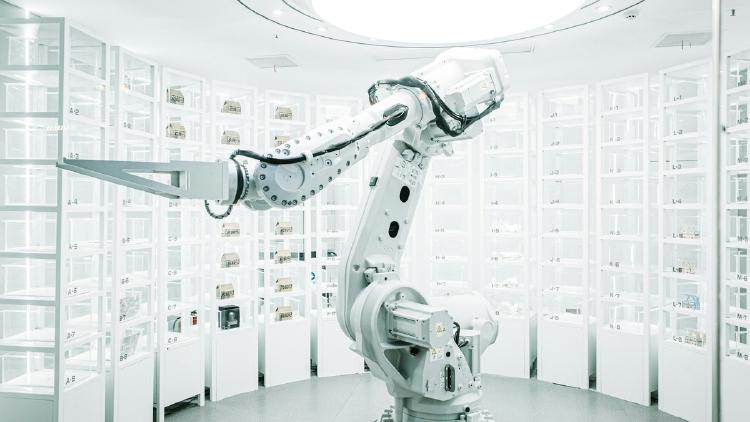
Alibaba's generalist VLA model for robotic manipulation, built on Qwen3.5-4B with a DiT action decoder, trained on 38,100+ hours of open-source data, and ranked first on the RoboChallenge generalist track.

A new impossibility theorem proves feedback-based training can't guarantee honest AI, while two papers cut agent memory costs 78% and multi-agent latency 7x.
