OpenClaw-RL Lets You Train a Personal AI Agent Just by Talking to It
Gen-Verse's new open-source framework uses asynchronous reinforcement learning to personalize LLMs through natural conversation - no labeling, no datasets, just feedback.
They summarize our coverage. We write it.
Newsletters like this one rebroadcast our headlines - often without the full review, the source reading, or the analysis underneath. Our weekly briefing sends the work they paraphrase, straight from the desk, before they get to it.
Free, weekly, no spam. One email every Tuesday. Unsubscribe anytime.

Gen-Verse's new open-source framework uses asynchronous reinforcement learning to personalize LLMs through natural conversation - no labeling, no datasets, just feedback.

A 38-researcher red-teaming study deployed five autonomous AI agents with email, shell access, and persistent memory in a live environment. In two weeks, one destroyed its own mail server, two got stuck in a 9-day infinite loop, and another leaked SSNs because you said 'forward' instead of 'share.'

People are spending $2,200 on Mac Minis to run OpenClaw - an agent that calls Claude and OpenAI APIs remotely. The Mac Mini's GPU sits idle. Any old laptop, desktop, or even an Android phone can make HTTP requests just as well.

OpenClaw ships with authentication disabled and binds to all interfaces. This step-by-step guide covers every hardening measure you need - from authentication and sandboxing to MCP security and network isolation - backed by real CVEs and security research.

Google disabled Antigravity accounts for paying subscribers who linked OpenClaw via OAuth, citing service degradation. Creator Peter Steinberger calls it draconian.

A former Scale AI and DeepMind researcher told OpenClaw to only suggest email deletions. It hit a context limit, forgot the rule, and trashed hundreds of messages before she could stop it.

An OpenClaw agent with access to a cybersecurity firm's internal CTI platform published confidential analysis on ClawdINT.com. The agent worked perfectly - the permissions didn't.

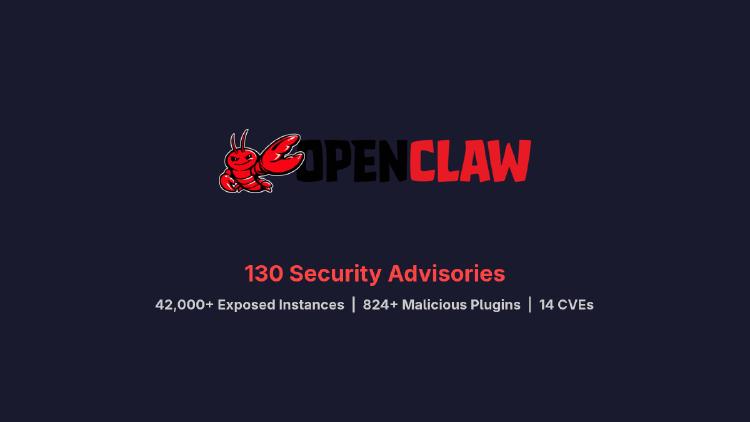
OpenClaw's GitHub security advisories jumped from ~90 to 130 in 48 hours. With 40,000+ exposed instances, a poisoned plugin marketplace, and malware targeting Mac Minis, the most popular personal AI agent is also the most dangerous.

1,184 malicious skills were found on OpenClaw's ClawHub marketplace - stealing SSH keys, crypto wallets, browser passwords, and opening reverse shells. One attacker uploaded 677 packages alone. The #1 ranked skill had 9 vulnerabilities and was downloaded thousands of times.

A compromised npm publishing token allowed an attacker to push a malicious version of the Cline CLI that silently installed OpenClaw via a postinstall script. The incident was caught and fixed within hours.

Peter Steinberger, the Austrian developer behind the viral AI agent OpenClaw, is joining OpenAI to build the next generation of personal agents. The project will live on as an independent open-source foundation.