

Multimodal AI Explained - A Beginner's Guide
Multimodal AI can see, hear, and read at once - here's how it works and why it matters for everyday users.
They summarize our coverage. We write it.
Newsletters like this one rebroadcast our headlines - often without the full review, the source reading, or the analysis underneath. Our weekly briefing sends the work they paraphrase, straight from the desk, before they get to it.
Free, weekly, no spam. One email every Tuesday. Unsubscribe anytime.
Multimodal AI can see, hear, and read at once - here's how it works and why it matters for everyday users.

Moonshot AI's Kimi K2.5 delivers best-in-class open-weight math and a genuinely novel multi-agent architecture, but a brutal hallucination rate and slow inference limit its real-world reliability.
Ai2's MolmoWeb is a fully open-source web agent that navigates browsers by screenshot alone, beating GPT-4o-based agents at the 8B scale with weights, training data, and code all released under Apache 2.0.

Mistral Small 4 packs reasoning, vision, and agentic coding into a 119B MoE under Apache 2.0 - a serious small-model contender at a price that's hard to ignore.
Cohere Command A Vision is a 112B multimodal model that leads on document and OCR benchmarks, beating GPT-4.1 across seven visual understanding tasks.
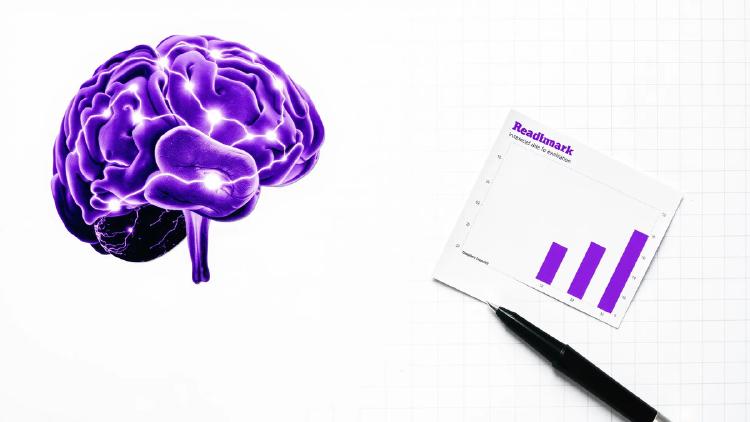
Three new papers expose cracks in how AI models think, how benchmarks evaluate multimodal reasoning, and why LLM judges reliably mislead.
Google's Gemini 3.1 Flash-Lite delivers frontier-class benchmarks at a fraction of the cost of Pro - but a sluggish first-token response and preview-only status mean it's not for every workload.

Luma Agents coordinates text, image, video, and audio from a single brief using the Uni-1 unified model - a genuine architectural leap, with some real rough edges still showing.

Google's first natively multimodal embedding model maps text, images, video, audio, and PDFs into a single vector space - now in public preview via Gemini API and Vertex AI.

Grok 4 is xAI's frontier reasoning model, the first to break 50% on Humanity's Last Exam, with a 256K context window, $3/M input pricing, and a Heavy multi-agent variant built on 200,000 GPUs.

Microsoft releases Phi-4-reasoning-vision-15B - a 15B open-weight multimodal model trained on 240 GPUs in 4 days that competes with 100B+ parameter models on math, science, and GUI understanding.
Luma AI's new Agents platform, powered by the Uni-1 Unified Intelligence model, lets creative teams go from a written brief to finished video, images, and audio in one workflow.
