
Audio Understanding Benchmarks Leaderboard 2026
Rankings of the best audio language models on MMAU, MMAU-Pro, and other benchmarks covering speech reasoning, music understanding, and environmental sound identification.
They summarize our coverage. We write it.
Newsletters like this one rebroadcast our headlines - often without the full review, the source reading, or the analysis underneath. Our weekly briefing sends the work they paraphrase, straight from the desk, before they get to it.
Free, weekly, no spam. One email every Tuesday. Unsubscribe anytime.
Rankings of the best audio language models on MMAU, MMAU-Pro, and other benchmarks covering speech reasoning, music understanding, and environmental sound identification.
Anthropic's new Claude Design tool turns text prompts into prototypes and slide decks - and wiped 7% off Figma's stock price the moment it launched.
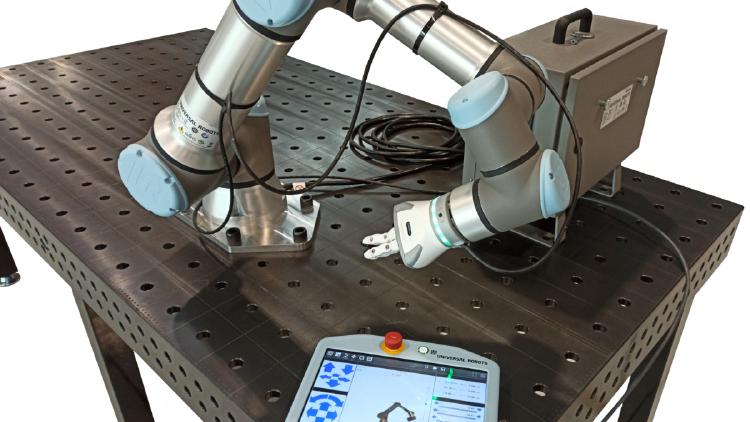
Physical Intelligence's π0.7 robot model can generalize to tasks it was never explicitly trained on, matching fine-tuned specialist models through compositional skill recombination.

Rankings of AI video generation models across VBench, VBench-2.0, and the Artificial Analysis Video Arena Elo system, covering text-to-video and image-to-video performance.
Rankings of AI models on the key visual reasoning benchmarks - MMMU, MathVista, ChartQA, DocVQA, OCRBench, AI2D, CharXiv, and more - focused on image and document understanding.
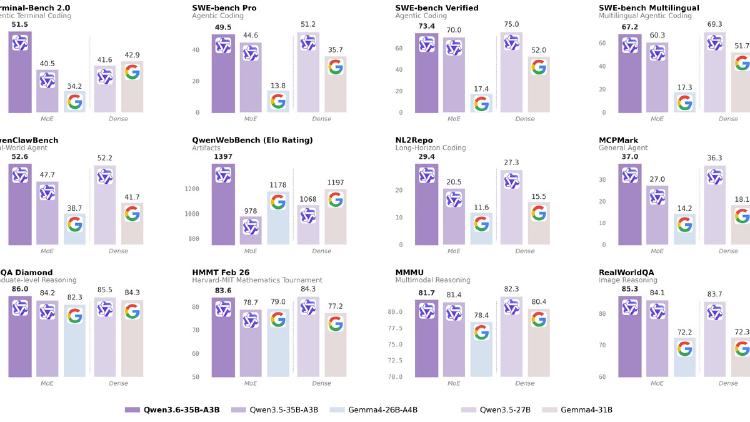
Alibaba's 35B sparse MoE with 3B active parameters delivers 73.4% SWE-bench Verified, multimodal vision and video, 256K context, and DeltaNet hybrid architecture under Apache 2.0.
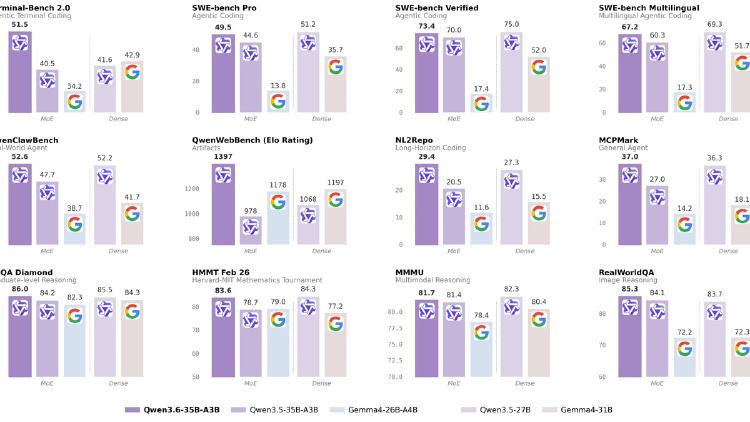
Alibaba's Qwen 3.6-35B-A3B activates only 3B of its 35B parameters per token, scores 73.4% on SWE-bench Verified, handles video and images, and ships under Apache 2.0.
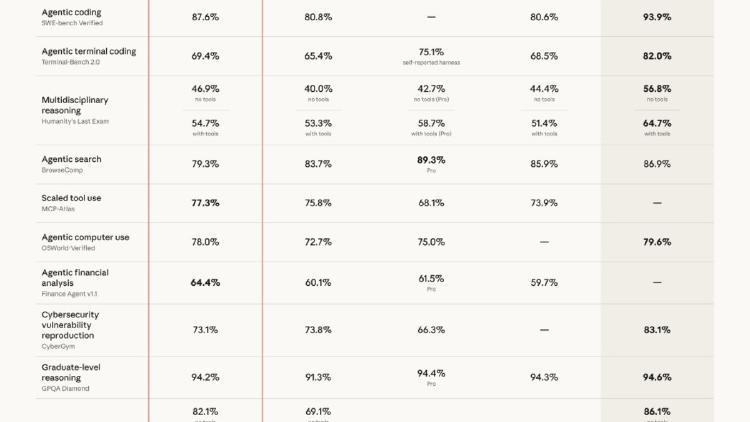
Anthropic's latest flagship model ships with 3x higher resolution vision, a new xhigh effort level, task budgets for cost control, cyber safeguards, and 13% better coding performance at the same $5/$25 pricing.
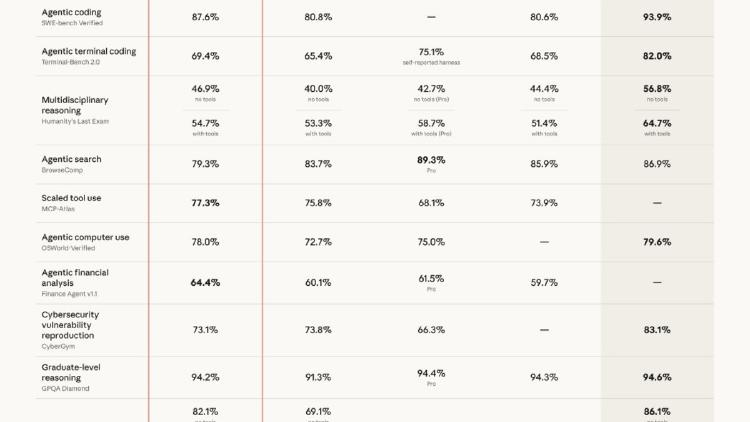
Anthropic releases Claude Opus 4.7 with 3x higher resolution vision, a new xhigh effort level, task budgets for cost control, /ultrareview in Claude Code, and cyber safeguards that automatically block high-risk requests.
Google launched a free native Gemini app for Mac with screen sharing, window context, image and video generation, and a global Option+Space shortcut - built in pure Swift with 100+ features in under 100 days.
Google's new Gemini 3.1 Flash TTS hits Elo 1,211 on the Artificial Analysis leaderboard and introduces 200-plus audio tags for mid-sentence voice control, available in preview today via the Gemini API.
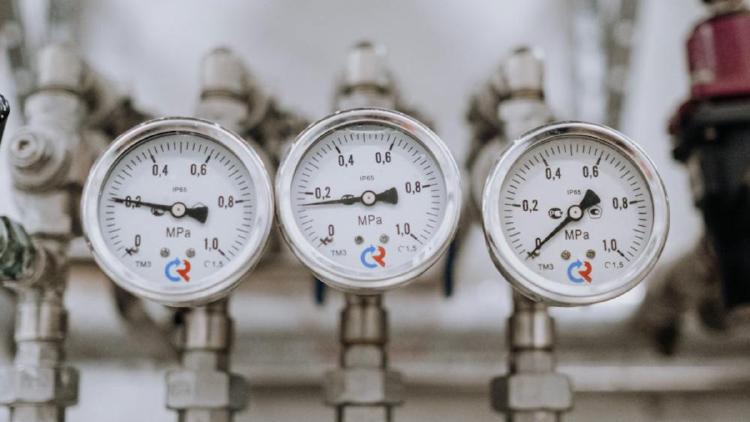
Google DeepMind's Gemini Robotics-ER 1.6 hits 93% accuracy reading industrial gauges via agentic vision, a 70-point jump over ER 1.5, and launches inside Boston Dynamics' Spot today.
