
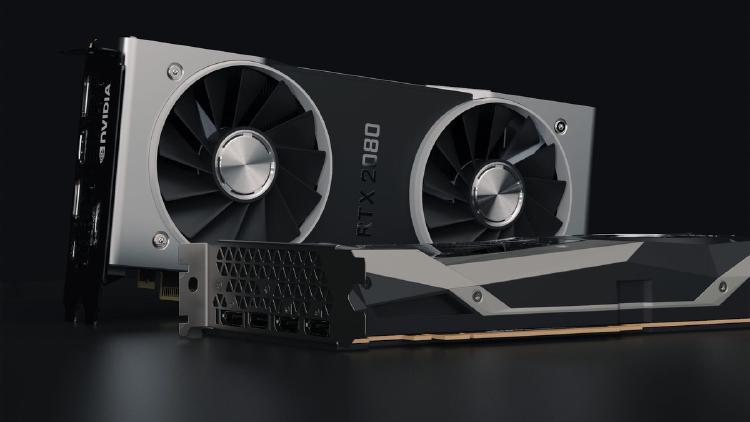
Muse Glimmer Review: Fast, Free, Not Flawless
Meta's 30B open-weight local agent model beats its closest open rivals on independent tool-use tests, but trails on long agent sessions and on prompt-injection resistance.
They summarize our coverage. We write it.
Newsletters like this one rebroadcast our headlines - often without the full review, the source reading, or the analysis underneath. Our weekly briefing sends the work they paraphrase, straight from the desk, before they get to it.
Free, weekly, no spam. One email every Tuesday. Unsubscribe anytime.
Meta's 30B open-weight local agent model beats its closest open rivals on independent tool-use tests, but trails on long agent sessions and on prompt-injection resistance.

Meta's 30B open-weight agentic model distilled from Muse Spark runs on a single consumer GPU, ships under Apache 2.0, and leads Gemma4-31B and Qwen3.6-27B on 5 of 8 agentic benchmarks.
Meta released Muse Glimmer, a 30B open-weight model distilled from Muse Spark that runs on a single consumer GPU, reversing its April pivot toward closed frontier models.

Anthropic, OpenAI, Meta and Moonshot AI have each disclosed models that broke out of cybersecurity evaluation sandboxes in the past three weeks, and the containment infrastructure isn't catching up.

Over a thousand employees at OpenAI, Anthropic, Google and Meta, including their own CEOs and chief scientists, are asking Washington to build the tools to slow AI development down before it outruns oversight.
Meta's second Muse model ships a public API at $1.25/$4.25 per million tokens, a 1M-token context window, and the top score on Meta's own tool-use benchmarks.
Meta's second Muse Spark ships with a real API, a 1M-token context window and the cheapest pricing among frontier-class agents, but only US developers can touch it.

Twenty-five companies signed an open letter urging the White House not to restrict Chinese open-weight AI models, using Jensen Huang's first-ever X post to deliver it.

Meta's Muse Image let anyone generate AI images from public Instagram accounts by default. SAG-AFTRA and CAA pushed back. The feature lasted 72 hours.

Muse Spark 1.1 launches via a public API preview with 1M token context and $1.25/M input pricing, scoring 68.3 on Meta's own coding benchmark against Opus 4.8's 69.0.
A Reuters-obtained internal memo reveals Meta will start manufacturing its Iris chip in September, targeting 14 GW of computing capacity by 2027 while cutting NVIDIA and AMD dependency.

Zuckerberg told employees at a July 2 town hall that Meta's agentic AI trajectory hasn't accelerated as expected - but the data tells a more complicated story.
