
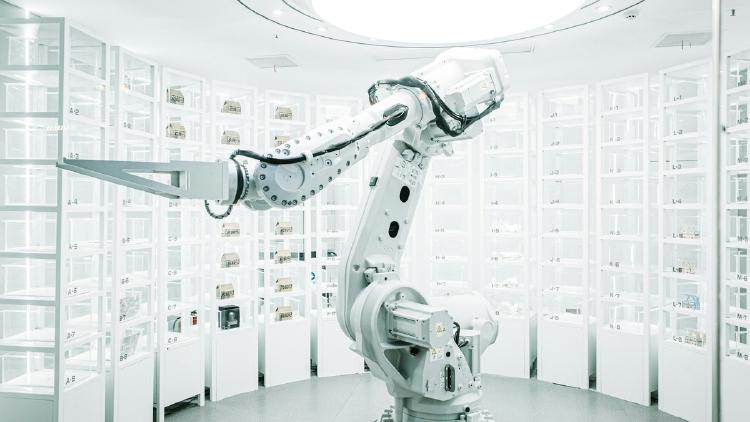
Qwen-RobotManip
Alibaba's generalist VLA model for robotic manipulation, built on Qwen3.5-4B with a DiT action decoder, trained on 38,100+ hours of open-source data, and ranked first on the RoboChallenge generalist track.
They summarize our coverage. We write it.
Newsletters like this one rebroadcast our headlines - often without the full review, the source reading, or the analysis underneath. Our weekly briefing sends the work they paraphrase, straight from the desk, before they get to it.
Free, weekly, no spam. One email every Tuesday. Unsubscribe anytime.
Alibaba's generalist VLA model for robotic manipulation, built on Qwen3.5-4B with a DiT action decoder, trained on 38,100+ hours of open-source data, and ranked first on the RoboChallenge generalist track.
Alibaba's first multimodal agent model, combining GUI grounding (ScreenSpot Pro 79.0), 1M-token context, and text-plus-vision input at $0.40/M tokens.

Three papers from today's arXiv: workplace agents jumped from 43% to 89% task completion in two years, a 47-researcher coalition ships a unified eval schema, and agent memory only helps when similarity tops 0.8.
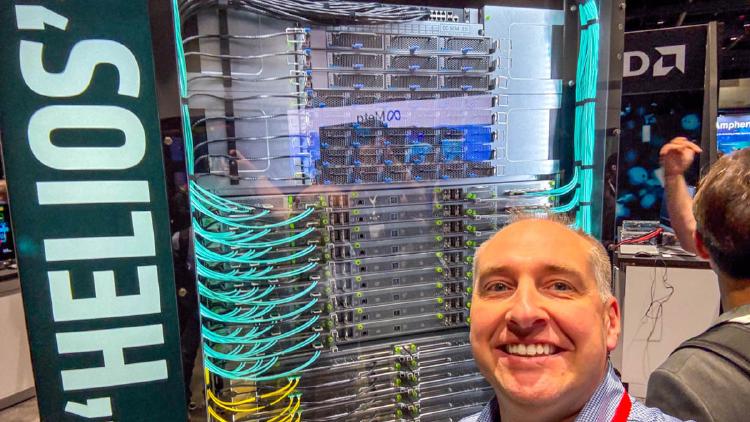
AMD's CDNA 5 accelerator on TSMC 2nm with 432 GB HBM4 memory - the GPU behind OpenAI's 1GW deployment and Oracle's 50,000-chip supercluster.

Zhipu AI's GLM-5.2 ships with 1M token context, 744B MoE parameters, and MIT license the day after Fable 5 goes offline - but no benchmark numbers at launch.
Z.ai's GLM-5.2 is a 744B open-weight MoE model with a 1M token context window, MIT license, and first-day support for eight coding agents at roughly 1/10th the cost of US frontier models.

June 2026 overall LLM rankings covering Claude Fable 5, Claude Opus 4.8, GPT-5.5, Gemini 3.1 Pro, and the open-weight models catching up fast.
Artificial Analysis released AgentPerf, the first agentic AI infrastructure benchmark, measuring concurrent agents per megawatt. NVIDIA Blackwell leads with 20x gains over Hopper.
Moonshot AI's Kimi K2.7-Code is a 1T-parameter open-weight MoE coding model with mandatory thinking mode, 256K context, and 30% fewer reasoning tokens than K2.6.

Moonshot AI ships Kimi K2.7-Code with 30% fewer reasoning tokens and a 21.8% gain on its own coding benchmarks, but the model still trails Claude Opus 4.8 on most tests in the same table.

Three new papers expose a 50-point gap in agent tool knowledge, show tree search tripling inference throughput, and map the research between AGI and superintelligence.
A hands-on review of all seven MAI models - from the April transcription and image launch to Build 2026's MAI-Thinking-1, MAI-Code-1-Flash, and the multimodal upgrades.
