

Olympiad Gold, Broken Memories, and Attention Loss
A 30B model earns IMO gold, memory consolidation silently corrupts agents, and a new metric predicts when LLMs lose track of their instructions.
They summarize our coverage. We write it.
Newsletters like this one rebroadcast our headlines - often without the full review, the source reading, or the analysis underneath. Our weekly briefing sends the work they paraphrase, straight from the desk, before they get to it.
Free, weekly, no spam. One email every Tuesday. Unsubscribe anytime.
A 30B model earns IMO gold, memory consolidation silently corrupts agents, and a new metric predicts when LLMs lose track of their instructions.
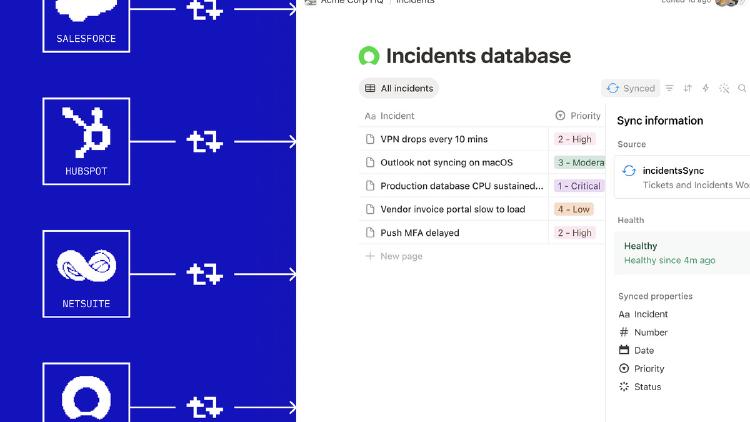
Notion 3.5's Developer Platform adds Workers, live database sync, and first-class Claude Code and Cursor support - turning the workspace into an AI agent orchestration layer.

Vapi closes a $50M Series B at $500M valuation after Amazon Ring routed 100% of its inbound calls through the platform, chosen over 40 competing voice AI vendors.

New research shows reasoning length amplifies position bias, behavior cues cut wasted tokens by 50% while boosting safety, and sparse autoencoders can predict tool failures from model internals.

Pwn2Own Berlin 2026 hit a hard submission cap for the first time in 19 years. Rejected researchers are now publishing working zero-days directly, breaking the contest's secrecy norms.

Palisade Research shows frontier AI models autonomously exploit vulnerabilities and deploy working AI inference servers on remote machines, with success rates jumping from 5% to 81% in twelve months.

Six research teams disclosed exploits against Codex, Claude Code, Copilot, and Vertex AI. Every attack went after credentials the agents carried - not the models themselves.

Three new papers show that more agent components backfire, reasoning models hide unsafe thinking, and vision-language models waste most of their attention.

OpenAI's second-generation real-time audio model with GPT-5-class reasoning, 128K context, five reasoning levels, and parallel tool calling - now generally available in the Realtime API.

OpenAI's Realtime API exits beta with GPT-Realtime-2, Translate, and Whisper - three specialized voice models splitting reasoning, translation, and transcription into distinct endpoints.

Google DeepMind's May 2026 AlphaEvolve impact report shows the system running in production across infrastructure, quantum computing, genomics, and commercial partnerships spanning logistics to fintech.

Three new papers deliver a runtime safety firewall for agent tools, challenge how we measure AI alignment, and introduce elastic context management for long-horizon search agents.
