
Seedance 2.0 Review: ByteDance's Video Generator Has Hollywood Running Scared
A hands-on review of Seedance 2.0, ByteDance's AI video generator that produces photorealistic 15-second clips with synchronized audio - and has triggered cease-and-desist letters from the Motion Picture Association.
 12 min read
Two weeks ago ByteDance released Seedance 2.0, and within 24 hours the Motion Picture Association fired off a cease-and-desist letter. A deepfake of Brad Pitt fighting Tom Cruise racked up 3.2 million views on X. SAG-AFTRA issued a statement calling the tool's lack of guardrails "unacceptable." And Deadpool screenwriter Rhett Reese posted five words that bounced around the entire industry: "It's likely over for us."
That is quite the launch week for a video generator.
After spending the past two weeks testing Seedance 2.0 extensively - creating hundreds of clips across dozens of prompt styles, stress-testing its camera controls, and comparing output against Sora, Runway, and Kling - I can tell you the panic is partly warranted and partly premature. Seedance 2.0 is genuinely the most capable AI video generator available right now. It is also a 15-second tool with real limitations, restricted global access, and an ethical framework that's politely described as "under construction."
Here is where things actually stand.
TL;DR
- 8/10 - The best AI video generator available in February 2026, with unmatched character consistency and native audio-video synchronization
- Key strength: Dual-branch architecture that creates synchronized video and audio in a single pass, with director-level control over camera movement and multi-shot storytelling
- Key weakness: 15-second cap, limited global availability, and virtually nonexistent copyright safeguards that have triggered legal action from Hollywood studios
- Use it if you are a professional creator who needs cinematic short-form clips with precise control. Skip it if you need long-form content, work outside China, or care about the ethical provenance of your AI tools
What Makes Seedance 2.0 Different
The headline feature is what ByteDance calls a "unified multimodal audio-video joint generation architecture." In plain terms, Seedance 2.0 doesn't produce video and then staple audio onto it as a post-processing step. It produces both simultaneously through a dual-branch diffusion transformer - one branch handling video latents, the other handling audio latents, with cross-attention layers binding them during generation.
The result is synchronization quality that is immediately noticeable. Footsteps land when feet hit the ground. Lip movements track dialogue accurately across eight languages. Rain sounds match the direction and intensity of visible rainfall. If you have used Sora or Runway, you know how janky audio-video alignment can be when the two are created separately. Seedance 2.0 solves that problem at the architectural level.
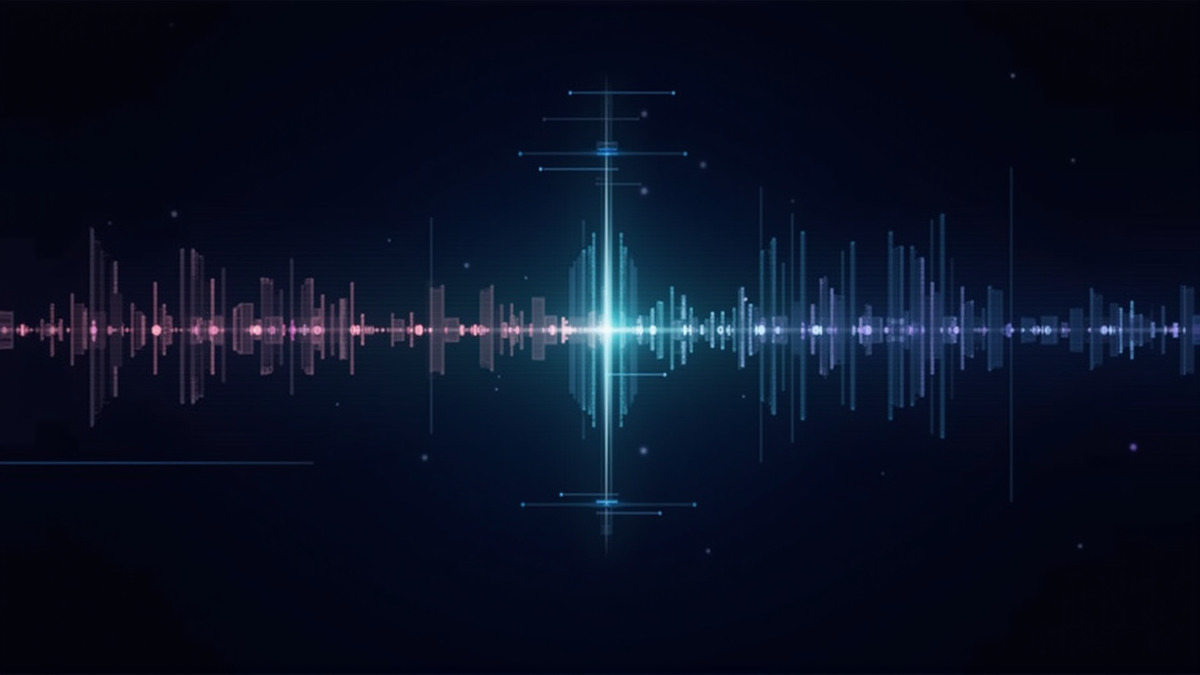 Seedance 2.0's dual-branch diffusion transformer generates audio and video simultaneously through coordinated denoising - a fundamentally different approach from competitors that bolt audio on after the fact.
The second differentiator is what ByteDance calls the quad-modal input system. You can feed Seedance up to 12 reference files in a single generation: nine images, three video clips, three audio clips, plus text prompts. Want a character to match a specific face, move like a reference dancer, and stay in rhythm with a particular soundtrack? Upload all three references and a text description. The model weaves them together.
This is not theoretical. In testing, I uploaded a portrait photo, a 10-second clip of someone walking through a market, and an ambient audio track of city noise. The output maintained the face from my portrait, adopted the walking gait from the video reference, and produced ambient sound that matched the visual environment while staying consistent with my audio reference. That kind of multi-reference composition is something no other publicly available tool does at this quality level.
The Output Quality - Genuinely Impressive
Let me be specific about what Seedance 2.0 actually produces, because "good AI video" covers a wide spectrum in 2026.
Resolution and clarity. Seedance outputs at up to 2K natively. The sweet spot is 1080p, where clips look clean and production-ready. Detail holds up well on faces, textures, and environmental elements. This is not the smudgy, dreamlike output of early AI video generators. At a casual glance, well-prompted Seedance clips are difficult to distinguish from professionally shot footage.
Motion quality. This is where Seedance 2.0 truly leads the field. Character movement is fluid and physically plausible. Camera movements - tracking shots, orbit shots, dolly zooms, fast transitions - render convincingly. I created a clip of a woman walking through a rainy street, and the camera followed her with a smooth steadicam-style track while rain fell with directionally coherent physics. The umbrella she carried cast a shadow that moved correctly. A year ago this would have been impossible.
Character consistency. This might be Seedance's single strongest feature. Faces, clothing, and even small details like jewelry stay consistent across the entire duration of a clip. If you are producing serialized content - short dramas, recurring brand campaigns, social media series - this matters enormously. Character drift has been the bane of AI video since the field began, and Seedance 2.0 handles it better than anything else I have tested, including Sora 2.
Audio generation. The native audio is solid. Dialogue sounds natural mostly. Environmental sound design - wind, traffic, water, crowd noise - is surprisingly good. Music-synchronized generation works as advertised: upload a beat and the model produces motion that matches the rhythm. Lip sync across English, Mandarin, Spanish, French, Japanese, Korean, Hindi, and Arabic lands accurately usually.
Where It Falls Short
Fifteen seconds. That's the hard ceiling, and it's a significant constraint. If your vision requires anything longer than a brief clip, you are stitching segments together in post-production. Kling offers up to two minutes of continuous generation. Sora 2 goes up to 25 seconds. Seedance's duration cap means it excels at social media clips, ads, and short-form content, but it isn't a tool for producing scenes, let alone sequences.
The lottery problem. Identical prompts produce varying quality. My testing suggests roughly a 90% success rate - meaning 1 in 10 generations needs a re-roll. For a professional workflow this is manageable but annoying. For casual users who expect consistency on the first try, it's frustrating.
Text rendering. On-screen text is still essentially broken. Letters warp, spacing drifts, and anything beyond two or three words becomes garbled. This is a universal AI video weakness, not unique to Seedance, but it bears mentioning for anyone planning to use the tool for content that requires legible titles or captions.
Fine detail under stress. Hands are mostly fine now - a genuine improvement over earlier AI video models - but complex multi-character interactions still produce occasional artifacts. Two people shaking hands can create unnatural finger movements. Fire and fluid simulations sometimes need multiple re-generations to look right.
Generation speed. A single 15-second clip takes roughly 10 minutes to produce. During peak usage on the Jimeng platform, wait times can stretch past an hour. There is no real-time capability.
The Competitive Landscape
The AI video generation space is brutally competitive right now. Here is how Seedance 2.0 stacks up against the tools most creators are actually choosing between.
Seedance 2.0 vs. Sora 2. Sora remains the gold standard for physical realism. Gravity, momentum, collisions, fluid dynamics, light refraction - Sora simulates physical laws with more precision than anything else on the market. But Seedance beats Sora on prompt adherence, character consistency, and multi-shot composition. Sora also maxes out at 1080p where Seedance reaches 2K. On pricing, Seedance is considerably cheaper per generation. The real differentiator is audio: Seedance produces it natively while Sora's audio pipeline is still a separate process. If you need your video and sound to feel like they were born together, Seedance wins.
Seedance 2.0 vs. Runway Gen-4. Runway has the best developer tooling and the most accessible interface of any AI video platform. If you want the smoothest workflow and the gentlest learning curve, Runway is still the pick. But Seedance's raw output quality surpasses Gen-4 in nearly every measurable dimension - motion fluidity, facial detail, lighting accuracy, temporal consistency. Runway's strength is in stylization and creative control through a well-designed UI. Seedance's strength is photorealism and multi-modal reference composition.
Seedance 2.0 vs. Kling 3.0. Kling wins on duration (two minutes vs. 15 seconds) and offers 4K/60fps output, which Seedance doesn't match. For simple prompt-to-video generation without reference files, Kling produces excellent results with less effort. But Seedance's multi-modal input system is unmatched if you have specific reference materials - motion templates, rhythm cues, face references - that you want the model to follow. Different tools for different workflows.
For a more detailed breakdown of all the options, our comparison of the best AI video generators in 2026 covers the full field.
The Hollywood Problem
I cannot review Seedance 2.0 without addressing the elephant in the room, because it has become the defining story of this product's launch.
Within a day of release, users on ByteDance's Jimeng platform were generating clips featuring Hollywood actors, Disney characters, and scenes that clearly reproduced copyrighted material. The Brad Pitt / Tom Cruise deepfake was the most viral example, but it was far from the only one. Users created clips of Marvel characters, Star Wars scenes, and photorealistic footage of real celebrities in fabricated situations.
 The Hollywood backlash against Seedance 2.0 has been swift - the MPA's cease-and-desist letter called copyright infringement "a feature, not a bug" of the platform.
The MPA's cease-and-desist letter to ByteDance was blunt, with CEO Charles Rivkin stating that Seedance 2.0 had "engaged in unauthorized use of U.S. copyrighted works on a massive scale." The MPA argued that copyright infringement was "a feature, not a bug" of the video generator. SAG-AFTRA followed with its own statement condemning the "unauthorized use of our members' voices and likenesses."
ByteDance responded by stating it "respects intellectual property rights" and would "strengthen current safeguards," but hasn't disclosed specifics. Some features have already been restricted on the Jimeng platform - real-person reference image uploads and face/voice cloning have been disabled. The planned global API rollout, originally scheduled for February 24, has been delayed, almost certainly because of the legal pressure.
This is not a peripheral concern. The speed and ease with which Seedance 2.0 can produce photorealistic footage of real people doing things they never did raises questions that go well beyond fair use debates. The broader context - Hollywood studios quietly using AI themselves while publicly condemning it - makes the situation even more complicated, but it doesn't excuse ByteDance's initial lack of guardrails.
As a reviewer, I can admire the technology while being concerned about its deployment. Both things are true simultaneously.
Pricing and Access
Here is where things get complicated for international users. Seedance 2.0 is primarily available through ByteDance's Jimeng (Dreamina) platform, which is designed for the Chinese market. Global access remains limited and requires navigating platform restrictions.
On Jimeng, pricing starts at approximately 69 RMB per month (around $9.60 USD). The international Dreamina platform offers credit-based plans ranging from $18 to $84 per month. A basic free tier exists with limited credits, capped at 5-second clips in 720p.
For developers, third-party API access through providers like fal.ai and Kie AI is available, with costs running approximately $0.42 per shot at the low end. However, ByteDance's own official global API - the one most developers are waiting for - remains delayed with no confirmed launch date.
If you're comparing value, Seedance substantially undercuts Sora's pricing per generation. Whether you can reliably access it outside China without friction is a different question, and right now the honest answer is "it depends."
Who Should Use Seedance 2.0
Short-form content creators. If you produce social media videos, ads, or clips under 15 seconds, Seedance 2.0 is the best tool available right now. The combination of photorealistic output, native audio, and character consistency is unmatched for this use case.
Commercial production teams. For advertising agencies, brand teams, and studios that need cinematic-quality clips for campaigns, Seedance's multi-modal reference system enables a level of control that competitors don't offer. The ability to upload face references, motion templates, and audio cues in a single generation request is a genuine production advantage.
Creators who need consistency. If you're building a series with recurring characters, Seedance's character consistency is the best in the industry. This matters for episodic content, brand mascots, and any workflow where the same face needs to appear reliably across multiple clips.
Who should skip it. Long-form video producers (the 15-second cap is a deal-breaker). Casual users outside China (access friction is real). Anyone who needs on-screen text in their video. And anyone who is uncomfortable using a tool whose content moderation and copyright protection are, charitably, still being figured out.
The Verdict
Seedance 2.0 is the most technically impressive AI video generator available in February 2026. The dual-branch architecture that produces synchronized audio and video in a single pass is a genuine innovation, not marketing spin. Character consistency is the best in the field. Camera control is cinematic. The quad-modal input system gives professional creators a level of directorial control that nothing else matches.
But technical achievement does not exist in a vacuum. The 15-second duration cap limits its utility. Global access remains frustratingly restricted. And the copyright situation - where the tool launched with basically no guardrails against generating content featuring real people and copyrighted characters - represents either a serious oversight or a calculated gamble. Either way, it's a problem that ByteDance needs to solve before Seedance 2.0 can be responsibly recommended for professional use at scale.
For the creative AI landscape overall, Seedance 2.0 is a benchmark moment. It proves that AI-produced video has crossed the threshold from "interesting novelty" to "production-viable tool" for short-form content. The question is no longer whether AI video is good enough. The question is whether the companies building these tools will deploy them responsibly.
ByteDance has not answered that question yet. But the technology itself? It's remarkable.
Score: 8/10
Sources
- Seedance 2.0 Official Product Page - ByteDance Seed
- Hollywood isn't happy about the new Seedance 2.0 video generator - TechCrunch
- MPA Sends Cease and Desist Letter to ByteDance Over Seedance 2.0 Videos - The Hollywood Reporter
- ByteDance responds to copyright infringement concerns with Seedance 2.0 - NBC News
- Seedance 2.0: China's latest AI is so good it's spooked Hollywood - CNN
- What Is Seedance 2.0? Features, Architecture, and More - Analytics Vidhya
- Seedance 2.0 Sparks Hollywood Backlash - The Hollywood Reporter
- ByteDance To Halt Seedance 2.0's AI Rip-Offs After Legal Threats From Disney and Paramount - Deadline
