
OpenAI Workspace Agents Review: GPTs Reimagined
OpenAI Workspace Agents replace Custom GPTs with always-on, Codex-powered agents that execute real workflows across Slack, Salesforce, and Google Workspace.
 8 min read
Custom GPTs were a good idea that hit a wall. You could dress up a chatbot with special instructions and a knowledge base, but when the conversation ended, nothing happened. No emails sent. No tickets filed. No reports created. The agent sat in the sidebar and waited.
TL;DR
- 8.0/10 - the most capable enterprise workflow automation OpenAI has shipped to date, but still a work in progress
- Replaces Custom GPTs with always-on agents that connect to Slack, Google Workspace, and Salesforce and take real actions
- Cloud-only, Business+ plans only, and credit billing starts today (May 6) with no published per-action costs
- The right choice for teams already on ChatGPT Business who want to automate repeatable workflows without switching platforms
On April 22, 2026, OpenAI shipped Workspace Agents in ChatGPT and changed that story. Powered by Codex, these agents run continuously in the cloud, connect to your team's actual tools, remember prior context, and can execute multi-step workflows autonomously. Today, the free preview period ends and credit-based billing kicks in. If you're a team admin deciding whether to turn this on, read on.
From GPT to Agent
The difference between a Custom GPT and a Workspace Agent is the difference between a consultant who gives advice and one who also does the work. A Custom GPT for sales prep walks you through a discovery framework and suggests questions. A Workspace Agent for sales prep reads Salesforce, pulls the prospect's history, checks for recent news, drafts a brief, and drops it in your Slack channel before your 9am call - without you opening ChatGPT.
Custom GPTs also lacked persistent execution. They ran inside a chat session and stopped when you closed the tab. Workspace Agents run in the cloud and keep working. Scheduled reports, daily digests, weekly metrics rollups - all of these now happen without human prompting.
Team sharing was the other gap. Custom GPTs could be published, but they existed per-user and didn't share memory or context across a team. Workspace Agents are built for shared use: one agent serves an entire workspace, with activity logs and access controls that span the organization.
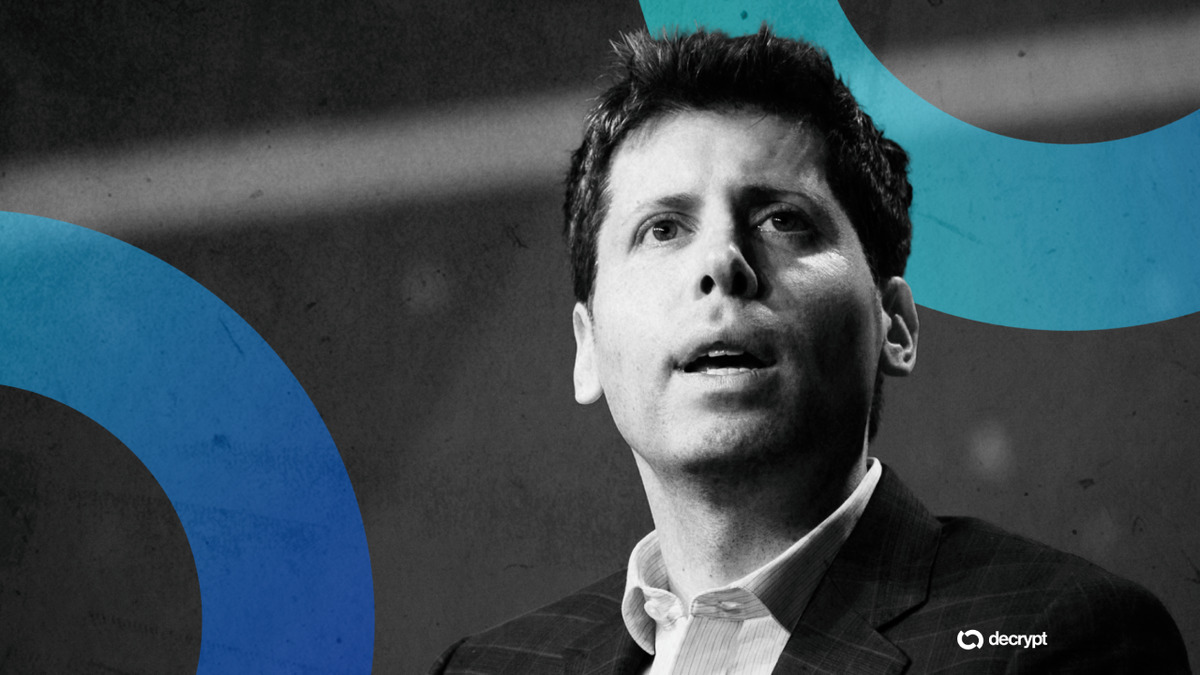 OpenAI's April 22, 2026 launch positioned Workspace Agents as the direct successor to Custom GPTs.
Source: decrypt.co
OpenAI's April 22, 2026 launch positioned Workspace Agents as the direct successor to Custom GPTs.
Source: decrypt.co
Under the Hood
Workspace Agents run on Codex, the same model family that powers OpenAI's coding environments. This is a deliberate architectural choice: Codex handles multi-step tool calls and action sequences more reliably than GPT-5.5-class models, which are stronger at open-ended reasoning but less disciplined as executors.
The server architecture - which OpenAI published in February 2026 - breaks agent work into threads, turns, and items. A thread is the durable session container that survives disconnections. A turn groups everything produced in response to a single trigger. An item is the atomic unit: a message, a tool call, a diff, or an approval request. Every step is logged, which makes agent runs auditable in a way Custom GPT interactions never were.
Memory and Continuity
Memory in Workspace Agents is scoped to the agent's purpose, not to individual users. An agent managing your team's weekly sales digest knows the format, past data, and preferred tone. It doesn't build a personal model of each user who interacts with it. That distinction matters: if you want personalized AI memory that follows you across every conversation and channel, this isn't the right product. For shared team workflows where consistency matters more than personalization, the scoped approach works well.
The Integration Layer
At launch, Workspace Agents connect to Slack, Google Workspace (Gmail, Drive, Calendar, Docs, and Sheets), and Salesforce. Connectors for Notion, Linear, GitHub, and Atlassian are on OpenAI's roadmap without firm dates. Each integration requires admin authorization at the workspace level, and agents inherit only the permissions the admin grants.
The Slack integration is the most useful of the three right now. Agents can be deployed directly into a Slack channel, respond to mentions, run on a schedule, or trigger on incoming messages matching a pattern. A support triage agent that classifies new messages in #customer-feedback and routes them to the right team is truly practical and takes under an hour to set up.
 Workspace Agents are designed for shared team use - one agent, one set of controls, one history that everyone can see.
Source: pexels.com
Workspace Agents are designed for shared team use - one agent, one set of controls, one history that everyone can see.
Source: pexels.com
Building Your First Agent
Setup starts in the ChatGPT sidebar under Agents. You describe a workflow in plain language and the builder walks you through adding tools, setting a schedule, and publishing to the workspace. OpenAI ships templates for finance, sales, marketing, and engineering - each pre-wired with the relevant tools and suggested permissions. Most teams will modify a template rather than build from scratch, and that's the intended path.
Scheduling and Triggers
Agents can run on a fixed schedule (every Monday at 8am), on a webhook trigger, or when rolled out into Slack and activated by a mention. The scheduling interface is simple. There's no support for conditional schedules ("run only if there are new items"), cron expressions, or dynamic timing. For most recurring team workflows this is sufficient. For complex operational pipelines with conditional logic, it's a real constraint.
Approval Workflows
Admins can require human approval before any action that writes to an external system. An agent preparing to send an email or update a Salesforce record pauses and presents the proposed action for sign-off. This is the correct default for a product still in research preview. Teams typically start with all approvals enabled and disable them selectively as they build trust in specific agent behaviors.
Giving an agent access to your production Salesforce instance is a governance decision, not a technical one. The controls exist - the question is whether your organization is ready to use them.
Security and Admin Controls
The security model is more serious than Custom GPTs ever were. Admins define which tools each agent can access, set approval checkpoints for sensitive actions, and monitor all runs from a central dashboard. Agent activity logs show every tool call, data read, and write operation. OpenAI says prompt injection protection is built in, though the implementation details aren't published.
The cloud-only architecture means sensitive data travels through OpenAI's infrastructure during every agent run. For organizations with strict data residency requirements or on-premise systems, that's a hard blocker. OpenAI hasn't announced a private deployment option, and given the operational complexity of running Codex on-premise, don't expect one soon.
 Enterprise adoption of agentic AI requires audit logs, governance policies, and change management - not just good features.
Source: pexels.com
Enterprise adoption of agentic AI requires audit logs, governance policies, and change management - not just good features.
Source: pexels.com
The Pricing Picture
The free preview ended today. Credit-based billing is now active for all ChatGPT Business ($30/user/month), Enterprise, and Edu plans. Agents draw from a shared credit pool when users exceed their per-seat limits.
OpenAI hasn't published per-action or per-run rates. Teams that tested agents through the preview period have no baseline for what their credit consumption will cost in dollar terms. This is a real problem: teams are now billing from an opaque meter. Organizations that plan to deploy agents at scale should contact OpenAI for usage estimates before committing, rather than waiting to be surprised on the next invoice.
Strengths
- Real actions, not just answers: agents read from and write to connected apps
- Solid admin controls with approval workflows and full audit logs
- Slack integration is smooth and works reliably for team notifications and routing
- Templates get teams to a working agent in under a day without starting from scratch
- Codex execution is more reliable than GPT-4-class models on multi-step action sequences
Weaknesses
- Cloud-only: no local execution, no on-premise option for data-sensitive industries
- Business+ only: individual Plus subscribers have no access
- Pricing opacity: credit costs still unpublished as billing starts
- Limited connectors: Notion, GitHub, Linear, Atlassian all pending
- No personal memory: agents are team-aware but not user-aware
- Still labeled "research preview" - features and behavior subject to change
How It Compares
| Workspace Agents | Zapier Agents | Microsoft Agent 365 | Google Gemini Enterprise | |
|---|---|---|---|---|
| Underlying model | Codex | Third-party LLMs | Multiple (model-diverse) | Gemini 3.1 |
| Key strength | ChatGPT ecosystem depth | 6,000+ connectors | Deep M365 integration | G-Suite depth |
| Slack native | Yes | Partial | No | No |
| Salesforce native | Yes | Yes | Via Copilot Studio | Partial |
| Local execution | No | No | Partial | No |
| Approx. Pricing | Credits (Business+, $30+/user/mo) | Starts free | Bundled in E7 ($99/user/mo) | Varies by tier |
Microsoft's Agent 365 - launched May 1, 2026 - is the most direct competitor for organizations already on the M365 stack. Zapier Agents offer a far wider connector library but weaker native AI reasoning. Google's enterprise agents go deep on G-Suite but are less flexible outside it.
Verdict
Workspace Agents are the best thing OpenAI has shipped for enterprise teams since ChatGPT. The leap from Custom GPTs is genuine: these agents actually do things. The Codex execution layer is reliable, the approval controls are well-designed, and the Slack integration is the most right away useful connector of the three.
The gaps are worth taking seriously. Cloud-only architecture, a limited connector catalogue, and pricing opacity are genuine blockers for regulated industries and organizations that need to plan budgets. Research preview status means nothing is locked in, and OpenAI has been iterating on this product quickly.
At 8.0/10, this is a strong first production-grade agentic product from OpenAI. If your team is already on ChatGPT Business, the Agents tab is worth opening today. Just don't wire it into anything mission-critical before you've seen what a month of credit consumption actually costs.
Sources
- Introducing Workspace Agents in ChatGPT - OpenAI (April 22, 2026)
- ChatGPT Workspace Agents for Enterprise and Business - OpenAI Help Center
- OpenAI unveils Workspace Agents, successor to Custom GPTs - VentureBeat
- OpenAI updates ChatGPT with Codex-powered Workspace Agents - 9to5Mac
- OpenAI launches Workspace Agents - Decrypt
- Workspace Agents in ChatGPT - Hacker News
- OpenAI Codex App Server architecture - InfoQ (February 2026)
- Workspace Agents vs Custom GPTs explained - FindSkill.ai

