
Kling 3.0 Review: Best AI Video Generator?
Kling 3.0 brings native 4K at 60fps, multi-shot AI Director, and single-pass audio to AI video - here's whether it lives up to the hype.
 10 min read
When Kuaishou launched Kling 3.0 on February 4, 2026, the AI video community paid attention. The promise: native 4K at 60 frames per second, up to six distinct camera shots within a single 15-second clip, and synchronized audio generated in one pass with the video. After spending several weeks with the platform, testing its limits across short film sequences, product visuals, and dialogue-heavy clips, I can say Kling 3.0 is truly impressive - and truly frustrating in equal measure.
TL;DR
- 8.0/10 - the strongest general-purpose AI video model right now, with caveats
- Multi-shot AI Director and native 4K at 60fps are real differentiators that no competitor matches
- Generation takes 3-5 minutes per clip; character consistency across separate generations remains weak; lip sync is hit-or-miss
- Best for: filmmakers, advertisers, previs teams who need cinematic camera work and single-clip storytelling. Skip if you need fast iteration or reliable talking-head lip sync.
What Changed in 3.0
Kling 3.0 isn't a minor version bump. Kuaishou rebuilt the underlying architecture around what they call Multi-modal Visual Language (MVL) - a unified model that processes text, image, and video in a single pass rather than piping outputs between separate tools. The result is a model that feels qualitatively different from its predecessors.
The headline numbers: native 4K (3840x2160), up to 60fps, and a maximum clip duration of 15 seconds, up from 10 in version 2.6. Those numbers matter in practice. The 4K output isn't upscaled from 1080p - textures and edges hold up at full resolution. The 60fps frame rate produces motion that reads as cinematic rather than uncanny.
Kuaishou launched four models simultaneously: Video 3.0, Video 3.0 Omni, Image 3.0, and Image 3.0 Omni. The Omni variants add the native audio generation. If you're creating video without audio, the standard Video 3.0 is cheaper and slightly faster. Most creative workflows will want Omni.
April 2024 - Kling 1.0 launches as a closed beta in China, gaining early attention for photorealistic human motion.
Late 2024 - Kling 2.0 and later 2.x updates add longer clips, improved consistency, and global access.
February 4, 2026 - Kling 3.0 launches with native 4K, multi-shot AI Director, Omni audio, and MVL architecture.
AI Director: Truly New Territory
The multi-shot feature is the most interesting thing Kling 3.0 does. Most AI video models produce a single continuous shot. Kling 3.0 lets you specify up to six distinct shots within one generation: different durations, different shot sizes (wide, medium, close-up, macro, POV), different camera movements (pan, track, dolly, static), and different narrative beats. The model handles choreography and transitions between them.
To get good results, you need to write structured, shot-list-style prompts. A casual natural language description will produce poor multi-shot output. When you put in the work - describing each beat clearly, specifying camera angles and subject positions - the results are properly cinematic in a way that single-shot AI video isn't.
What impressed me most is what Kuaishou calls Spatial Continuity. Characters maintain correct positional relationships to the environment across different camera angles within the same clip. A subject standing at a window in a wide shot is at the same window, from the same angle of approach, when you cut to a close-up. This sounds obvious, but it's notoriously hard for generative models to get right, and Kling 3.0 gets it right most of the time.
The AI Director feature is the first time an AI video model has felt truly useful for narrative filmmaking, not just for creating atmospheric b-roll.
The main caveat: secondary character detail does degrade across a full 15-second multi-shot sequence. Faces of background characters, fine clothing details, and environmental props can soften or morph in the final shots. This is manageable if you're generating sequences for previs or social content; it's a problem if you need frame-perfect consistency all through.
Omni Audio: Strong, Not Perfect
The Omni audio system generates synchronized audio in a single pass with video: voiceovers, lip-synced dialogue, ambient sound, and background music all produced together. In practice, this means a café scene gets background conversation murmur and espresso machine hiss without manual audio layering. A walking sequence gets footsteps paced correctly to the stride.
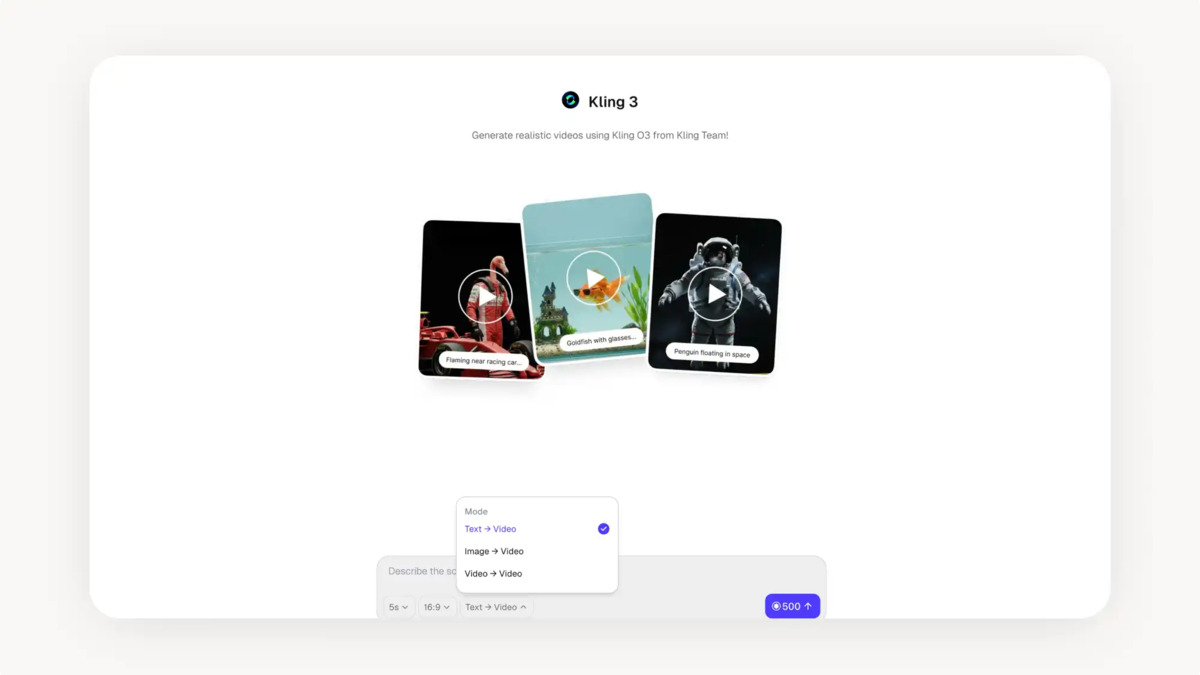 Kling 3.0's web interface with the AI Director multi-shot controls visible. The structured prompt panel on the left maps each shot to a camera specification.
Source: app.klingai.com
Kling 3.0's web interface with the AI Director multi-shot controls visible. The structured prompt panel on the left maps each shot to a camera specification.
Source: app.klingai.com
Dialogue lip sync supports five languages: Chinese, English, Japanese, Korean, and Spanish. The Voice Binding feature attaches specific voice profiles to specific characters, so multi-character dialogue scenes maintain consistent speaker identities. I tested a two-person English dialogue clip and an English/Japanese mixed-language exchange - both produced usable results on the first attempt.
That said, lip sync is inconsistent in a way that other reviewers also flagged. Chase Jarvis, in his review, described it as "doesn't always hit the mark" - which matches my experience. Roughly two out of five dialogue clips I generated had sync issues that would require a retake. For comparison, Veo 3.1 produces noticeably more reliable lip sync, especially for English dialogue. If talking-head content is your primary use case, Veo 3.1 is the better tool.
Audio quality can also sound muffled in some generations - especially with ambient soundscapes that involve water or wind. It's not a dealbreaker for social content, but it is audible in a good pair of headphones.
Benchmarks and Competition
On the Artificial Analysis leaderboard from early February 2026, Kling 3.0 Pro scored 1243 ELO in text-to-video generation. Runway Gen-4.5 sits slightly ahead at about 1247 ELO in overall quality perception, while Veo 3.1 scores 1226 ELO. Sora 2 Pro trails the field in these rankings.
The more useful comparison is by capability profile:
| Capability | Kling 3.0 | Veo 3.1 | Sora 2 | Runway Gen-4.5 |
|---|---|---|---|---|
| Max resolution | Native 4K | ~1080p | 1080p | 1080p |
| Max FPS | 60 | 30 | 30 | 30 |
| Max clip length | 15s | 8s | ~20s | 10s |
| Multi-shot | Up to 6 shots | Limited | Limited | No |
| Native audio | Yes | Yes (better quality) | Partial | No |
| Lip sync | Inconsistent | Best-in-class | Good | N/A |
| Approx. API cost | ~$0.10/sec | ~$0.20/sec | ~$0.15/sec | Varies |
Kling 3.0 wins on raw technical specs and the multi-shot feature. Runway Gen-4.5 wins for stylized creative work and fast iteration. Veo 3.1 wins for dialogue-heavy content. Sora 2 wins for complex multi-subject scenes with precise prompt adherence. There isn't a single dominant choice for all use cases - the right tool depends on the specific project. The best AI video generators guide for 2026 covers the full competitive field if you're still deciding.
Pricing: Getting Expensive
Kling AI uses a credit system across five tiers.
| Plan | Monthly Price | Monthly Credits |
|---|---|---|
| Free | $0 | 66/day (no rollover) |
| Standard | $6.99 | 660 |
| Pro | $25.99 | 3,000 |
| Premier | $64.99 | 8,000 |
| Ultra | $180 | 26,000 |
A Professional Mode 10-second clip costs 70 credits. A 10-second Omni Native Audio generation costs 100-200 credits. At the Pro tier, that's roughly 15-30 Omni clips per month - not enough for a serious production workflow.
The Ultra plan jumped from $128/month in August 2025 to $180/month in January 2026, a 41% price increase in under six months. The credit expiry policy is also genuinely bad: free credits expire daily, and paid subscription credits allow only 20% rollover to the following month. If you have a slow month, you lose most of what you paid for. Purchased credit packs are non-refundable.
For individual creators, the Pro tier is workable. For teams doing production volume, you're looking at Ultra at $180/month or building on the API through a third-party reseller. Runway Gen-4.5 and Veo 3.1 both offer more transparent credit economics for high-volume work.
Generation Speed
This is Kling 3.0's most significant practical weakness. A 5-second clip takes approximately two minutes. A full 15-second multi-shot 4K sequence takes five minutes or more. Competitors like Grok's video generation produce clips in roughly 30 seconds. For rapid iteration - trying multiple prompt variations, adjusting and regenerating - the wait times are painful.
 A multi-shot sequence created with AI Director: three shots with different camera positions and motion, produced in a single generation pass.
Source: app.klingai.com
A multi-shot sequence created with AI Director: three shots with different camera positions and motion, produced in a single generation pass.
Source: app.klingai.com
The speed tradeoff comes with the territory at 4K 60fps, and Kuaishou hasn't published a roadmap for improving generation times. If you can batch your generations and work on other tasks while the model renders, the wait is manageable. If you're working in a live creative session with a client or collaborator, it's a real friction point.
Known Issues
Beyond speed and lip sync inconsistency, a few other issues are worth flagging:
- Physics hallucination: Water splashing, glass reflections, and loose fabric can morph unnaturally mid-clip, especially in the later frames of longer sequences
- Character cloning drift: The facial likeness clone feature (which lets you extract a face from reference footage) shows drift that Curious Refuge described as "more like an R&D tool than commercial-ready"
- Abstract visuals: Design-heavy or collage-style content doesn't translate well - the model is optimized for photorealistic naturalistic scenes
- Customer support: Multiple user reports describe unhelpful support responses and strict no-refund enforcement even when platform failures prevented generations from completing
The character cloning limitation matters because one of the main use cases for tools like this is brand-consistent product advertising. If the face of a spokesperson or influencer drifts across a campaign, the clips aren't usable commercially.
Who Should Use It
Kling 3.0 is the right choice if you're doing short-form cinematic content, product advertising, or narrative previs and you need multi-angle storytelling in a single generation. The AI Director feature has no direct equivalent in any competing model. Native 4K at 60fps is a real technical advantage for output that ends up in broadcast or premium social contexts.
If your primary use case is dialogue with reliable lip sync, Veo 3.1 is a better fit. If you need fast iteration cycles or stylized VFX, Runway Gen-4.5 serves you better. For complex multi-subject narrative scenes, Sora 2 still holds advantages on prompt adherence.
The pricing and credit expiry policies are real negatives. Kuaishou has a strong product and has chosen to monetize it aggressively. The Ultra tier at $180/month with 20% credit rollover is genuinely unfriendly to serious production teams.
For context on how Kling compares to AI video tools built into broader ecosystems, the Seedance 2.0 review covers ByteDance's approach, which takes a different stance on pricing and distribution.
Strengths and Weaknesses
Strengths:
- Multi-shot AI Director is a genuine first in consumer AI video - no equivalent in any competitor
- Native 4K at 60fps, not upscaled - textures and motion hold up at full resolution
- Single-pass MVL architecture produces coherent audio-video synchronization
- Spatial Continuity across multi-shot sequences is technically impressive
- Strong cinematic physics: gravity, inertia, fabric, and lighting behave convincingly
- Broad third-party integrations (InVideo, Higgsfield, Artlist, Magic Hour, fal.ai, Replicate)
Weaknesses:
- 3-5 minute generation times make rapid iteration painful
- Lip sync inconsistency - roughly one in three Omni dialogue clips needs a retake
- Credit expiry policy punishes irregular usage
- Ultra tier jumped 41% in six months; overall pricing is aggressive
- Character consistency across separate generations remains weak
- Customer support widely reported as unresponsive
Verdict
Kling 3.0 earns its reputation as the most technically capable general-purpose AI video model available right now. The multi-shot AI Director feature represents a genuine step toward AI tools that can handle narrative structure, not just produce pretty clips. Native 4K at 60fps and a coherent single-pass audio system make it the best choice for high-quality short-form cinematic work.
The 41% price hike on Ultra, the punishing credit rollover limits, and the slow generation times prevent it from being an easy recommendation for production teams. Test the free tier, run a Pro subscription for one project, and decide whether the multi-shot and resolution advantages justify the cost and wait times for your specific workflow. For most filmmakers and advertisers doing premium short content, they will.
Score: 8.0/10
Sources
- Kling AI Launches 3.0 Model - Kuaishou IR Press Release
- Kling 3.0 Review - Curious Refuge
- Kling 3.0 AI Video - My 100% Honest Review - Chase Jarvis
- Kling 3.0 Complete Guide - InVideo
- Kling 3.0 Deep Dive - Overchat AI
- Best AI Video Models 2026 - TeamDay
- Kling AI Pricing 2026 - AI Tool Analysis
- Kling 3.0 Technical Preview - WaveSpeedAI
- Kling Video 3.0 AI Director Features Guide - Official Kling Blog
- Kling 3.0 Prompting Guide - fal.ai
- Kling 3.0 Multi-Shot Feature Detail - kling3.io
- Kling 3.0 Technical Introduction - CineD

