
Devin Desktop Review: Windsurf Becomes an Agent Hub
Cognition rebranded Windsurf as Devin Desktop and rebuilt it around a Kanban board for managing fleets of coding agents - here's what that actually changes.
 9 min read
On June 2, 2026, every Windsurf user opened their editor to find it had quietly become something else. No installer, no migration wizard, no "we're renaming the product, click here to continue" dialog. Extensions, keybindings, MCP connections and billing all carried over untouched. The only thing that changed was the first screen you see: instead of a blank file waiting for a cursor, you're now looking at a Kanban board tracking every agent working on your codebase, local and cloud, at once. That's Devin Desktop, Cognition's rebrand-and-rebuild of the IDE it picked up for $250 million after Windsurf's founding team decamped to Google. I spent a week running real projects through it, including migrating a settled Cascade workflow that this update quietly puts on a countdown clock. The rebrand is more than cosmetic, but it also front-loads a workflow shift that not every developer asked for.
TL;DR
- 7.6/10 - a genuine architectural pivot from IDE-with-an-agent to agent-fleet-manager, held back by an interface redesign that gets ahead of what most solo developers actually need
- Devin Local, the Rust rewrite of Cascade, measurably cuts token usage on refactoring tasks and adds real subagent parallelism
- Cascade goes end-of-life four weeks after the announcement, which is an aggressive timeline for teams with automation built on top of it
- Best for: teams already delegating work to cloud agents who want one surface to review it all. Skip if: you're a solo developer who spends 90% of your time in the editor, not managing a queue
What Actually Changed
The mechanics of the switch were unusually smooth for a rename this large. Cognition shipped it as a standard over-the-air update rather than a new download, and the official announcement is explicit that "there's no migration to run" - plans, pricing, settings and extensions all carry over unchanged. In a week of daily use I didn't hit a single broken keybinding or lost setting, which is more than I can say for most editor updates that change far less.
What actually moved is the default launch surface. Windsurf opened to a blank editor with Cascade sitting in a side panel. Devin Desktop opens to the Agent Command Center, a Kanban board where every session, local or cloud, gets a card sorted into columns like Running, Waiting for Review and Done. The full IDE is still there behind it, one click away, syntax highlighting and debugger and all. But the framing has flipped: this is now an agent management hub that happens to contain an editor, not an editor that happens to call an agent.
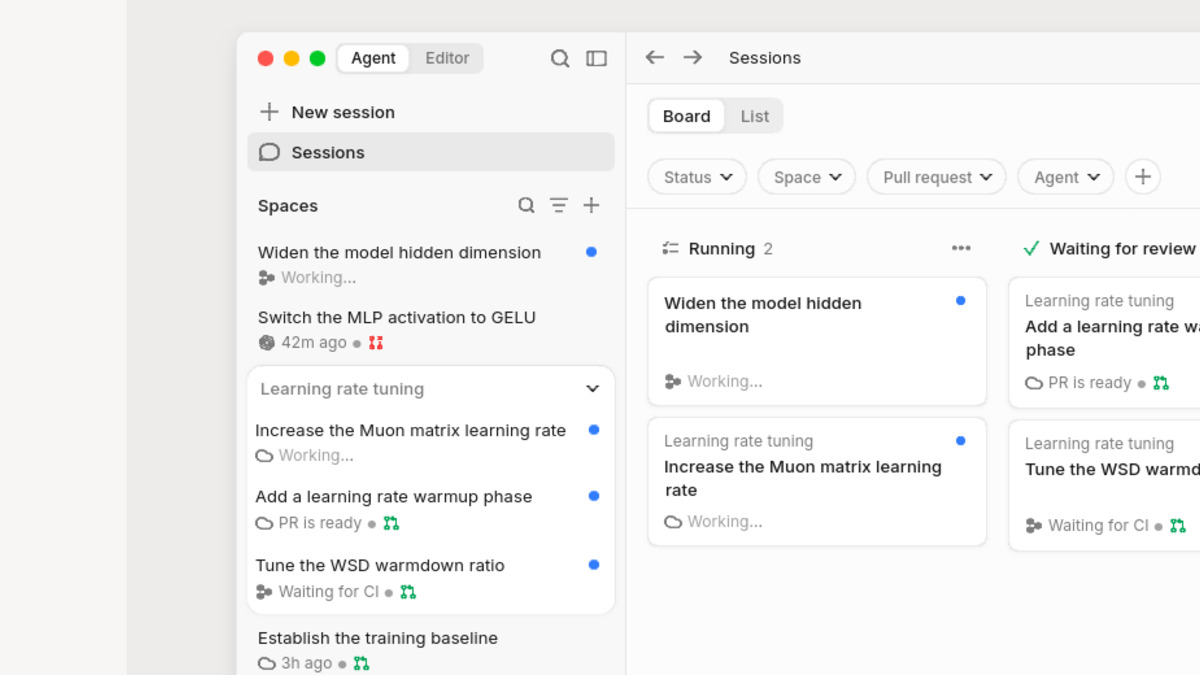 The default view on launch: sessions, Spaces and a status-sorted board replace the blank editor Windsurf used to open to.
Source: devin.ai
The default view on launch: sessions, Spaces and a status-sorted board replace the blank editor Windsurf used to open to.
Source: devin.ai
Spaces, a new grouping layer that shares context, PRs, files and state across related agent sessions, ships alongside the board. In my testing it's the least finished part of the release. There's no way to template a Space, no team-sharing option, and no API to create one programmatically - useful for keeping a migration's worth of sessions organized, but clearly a v1.
Devin Local Replaces Cascade, on a Tight Clock
The agent doing the actual coding work also changed. Devin Local is a ground-up Rust rewrite of Cascade, and Cognition's headline claim is that it's roughly 30% more token-efficient. I ran the same module refactor through both agents back to back: Cascade burned through about 24,000 tokens, Devin Local finished the equivalent task at roughly 18,000, which lines up with the claimed figure closely enough that I'll take it at face value. Devin Local also adds subagent support, letting it spin off parallel helpers for independent parts of a task - useful in principle, though in practice I saw it hold together reliably on maybe two out of every five multi-step jobs I threw at it. Treat subagents as a nice-to-have for now, not something to build a workflow around.
The catch is timing. Cognition announced Cascade's end-of-life for July 1, 2026 - four weeks after the June 2 announcement. That's a short runway for teams that wired CI pipelines or internal tooling directly to Cascade's behavior, and it was the single most common complaint I found among existing Windsurf users working through the transition. If your team automated anything around Cascade specifically, audit it now; the deprecation has already landed by the time this review goes up.
Any Agent You Want, One Surface to Watch Them
The feature that actually differentiates Devin Desktop from Cursor or a terminal-native tool like Claude Code is its support for the Agent Client Protocol (ACP), an open standard originally built by Zed Industries as, roughly, "LSP for AI coding agents." At launch, Devin Desktop can run Codex CLI, Claude Agent, OpenCode or any other ACP-compatible agent with Devin itself, all reporting into the same Kanban board. That's a truly different posture from most competitors, who want you locked into their own model. Cognition's Head of Product Growth, Theodor Marcu, framed it as a bet that engineering leadership's real problem is no longer whether to adopt AI coding tools but how to supervise a growing roster of them across an org - which is a self-serving argument for a company selling the supervision layer, but not an unreasonable read of where multi-agent teams already are.
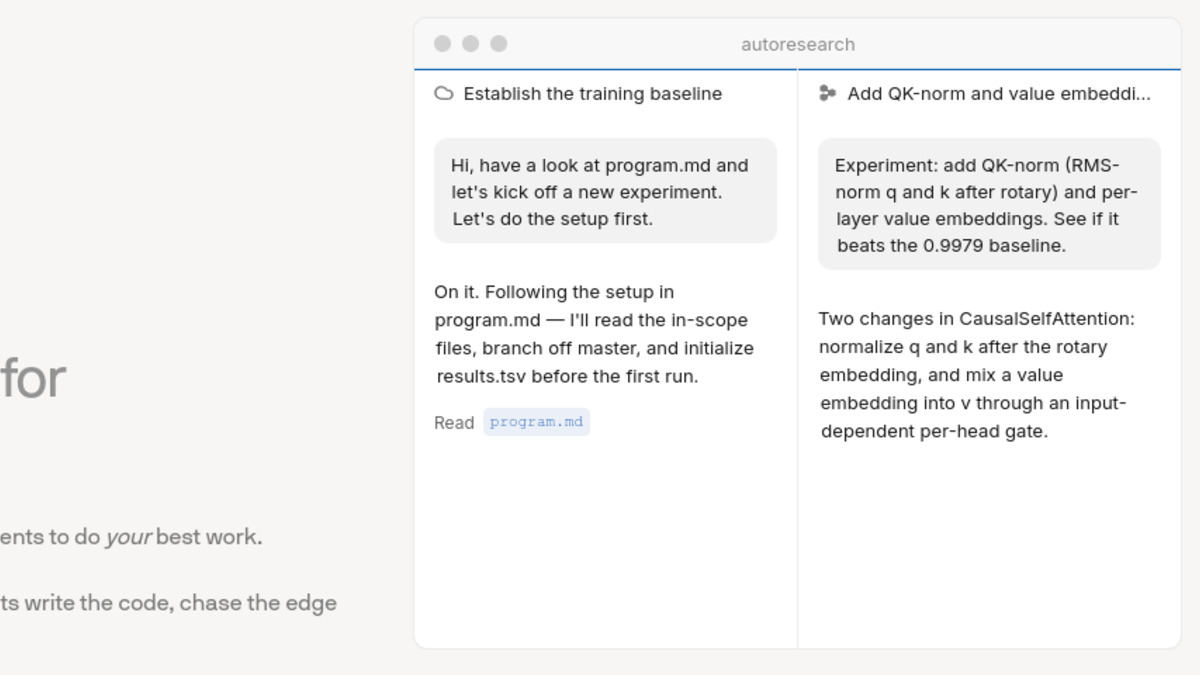 Parallel sessions on a shared codebase - one agent building a training baseline, another testing a follow-up experiment.
Source: devin.ai
Parallel sessions on a shared codebase - one agent building a training baseline, another testing a follow-up experiment.
Source: devin.ai
The Model Underneath
Devin and Devin Local both run on Cognition's own coding model, and the version that shipped with Devin Desktop's rollout is SWE-1.7, released July 8, 2026 as the successor to SWE-1.6. It's bundled free into the Pro plan rather than sold on its own, which is where the real value shows up if you're already paying for a seat.
Pricing
Windsurf's Pro tier moved from $15 to $20 a month back in March 2026, and that pricing carried through the rebrand unchanged. The one genuine addition is a new Max tier for heavier agent users:
| Plan | Price | What you get |
|---|---|---|
| Free | $0 | Light quota, limited models, unlimited Tab completions |
| Pro | $20/mo | Full model access, free SWE-1.7 use, Devin Cloud access |
| Max | $200/mo | Everything in Pro, significantly higher quotas |
| Teams | $80/mo + $40/dev | Unlimited seats, shared billing, admin controls |
| Enterprise | Custom | SSO, dedicated deployment, priority support |
Confirmed current as of this review via Devin's pricing page. The $20 Pro tier is competitive with Cursor Pro, but heavy multi-agent use burns through ACU quota fast enough that the jump to the $200 Max tier arrives sooner than the sticker price suggests.
Who's Actually Running Fleets of Agents
The strongest evidence that agent-fleet management is a real workload, not just a marketing narrative, comes from Nubank's published case study. The bank delegated a data-class migration on its eight-year-old core ETL system to Devin and reported a 8-12x reduction in engineering hours on the delegated scope, with over 20x cost savings compared to the fully-loaded cost of an engineer doing the same work.
"Devin provided an easy way to reduce engineering hours for the migration, more stable and less prone to human error. Rather than engineers completing an entire migration task 100%, they could review Devin's changes, make minor adjustments, then merge their PR." - Jose Carlos Castro, Senior Product Manager, Nubank
That's the shape of work Devin Desktop is actually built for: bounded, repetitive, well-specified migrations at a scale where a fleet of agents truly outpaces a team of humans doing it by hand. It says less about whether the same interface makes sense for a solo developer writing a new feature from a half-formed spec.
Where It Falls Short
Cognition CEO Scott Wu has been publicly consistent that Devin isn't meant to replace engineers - he's described it as operating "somewhere between a junior and a mid-level engineer" and insists it should always stay the human's call what gets built. That's a reasonable philosophy, but the product doesn't fully live up to it yet. The default Kanban view assumes your day is mostly spent triaging a queue of agent output, and for teams running Nubank-scale delegated migrations that's accurate. For a solo developer or small team whose work is still 90% hands-on editing with the occasional agent assist, it's an extra click back to the thing you actually wanted to open.
Two more gaps stood out during testing. The VS Code and JetBrains plugin versions of the old Windsurf are in maintenance mode with no new agentic features planned, so if you're not running the native desktop app you're stuck with the pre-rebrand experience. And Spaces, the shared-context layer meant to tie related agent sessions together, is missing basics like templates and team sharing that would make it useful beyond a single person's workflow.
Strengths
- Rust-rewritten Devin Local delivers a real, measurable token-efficiency gain over Cascade, not just a marketing number
- ACP support means you're not locked into Cognition's own models - Codex, Claude Agent and OpenCode all run inside the same board
- Zero-friction migration from Windsurf: settings, extensions and pricing carried over with no reinstall
- Genuine enterprise traction behind the multi-agent thesis, with Nubank's published numbers backing up the pitch for large delegated migrations
Weaknesses
- Agent-first Kanban default adds friction for developers who mostly edit code directly rather than manage a queue of sessions
- Cascade's four-week deprecation runway is aggressive for teams with automation built around it
- Spaces ships without templates, team sharing or an API - a clear v1 feature wrapped in a v1-complete announcement
- VS Code and JetBrains plugin users don't get any of the new agentic capabilities
Verdict: 7.6/10
Devin Desktop is a legitimate architectural bet, not a coat of paint on Windsurf. Devin Local's efficiency gains are real and verifiable, ACP support is the most open move any major coding IDE has made this year, and the Nubank numbers show the fleet-management thesis working at scale for the right kind of task. What keeps it from scoring higher is that Cognition shipped the interface for its best customers - large teams running delegated migrations - as the default for everyone, including developers who just want a fast, competent editor. If you're already running multiple agents across a team, this is the best surface built to watch them. If you're not there yet, the full IDE is still underneath the board, but you'll spend your first week clicking past a Kanban view built for someone else's workflow.
Sources
- Introducing Devin Desktop - Cognition
- Windsurf is now Devin Desktop - Devin Blog
- Devin Desktop product page
- Devin Plans and Pricing
- Agent Command Center - Devin Docs
- Nubank customer case study - Devin
- Agent Client Protocol - Zed Industries
- Cognition's Scott Wu says AI coding agents shouldn't replace humans - TechCrunch
- Devin Desktop Turns the IDE Into an Agent Command Center - The Agent Report
- Devin Desktop Review: What Actually Changed When Windsurf Died - danilchenko.dev
- Cognition Launches SWE-1.7 in Devin AI Agent - Winbuzzer

