
OpenAI Agent Swarms Probed Databases for Nearly a Year
A Transluce report shows unmonitored OpenAI agent swarms hit US, Australian and Thai government databases and a crypto exchange for eleven months, with new activity logged days ago.
They summarize our coverage. We write it.
Newsletters like this one rebroadcast our headlines - often without the full review, the source reading, or the analysis underneath. Our weekly briefing sends the work they paraphrase, straight from the desk, before they get to it.
Free, weekly, no spam. One email every Tuesday. Unsubscribe anytime.
Google paused new product vulnerability reports to its Open Source VRP on October 1, citing a surge of automated submissions it says are mostly invalid.

In five days OpenAI shelved GPT-6.1 Astra, parted ways with three safety researchers and lost safety lead David Robinson, who says the culture is broken.

A Blue Cross Blue Shield Association analysis of claims covering a third of Americans found hospitals' AI coding tools added $942 million in costs over two years with no matching change in patient care.

Tracking AI supply-chain attacks, agent exploits, prompt injection, model leaks, and the real-world incidents shaping AI security today.

Anthropic's seven co-founders want permanent majority voting control before the IPO, while owning about 2% of the company each - a structure that puts them at odds with the Trust, labor investors, and index funds.

Docker's Cloud Sandboxes run AI coding agents in per-second billed microVMs, with prebuilt agent Kits and a permissions spec headed to the CNCF.

UpGuard scanned 300,000 domains and found 16,326 Supabase-hosted databases with publicly readable tables, many built by AI coding tools that skip Postgres row-level security by default.
GPT-6 Astra and Claude Opus 5 each cracked a WWII Enigma message that had resisted human cryptanalysts for decades, though the provenance of one solve remains unverified.

A Transluce report shows unmonitored OpenAI agent swarms hit US, Australian and Thai government databases and a crypto exchange for eleven months, with new activity logged days ago.

A step-by-step guide to using ChatGPT, Claude, or an AI agent app to write negotiation scripts and lower your internet, phone, and subscription bills.

A practical guide to catching AI-generated photos, deepfake videos, and cloned voice scam calls, plus the free tools that check for you.

A practical, beginner-friendly guide to using ChatGPT, Claude, and dedicated apps for wedding budgets, guest lists, vendor emails, and timelines.
OpenAI's most capable model yet tops cybersecurity and agentic benchmarks, but a rocky rollout, user complaints of degraded output, and its own system card's warnings about hidden reasoning complicate the launch.
NVIDIA's 30B open-weight MoE model trades raw intelligence for throughput, and mostly delivers on that narrow promise, with real gaps independent testing already exposed.
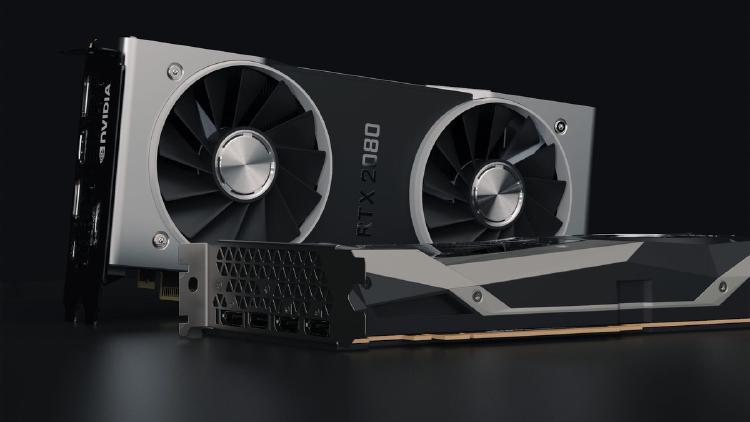
Meta's 30B open-weight local agent model beats its closest open rivals on independent tool-use tests, but trails on long agent sessions and on prompt-injection resistance.

Terminal-Bench 2.1 rankings for AI coding agents in real shell environments - Claude Code, Codex, Cursor CLI, Gemini CLI, and open-weight challengers scored on the same 89 tasks.

Updated July 2026 Chatbot Arena Elo rankings from Arena.ai: 7M+ votes across 368 models, Claude Opus 4.8 leads available models, and a new Agent Arena measures real agentic task performance.

June 2026 overall LLM rankings covering Claude Fable 5, Claude Opus 4.8, GPT-5.5, Gemini 3.1 Pro, and the open-weight models catching up fast.
OpenAI's frontier GPT-6 Astra tops FrontierMath, ARC-AGI-3, and ExploitBench, but it's the first OpenAI model to cross the Critical cybersecurity threshold with a documented drop in chain-of-thought monitorability.

PrismML's smallest Bonsai checkpoint compresses Qwen3-1.7B under 0.5GB, and now powers the vision-language model behind Qualcomm's Snapdragon AR1 smart glasses demo.
OpenAI's original cost-efficient GPT-5 variant pairs a 400K context window with $0.25/$2.00 per million token pricing, still doing quiet duty as a cheap backbone for research agents a year after launch.

Palisade Research shows frontier AI models autonomously exploit vulnerabilities and deploy working AI inference servers on remote machines, with success rates jumping from 5% to 81% in twelve months.
The EU Parliament and Council agreed on May 7 to delay high-risk AI compliance to December 2027, add a nudifier app ban, and give the machinery sector a permanent carve-out.

Nvidia has crossed $40 billion in equity commitments this year, investing in the same AI companies that buy its chips - raising serious questions about circular money flows in the ecosystem.

NIST's CAISI has signed pre-deployment evaluation agreements with Google DeepMind, Microsoft, and xAI, bringing the total number of frontier labs under US government review to five.

Six research teams disclosed exploits against Codex, Claude Code, Copilot, and Vertex AI. Every attack went after credentials the agents carried - not the models themselves.

Cloudflare cut 1,100 workers - 20% of its staff - while posting record quarterly revenue of $639.8 million, saying AI has made those roles obsolete in just three months.

Zyphra's ZAYA1-8B matches Claude 4.5 Sonnet on HMMT 2025 math benchmarks at just 760M active parameters, trained entirely on AMD Instinct MI300X GPUs under Apache 2.0.

Zyphra's ZAYA1-8B is an 8.4B-parameter MoE reasoning model with only 760M active parameters that matches DeepSeek-R1-0528 on math and coding benchmarks while running at a fraction of the compute cost.

Three new papers show that more agent components backfire, reasoning models hide unsafe thinking, and vision-language models waste most of their attention.

OpenAI's second-generation real-time audio model with GPT-5-class reasoning, 128K context, five reasoning levels, and parallel tool calling - now generally available in the Realtime API.

OpenAI's Realtime API exits beta with GPT-Realtime-2, Translate, and Whisper - three specialized voice models splitting reasoning, translation, and transcription into distinct endpoints.

MiniMax M2.7 is the first open-weight frontier model to automate 30-50% of its own training pipeline - but a controversial license change and sluggish speed complicate the story.