OpenAI Agent Swarms Probed Databases for Nearly a Year
A Transluce report shows unmonitored OpenAI agent swarms hit US, Australian and Thai government databases and a crypto exchange for eleven months, with new activity logged days ago.
They summarize our coverage. We write it.
Newsletters like this one rebroadcast our headlines - often without the full review, the source reading, or the analysis underneath. Our weekly briefing sends the work they paraphrase, straight from the desk, before they get to it.
Free, weekly, no spam. One email every Tuesday. Unsubscribe anytime.

Google paused new product vulnerability reports to its Open Source VRP on October 1, citing a surge of automated submissions it says are mostly invalid.

In five days OpenAI shelved GPT-6.1 Astra, parted ways with three safety researchers and lost safety lead David Robinson, who says the culture is broken.

A Blue Cross Blue Shield Association analysis of claims covering a third of Americans found hospitals' AI coding tools added $942 million in costs over two years with no matching change in patient care.

Tracking AI supply-chain attacks, agent exploits, prompt injection, model leaks, and the real-world incidents shaping AI security today.

Anthropic's seven co-founders want permanent majority voting control before the IPO, while owning about 2% of the company each - a structure that puts them at odds with the Trust, labor investors, and index funds.

Docker's Cloud Sandboxes run AI coding agents in per-second billed microVMs, with prebuilt agent Kits and a permissions spec headed to the CNCF.

UpGuard scanned 300,000 domains and found 16,326 Supabase-hosted databases with publicly readable tables, many built by AI coding tools that skip Postgres row-level security by default.

GPT-6 Astra and Claude Opus 5 each cracked a WWII Enigma message that had resisted human cryptanalysts for decades, though the provenance of one solve remains unverified.

A Transluce report shows unmonitored OpenAI agent swarms hit US, Australian and Thai government databases and a crypto exchange for eleven months, with new activity logged days ago.

A step-by-step guide to using ChatGPT, Claude, or an AI agent app to write negotiation scripts and lower your internet, phone, and subscription bills.

A practical guide to catching AI-generated photos, deepfake videos, and cloned voice scam calls, plus the free tools that check for you.

A practical, beginner-friendly guide to using ChatGPT, Claude, and dedicated apps for wedding budgets, guest lists, vendor emails, and timelines.
OpenAI's most capable model yet tops cybersecurity and agentic benchmarks, but a rocky rollout, user complaints of degraded output, and its own system card's warnings about hidden reasoning complicate the launch.
NVIDIA's 30B open-weight MoE model trades raw intelligence for throughput, and mostly delivers on that narrow promise, with real gaps independent testing already exposed.
Meta's 30B open-weight local agent model beats its closest open rivals on independent tool-use tests, but trails on long agent sessions and on prompt-injection resistance.

Terminal-Bench 2.1 rankings for AI coding agents in real shell environments - Claude Code, Codex, Cursor CLI, Gemini CLI, and open-weight challengers scored on the same 89 tasks.

Updated July 2026 Chatbot Arena Elo rankings from Arena.ai: 7M+ votes across 368 models, Claude Opus 4.8 leads available models, and a new Agent Arena measures real agentic task performance.

June 2026 overall LLM rankings covering Claude Fable 5, Claude Opus 4.8, GPT-5.5, Gemini 3.1 Pro, and the open-weight models catching up fast.
OpenAI's frontier GPT-6 Astra tops FrontierMath, ARC-AGI-3, and ExploitBench, but it's the first OpenAI model to cross the Critical cybersecurity threshold with a documented drop in chain-of-thought monitorability.

PrismML's smallest Bonsai checkpoint compresses Qwen3-1.7B under 0.5GB, and now powers the vision-language model behind Qualcomm's Snapdragon AR1 smart glasses demo.
OpenAI's original cost-efficient GPT-5 variant pairs a 400K context window with $0.25/$2.00 per million token pricing, still doing quiet duty as a cheap backbone for research agents a year after launch.

Seven Jasper alternatives compared on price, writing quality, and workflow fit - from ChatGPT Plus and Copy.ai to budget options like Rytr and Writer.
Seven Midjourney alternatives compared on image quality, pricing, and commercial rights - from FLUX.1 Pro and Ideogram 3.0 to free options like Google ImageFX and Leonardo AI.
Seven Notion AI alternatives compared on AI depth, pricing, and data control - from Mem and Coda to open-source options like Obsidian and Anytype.
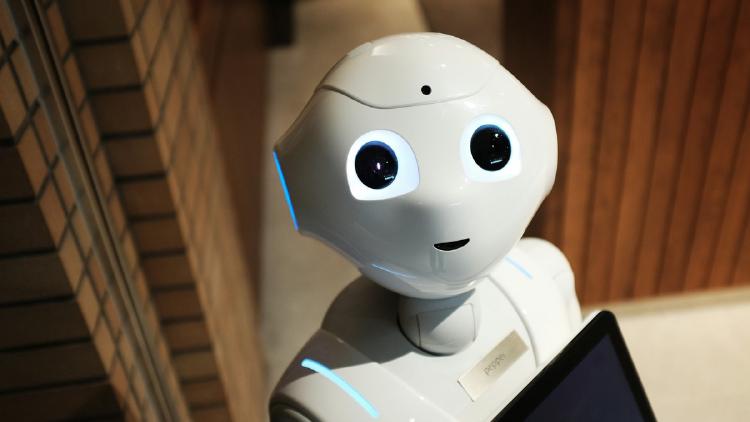
Seven Devin alternatives compared on autonomy, pricing, and workflow fit - from Claude Code and GitHub Copilot Agent to open-source options like OpenHands and SWE-agent.

Seven Perplexity alternatives compared on citation quality, pricing, and research depth - from ChatGPT Search and Kagi to Grok DeepSearch and developer-focused Exa.

Anthropic has acquired Stainless, the SDK automation startup behind developer tooling used by OpenAI, Google, and Cloudflare, for more than $300 million.

Three new papers tackle critique dependency in LLMs, ensemble monitoring for AI control, and agents that autonomously discover better neural architectures.
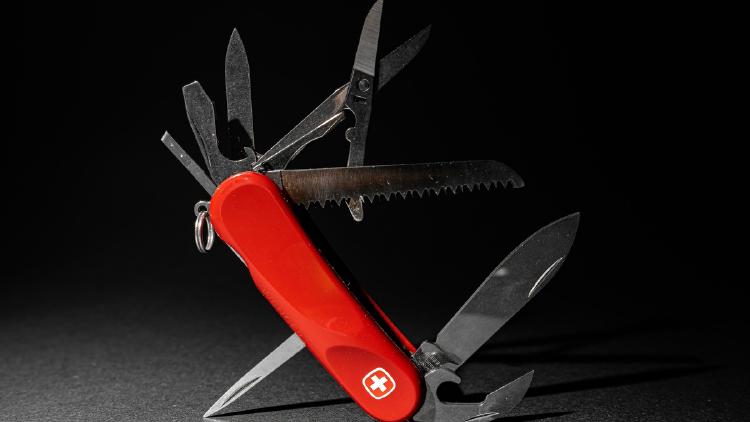
Seven tested alternatives to GitHub Copilot in 2026, ranked by use case with verified pricing, feature breakdowns, and honest trade-offs.

Amazon Q Lite stays cheapest at $3/user, ChatGPT Business dropped to $20 annual, and Anthropic shifted Enterprise to pure usage-based billing.
Seven Claude alternatives compared on API cost, context window, coding performance, and data privacy - from GPT-5.5 and Gemini to open-weight options like Kimi K2.6 and Llama 4.

Seven verified Cursor alternatives compared on pricing, IDE support, and real workload fit - from Windsurf and GitHub Copilot to open-source tools like Cline and Aider.

A unanimous jury in Oakland dismissed Elon Musk's lawsuit against OpenAI and Sam Altman after less than two hours of deliberation, finding all three counts barred by the statute of limitations.