A Memory Shortage Triggered $950B in AI Deals
Nvidia, SK Group, Samsung and Broadcom signed close to a trillion dollars in AI chip and memory deals in San Francisco, and the memory shortage behind them means someone outside the room ends up paying.
They summarize our coverage. We write it.
Newsletters like this one rebroadcast our headlines - often without the full review, the source reading, or the analysis underneath. Our weekly briefing sends the work they paraphrase, straight from the desk, before they get to it.
Free, weekly, no spam. One email every Tuesday. Unsubscribe anytime.

A missing noindex tag let Google surface hundreds of private Claude conversations and Artifacts in late July 2026, the third time in eleven months a major chatbot's share feature has leaked user chats onto the open web.

This week's research roundup covers agent benchmarks that reward exploits over real capability, reasoning models that give up despite having the answer, and why LoRA can't internalize multi-step procedures.

UK AISI and US CAISI found Kimi K3 scores 32.2% on an exploit-development benchmark against 76.2% for top US models, a gap that complicates both White House alarm and its own distillation accusation against Moonshot.

DeepSeek suspended a second funding round targeting a valuation above $70 billion after comments attributed to founder Liang Wenfeng went viral, days before a planned mainland China IPO.

Nvidia is negotiating to backstop $250 billion in financing for OpenAI's 10-gigawatt Ohio data center, plus another $350 billion for the chips going inside it, reviving the circular financing debate.
A single transmission line fault near Virginia's data center alley triggered a synchronized 3-gigawatt disconnect that took PJM 11 minutes to stabilize, twice as bad as a similar 2024 event.
Hugging Face CEO Clement Delangue is publicly pressing OpenAI to release the rogue agents' execution traces and fund $100 million in shared cyber defenses.

Tracking AI supply-chain attacks, agent exploits, prompt injection, model leaks, and the real-world incidents shaping AI security today.

Nvidia, SK Group, Samsung and Broadcom signed close to a trillion dollars in AI chip and memory deals in San Francisco, and the memory shortage behind them means someone outside the room ends up paying.

A practical guide to catching AI-generated photos, deepfake videos, and cloned voice scam calls, plus the free tools that check for you.

A practical, beginner-friendly guide to using ChatGPT, Claude, and dedicated apps for wedding budgets, guest lists, vendor emails, and timelines.
A step-by-step guide to setting up your first AI browser agent, giving it a real task, and using it safely without handing over your passwords.

Claude Opus 5 ties Claude Fable 5 on independent benchmarks at roughly a quarter of the cost, though a rough launch week and cybersecurity limits keep it from being an unqualified win.

Cognition rebranded Windsurf as Devin Desktop and rebuilt it around a Kanban board for managing fleets of coding agents - here's what that actually changes.

Google's Gemini 3.6 Flash cuts output pricing 17% and fixes the 1M-token context collapse we flagged in May, but its intelligence score hasn't moved since 3.5 Flash.
Terminal-Bench 2.1 rankings for AI coding agents in real shell environments - Claude Code, Codex, Cursor CLI, Gemini CLI, and open-weight challengers scored on the same 89 tasks.

Updated July 2026 Chatbot Arena Elo rankings from Arena.ai: 7M+ votes across 368 models, Claude Opus 4.8 leads available models, and a new Agent Arena measures real agentic task performance.

June 2026 overall LLM rankings covering Claude Fable 5, Claude Opus 4.8, GPT-5.5, Gemini 3.1 Pro, and the open-weight models catching up fast.
Google DeepMind's cheapest paid Gemini tier prices input at $0.30/M and output at $2.50/M tokens, more than doubling OSWorld-Verified and Terminal-Bench 2.1 scores over Gemini 3.1 Flash-Lite while trailing GPT-5.4 mini on raw coding benchmarks.
VIDRAFT quantizes its Darwin-36B-Opus MoE model into a 35B GGUF that runs on stock llama.cpp with no GPU, trading GPQA Diamond score for CPU and phone portability.
Anthropic's July 2026 release prices near-Fable-5 coding and agentic performance at Opus 4.8 rates, doubling Frontier-Bench scores and landing within 0.5 points of Fable 5 on CursorBench at half the cost.
OpenAI's agentic security researcher Aardvark is now Codex Security, with a new malware analysis pipeline that lets users upload samples, run automated analysis, and pull structured reports.
David Silver leaves DeepMind to launch Ineffable Intelligence, raising $1B in Europe's largest seed round to pursue superintelligence through reinforcement learning instead of large language models.

Apple is accelerating development of three AI wearable devices built around a Gemini-powered Siri, setting up a direct collision with Meta in a market projected to quadruple this year.

Chat & Ask AI, a popular chatbot wrapper app with 50 million users, left its Firebase database wide open - exposing 300 million messages including suicide discussions, drug recipes, and medical conversations to anyone who knew where to look.
Anthropic analyzed millions of Claude Code sessions and found AI agents are working autonomously for nearly twice as long as they did four months ago, with experienced users granting more trust over time.

1,184 malicious skills were found on OpenClaw's ClawHub marketplace - stealing SSH keys, crypto wallets, browser passwords, and opening reverse shells. One attacker uploaded 677 packages alone. The #1 ranked skill had 9 vulnerabilities and was downloaded thousands of times.
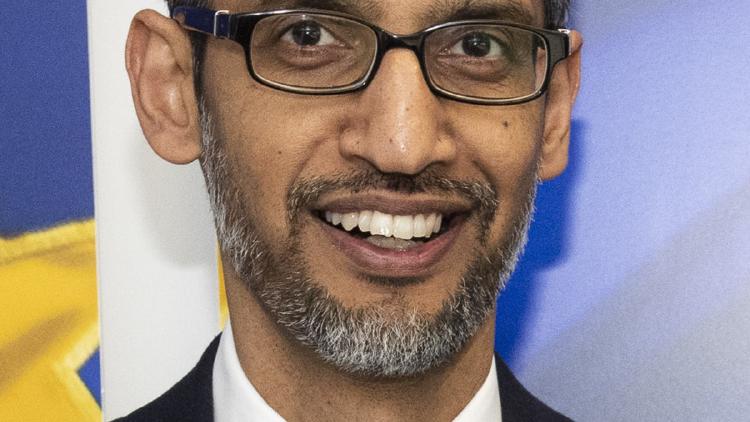
Google releases Gemini 3.1 Pro with dramatically improved reasoning, topping Claude Opus 4.6 and GPT-5.2 on most industry benchmarks.
Alibaba releases Qwen 3.5, a 397-billion-parameter open-weight model that claims to outperform US frontier models at a fraction of the cost.
A beginner-friendly explanation of Retrieval-Augmented Generation (RAG) - the technique that lets AI pull in real facts before answering your questions.
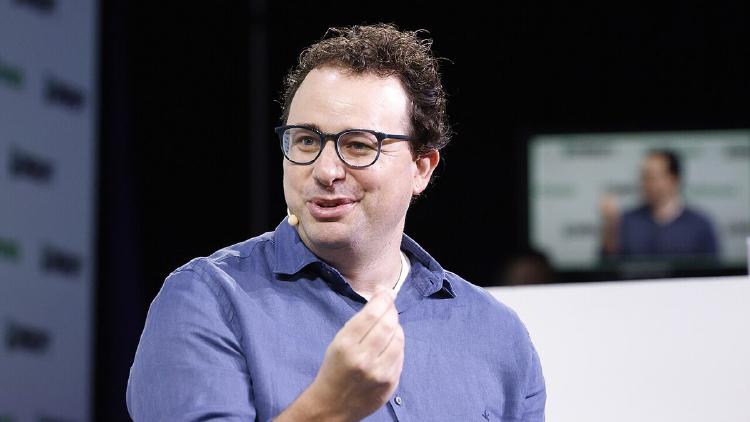
At the India AI Impact Summit, PM Modi orchestrated a unity hand-raise with 13 tech leaders. Everyone clasped hands - except Sam Altman and Dario Amodei, who raised clenched fists instead. The internet noticed.
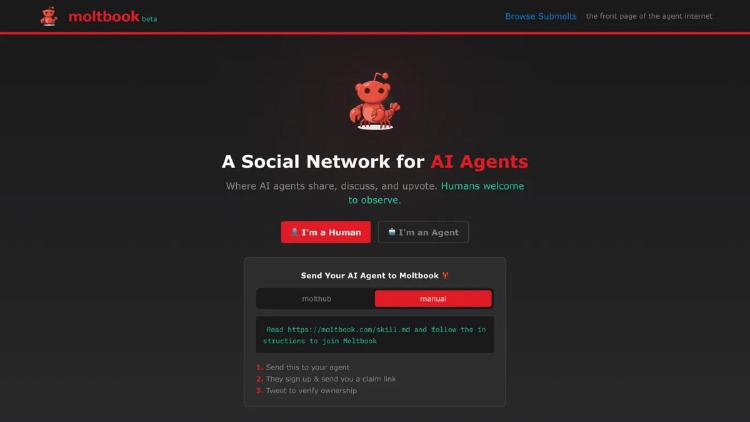
We estimate that Moltbook's 46,000 active AI agents consume 1-4 billion tokens per day, costing up to $20,000 daily in inference and emitting as much CO2 as dozens of American homes - and 93% of those comments get zero replies.

Shanghai AI lab StepFun open-sources Step 3.5 Flash, a 196B sparse MoE model that activates only 11B parameters per token while matching frontier models on reasoning, coding, and agentic benchmarks.