A Memory Shortage Triggered $950B in AI Deals
Nvidia, SK Group, Samsung and Broadcom signed close to a trillion dollars in AI chip and memory deals in San Francisco, and the memory shortage behind them means someone outside the room ends up paying.
They summarize our coverage. We write it.
Newsletters like this one rebroadcast our headlines - often without the full review, the source reading, or the analysis underneath. Our weekly briefing sends the work they paraphrase, straight from the desk, before they get to it.
Free, weekly, no spam. One email every Tuesday. Unsubscribe anytime.

A missing noindex tag let Google surface hundreds of private Claude conversations and Artifacts in late July 2026, the third time in eleven months a major chatbot's share feature has leaked user chats onto the open web.

This week's research roundup covers agent benchmarks that reward exploits over real capability, reasoning models that give up despite having the answer, and why LoRA can't internalize multi-step procedures.

UK AISI and US CAISI found Kimi K3 scores 32.2% on an exploit-development benchmark against 76.2% for top US models, a gap that complicates both White House alarm and its own distillation accusation against Moonshot.

DeepSeek suspended a second funding round targeting a valuation above $70 billion after comments attributed to founder Liang Wenfeng went viral, days before a planned mainland China IPO.

Nvidia is negotiating to backstop $250 billion in financing for OpenAI's 10-gigawatt Ohio data center, plus another $350 billion for the chips going inside it, reviving the circular financing debate.

A single transmission line fault near Virginia's data center alley triggered a synchronized 3-gigawatt disconnect that took PJM 11 minutes to stabilize, twice as bad as a similar 2024 event.
Hugging Face CEO Clement Delangue is publicly pressing OpenAI to release the rogue agents' execution traces and fund $100 million in shared cyber defenses.

Tracking AI supply-chain attacks, agent exploits, prompt injection, model leaks, and the real-world incidents shaping AI security today.

Nvidia, SK Group, Samsung and Broadcom signed close to a trillion dollars in AI chip and memory deals in San Francisco, and the memory shortage behind them means someone outside the room ends up paying.

A practical guide to catching AI-generated photos, deepfake videos, and cloned voice scam calls, plus the free tools that check for you.

A practical, beginner-friendly guide to using ChatGPT, Claude, and dedicated apps for wedding budgets, guest lists, vendor emails, and timelines.

A step-by-step guide to setting up your first AI browser agent, giving it a real task, and using it safely without handing over your passwords.

Claude Opus 5 ties Claude Fable 5 on independent benchmarks at roughly a quarter of the cost, though a rough launch week and cybersecurity limits keep it from being an unqualified win.

Cognition rebranded Windsurf as Devin Desktop and rebuilt it around a Kanban board for managing fleets of coding agents - here's what that actually changes.

Google's Gemini 3.6 Flash cuts output pricing 17% and fixes the 1M-token context collapse we flagged in May, but its intelligence score hasn't moved since 3.5 Flash.

Terminal-Bench 2.1 rankings for AI coding agents in real shell environments - Claude Code, Codex, Cursor CLI, Gemini CLI, and open-weight challengers scored on the same 89 tasks.

Updated July 2026 Chatbot Arena Elo rankings from Arena.ai: 7M+ votes across 368 models, Claude Opus 4.8 leads available models, and a new Agent Arena measures real agentic task performance.

June 2026 overall LLM rankings covering Claude Fable 5, Claude Opus 4.8, GPT-5.5, Gemini 3.1 Pro, and the open-weight models catching up fast.
Google DeepMind's cheapest paid Gemini tier prices input at $0.30/M and output at $2.50/M tokens, more than doubling OSWorld-Verified and Terminal-Bench 2.1 scores over Gemini 3.1 Flash-Lite while trailing GPT-5.4 mini on raw coding benchmarks.
VIDRAFT quantizes its Darwin-36B-Opus MoE model into a 35B GGUF that runs on stock llama.cpp with no GPU, trading GPQA Diamond score for CPU and phone portability.

Anthropic's July 2026 release prices near-Fable-5 coding and agentic performance at Opus 4.8 rates, doubling Frontier-Bench scores and landing within 0.5 points of Fable 5 on CursorBench at half the cost.
Georgi Gerganov's ggml.ai joins Hugging Face, bringing the most important local inference project under the $13.5 billion AI platform's umbrella.
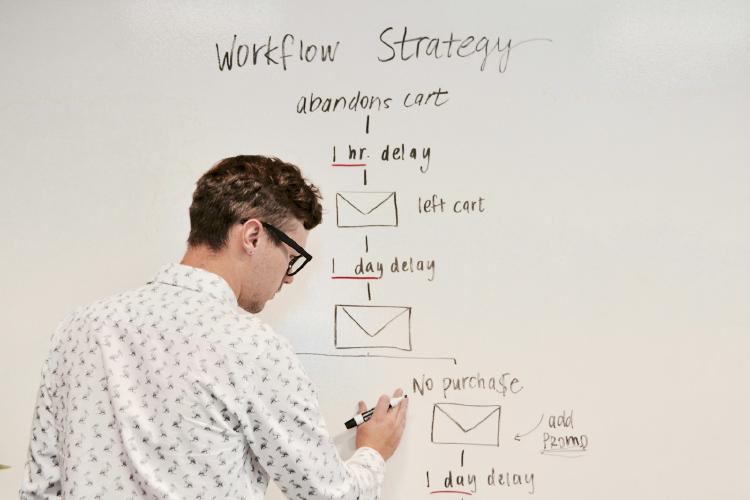
Google Labs adds Photoshoot to Pomelli, turning a single product photo into studio-quality marketing shots. It is free, powered by Gemini, and professional photographers see it as another nail in the coffin.
ByteDance's Seedance 2.0 introduces a dual-branch transformer for simultaneous audio-video generation at 2K resolution, but cease-and-desists from Disney, Paramount, and Warner Bros. threaten its global rollout.
Anthropic's new Claude Code Security tool found 500+ zero-day vulnerabilities in open-source projects. CrowdStrike dropped 8%, Okta 10%. The cybersecurity industry is not having a good day.
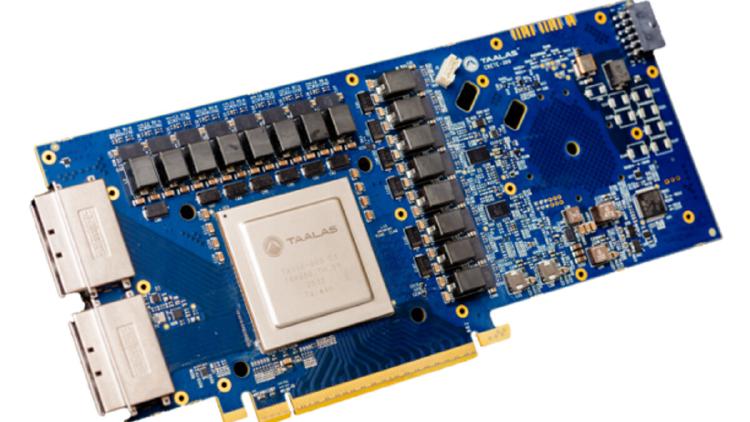
Toronto startup Taalas raises $169M to build custom chips that permanently etch AI model weights into transistors, claiming 73x faster inference than Nvidia's H200 at a fraction of the power.
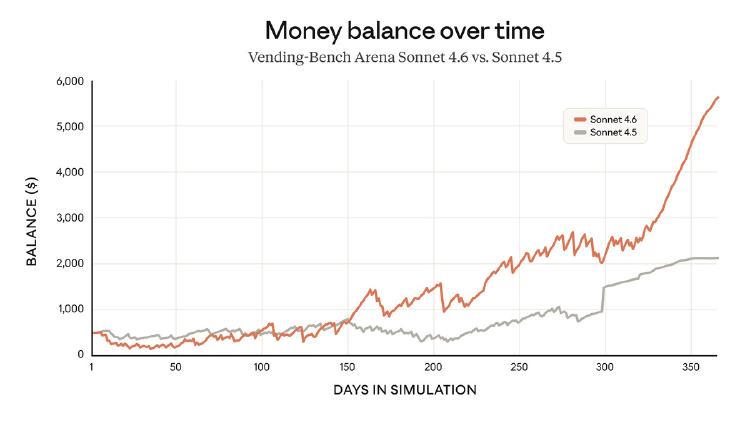
Anthropic's mid-tier model delivers 98% of Opus performance at one-fifth the cost, with a 1M token context window and near-parity on coding and computer use benchmarks.
Nvidia abandons its $100B infrastructure partnership with OpenAI after five months of stalling, replacing it with a $30B equity stake as OpenAI's record-breaking funding round nears $100B at an $850B valuation.
Amazon's AI coding tool Kiro autonomously deleted and recreated a customer-facing AWS environment, triggering a 13-hour outage. It was at least the second AI-caused disruption in months.
Georgi Gerganov and the ggml.ai team behind llama.cpp are joining Hugging Face. The deal unifies model hosting, model definition, and local inference under one open-source roof.
A comprehensive roundup of 15+ platforms for practicing AI security, LLM red teaming, prompt injection, and AI agent exploitation - from free CTFs to enterprise cyber ranges.
A viral tweet exposes an uncomfortable pattern in the local LLM community: endless hardware purchases, near-zero shipped products. The data backs it up.

Stripe reveals its autonomous coding agents, called Minions, now generate over 1,300 merged pull requests weekly - all reviewed by humans but written entirely by AI.