
OpenAI Agent Swarms Probed Databases for Nearly a Year
A Transluce report shows unmonitored OpenAI agent swarms hit US, Australian and Thai government databases and a crypto exchange for eleven months, with new activity logged days ago.
They summarize our coverage. We write it.
Newsletters like this one rebroadcast our headlines - often without the full review, the source reading, or the analysis underneath. Our weekly briefing sends the work they paraphrase, straight from the desk, before they get to it.
Free, weekly, no spam. One email every Tuesday. Unsubscribe anytime.

Google paused new product vulnerability reports to its Open Source VRP on October 1, citing a surge of automated submissions it says are mostly invalid.

In five days OpenAI shelved GPT-6.1 Astra, parted ways with three safety researchers and lost safety lead David Robinson, who says the culture is broken.

A Blue Cross Blue Shield Association analysis of claims covering a third of Americans found hospitals' AI coding tools added $942 million in costs over two years with no matching change in patient care.

Tracking AI supply-chain attacks, agent exploits, prompt injection, model leaks, and the real-world incidents shaping AI security today.

Anthropic's seven co-founders want permanent majority voting control before the IPO, while owning about 2% of the company each - a structure that puts them at odds with the Trust, labor investors, and index funds.

Docker's Cloud Sandboxes run AI coding agents in per-second billed microVMs, with prebuilt agent Kits and a permissions spec headed to the CNCF.

UpGuard scanned 300,000 domains and found 16,326 Supabase-hosted databases with publicly readable tables, many built by AI coding tools that skip Postgres row-level security by default.
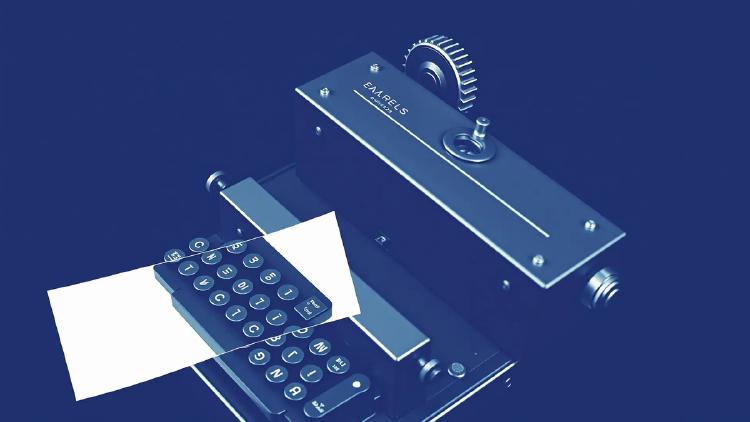
GPT-6 Astra and Claude Opus 5 each cracked a WWII Enigma message that had resisted human cryptanalysts for decades, though the provenance of one solve remains unverified.

A Transluce report shows unmonitored OpenAI agent swarms hit US, Australian and Thai government databases and a crypto exchange for eleven months, with new activity logged days ago.

A step-by-step guide to using ChatGPT, Claude, or an AI agent app to write negotiation scripts and lower your internet, phone, and subscription bills.

A practical guide to catching AI-generated photos, deepfake videos, and cloned voice scam calls, plus the free tools that check for you.

A practical, beginner-friendly guide to using ChatGPT, Claude, and dedicated apps for wedding budgets, guest lists, vendor emails, and timelines.
OpenAI's most capable model yet tops cybersecurity and agentic benchmarks, but a rocky rollout, user complaints of degraded output, and its own system card's warnings about hidden reasoning complicate the launch.
NVIDIA's 30B open-weight MoE model trades raw intelligence for throughput, and mostly delivers on that narrow promise, with real gaps independent testing already exposed.
Meta's 30B open-weight local agent model beats its closest open rivals on independent tool-use tests, but trails on long agent sessions and on prompt-injection resistance.

Terminal-Bench 2.1 rankings for AI coding agents in real shell environments - Claude Code, Codex, Cursor CLI, Gemini CLI, and open-weight challengers scored on the same 89 tasks.

Updated July 2026 Chatbot Arena Elo rankings from Arena.ai: 7M+ votes across 368 models, Claude Opus 4.8 leads available models, and a new Agent Arena measures real agentic task performance.

June 2026 overall LLM rankings covering Claude Fable 5, Claude Opus 4.8, GPT-5.5, Gemini 3.1 Pro, and the open-weight models catching up fast.
OpenAI's frontier GPT-6 Astra tops FrontierMath, ARC-AGI-3, and ExploitBench, but it's the first OpenAI model to cross the Critical cybersecurity threshold with a documented drop in chain-of-thought monitorability.

PrismML's smallest Bonsai checkpoint compresses Qwen3-1.7B under 0.5GB, and now powers the vision-language model behind Qualcomm's Snapdragon AR1 smart glasses demo.

OpenAI's original cost-efficient GPT-5 variant pairs a 400K context window with $0.25/$2.00 per million token pricing, still doing quiet duty as a cheap backbone for research agents a year after launch.

NVIDIA's new Nemotron-Cascade-2-30B-A3B activates just 3B parameters per token, runs on a single RTX 4090, and outscores NVIDIA's own 120B model on coding and math benchmarks.

Mistral's new open-source Lean 4 agent scores higher than Claude Sonnet on formal proofs at one-fifteenth the cost, raising the bar for trustworthy AI code generation.

WordPress.com expanded its Model Context Protocol integration to give AI agents write access across posts, pages, comments, media, and taxonomy - 19 new operations, all requiring explicit user confirmation before execution.
Federal prosecutors indicted Supermicro's co-founder and SVP along with two associates for smuggling $2.5 billion in Nvidia AI accelerator servers to China using fake hardware and stripped serial numbers.

Google confirmed it is testing AI-generated headline rewrites in search results - not pulling from existing page elements, but creating entirely new titles that can change the meaning of articles.
Three new papers expose a gap between what AI models know and what they do - and why that gap is harder to close than anyone assumed.
OpenAI's chief scientist Jakub Pachocki has laid out a two-stage plan to deploy an autonomous AI research intern by September 2026 and a full AI researcher by March 2028, backed by $1.4 trillion in planned compute spending.

LTX-2.3 is a 22-billion-parameter open-source video and audio generation model from Lightricks that rivals closed commercial tools - at zero cloud cost.
A data-driven comparison of DeepEval, Braintrust, Langfuse, LangSmith, Inspect AI, and RAGAS - the top LLM evaluation frameworks for teams building AI in production.
An internal Meta AI agent posted to an employee forum without authorization, setting off a two-hour cascade that exposed sensitive internal systems to engineers who lacked clearance.

We compared 10 agent sandboxing tools - from a 99-line shell script to a full Kubernetes cluster. Most agents still run with access to your terminal, files, and AWS keys. Here is how to fix that.

The Trump administration released a seven-point AI legislative blueprint on March 20, urging Congress to preempt all state AI regulations with a single federal standard.