
Meta's $145B AI Bet Is Behind Schedule, Zuckerberg Admits
Zuckerberg told employees at a July 2 town hall that Meta's agentic AI trajectory hasn't accelerated as expected - but the data tells a more complicated story.
 6 min read
"The trajectory of the agentic development over at least the last four months hasn't really accelerated in the way that we expected."
- Mark Zuckerberg, internal town hall, July 2, 2026
That line came from a recording heard by Reuters. It arrived at the same moment Meta's competitors are spending billions specifically to fill the deployment gap Zuckerberg is now admitting exists.
TL;DR
- What he said: Meta's AI agent development is behind internal expectations after four months of a major restructuring
- What we found: Meta shipped Meta Business Agent globally in June, handling 10 million conversations per week - but enterprise deployment has stalled
- The real gap: Meta built the infrastructure and models; the operational layer needed to turn them into reliable agents is still missing
- Stock reaction: Meta shares fell 4.94% after Reuters reported the town hall admission
The Claim
Zuckerberg delivered the admission at a company-wide town hall on July 2. The context matters. In May, Meta laid off roughly 8,000 employees - about 10% of its global workforce - and reassigned approximately 7,000 more engineers to AI-focused teams. The restructuring was framed as a pivot to accelerate the company's AI ambitions.
The Words Zuckerberg Actually Used
He told employees the reorganization "hasn't come to fruition yet" and that executives "miscalculated on the timing" of the changes. He was careful not to describe this as a failure. The framing was delay, not collapse.
On the question of AI productivity driving the layoffs, he pushed back against that interpretation directly: "Getting everyone internally to use AI tools and getting to do the work more efficiently is not the thing that's driving layoffs," while adding a hedge - "we'll see how all this stuff trends."
Asked about a longer-term plan, he was unusually candid: "I wish that I can tell you that I have a crystal ball plan for the next, like, three years of how all this stuff is going to play out. I don't."
He expects the company to see "more significant benefits" from its AI investments within the next three to six months. No benchmarks were given.
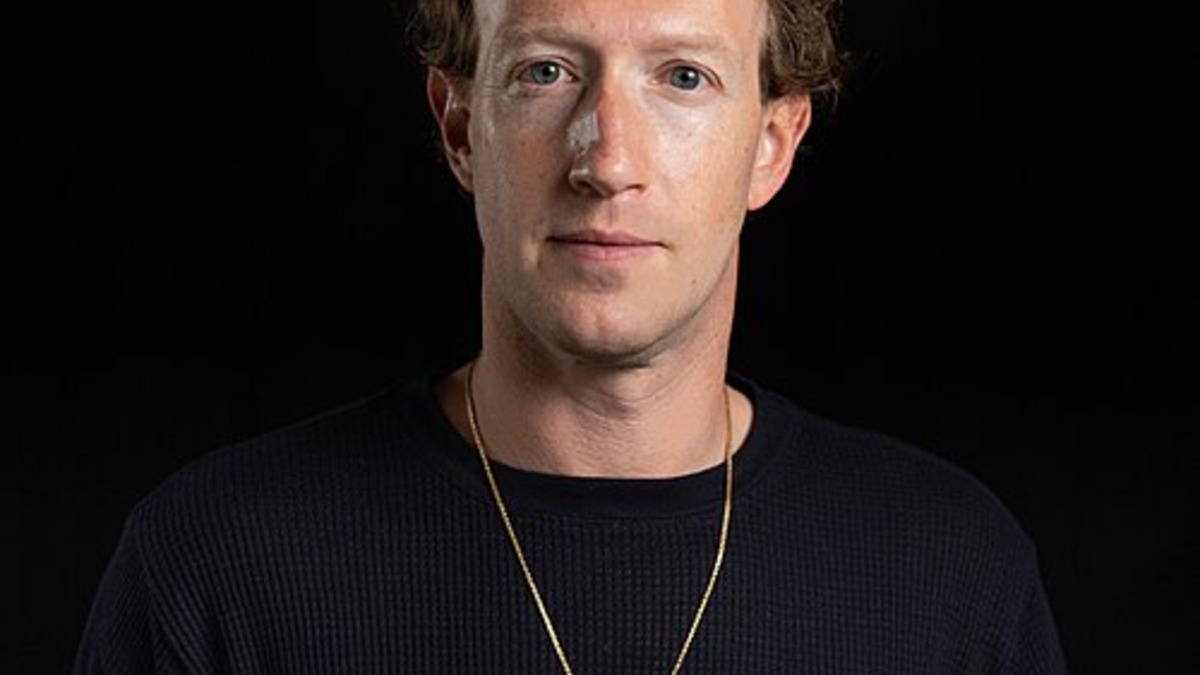 Zuckerberg has positioned Meta's AI push as existential for the company's long-term competitiveness.
Source: commons.wikimedia.org
Zuckerberg has positioned Meta's AI push as existential for the company's long-term competitiveness.
Source: commons.wikimedia.org
The Evidence
What Meta Actually Shipped
The "agents aren't progressing" framing doesn't match everything that shipped. Meta launched Meta Business Agent globally on June 3 - an AI assistant for customer support inside WhatsApp Business, Instagram DMs, and Messenger. The system handles 10 million conversations per week and is already used by more than one million businesses in pilots across India, Mexico, and Brazil.
Meta AI, the consumer assistant, has more than 700 million monthly active users. Llama 4 Maverick launched in April 2026 and moved to the top of several independent benchmarks. The lab hasn't been standing still.
 Meta Business Agent handles 10 million conversations a week across WhatsApp Business, Instagram, and Messenger.
Source: techcrunch.com
Meta Business Agent handles 10 million conversations a week across WhatsApp Business, Instagram, and Messenger.
Source: techcrunch.com
What Meta Actually Spent
The spending levels suggest the issue isn't a lack of investment. Meta raised its full-year 2026 capital expenditure guidance to $125-$145 billion. In Q1 alone, the company spent $19.8 billion on AI infrastructure. It employs more than 77,000 people after the layoffs, with roughly 7,000 of them now explicitly working on AI products.
A $145 billion year of infrastructure spending that generates excess compute capacity Meta is now trying to sell isn't the picture of a company running low on resources.
The Market Context
The gap Zuckerberg described - between model capability and operational deployment at enterprise scale - is exactly what two of Meta's competitors are now charging to close.
Amazon committed $1 billion to its Forward Deployed Engineers program, embedding AI specialists directly inside enterprise client operations. Microsoft launched Frontier Company with $2.5 billion and 6,000 engineers to do the same thing. Both programs were announced in the weeks surrounding Zuckerberg's admission.
| Company | Deployment Bet | Focus |
|---|---|---|
| Amazon | $1B Forward Deployed Engineers | Embedding engineers in enterprise clients |
| Microsoft | $2.5B Frontier Company | Launching AI at enterprise scale |
| Meta | $145B capex, internal teams | Consumer AI, Llama ecosystem |
The contrast isn't subtle. Amazon and Microsoft built human deployment infrastructure. Meta built model and compute infrastructure. The gap Zuckerberg is acknowledging is exactly where its competitors chose to invest.
What They Left Out
Three things didn't make it into Zuckerberg's framing.
First, the admission quietly decouples the layoff narrative from AI productivity. For months, the implicit story in business media was that Meta was cutting headcount because AI agents were picking up the slack. Zuckerberg's admission that agents "haven't come to fruition yet" makes that story hard to sustain. The layoffs were a capital allocation decision - reducing people-costs to fund infrastructure-costs - not a sign that AI had already started doing their work.
Second, this isn't a Meta-specific problem. The "Product Overhang Doctrine" - the gap between what frontier models can show in controlled settings and what enterprises can actually deploy reliably at scale - is real across the industry. Amazon and Microsoft are charging for solutions to a problem everyone has. That Zuckerberg admitted it publicly doesn't mean competitors are ahead on the actual problem; it means they found a different revenue model for the same unresolved challenge.
Third, the "three to six months" timeline has no measurable component attached to it. Zuckerberg said the company would "begin to experience more significant benefits" in that window. There are no specific benchmarks, product milestones, or financial targets connected to that statement. It's the kind of forward guidance that sounds like optimism and functions as internal morale management.
Zuckerberg's admission is more candid than most public statements from CEOs of companies spending this much money. The acknowledgment that a major reorganization hasn't worked as planned, delivered internally but right away leaked to Reuters, says something real about Meta's position. The company that built the world's most-used consumer AI assistant and one of the most widely adopted open-source model families still can't reliably deploy agents inside enterprise clients. That's not a model quality problem. It's an operations and integration problem - the same one Amazon and Microsoft are quietly making a second business out of solving for everyone else.
Sources:
- Exclusive: Zuckerberg says AI agent development going slower than expected - Reuters via MarketScreener
- Zuckerberg tells Meta employees the layoffs are about capex, not AI productivity - The Next Web
- Meta's AI agent for WhatsApp Business is now available globally - TechCrunch
- Meta says its business AI now facilitates 10 million conversations a week - TechCrunch
- Meta's Zuckerberg Admits AI Agents Are Behind Schedule - FourWeekMBA

