
xAI Runs 46 Gas Turbines Near Memphis - NAACP Sues
xAI operates 46 gas turbines at its Southaven data center power plant, five above its state permit, as the NAACP seeks an emergency court order over Clean Air Act violations.
 6 min read
xAI is running 46 gas turbines at its Southaven, Mississippi data center power plant - five more than its state permit allows, and potentially all 46 in violation of federal clean air law. The NAACP has asked a federal court for emergency action to halt the pollution, marking a direct legal challenge to AI infrastructure buildout from an environmental justice organization.
Key Specs: xAI Southaven Power Plant
| Metric | Value |
|---|---|
| Turbines currently operating | 46 |
| Mississippi state permit ceiling | 41 |
| Turbines above state permit | 5 |
| Facility started with | 18 turbines |
| Estimated annual NOx | 2,508 tons |
| Estimated annual CO | 837 tons |
| Annual fine particulate matter | 236 tons |
| Annual formaldehyde | 25 tons |
| NAACP lawsuit filed | April 15, 2026 |
| Emergency injunction requested | May 6, 2026 |
The Facility and Its Power Needs
From Memphis to Southaven
The Colossus cluster - xAI's GPU supercomputer for training Grok models - spans two buildings in Memphis, Tennessee. The power infrastructure sits just across the state line in Southaven, Mississippi. xAI chose Southaven partly because Mississippi's permitting rules made it faster to build, and partly because the Memphis grid couldn't supply enough power on its own.
The facility currently draws roughly 495 megawatts from its turbine bank, capacity that rivals a mid-sized natural gas plant. xAI has committed to a $20 billion investment in the state, including a third data center that, combined with its Memphis sites, would eventually deliver 2 gigawatts of compute power.
The turbines feed the data center directly, bypassing the utility grid entirely. That's the point: no waiting for substations, no grid upgrade timelines. xAI was one of seven tech companies to sign a White House pledge to self-supply power for AI data centers in March. The method at Southaven works. Whether it is legal is now a federal court's problem.
The Temporary-Mobile Loophole
Mississippi classifies the turbines as "temporary-mobile" units because they're mounted on flatbed trailers. Under state environmental rules, portable power equipment can operate for up to a year without an air permit, as long as it's categorized as mobile.
The trailers don't move. They haven't moved since they arrived. They're connected to natural gas lines and data center switchgear. Mississippi's Department of Environmental Quality acknowledged this in a statement, saying the turbines "remain exempt from air permitting requirements during this temporary period."
On March 10, 2026, the state issued an air permit covering 41 of the turbines. Since then, xAI has added five more, for a total of 46. State officials told reporters they're "evaluating the situation."
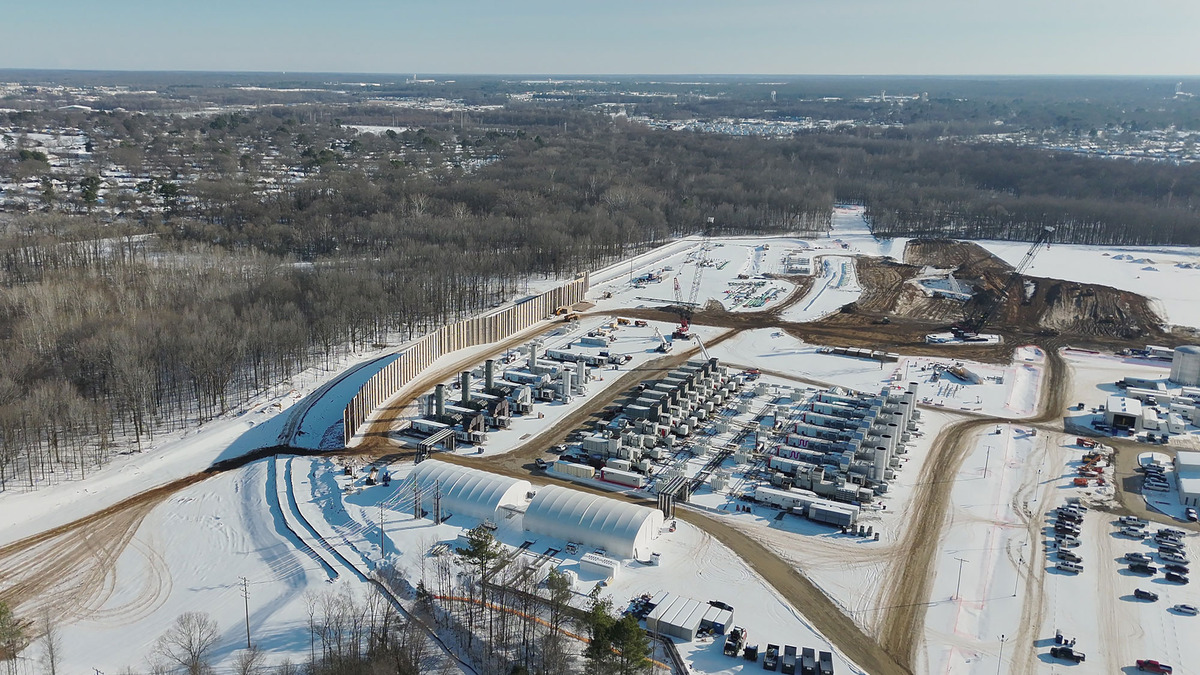 Aerial view of gas turbines at xAI's Southaven, Mississippi data center site, captured by Floodlight in early 2026.
Source: mississippifreepress.org / Evan Simon / Floodlight
Aerial view of gas turbines at xAI's Southaven, Mississippi data center site, captured by Floodlight in early 2026.
Source: mississippifreepress.org / Evan Simon / Floodlight
The Emissions Picture
The 46 turbines would emit, if running continuously, an estimated 2,508 tons of nitrogen oxides per year, according to Earthjustice's projections. That's potentially the largest single industrial NOx source in greater Memphis - a region that already fails national smog standards for ozone. Projections for the full permitted facility put greenhouse gas emissions above 6 million tons annually, which would rank it among the largest fossil fuel power plants in Mississippi.
| Pollutant | Annual Estimate | Health Impact |
|---|---|---|
| Nitrogen oxides (NOx) | 2,508 tons | Smog, asthma triggers |
| Carbon monoxide (CO) | 837 tons | Neurological effects |
| Fine particulate matter (PM2.5) | 236 tons | Lung and heart disease |
| Formaldehyde | 25 tons | Carcinogen |
The communities immediately surrounding the facility are disproportionately Black compared to national demographics, according to the NAACP's complaint. Tens of thousands of people live, attend school, and worship within the facility's pollution radius.
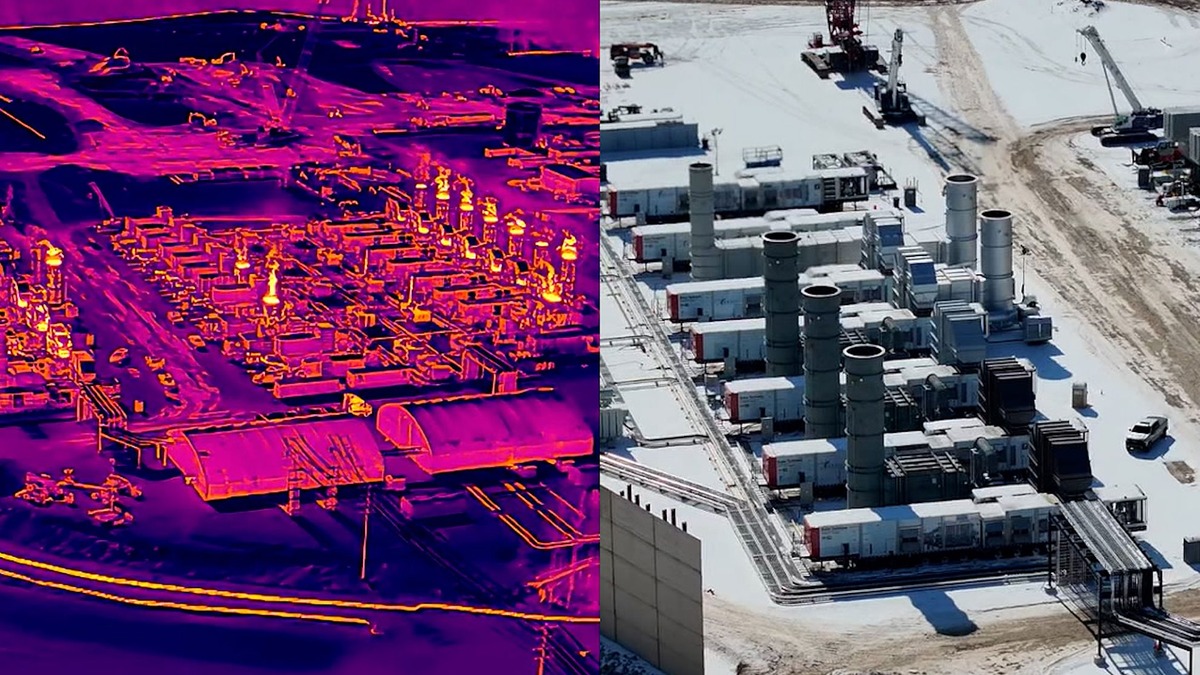 Thermal imaging captured by Floodlight shows turbines operating at the Southaven site weeks after the EPA's January 2026 ruling confirming they require Clean Air Act permits.
Source: mississippifreepress.org / Evan Simon / Floodlight
Thermal imaging captured by Floodlight shows turbines operating at the Southaven site weeks after the EPA's January 2026 ruling confirming they require Clean Air Act permits.
Source: mississippifreepress.org / Evan Simon / Floodlight
The Legal Case
EPA's January Ruling
On January 15, 2026, the EPA issued a final ruling confirming that large natural gas combustion turbines are "stationary sources" under the Clean Air Act. That means they require both construction permits and air quality permits before operating - the ruling was a direct response to the rise of trailer-mounted generators at data centers.
The ruling contains no exception for units on flatbed trailers. Bruce Buckheit, who ran EPA's air enforcement division for more than a decade, reviewed the Southaven situation and said: "That is a violation of the law."
The NAACP Lawsuit
The NAACP filed suit on April 15, 2026, represented by the Southern Environmental Law Center and Earthjustice. The complaint argues that Mississippi's temporary-mobile classification misinterprets federal law and that xAI is operating a stationary power plant without the permits the Clean Air Act requires.
"By expanding an unpermitted power plant despite decades of clear direction for permitting, xAI is showing blatant disregard for the law." - Abre' Conner, NAACP Director
The Emergency Injunction
After xAI added more turbines in late March and early May - pushing the total count past the state permit ceiling - the NAACP asked the court on May 6 for a preliminary injunction to halt operations while litigation proceeds.
"Rather than stop, they've added more turbines capable of inflicting even more harm." - Laura Thoms, Earthjustice
Residents near the site describe a constant low-frequency hum audible indoors and outdoors. Krystal Polk, an asthmatic who lives nearby, told reporters: "I do feel like xAI is playing by a different set of rules." Shannon Samsa, a physician's assistant and Southaven resident, is more direct: "I don't want my children growing up around such massive amounts of air pollution."
xAI hasn't commented publicly on the lawsuit or the injunction request.
What To Watch
The court's ruling on the preliminary injunction is the near-term trigger. If the judge grants it, xAI would have to shut down or notably curtail turbine operations while litigation continues - a scenario that could directly affect Colossus uptime and Grok training capacity. The broader legal question is whether Mississippi's temporary-mobile exemption can shield operators from Clean Air Act requirements. A ruling against xAI would set a precedent affecting data centers across the South that have adopted the same approach.
AI power demand is not slowing. xAI is building toward 2 gigawatts at its Mississippi sites alone, and other operators are exploring fusion energy deals and orbital data centers as longer-term answers to the power supply gap. Maine tried a different path - a statewide data center moratorium that its governor vetoed in April. None of these solutions fill the gap today. For now, the gap between how fast data centers scale and how fast permitting can keep up is being filled with flatbed turbines, and a federal court will decide whether that is legal.
Sources:
- Musk's xAI is running nearly 50 gas turbines unchecked at its Mississippi data center - TechCrunch
- xAI Faces Southaven Scrutiny Over Early-May Turbine Count - Winbuzzer
- NAACP Asks Court for Emergency Action to Stop Illegal Air Pollution from xAI - Earthjustice
- xAI Got Sued Over Its Gas Turbines, so It Naturally Added More of Them - Gizmodo
- 'A Different Set of Rules': Thermal Drone Footage Shows Musk's AI Power Plant Flouting Clean Air Regulations - Mississippi Free Press
- Drone Footage Shows Musk's AI Power Plant Flouting Clean Air Regulations in Black Community - Capital B News
- Mississippi Permit Board Grants xAI's Request for 41 Southaven Gas Turbines - Mississippi Free Press

