
World ID 4.0 Brings Human Verification to Tinder and Zoom
Sam Altman's World project launched World ID 4.0 at a San Francisco event on April 17, signing Tinder, Zoom, DocuSign, and Okta as partners while introducing Agent Kit to authorize AI agents.
 Updated
6 min read
Updated
6 min read
Six months ago, being asked to stare into a white orb to prove you are human felt like a niche crypto experiment. On April 17, 2026, it became the backbone of a global identity layer connecting Tinder profiles, Zoom calls, DocuSign contracts, and the expanding universe of AI agents running errands on your behalf.
Sam Altman's Tools for Humanity held its Lift Off event in San Francisco and announced World ID 4.0, a major protocol upgrade paired with a wave of enterprise partnerships that suggests the company is no longer positioning itself as a blockchain curiosity. It's positioning itself as infrastructure.
TL;DR
- World ID 4.0 launched April 17 at a San Francisco event with a new open-source SDK, multi-device sessions, and key rotation
- New low-friction "Selfie Check" tier joins iris scanning and government ID as verification options
- Tinder, Zoom, DocuSign, Okta, Shopify, and Vercel all signed on as integration partners
- Agent Kit lets AI agents act for verified humans, with Coinbase, Browserbase, and Exa also signed on
- 18 million users enrolled so far; iris biometrics have been used 150 million times
What World ID 4.0 Actually Changes
Three Tiers, One Identity
The protocol now runs three verification levels with different trade-offs between friction and assurance. At the top sits Orb verification - a physical spherical scanner that captures iris data and produces a cryptographic identifier stored locally on the user's device, not on World's servers. The second tier uses NFC chip scanning of government-issued documents. The third, introduced with 4.0, is Selfie Check: face biometrics plus liveness detection, with no hardware required.
The selfie tier is the most consequential addition from a growth perspective. The Orb requires the user to physically travel to one of the company's deployment locations. Selfie Check does not. It offers the lowest assurance level but removes the adoption barrier that has kept World's user count at 18 million across two years of operation.
What the 4.0 Upgrade Delivers
The protocol changes are meaningful. World ID 4.0 introduces account-based design, key rotation, multi-device sessions, and single-use anonymity nullifiers. That last feature is worth unpacking: each time a World ID is used to verify identity on a platform, it creates a unique one-time signal. The platform gets confirmation that this is a real human, but can't link the verification to any other action that user has taken elsewhere. It's meant to make the protocol privacy-preserving even as it becomes more widely deployed.
The SDK is now open source and publicly available to developers.
The Partner Lineup
Tinder - Dating in the Agent Era
Tinder piloted World ID verification in Japan last year. The April 17 announcement extends the integration globally, including the United States. Users who have been verified through an Orb scan can display a World ID emblem on their dating profiles, showing to potential matches that a real human - not a bot, not an AI persona - is behind the account.
The problem Tinder is trying to solve is not hypothetical. Dating platforms have spent years battling automated fake accounts and romance scam bots. As AI image generation and AI conversation capabilities improve, distinguishing a human from a well-crafted AI persona using only profile information becomes harder. World ID does not solve the underlying model capability problem; it shifts the trust anchor to a piece of biometric evidence captured offline.
Zoom and DocuSign - Business Verification
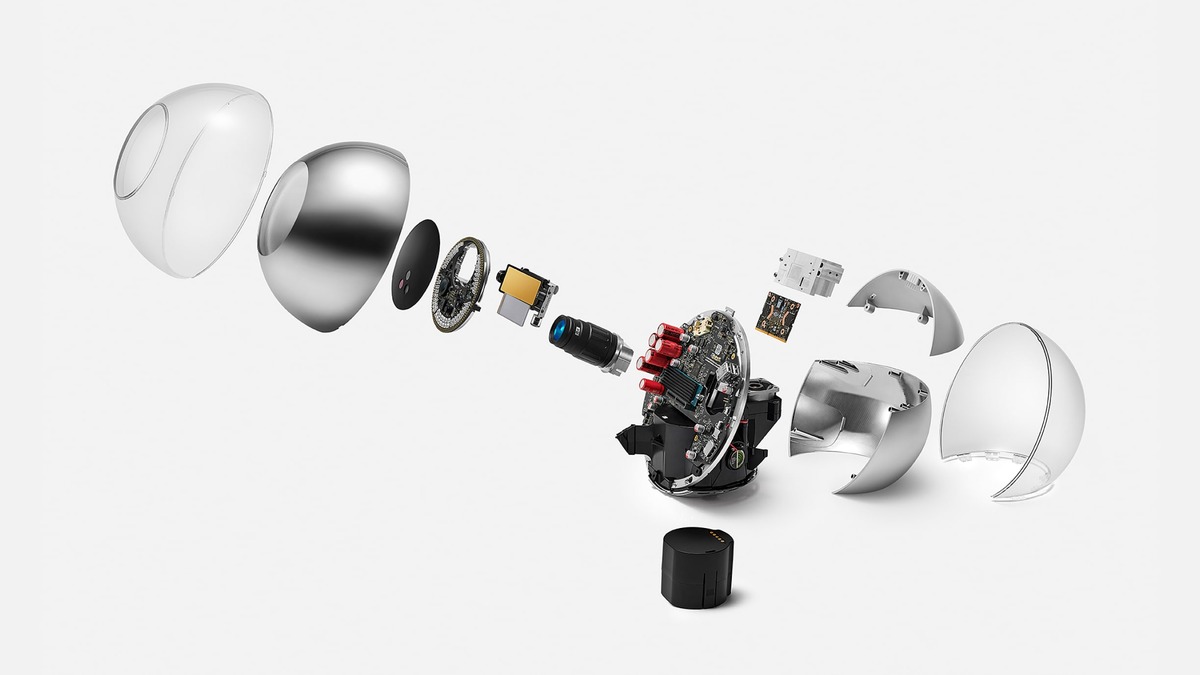 The World Orb uses multispectral infrared sensors to capture iris data and produce a cryptographic World ID. The device processes biometrics locally and doesn't send raw iris images to external servers.
Source: world.org
The World Orb uses multispectral infrared sensors to capture iris data and produce a cryptographic World ID. The device processes biometrics locally and doesn't send raw iris images to external servers.
Source: world.org
Zoom's integration is aimed at deepfake prevention in business calls. The system runs a three-way match: the person on camera is compared against the verified World ID holder expected in the meeting. If the verification fails or cannot be completed, participants are flagged.
DocuSign's use case is narrower: confirming that the person signing a document is the verified human associated with the account, rather than an AI agent acting autonomously. As more enterprise workflows add AI tools that can read, draft, and execute documents, the question of who actually authorized a signature becomes commercially and legally relevant.
Agent Kit - The Real Pivot
The partnership that deserves the most scrutiny isn't Tinder. It's the cluster of AI agent integrations that World is calling Agent Kit.
"We don't want Skynet. Agent Kit, we feel, is an incredibly compelling answer here," a World research representative said at the event.
The concept is straightforward: when an AI agent performs an action - approving a payment, submitting a form, delegating a task - Agent Kit creates a cryptographic link between that action and a verified human World ID. The agent acted, but a real human authorized it. Okta, Vercel, Shopify, Browserbase, Exa, and Coinbase have all signed on as integration partners.
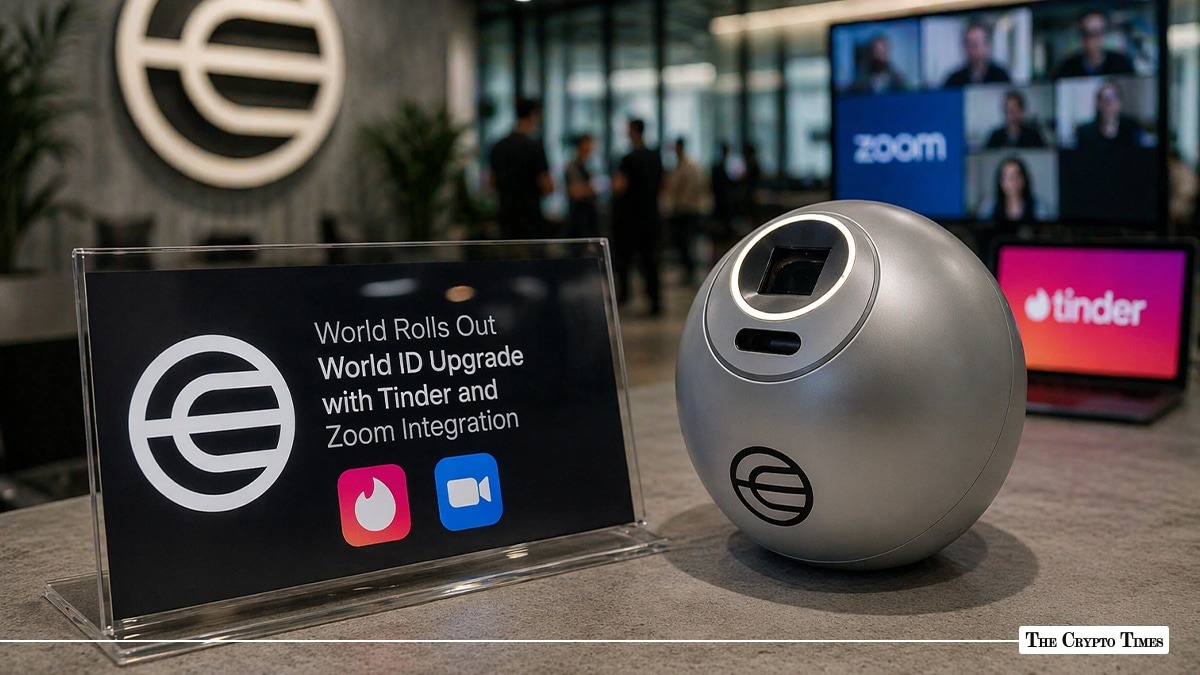 World ID 4.0 integrations with Tinder and Zoom were among the headline announcements at the San Francisco Lift Off event.
Source: cryptotimes.io
World ID 4.0 integrations with Tinder and Zoom were among the headline announcements at the San Francisco Lift Off event.
Source: cryptotimes.io
This positions World at the authorization layer of autonomous AI systems in a way that no other company has credibly attempted at scale. Stanford and Harvard red-team research has repeatedly shown that AI agents operating without human authorization controls create significant security and liability exposure. Agent Kit is a commercial answer to that problem, though it raises its own questions about whether a biometric-backed authorization record creates a surveillance trail its own architects will struggle to contain.
Altman voiced the market logic in a statement at the event: "The world is getting close to very powerful AI...there's going to be more stuff generated by AI than by humans." If that's true, then the ability to certify human origin - whether for a dating profile, a meeting participant, or an autonomous agent action - becomes a platform primitive worth controlling.
What the Numbers Say
The company has 18 million verified users and reports 150 million uses of its iris biometrics across platforms to date. Those numbers are real, but they need context.
The WLD token dropped 13 percent on the day of the Lift Off announcement, despite the partnership news. Razer and Mythical Games have adopted World ID for their platforms. Reddit is reportedly exploring the protocol for bot detection but has not committed. Concert Kit - World's ticket bot prevention product, launched for upcoming Bruno Mars and 30 Seconds to Mars tours - is among the few live applications outside of crypto that touches a non-technical consumer audience.
World has faced regulatory bans in Kenya, Ghana, Spain, and Germany for its iris collection practices. The 4.0 upgrade addresses some of those concerns through improved on-device processing and single-use anonymity tokens, but it doesn't change the fundamental trade-off: you're handing a private company a cryptographic record of your biometric identity in exchange for verified status across its partner network.
The question for World ID is not whether human verification is a problem worth solving. It clearly is, and the MCP ecosystem's own trust issues have already shown how quickly unverified agent actions become attack surfaces. The question is whether a system built on iris scanning - one that requires trusting a single company with the enrollment infrastructure - is the right foundation for something as consequential as global human identity. That question did not get answered at the Lift Off event.
Sources:
- Sam Altman's project World looks to scale its human verification empire - TechCrunch
- World targets central IDV, AI agent management role with selfie biometrics - Biometric Update
- Sam Altman's World project launches major upgrade to fight deepfakes and bots - CoinDesk
- Opening the Orb: A look inside World's biometric imaging device - world.org
Last updated

