
Vapi Raises $50M After Amazon Ring Picks It Over 40 Rivals
Vapi closes a $50M Series B at $500M valuation after Amazon Ring routed 100% of its inbound calls through the platform, chosen over 40 competing voice AI vendors.
 6 min read
Amazon Ring handles security calls for millions of customers. When the company decided to route all of that inbound traffic through an AI voice agent, it assessed more than 40 platforms before picking Vapi - a 100-person startup founded by two University of Waterloo graduates. Ring went from zero to production in two weeks.
That deployment, with 1 billion-plus calls processed platform-wide, closed Vapi's $50 million Series B. Peak XV Partners led the round at a post-money valuation of roughly $500 million. Microsoft's M12, Kleiner Perkins, and Bessemer Venture Partners joined. Total funding now sits at $72 million.
The Amazon Ring Deployment
40 Vendors, One Contract
Ring needed something specific: a voice infrastructure layer that non-engineers could tune without opening a ticket, with AI guardrails and sub-second response times across millions of calls. Jason Mitura, VP of software development at Amazon Ring, said his team evaluated more than 40 AI voice vendors before landing on Vapi.
"A lot of AI tools promise great outcomes - Vapi has delivered on them."
Ring isn't using Vapi for a pilot or a side queue. One hundred percent of its inbound call volume - every customer call about a Ring doorbell, camera, or smart alarm - routes through Vapi today. Customer satisfaction scores improved after the rollout.
Zero to Production in Two Weeks
The deployment timeline matters more than the headline vendor count. Enterprise voice rollouts traditionally require months of SIP trunk configuration, middleware, and testing. Ring's team went from first API call to full production in 14 days.
That speed reflects CEO Jordan Dearsley's design principle: focus "less on pre-packaged applications and more on the infrastructure and orchestration layer." Rather than shipping a fixed product, Vapi exposes the plumbing. Ring's teams can adjust the agent's tone, escalation paths, and response scope without touching engineering.
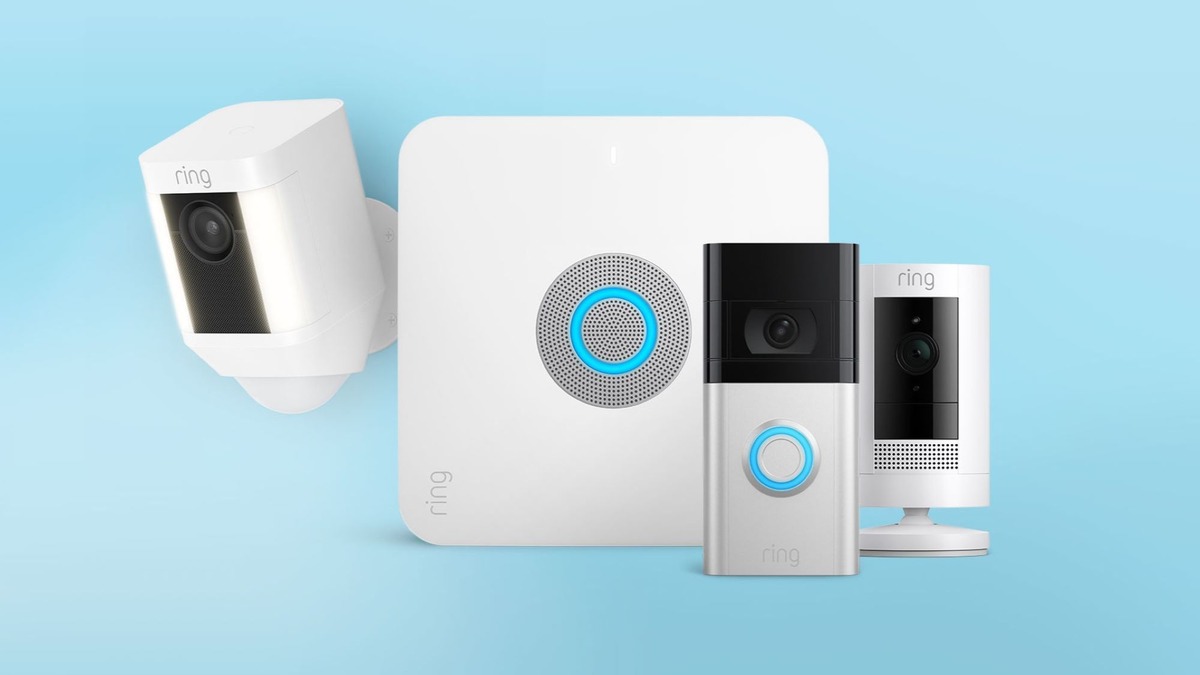 Amazon Ring's security device lineup - 100% of inbound call traffic now routes through Vapi's voice AI platform after the company chose it over 40 competitors.
Source: aboutamazon.com
Amazon Ring's security device lineup - 100% of inbound call traffic now routes through Vapi's voice AI platform after the company chose it over 40 competitors.
Source: aboutamazon.com
How Vapi Is Built
Vapi is API-first by design - the name stands for Voice API. Every configuration is accessible programmatically. Here is a minimal assistant setup:
POST https://api.vapi.ai/assistant
Authorization: Bearer YOUR_API_KEY
Content-Type: application/json

{
  "name": "Ring Support Agent",
  "model": {
    "provider": "openai",
    "model": "gpt-4o",
    "systemPrompt": "You are a helpful Ring support agent..."
  },
  "voice": {
    "provider": "11labs",
    "voiceId": "rachel"
  },
  "firstMessage": "Hi, this is Ring Support. How can I help?",
  "endCallMessage": "Thanks for contacting Ring. Goodbye."
}
The call creates a persistent assistant configuration. Vapi handles call routing, turn detection, and streaming from there.
Three Layers, One Stream
Vapi coordinates three components that every voice agent requires:
Speech-to-text converts caller audio to text in real time. Vapi routes this through Deepgram, AssemblyAI, or OpenAI Whisper depending on configuration. Partial transcripts stream into the LLM before the caller finishes speaking - the single biggest lever for cutting latency.
Large language model creates the response. Vapi supports any OpenAI-compatible endpoint: GPT-4o, Claude, Llama, or a private deployment. The model receives streaming partial transcripts and starts drafting a response mid-utterance.
Text-to-speech converts LLM output to audio. Supported providers include ElevenLabs, Deepgram, OpenAI TTS, and Play.ht. Vapi starts pushing audio to the caller as soon as the first LLM tokens arrive, skipping the wait for a complete sentence.
The company claims sub-500ms end-to-end latency under typical conditions. AssemblyAI benchmarks on a comparable Vapi pipeline hit around 465ms - fast enough that most callers don't notice the pause.
Orchestration and Interruption Logic
The hardest part of voice AI is not the STT-LLM-TTS chain - it is what happens when a caller interrupts the agent mid-sentence. Vapi handles barge-in detection, end-of-turn signaling, and mid-stream cancellation across all three layers at once. When a caller speaks over the agent, Vapi stops TTS playback, cancels pending LLM tokens, and re-transcribes from the new input without dropping call state.
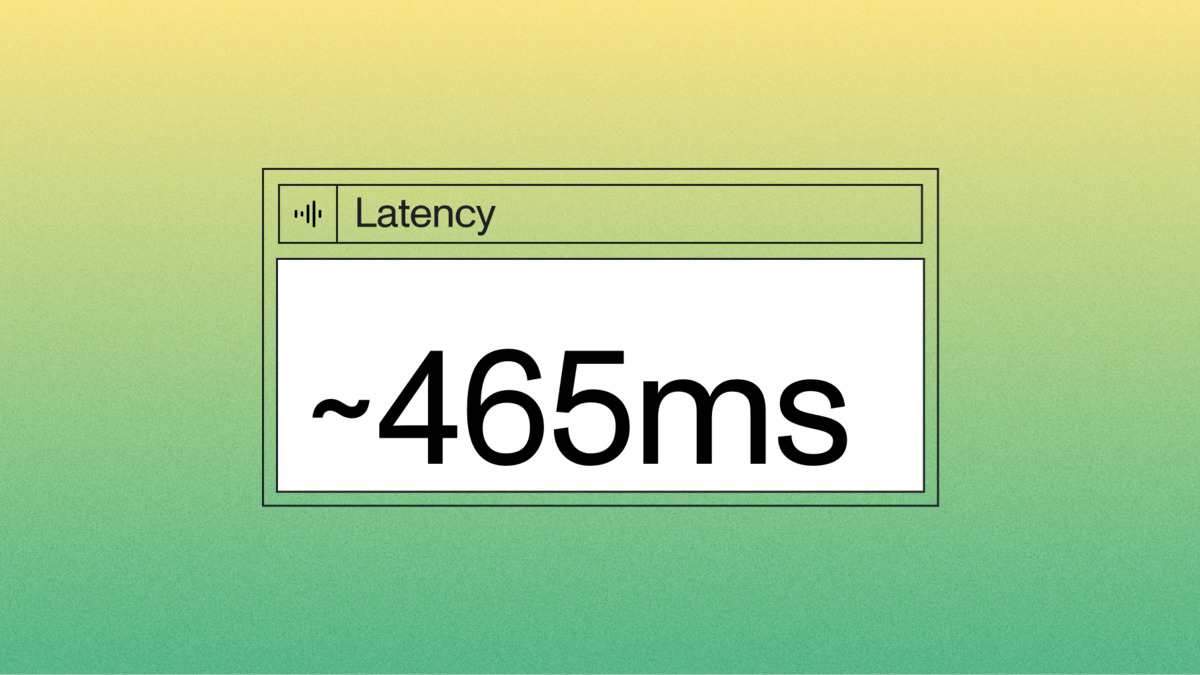 Vapi's STT-LLM-TTS pipeline achieves around 465ms end-to-end latency by streaming partial results at every stage - each layer starts before the previous one finishes.
Source: assemblyai.com
Vapi's STT-LLM-TTS pipeline achieves around 465ms end-to-end latency by streaming partial results at every stage - each layer starts before the previous one finishes.
Source: assemblyai.com
Enterprise Controls
OAuth2 and RBAC sit on top of the base pipeline. AI guardrails block the model from giving answers outside defined scope - Ring uses this to keep the agent within support boundaries. Multi-language mode handles English, Spanish, Italian, and French from a single assistant configuration.
What You Need to Deploy
| Component | Supported Options |
|---|---|
| Speech-to-text | Deepgram, AssemblyAI, OpenAI Whisper, Azure |
| LLM | OpenAI, Anthropic, Google, any OpenAI-compatible endpoint |
| Text-to-speech | ElevenLabs, Deepgram, OpenAI TTS, Play.ht, Azure |
| Telephony | Twilio, Vonage, Telnyx (bring your own numbers) |
| Languages | English, Spanish, Italian, French, multilingual mode |
| Access controls | OAuth2, RBAC, enterprise SSO |
| Deployment | Cloud-hosted only, no self-hosted option disclosed |
Pricing is consumption-based. Enterprise contracts cover dedicated capacity and custom SLAs. You bring SIP trunks or Twilio numbers; Vapi handles everything from audio ingestion to response playback.
The Scale Numbers
Vapi grew its enterprise ARR tenfold from early 2025 to this round. More than 1 million developers have built on the platform and the API surface has 2.7 million unique agents registered. Current throughput is 1 to 5 million calls per day, concentrated in financial services, healthcare, insurance, automotive, and workforce management.
Peak XV partner Arnav Sahu framed the investment thesis as Vapi becoming "the next Zapier and N8N for voice-AI workflows" - positioning it less as a voice chatbot company and more as workflow infrastructure for any process currently stuck in a phone queue.
 Vapi co-founders Jordan Dearsley (left) and Nikhil Gupta (right), University of Waterloo classmates who built the platform to 1 billion calls and a $500M valuation.
Source: techcrunch.com
Vapi co-founders Jordan Dearsley (left) and Nikhil Gupta (right), University of Waterloo classmates who built the platform to 1 billion calls and a $500M valuation.
Source: techcrunch.com
Where It Falls Short
Vapi has real traction, but several gaps matter for large-scale enterprise adoption.
Uptime SLAs aren't yet standard. Guaranteed uptime and predictable latency monitoring are listed as upcoming features - not live ones. Ring presumably negotiated custom terms. The general product doesn't yet carry the contractual reliability guarantees a telecom vendor would provide.
No self-hosted path. Healthcare, financial services, and insurance - the verticals Vapi claims as its strongest - often carry data residency requirements. Vapi has not announced a private deployment option.
Call-level analytics are still on the roadmap. Per-call dashboards and granular agent failure analysis are listed as coming. Enterprise teams debugging production call quality are currently working from aggregate metrics only.
Competitors aren't standing still. Retell AI, Bland, and open-source frameworks like LiveKit all offer comparable STT-LLM-TTS orchestration. The best AI phone call agents comparison lists several platforms with tighter latency or lower cost at smaller scales. Vapi's edge right now is the breadth of its enterprise integrations and the Amazon Ring reference - neither is a hard technical moat.
If you want to build your own voice agent, our setup guide walks through the full stack. The best AI voice agents comparison shows where Vapi sits against alternatives.
The Amazon Ring win gives Vapi something most Series B startups do not have: a public reference deployment at genuine scale. The question for the rest of 2026 is whether the SLA and observability gaps close before a competitor lands the next Ring-sized contract.
Sources:
- TechCrunch: AI voice startup Vapi hits $500M valuation after winning Amazon Ring over 40 rivals
- The Next Web: Vapi raises $50M Series B led by Peak XV for enterprise voice AI
- AssemblyAI: How to build the lowest latency voice agent in Vapi
- AssemblyAI: The voice AI stack for building agents in 2026
- Vapi.ai platform

