
US Grants UAE License-Free Access to Nvidia AI Chips
The Commerce Department reclassified the UAE to Country Group A:5, giving NVIDIA, AMD, and Cerebras a clear path to supply AI chips and servers without per-shipment export licenses.
 Updated
6 min read
Updated
6 min read
The Trump administration opened a significant new front in its export control strategy on July 10, removing the United Arab Emirates from the restricted technology tiers that had long required US chip companies to file individual export licenses before shipping advanced AI hardware into the Gulf. The Bureau of Industry and Security (BIS) formally reclassified the UAE from Country Groups D:3 and D:4 to A:5, the same tier occupied by Japan, Australia, and the United Kingdom.
For NVIDIA, AMD, and Cerebras, the practical effect is immediate. The license requirement that had previously governed each sale of advanced computing equipment to UAE customers is now gone.
TL;DR
- UAE upgraded from restricted export tiers (D:3/D:4) to trusted tier A:5, equivalent to Japan and UK
- NVIDIA, AMD, and Cerebras can ship AI chips and servers to UAE buyers without per-shipment licenses
- G42 and its subsidiary Core42 are the direct beneficiaries, clearing the path for their Stargate UAE campus
- US companies operating in UAE - Amazon, Apple, xAI - gain smoother internal logistics for compute
- China-based AI labs are explicitly not included; the gap between UAE's chip access and China's widens
The official BIS statement framed the move as a reward for diplomatic alignment:
"The United Arab Emirates has taken significant steps to safeguard sensitive American technology. The UAE's designation as a US Major Defense Partner, combined with its support for US national security objectives in the region, makes this reclassification appropriate." - Bureau of Industry and Security, July 10, 2026
The reference to "national security objectives in the region" is a direct nod to the UAE's posture in the US-Iran conflict, a point the administration has been careful to acknowledge in its Gulf policy statements this year.
What the Reclassification Actually Changes
For US Chipmakers
Before July 10, exporting advanced computing items to UAE entities required individual export licenses from BIS. Each license application meant paperwork, review periods, and uncertainty - enough friction that smaller deals would sometimes fall through or slow notably. A:5 status removes that entirely. NVIDIA can now ship GB300 systems to G42 the same way it ships to UK hyperscalers.
The change applies broadly: AI chips and servers, commercial satellites and spacecraft, and a range of dual-use technologies that touch oil and gas, civil nuclear, and desalination. Unmanned aerial vehicle support hardware - previously restricted - also moves to license-free under the Special Technology Authorization exception.
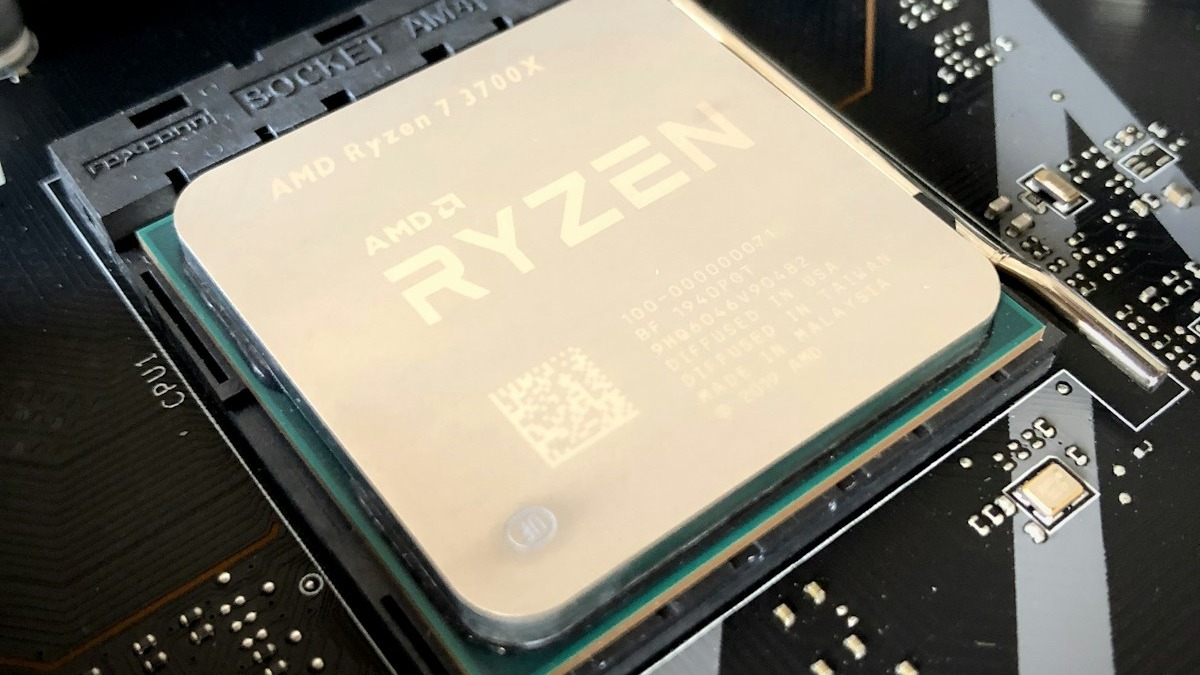 Advanced AI accelerators like NVIDIA's Blackwell series can now flow to UAE customers without individual export licenses.
Source: unsplash.com
Advanced AI accelerators like NVIDIA's Blackwell series can now flow to UAE customers without individual export licenses.
Source: unsplash.com
For UAE Recipients
The named beneficiaries on the US side are the companies whose UAE operations had previously required case-by-case approval: Amazon, Apple, and xAI are all explicitly covered under the new framework alongside NVIDIA, AMD, and Cerebras.
On the UAE side, the primary recipient is G42 and its data center subsidiary Core42. G42 is Abu Dhabi's state-backed AI champion, backed by Silver Lake and Mubadala, with Microsoft holding a $1.5 billion stake acquired last year. The company is currently building Stargate UAE, a 1-gigawatt AI campus in Abu Dhabi. The first 200-megawatt phase, powered by NVIDIA Grace Blackwell GB300 systems, is scheduled to come online before the end of 2026. Core42 has also been expanding its US footprint, tripling its Minneapolis data center capacity to 60 megawatts earlier this year.
Microsoft's parallel UAE investment - $15.2 billion committed through 2029 - gets meaningfully de-risked by the reclassification. The company had already partnered with G42 on a 200-megawatt capacity expansion through Khazna Data Centers, G42's build-out vehicle. That project was largely predicated on smooth chip supply.
For the Competition
The reclassification is as much about China as it's about the UAE. The NVIDIA Blackwell series - the same hardware now flowing freely to G42 - remains banned for export to China under existing EAR controls. Earlier this year, the Commerce Department moved to tighten enforcement after DeepSeek and others were found accessing restricted chips through third parties.
The UAE deal sharpens that divide. While Beijing's AI labs are scrambling to work around export controls and build domestic alternatives, Abu Dhabi is getting unrestricted access to the best available American training and inference hardware. G42's Stargate UAE campus, if completed on schedule, would be among the largest single concentrations of frontier AI compute outside the continental United States.
The Geopolitical Calculus
The A:5 reclassification isn't charity. It's structured as a formal exchange.
The May 2025 US-UAE Artificial Intelligence Cooperation framework, signed during a Gulf state visit, was the diplomatic vehicle for this outcome. The UAE committed to technology safeguards - restricting access to advanced hardware within its borders and aligning with US due-diligence standards for chip re-export. In return, Washington agreed to the reclassification.
What's left unsaid publicly is the Iran dimension. The BIS statement's mention of "national security objectives in the region" tracks closely with the UAE's support posture in the US-Iran conflict. Defense cooperation has historically preceded technology cooperation in US bilateral frameworks, and this follows that pattern.
 Abu Dhabi is positioning itself as a Gulf AI hub, with G42's Stargate UAE campus targeting 1GW of capacity.
Source: unsplash.com
Abu Dhabi is positioning itself as a Gulf AI hub, with G42's Stargate UAE campus targeting 1GW of capacity.
Source: unsplash.com
| Stakeholder | Impact | Timeline |
|---|---|---|
| NVIDIA, AMD, Cerebras | License-free exports to UAE; new revenue from G42 orders | Immediate |
| G42 / Core42 | Unrestricted chip supply for Stargate UAE Phase 1 | H2 2026 |
| Amazon, Apple, xAI | Smoother UAE compute expansion without per-shipment approvals | Immediate |
| Microsoft | $15.2B UAE investment de-risked; Khazna data center supply chain clarified | Ongoing |
| Chinese AI labs | Widening hardware gap; Blackwell remains inaccessible | Indefinite |
| Saudi Arabia, India | Watching for similar A:5 precedent; diplomatic groundwork already underway | Months to years |
What Happens Next
The more immediate question is whether the Stargate UAE timeline holds. The first 200MW phase requires large-scale NVIDIA GB300 deliveries in the next two quarters. The reclassification removes one obstacle, but NVIDIA's global supply constraints remain real - the company's order books are already stretched by domestic Stargate commitments and Microsoft's Azure expansion.
On the policy side, the A:5 precedent will be watched closely in Riyadh and New Delhi. Saudi Arabia has been in active discussions with US counterparts about similar bilateral AI frameworks. India's relationship with US export controls is complicated by its non-alignment posture, but the UAE deal creates a template: security commitments and technology safeguards in exchange for license-free chip access.
Congress is another variable. The DeepSeek export controls debate earlier this year surfaced genuine disagreement about how far to extend chip access to Gulf states, with some members arguing that UAE's sovereign wealth fund ties to Chinese investors create re-export risks. The BIS announcement didn't address those concerns directly.
Washington's bet is that a well-resourced UAE AI sector anchored by G42, Microsoft, and US chip supply is a better strategic outcome than ceding Gulf AI infrastructure to Chinese alternatives. The reclassification locks that bet in.
The A:5 designation is the biggest shift in Gulf AI trade policy since the export control tightening that hit DeepSeek in February. Whether G42's Stargate campus delivers on its schedule - or whether NVIDIA's supply chain can keep pace - will determine whether the policy hits its intent.
Sources:
- Bureau of Industry and Security - UAE Reclassification Press Release
- CryptoBriefing: US Eases Tech and Military Export Rules for UAE
- BIS Federal Register Notice 2026-14132
- G42: Stargate UAE Construction Update
- PE Insights: Microsoft Partners with Silver Lake-backed G42 for $15B UAE Data Centre Expansion
- Core42 US Footprint Expansion - 60MW Minneapolis
Last updated

