
US and China Agree to AI Guardrails at Beijing Summit
Trump and Xi announced plans for a formal AI safety channel at their Beijing summit, but expert skepticism and stalled chip deals complicate the picture.
 Updated
7 min read
Updated
7 min read
The setting was the Temple of Heaven in Beijing - a 15th-century complex where Chinese emperors once prayed for good harvests. On Thursday, Donald Trump and Xi Jinping strolled through it together, posed for photographs in front of the Hall of Prayer for Good Harvests, and agreed, among other things, to establish a formal dialogue channel on artificial intelligence safety. It was, as diplomatic theater goes, carefully staged.
What emerged from the pageantry is more complicated.
TL;DR
- US and China plan to establish a formal AI safety protocol after the Trump-Xi Beijing summit
- The protocol aims to prevent non-state actors from accessing frontier AI models
- Treasury Secretary Bessent called the US the "undisputed leader" in AI - framing talks as something only a winning side can afford to offer
- Jensen Huang joined the delegation as a last-minute addition after Trump's personal call; the US cleared H200 chip sales to 10 Chinese firms but no deliveries have happened
- Experts warn China used the 2024 Geneva AI safety talks to gather intelligence rather than commit to real guardrails
The Protocol That Wasn't Announced
What Both Sides Agreed To
Treasury Secretary Scott Bessent, speaking with CNBC's Squawk Box from Beijing, delivered the clearest public statement on the AI talks. "The good news is the U.S. is the undisputed leader in the world here," Bessent said. "We have the greatest A.I. companies. We're actually going to be discussing the A.I. guardrails with the Chinese."
The focus, according to Reuters reporting from the summit, is a framework of best practices designed to prevent non-state actors - terrorist groups, criminal networks, rogue researchers - from accessing the most capable AI models. Both nations also agreed to what Beijing's official readout described as a "constructive China-U.S. relationship of strategic stability."
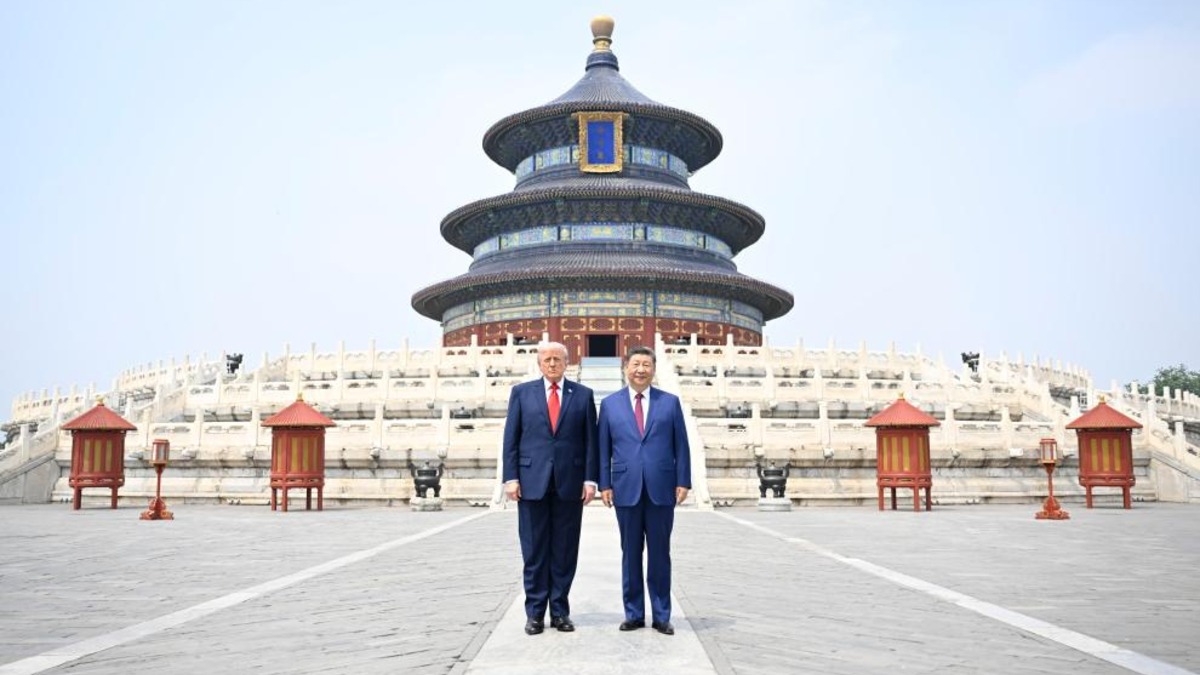 Xi Jinping and Trump at the official summit session in Beijing on May 14, 2026.
Source: en.people.cn
Xi Jinping and Trump at the official summit session in Beijing on May 14, 2026.
Source: en.people.cn
The Non-State Actor Focus
Framing the protocol around non-state actors is deliberate. It sidesteps the two questions that right away poison US-China AI talks: whether export controls should be lifted, and whether either government's own AI programs are subject to any restrictions. By scoping guardrails to outside actors, both governments can claim a safety win without constraining their own capabilities.
Bessent was explicit that the US negotiating position rests on its current lead. His framing - "we can have these talks because we're ahead" - contains an embedded assumption: that leading in AI justifies setting the norms. China hasn't agreed to that premise, and its state media hasn't repeated it.
The Beijing Delegation and the Chip Deal
Jensen Huang's Last-Minute Invitation
Nvidia CEO Jensen Huang wasn't on the original White House delegation list released Monday. A day later, Nvidia confirmed he was joining. Huang said Trump "asked me to come" - the president, reportedly after seeing press coverage of Huang's absence, called the CEO directly. Huang boarded Air Force One at an Alaska refueling stop.
The optics matter because Nvidia's business interests in China are directly tied to whatever emerges from these talks. Huang has been vocal about the damage export controls have done to Nvidia's China revenue. His presence in Beijing signaled that chip market access and AI safety are, in practice, being negotiated in the same room.
H200 Approvals, Zero Deliveries
That link became concrete Thursday with a Reuters exclusive: the US has cleared around 10 Chinese companies - including Alibaba, Tencent, ByteDance, and JD.com, plus distributors Lenovo and Foxconn - to purchase Nvidia's H200 chips, with each approved buyer permitted to acquire up to 75,000 units.
But not one chip has been delivered.
Chinese companies pulled back after guidance from Beijing. The signal from Chinese authorities has been to hold off, vetted or not. Whatever safety protocol emerges from this summit lands on top of that dynamic - a market nominally open, practically frozen. The US safety concession and the trade incentive are, for now, pointing in opposite directions.
Cross-reference our earlier coverage on the US AI chip export rules for the regulatory background behind those H200 approvals.
The Safety Claim Under the Microscope
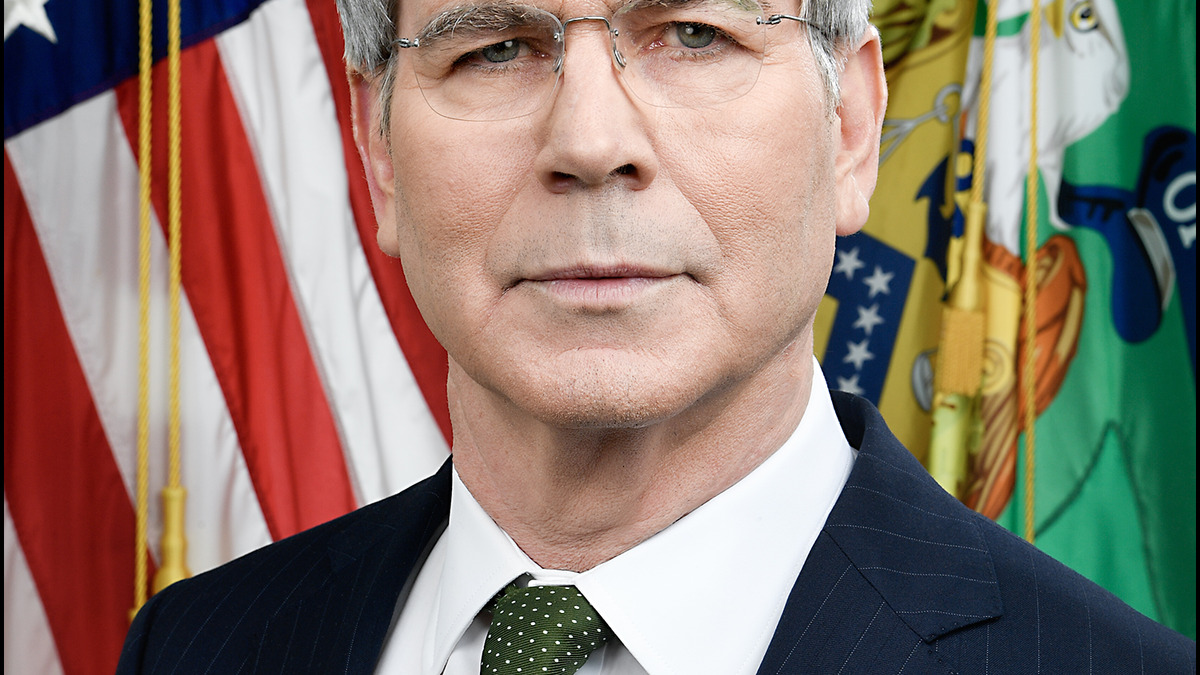 Treasury Secretary Scott Bessent during the CNBC Squawk Box interview in Beijing, where he described AI guardrails talks with China as a sign of US leadership.
Source: treasury.gov
Treasury Secretary Scott Bessent during the CNBC Squawk Box interview in Beijing, where he described AI guardrails talks with China as a sign of US leadership.
Source: treasury.gov
What Bessent Said vs What Experts Warn
Bessent said it was "of utmost importance" that the US maintain its AI lead, and that lead is exactly why Beijing is interested in guardrails talks. His argument: a country that is behind doesn't get to shape the norms. That's a reasonable theory. It doesn't tell you whether the resulting norms will hold.
Melanie Hart, a China policy researcher, has noted that China used Biden-era AI safety meetings primarily "to gather information about the United States, rather than to be serious about AI guardrails." She added that future credibility depends on China sending technical experts with real authority rather than foreign ministry officials who lack the AI background to make meaningful commitments.
The 2024 Geneva Precedent
The previous formal US-China AI safety dialogue, held in Geneva in 2024, produced nothing. The sides weren't even having the same conversation. The US delegation brought technical AI safety researchers focused on catastrophic risk scenarios. China's delegation brought foreign policy specialists whose main agenda was lifting chip export controls.
That mismatch has been well documented. What's less clear is whether this summit changes the underlying incentive structure. As the Carnegie Endowment analysis published before the summit argued, the right scope for productive dialogue is narrow: standardized pre-deployment testing, shared red-teaming best practices, and explicit boundaries on what technical information gets exchanged - specifically excluding how to extract sensitive dual-use knowledge from frontier models.
What Diverging Interests Actually Mean
Different Definitions of AI Safety
The US and China don't share a definition of what frontier AI safety means. For US policymakers and the AI safety research community, it covers catastrophic risk - models that could help synthesize bioweapons, that pursue goals misaligned with human oversight, that concentrate power in dangerous ways. For Chinese officials, "AI safety" has historically covered a different set of concerns: content control, social stability, the political reliability of AI outputs.
That gap has consequences. A protocol that both governments can sign is, by definition, one that doesn't require China to adopt the US definition of risk - or vice versa. The China five-year plan for AI published earlier this year focused almost completely on capability development and domestic chip self-sufficiency, with safety framed as an obstacle to competitiveness, not a shared goal.
The Export Control Contradiction
There's a structural tension in the US position that Bessent didn't address. Export controls - covered in our earlier report on global permit rules - exist exactly because the US doesn't trust China's AI development arc. If the US trusted China enough to establish meaningful safety governance, export controls would be less necessary. If export controls are still necessary, that expresses a degree of distrust that makes deep safety cooperation implausible.
Some observers argue the two can coexist: export controls as market tools, safety protocols as diplomatic ones. The problem is that China doesn't separate them. As the stalled H200 deliveries show, Beijing is treating chip access and AI governance as a package deal. The US can negotiate them separately in Washington; China won't.
Whether Thursday's summit produces a real protocol or a talking-point remains an open question - one that'll be answered not by what was said at the Temple of Heaven, but by whether China sends engineers or diplomats to the next meeting.
Sources:
- U.S. and China Forge Path on AI Safety Protocols - ChinaTechNews
- U.S. clears H200 chip sales to 10 China firms as Nvidia CEO looks for breakthrough - Reuters via TradingView
- US clears H200 chip sales to 10 China firms - TBS News
- Who was on Trump's plane to China? Elon Musk, Nvidia CEO and more - PBS News
- Trump China visit: US CEOs Musk, Cook and Huang join trade talks - Euronews
- Trump and Xi Should Tackle a Previously Impossible AI Conversation - Carnegie Endowment
- Xi, Trump visit Temple of Heaven - Xinhua
- H200 chip sales to China cleared amid stalled deliveries - BNN Bloomberg
Last updated

