
UN AI Governance Forum: Bengio Warns of Catastrophic Risk
The UN's first all-nations AI governance dialogue opened in Geneva with Turing Award winner Yoshua Bengio warning that science cannot guarantee AI won't cause catastrophic harm.
 Updated
6 min read
Updated
6 min read
The first United Nations forum where all 193 member states sat down specifically to discuss AI governance opened in Geneva on Sunday. By mid-morning, one of the world's most decorated machine learning researchers had told the room something none of the delegations wanted on the record: science has no current guarantee that increasingly capable AI systems won't cause catastrophic harm.
TL;DR
- 193 UN member states convened in Geneva July 6-7 for the inaugural Global Dialogue on AI Governance
- Scientific panel co-chair Yoshua Bengio warned "science currently cannot guarantee" AI won't cause catastrophic harm
- AI is "outpacing both scientific understanding and governments' ability to adapt," the panel's preliminary report found
- UN Secretary-General Guterres: "killer robots are already the norm" on modern battlefields
- The dialogue produces no binding rules - it's the first step in a longer multilateral process
The two-day session, co-chaired by Estonia's Ambassador Rein Tammsaar and El Salvador's Ambassador Egriselda López, brought together governments, tech companies, academics, and civil society to grapple with a technology that is advancing faster than the regulatory frameworks meant to contain it. No binding agreement came out of Geneva. What came out was a clearer record of how far governance is lagging behind capability.
 The Palais des Nations hosted the first all-nations UN AI governance dialogue on July 6-7, 2026.
Source: commons.wikimedia.org
The Palais des Nations hosted the first all-nations UN AI governance dialogue on July 6-7, 2026.
Source: commons.wikimedia.org
The Scientific Panel and Its Warning
The Independent International Scientific Panel on AI published its preliminary report on July 1, five days before the dialogue opened. The 40-member panel, representing all global regions, is co-chaired by Yoshua Bengio - Turing Award winner and one of the researchers credited with the deep learning revolution - and Maria Ressa, Nobel Peace Prize laureate and founder of Filipino news site Rappler.
What Bengio Said
Bengio's statement to the dialogue was direct. "Science currently cannot guarantee that as capabilities continue to increase, AI will not cause catastrophic harm, either on its own or due to malicious users," he told delegates. He also told the assembled governments: "we don't have the right national or even international governance tools, and we don't have good ways to steer the benefits."
His preliminary report put it in structural terms: AI is "outpacing both scientific understanding and governments' ability to adapt." The warning isn't that catastrophic harm is inevitable. It's that the scientific community lacks the tools to rule it out - which is a different kind of problem and arguably a harder one.
"AI is approaching or surpassing human capabilities in many domains." - Yoshua Bengio, scientific panel co-chair
That sentence landed differently in a room full of diplomats than it would at a machine learning conference. Bengio has been one of the field's most consistent voices on safety risks, and unlike many researchers who hedge in public settings, he didn't soften his language for Geneva.
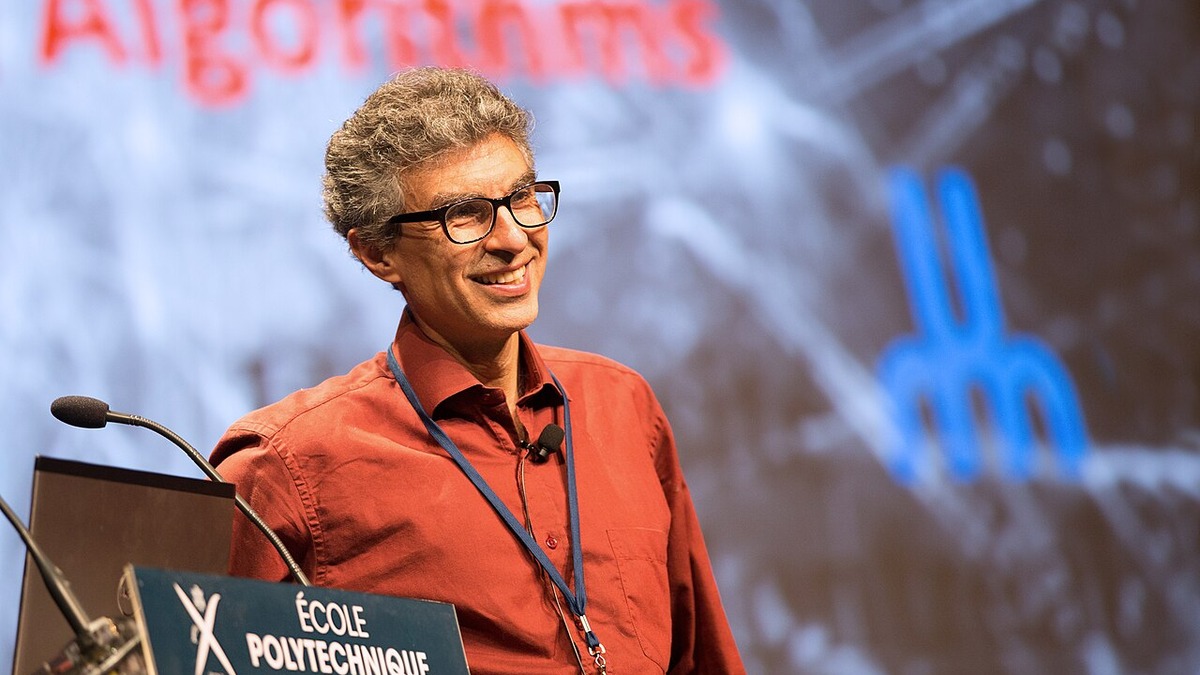 Yoshua Bengio co-chairs the UN's Independent International Scientific Panel on AI. His Geneva warning was among the strongest public statements on AI risk from a scientist of his standing.
Source: commons.wikimedia.org
Yoshua Bengio co-chairs the UN's Independent International Scientific Panel on AI. His Geneva warning was among the strongest public statements on AI risk from a scientist of his standing.
Source: commons.wikimedia.org
Maria Ressa's Angle
Maria Ressa focused on the information layer. She described AI's ability to boost content driven by "fear, anger and hate" as creating an "'information Armageddon'" - a phrase that's easy to dismiss as rhetorical but harder to argue against when measured against the speed at which AI-produced content now spreads.
"The world cannot govern what it cannot understand." - Maria Ressa, scientific panel co-chair
Her concern sits at a specific intersection: she's not warning about a future superintelligence. She's describing what she's observed as a journalist covering disinformation - AI making existing harm faster, cheaper, and harder to attribute. Having Bengio and Ressa lead the same panel is deliberate. They represent two different threat surfaces, and both say the same thing: the governance gap is already real.
The Guterres Proposals
UN Secretary-General António Guterres didn't confine himself to process language. He stated directly that "killer robots are already the norm" on modern battlefields as AI-enabled systems have multiplied in active conflict zones. His framing: "AI is too consequential to be shaped by a few."
UN Special Envoy Amandeep Singh Gill used almost identical language, describing AI as "too consequential to be shaped by a few."
Guterres outlined what he wants from the governance process. The proposals ranged from the specific to the structural:
- A mandatory AI child safety pledge, requiring companies to prove systems are safe for children before deployment, with zero tolerance for child sexual abuse material
- Human rights protections in high-stakes decisions: "Machines can inform, but humans must decide - and answer" in justice, healthcare, and policing contexts
- Locked-in access for developing countries, to prevent wealthy nations from cornering AI gains
- Transparency requirements: major AI companies to publicly disclose carbon, water, and land footprints of their systems
- All data centers powered by renewable energy by 2030
Most of these proposals have no current enforcement path. Several require corporate cooperation that isn't guaranteed. But the Guterres list serves a function: it defines what a future binding agreement would need to cover, even if the Geneva dialogue can't mandate anything today.
The Gap the Dialogue Exposed
Ambassador López raised what may be the sharpest systemic issue: the AI infrastructure gap between wealthy and developing nations. Research capacity, computing access, and the ability to participate in governance discussions are all concentrated in a small number of countries. A governance framework built mainly by those countries risks locking in those advantages.
That concern isn't new. What's new is its salience inside a UN forum explicitly designed to be inclusive. Estonia and El Salvador don't typically co-chair major technology governance summits. Their pairing signals something about the kind of forum this is meant to be - one where the users of AI, not just the builders, have standing.
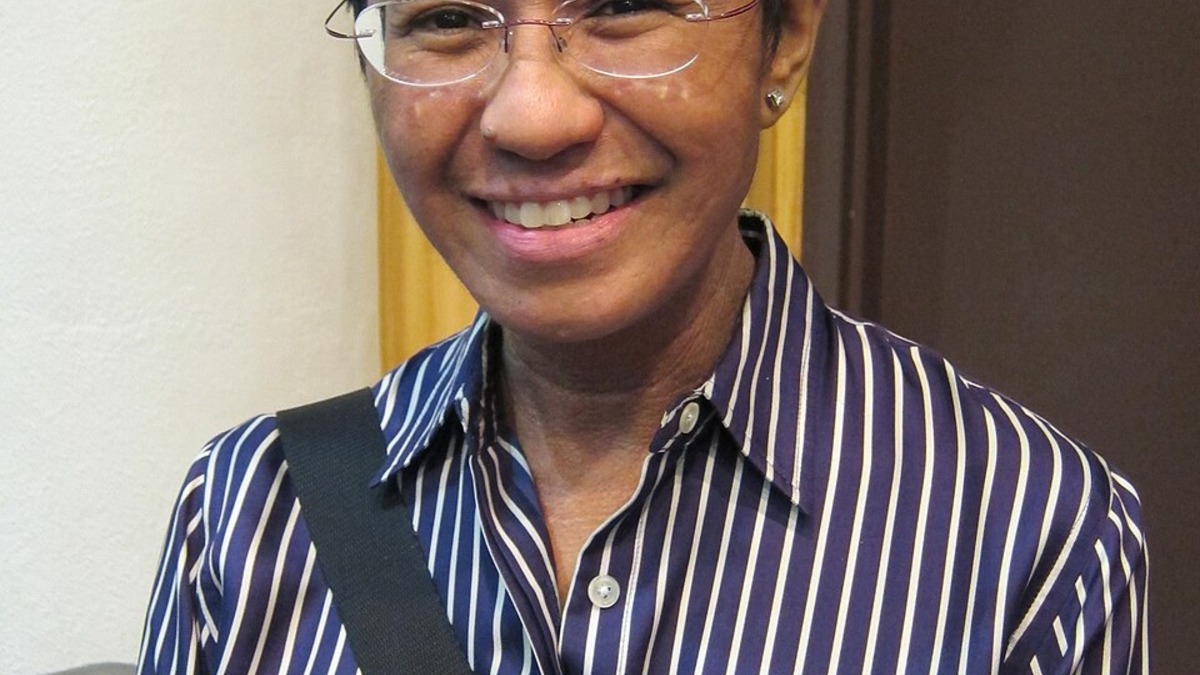 Maria Ressa co-chairs the UN's Independent International Scientific Panel on AI. Her focus at Geneva was on AI-accelerated disinformation - a threat she covered as a journalist before joining the panel.
Source: commons.wikimedia.org
Maria Ressa co-chairs the UN's Independent International Scientific Panel on AI. Her focus at Geneva was on AI-accelerated disinformation - a threat she covered as a journalist before joining the panel.
Source: commons.wikimedia.org
What Comes Next
The Geneva dialogue feeds into a longer process - not the UN AI for Good Global Commission launched on July 1 under Benioff and Kagame, which has a separate mandate around benefits and equity. This dialogue is the governmental track: how 193 states eventually agree on standards, if they do.
The scientific panel's preliminary report will be followed by a fuller report later in 2026. Individual governments are in parallel building their own national frameworks. The US approach - Trump's EO 14409, classified cybersecurity benchmarks, voluntary pre-release review periods - is one model. The EU AI Act is another. None of these are compatible by default, and Geneva produced no mechanism to reconcile them.
Bengio's panel is the part of this process that's most likely to produce something concrete in the near term. Its July 1 report is the first time a body with scientific credibility across all UN regions has formally assessed AI risk at this level. Whether governments cite it in legislation is the signal to watch.
The next panel report is due before the end of 2026. Between now and then, by most projections, at least two more frontier model generations will ship - each potentially changing the risk profile the panel is still working to document.
Sources:
- UN News: Global push for AI governance amid warnings of 'catastrophic harm'
- UN Geneva: AI, killer robots - UN chief issues urgent governance call
- UN Geneva: Global push for AI governance amid warnings of 'catastrophic harm'
- AI Weekly: UN opens Geneva AI dialogue as Bengio warns of catastrophic risk
- GlobalSecurity.org: Global push for AI governance amid warnings of 'catastrophic harm'
Last updated

