
Trump Eyes Government Equity Stake in OpenAI
The Trump administration is in talks with OpenAI about donating equity to a US sovereign-style fund, a deal that would make American taxpayers co-owners of the most valuable AI startup on Earth.
 Updated
7 min read
Updated
7 min read
OpenAI and the White House are in active discussions about giving the US government an equity stake in the company. If a deal closes, American taxpayers would become part-owners of an AI startup valued at more than $850 billion by private investors - and the largest unprofitable tech company in history.
TL;DR
- OpenAI CEO Sam Altman first pitched a government equity stake to the Trump administration in 2025
- Proposed structure: OpenAI donates shares to seed a "Public Wealth Fund" that distributes returns to citizens
- Trump confirmed discussions on Air Force One but no terms have been agreed
- Legal mechanism for the transfer doesn't exist yet; the deal may never close
- Senator Bernie Sanders proposed a harder version: 50% of major AI firms' stock, taken by force of law
What's on the Table
The talks have been running quietly for more than a year. Altman brought the concept to Trump's team in 2025 and formalized it in an April 2026 policy paper that described a fund that could "invest in diversified, long-term assets" and enable citizens to "participate directly in the upside of AI-driven growth, regardless of their starting wealth or access to capital."
Speaking to reporters on Air Force One, Trump confirmed the discussions are real.
"There are concepts where pieces could be given to the American public, where the American public essentially becomes a partner with the companies."
That's as precise as the public record gets. No equity percentage, no dollar value, no timeline. Three sources with knowledge of private deliberations told reporters the talks are preliminary and the details remain fluid.
The Intel Precedent
This isn't the first time Trump has pursued a government ownership stake in a major tech company. Since his second term began, the administration has taken positions in at least ten firms. The most prominent: a 10% stake in Intel, framed as a national competitiveness measure after the chipmaker's domestic manufacturing fell behind.
The Intel deal gave the administration a template. The OpenAI talks follow a similar logic: the government provides something the company wants - political cover, regulatory goodwill, a stamp of national importance - and receives equity in return.
The Public Wealth Fund Model
OpenAI's proposal is structured as a voluntary transfer, not a forced nationalization. The company would donate equity to seed the fund, which the government would then manage independently. Dividend distributions, if the fund ever paid them, would flow to American households.
Altman's pitch positions this as a way to address public anxiety about who captures AI's economic gains. That framing is politically useful. Whether the fund would ever produce meaningful returns for ordinary citizens is a separate question; the mechanics of distributing investment income to three hundred million people haven't been worked out.
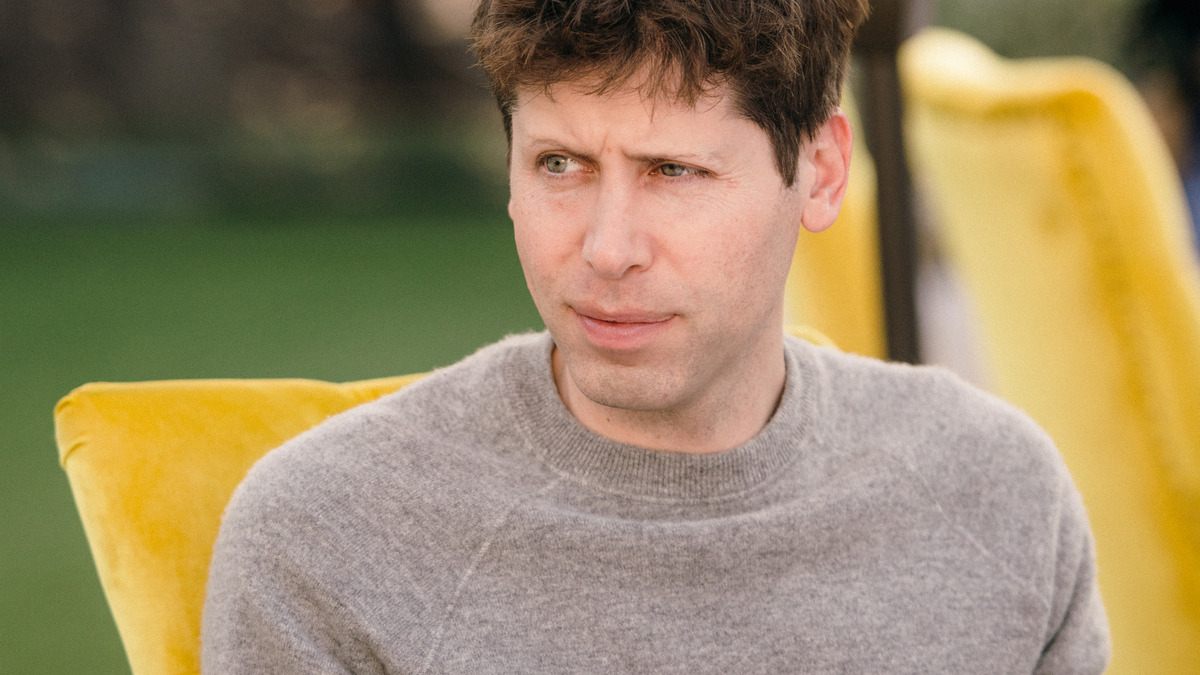 OpenAI CEO Sam Altman first pitched the government equity concept to Trump's team in 2025 and met with White House officials and congressional leaders in early June 2026.
Source: wikimedia.org
OpenAI CEO Sam Altman first pitched the government equity concept to Trump's team in 2025 and met with White House officials and congressional leaders in early June 2026.
Source: wikimedia.org
Impact Assessment
| Stakeholder | Impact | Timeline |
|---|---|---|
| OpenAI shareholders | Equity dilution if shares are donated; valuation protection through political alignment | Unclear |
| US government | Ownership interest in a top-five tech asset; potential regulatory conflict of interest | Pending legal framework |
| American households | Possible dividend income from AI growth, if fund ever distributes | Years out, highly uncertain |
| Anthropic and xAI | Pressure to participate; currently no equity talks with the administration | Ongoing |
| AI safety regulators | Risk of regulatory capture: government may soften rules to protect investment value | Immediate |
Companies
OpenAI is the obvious mover here, but the administration's discussions haven't stayed contained to one company. Senior officials have held preliminary conversations with multiple AI firms, though none beyond OpenAI have confirmed they're engaged. Anthropic told reporters it isn't currently in equity discussions with the White House - a position that may shift if OpenAI closes a deal and the political logic makes holding out awkward.
For OpenAI, the strategic calculus is clear. The company faces ongoing regulatory and legal pressure, including the Florida lawsuit filed in May alleging product liability for ChatGPT-related harm. A government equity stake wouldn't make those cases go away, but it changes the political environment in Washington far.
Competitors
xAI and Anthropic will be watching whether Altman's approach becomes the industry standard. If the government takes a stake in OpenAI and the company receives favorable treatment as a result - faster model approvals, softer oversight, preferred federal contracts - competitors face a binary choice: join the arrangement or operate at a disadvantage.
The dynamic echoes what happened after Trump's voluntary AI review order was signed in early June: labs that cooperated first got to shape the terms.
The Complications
Three problems stand out, and none of them are small.
First, the legal mechanism doesn't exist. There's no established process for a corporation to voluntarily transfer equity to the federal government to seed a public investment fund. Creating one requires congressional action, Treasury involvement, and securities law interpretations that haven't been tested.
Second, the conflict of interest problem. If the government owns OpenAI equity, its financial interest in that equity's appreciation runs directly against its public interest in regulating AI aggressively. One analyst put it plainly: the government becomes "less willing to impose safety rules because doing so could reduce the value of its own investment." This is the structural flaw that critics from both the left and right have identified.
Third, David Sacks - until recently Trump's AI and crypto czar and now co-chair of the President's Council of Advisors on Science and Technology - publicly warned the arrangement would "accelerate the corporate-government fusion we're already sliding toward." His concern wasn't redistribution but something closer: that entangling government finances with AI company performance creates a power dynamic that's hard to undo.
 The Trump administration has taken equity positions in at least ten companies since 2025, with Intel as the clearest precedent for an AI-sector stake.
Source: pexels.com
The Trump administration has taken equity positions in at least ten companies since 2025, with Intel as the clearest precedent for an AI-sector stake.
Source: pexels.com
The Sanders Counterproposal
The bipartisan element of this story is unusual. Senator Bernie Sanders introduced legislation this week to impose a one-time 50% tax on major AI companies - OpenAI, Anthropic, xAI - paid as stock rather than cash. Proceeds would flow into a sovereign wealth fund.
Sanders' proposal is coercive where Altman's is voluntary, and much larger in scale. Altman has said he can't support a 50% threshold. Sacks compared the Sanders approach to "CCP-style" nationalization and warned it'd create "Central Government AI - a system with even more totalistic power over information, decision-making, and human behavior."
The overlap, though, is real: both Trump and Sanders have concluded that the public should own a piece of the AI industry. They differ on how much and how to get there.
OpenAI is preparing for an initial public offering that could come later this year. Context on Altman's Washington activity this week is worth noting: he met with White House officials and congressional leaders on June 3, the same week Trump's voluntary AI review order was signed, and the same week a potential equity stake became front-page news. The timing isn't coincidental.
What Happens Next
The talks need a legal structure before they can become a deal. That requires Congress, not just the White House, to act - and there's no visible legislative vehicle moving to create a framework for voluntary government equity acquisition.
The IPO timeline matters here. If OpenAI files its S-1 and goes public before a government stake deal closes, the moment passes. A listed company donating shares to the government introduces securities law complications that make an already-complex arrangement dramatically harder.
The more likely near-term outcome: the talks produce a Memorandum of Understanding, a policy commitment, or a public partnership announcement that generates positive press without actually transferring equity. Washington is good at those. Whether American households ever see a dividend check from their notional OpenAI stake is a different story.
A Quinnipiac poll conducted this month found 55% of Americans believe AI will cause more harm than good in daily life. Altman's equity-stake pitch is partly an answer to that concern - and partly a political calculation ahead of OpenAI's IPO. The company needs Washington's goodwill. Giving the government a piece of the upside is one way to secure it.
Sources:
- Anthropic raises $65B in Series H at $965B valuation - Anthropic
- Trump Administration Reportedly In Talks For U.S. Government Stake In OpenAI - StockTwits
- The Trump administration might take an equity stake in OpenAI - TechCrunch
- Senior U.S. Officials Eye Government Shares in AI Giants - NOTUS
- Sam Altman Wants the Government to Own a Piece of OpenAI - AutoGPT
- David Sacks Rips Bernie Sanders' 50% AI Ownership Plan - Benzinga
- OpenAI CEO to Share Oversight Ideas in Wake of Trump AI Order - UPI
Last updated

