
Trump's AI Advisers Split Over Banning China's Models
OpenAI's Dean Ball floated regulatory pressure on Chinese open-weight models like Kimi K3, and within days Trump's own AI and defense officials turned on each other over it.
 Updated
6 min read
Updated
6 min read
TL;DR
- OpenAI's Dean Ball, a former Trump AI policy advisor, wrote that the administration's "best strategy" would be creating regulatory risk around Chinese open-weight models like Kimi K3 - then partly retracted it under backlash
- Former White House AI czar David Sacks accused closed labs of wanting government help to "eliminate their open source competition"
- Pentagon official Emil Michael called Ball the industry's "supreme village idiot" on X, citing a 40-point gap between his actual and perceived IQ
- Axios reports the Commerce Department has circulated draft rules to restrict Chinese open-weight models using supply chain security authorities, so far unimplemented
Moonshot AI released Kimi K3 on July 16, a 2.8 trillion parameter open-weight model that briefly topped LMArena's Frontend Code Arena and landed within range of Claude Fable 5 on general benchmarks. Four days later, the release had triggered an open feud inside Donald Trump's own AI policy circle over whether the United States should try to ban it. Every combatant in that feud works for or with the administration.
The Post That Started It
Dean Ball, who spent four months in 2025 as a senior White House AI policy advisor before joining OpenAI as head of strategic futures, posted on X that he was "personally surprised the Chinese state continues to allow the open sourcing of models this good." He called open-weight releases "decelerationist," arguing they let developers skip the capital spending that drives frontier progress, and predicted the administration would eventually conclude its "best strategy" was to manufacture regulatory uncertainty around Chinese models.
The Walkback
The post drew immediate fire, and Ball moved to soften it within days, clarifying he "wasn't proposing it like a good idea" but was "trying to describe what I believe will happen, not advocate for anything." The distinction didn't satisfy critics, who noted that an OpenAI executive predicting, rather than recommending, a policy that would financially benefit OpenAI still reads as a suggestion.
"I'm not sure whether Dean Ball is confessing to a regulatory capture strategy or simply predicting this will happen (he now says the latter)," wrote David Sacks, Trump's former White House AI and crypto czar, who stepped down from that post in March after hitting the 130-day limit for special government employees.
Sacks went further, arguing the "leading closed labs, already a duopoly in terms of AI model revenue, want the government to eliminate their open source competition," and called the use of "regulatory uncertainty as a competitive tool" unacceptable.
Washington Turns on Itself
The sharpest response came from inside the Pentagon, not from industry. Emil Michael, an Under Secretary at the department now branded the Department of War, posted that "every industry/ecosystem has its supreme village idiot" and named Ball as AI's version, adding that Ball has "perhaps the biggest gap between actual IQ and his own perceived IQ of anyone in the industry (about 40 points)."
Michael's underlying argument was meaningful: he pointed out that Congress already passed a 2026 law restricting government use of DeepSeek and High-Flyer models specifically, with waivers available, through what he called "the democratic process," not "some Deep State scheme" of the kind Ball's post implied was necessary.
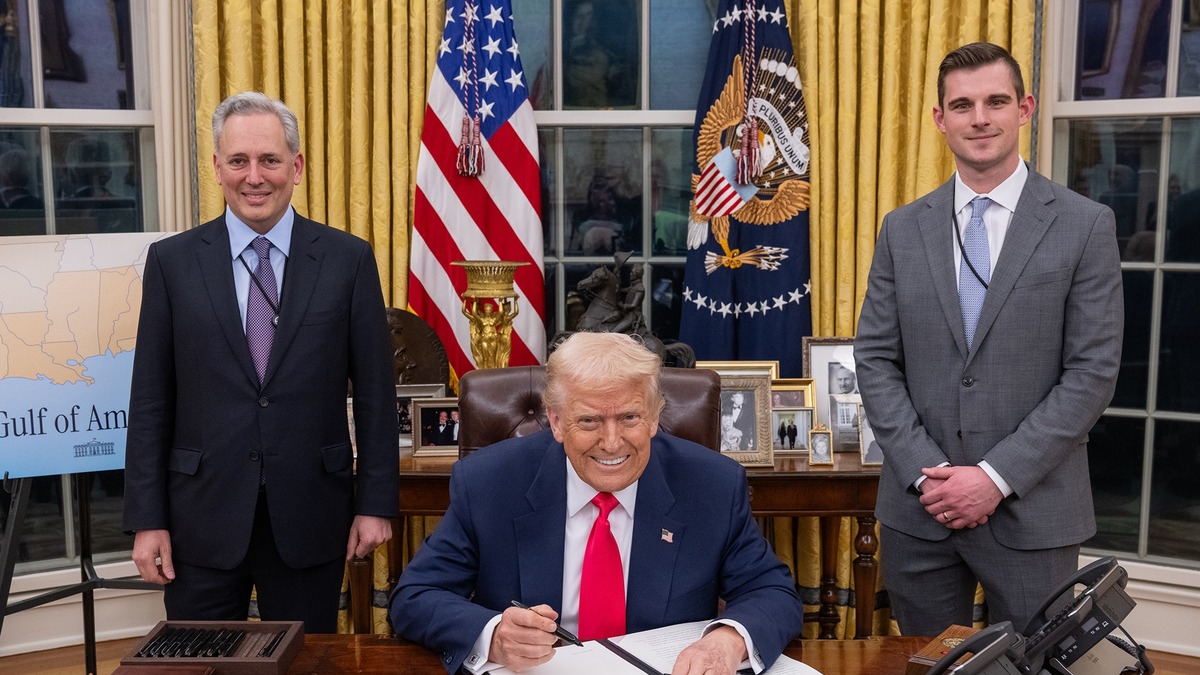 David Sacks (left) in the Oval Office in March 2025. He stepped down as White House AI and crypto czar a year later, in March 2026, but remains an active voice on administration AI policy.
Source: commons.wikimedia.org
David Sacks (left) in the Oval Office in March 2025. He stepped down as White House AI and crypto czar a year later, in March 2026, but remains an active voice on administration AI policy.
Source: commons.wikimedia.org
Who's Actually Arguing What
| Figure | Role | Position |
|---|---|---|
| Dean Ball | OpenAI head of strategic futures, ex-White House advisor | Predicted (then softened) that regulatory pressure on Chinese open models is coming |
| David Sacks | Former White House AI and crypto czar | Calls regulatory uncertainty a tool to protect closed-lab revenue |
| Emil Michael | Under Secretary, Department of War | Says existing restrictions came through Congress, not backroom pressure |
| Clem Delangue | Hugging Face CEO | Says restricting open models concentrates power in fewer companies |
What's Actually on the Table
Behind the social media fight sits real policy machinery. According to Axios, the Commerce Department drafted rules last summer to target Chinese open-weight models using supply chain security authorities, an effort that stalled after officials worried it'd stifle innovation rather than protect it. Other options reportedly discussed inside the administration include adding Chinese AI labs to the export-control Entity List, NSA and National Cyber Director advisories on the risk of using Chinese models, and an executive order requiring companies to accept liability for any breach tied to a Chinese model.
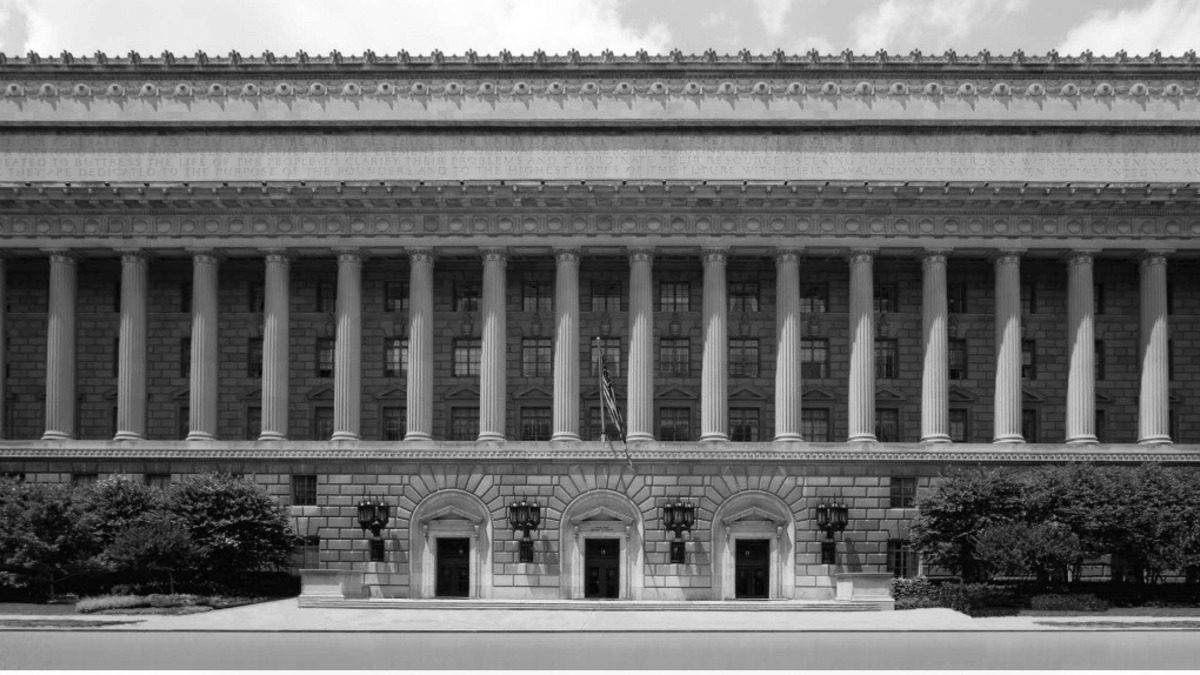 The Herbert C. Hoover Building in Washington, DC, headquarters of the Commerce Department, which drafted and then shelved supply-chain rules targeting Chinese open-weight models.
Source: commons.wikimedia.org
The Herbert C. Hoover Building in Washington, DC, headquarters of the Commerce Department, which drafted and then shelved supply-chain rules targeting Chinese open-weight models.
Source: commons.wikimedia.org
The Distillation Precedent
None of this is happening in a vacuum. The administration already moved once this year, announcing crackdowns on model distillation in April after complaints that US labs were quietly training on outputs from Chinese export-controlled hardware and models. That crackdown drew its own skepticism, for the same reason a Kimi ban would be hard to police: once weights are public, blocking American use of them means policing downloads, not shipments. The enforcement problem sits awkwardly next to Washington's other China AI lever, too. The administration loosened Nvidia's chip export rules to China earlier this month in exchange for a cut of Nvidia's China revenue, even as some of its own advisors push to tighten controls on the software side.
Who Gets Squeezed
Hugging Face CEO Clem Delangue has made the counter-argument publicly for months: restricting powerful open models doesn't remove the underlying risk, since frontier weights already leak, and it concentrates the technology in a handful of companies with far less visibility into how their systems work. "The biggest risk in AI is concentration of power," he has argued.
The people caught in the middle are the enterprise buyers already running Chinese models in production. Coinbase, Snowflake, and Databricks have all leaned on Chinese open-weight models such as GLM for coding tasks in recent months, largely for price and permissive licensing rather than ideology. A ban, even an informal one built on "soft-law discouragement," would force those companies to rip out working infrastructure or quietly ignore Washington's signal, the same bind Michael's cited 2026 law already created for DeepSeek and High-Flyer users.
None of the four officials quoted here work for a Chinese company, and none agree on what the government should do next. That, more than any single tweet, is the story: an administration that campaigned on cutting AI red tape is arguing internally over how much red tape to add, and the one thing everyone agrees on is that an outright ban would be nearly impossible to enforce once the weights are already on Hugging Face.
Sources:
- OpenAI is scared of open-weight models. Should the US be? - TechCrunch
- The secret Trump administration battle to fight Chinese AI - Axios via Yahoo
- Top Pentagon official takes shot at OpenAI's Dean Ball - Axios via Yahoo
- China's AI models have Trump's AI world at war with itself - MIT Technology Review
- OpenAI Exec Laments That China Is Giving Away Models So Good For-Profit Companies Won't Be Able to Compete - Futurism
- David Sacks Says Using Regulatory Uncertainty Against Chinese AI Is 'Completely Unacceptable' - Benzinga
- Pentagon Official Calls Ex-White House AI Architect 'Village Idiot' In China Policy Spat - The Daily Caller
Last updated

