
Trump's Plan to Kill State AI Laws Splits the GOP
Trump's executive order threatens to sue any state that regulates AI, but Republican governors, Heritage Foundation allies, and grassroots conservatives are pushing back hard - with Florida's AI Bill of Rights as the test case.
 8 min read
The Republican Party is splitting over artificial intelligence, and the fracture runs deeper than any policy disagreement in recent memory. On one side, President Donald Trump has signed an executive order threatening to sue any state that regulates AI. On the other, Governor Ron DeSantis is championing an "AI Bill of Rights" in Florida that would restrict chatbot access for minors, ban Chinese AI tools, and protect utility customers from subsidizing data centers.
The deadline for this collision is March 13, when Florida's legislative session ends. What happens in Tallahassee will set the template for how - or whether - states can govern AI at all.
TL;DR
- Trump's December 2025 executive order created a DOJ "AI Litigation Task Force" to sue states that regulate AI
- DeSantis proposed an AI Bill of Rights with parental controls for child chatbot use, deepfake bans, and data center cost protections
- Florida's Senate passed the bill unanimously in committee, but the House Speaker is blocking it - session ends March 13
- Heritage Foundation, state GOP governors, and populist conservatives are breaking with Trump on AI regulation
- Polls show 63% of Americans believe AI will reduce jobs - a number that cuts across party lines
The Executive Order
On December 11, 2025, Trump signed "Ensuring a National Policy Framework for Artificial Intelligence" - the most aggressive federal attempt to preempt state AI regulation in U.S. history.
The order directs the Department of Justice to establish an "AI Litigation Task Force" within 30 days. Its job: challenge state AI laws on grounds including interference with interstate commerce, federal preemption, and First Amendment concerns. The Commerce Department is separately directed to investigate whether federal broadband funding can be withheld from states that pass AI laws conflicting with the administration's position.
"AI WILL BE DESTROYED IN ITS INFANCY" if 50 states create conflicting rules, Trump argued when signing the order.
The Federal Trade Commission was given 90 days to issue a policy statement explaining when state laws requiring changes to AI model outputs are preempted by federal law. And federal agencies were told to assess whether discretionary grants could be conditioned on states not enacting AI regulations.
What It Exempts
One remarkable gap: child safety protections are explicitly carved out of the order's scope. That carve-out hasn't stopped the broader conflict from consuming the party.
The Congressional Backstory
Congress has already rejected this approach - repeatedly. The Senate voted 99-1 against a similar preemption measure. A comparable provision was stripped from the defense spending bill. Over 100 state-level AI laws are already on the books, and the administration is now attempting to do by executive action what it couldn't accomplish through legislation.
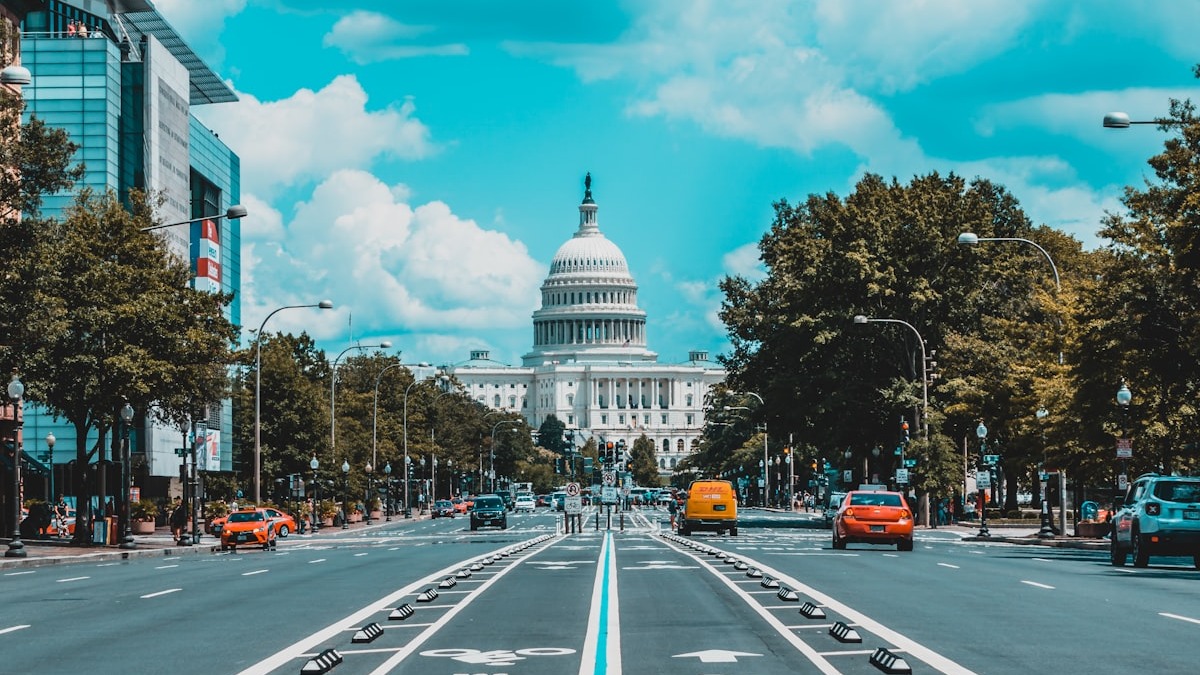 Congress rejected AI preemption 99-1 in the Senate. The administration is now attempting the same policy by executive order.
DeSantis and the AI Bill of Rights
One week before Trump's executive order, on December 4, 2025, DeSantis stood in The Villages, Florida and announced a proposal that would put him on a direct collision course with the White House.
"Our AI proposal will establish an Artificial Intelligence Bill of Rights to define and safeguard Floridians' rights - including data privacy, parental controls, consumer protections, and restrictions on AI use of an individual's name, image or likeness without consent," DeSantis said.
The proposal, filed as Senate Bill 482, covers six areas:
Parental Controls and Child Safety
Parents would gain the right to monitor their children's conversations with large language models, set access parameters for AI platforms, and receive alerts if a child displays concerning behavioral patterns. The bill also reinforces existing bans on deepfakes and explicit material involving minors.
The urgency isn't abstract. Megan Garcia's 14-year-old son, Sewell Setzer III, died by suicide after being groomed by Character.AI chatbots. Garcia testified before Congress about the incident - the kind of real-world harm that makes the White House's deregulatory posture uncomfortable for many Republicans.
Professional and Consumer Protections
The bill would block AI from providing licensed therapy or mental health counseling, prevent AI from impersonating licensed professionals, and require disclosure whenever a user interacts with an AI system rather than a human. Companies would be prohibited from selling personal data to third parties, and insurance companies would be barred from using AI as the sole factor in claim denials.
The China Ban
DeSantis's proposal would ban state and local agencies from using Chinese-created AI tools - naming DeepSeek specifically. This provision aligns with the broader national security framing that has controlled the Anthropic-Pentagon standoff and the administration's own rhetoric about maintaining American AI dominance.
Data Center Cost Protection
Perhaps the most politically potent provision: utilities would be prohibited from charging Florida residents more to support hyperscale data center development. Local governments would gain the authority to block data center construction completely.
"We don't want to see them building a massive data center and then sending you the bill," DeSantis said.
Data centers supporting AI workloads can consume power equivalent to a city of half a million people. For Floridians already dealing with rising insurance premiums and utility costs, the prospect of subsidizing tech giants' infrastructure is a visceral concern.
 Hyperscale AI data centers consume power equivalent to a city of 500,000 people. DeSantis wants Florida residents protected from footing the bill.
The Legislature's Internal War
SB 482 passed the Florida Senate Appropriations Committee with unanimous approval on February 18. That bipartisan support has made what happened in the House more striking.
House Speaker Daniel Perez, a Miami Republican, has effectively buried the companion bills - HB 1395 and HB 659 - by assigning them to multiple committees, where they have stalled since January 15. Perez's stated position is blunt.
"I have massive concerns with the state's ability to deal with anything in tech," Perez said. "AI regulation is for the federal government."
The standoff between Perez and DeSantis extends beyond AI - the two have clashed over property tax and budget priorities as well - but AI has become the sharpest point of contention. With the session ending on March 13, the AI Bill of Rights is running out of time.
The Wider Republican Fracture
Florida is the test case, but the divide runs through the entire party.
The Governors
Utah Governor Spencer Cox has expressed concerns about the executive order's reach. Texas State Senator Angela Paxton warned: "We can't be handcuffed by the federal government" for protecting citizens. Utah State Representative Doug Fiefia called it "an overreaching act that fundamentally disregards the Tenth Amendment."
The Conservative Movement
The Heritage Foundation, typically a reliable ally of Republican presidents, is sounding the alarm. Wesley Hodges, acting director of the foundation's Center for Technology and the Human Person, called Trump's preemption approach "ahistorical" and warned it "widens the schism between populists and tech advocates in the conservative movement right now."
Brad Littlejohn of American Compass echoed the concern, noting the executive order could backfire among Trump's own base - particularly traditional social conservatives worried about technology's impact on families and working-class populists concerned about job displacement.
Former Trump adviser Steve Bannon and the Institute for Family Studies are urging the party to take a "far more skeptical look at the technology."
The 2028 Shadow
According to NBC News, eight sources connected to DeSantis's administration confirm his AI stance serves a dual purpose: genuine policy conviction and 2028 presidential positioning. Vice President JD Vance and Secretary of State Marco Rubio - both potential contenders for Trump's endorsement - have taken strongly pro-AI positions. DeSantis is carving out the opposite lane, betting that AI safety concerns will resonate with a growing segment of the Republican electorate.
Why This Matters Beyond Florida
The stakes aren't limited to one state's legislative session. If Trump's executive order holds, it effectively creates a federal shield for the AI industry against any state-level accountability - for data practices, for labor impacts, for utility costs, for children's safety.
If DeSantis's model prevails, it establishes a template that other red-state governors could adopt: regulate the downstream effects of AI while avoiding direct restrictions on the technology itself.
Dueling super PACs are already spending to advance their respective visions, and grassroots backlash against data center construction is fueling populist pushback across rural America. Polls show 63% of Americans believe AI will decrease jobs overall - a concern that cuts across educational and political lines, representing nearly double the anxiety about computerization recorded in 1999.
This is not a fight between Democrats and Republicans over whether AI should be regulated. It's a fight within the Republican Party over whether anyone should be allowed to regulate it at all. The party that controls the White House, both chambers of Congress, and a majority of governorships can't agree on whether a parent in Florida should have the right to see what an AI chatbot said to their teenager. That disagreement will define AI governance in America far more than any executive order.
Sources:
- TIME - How Trump's AI Executive Order Splits Republicans
- NBC News - Ron DeSantis carves out a distinct GOP lane on AI
- Washington Examiner - Trump and DeSantis lock horns in GOP split over AI
- White House - Executive Order on AI National Policy Framework
- FOX 13 - Florida AI legislation update: House feud threatens DeSantis AI guardrails
- Florida Governor's Office - AI Bill of Rights Proposal
- Local 10 - AI bill on child safety stalls in Florida House
- NPR - Trump is trying to preempt state AI laws via executive order
