
Tencent Plans to Double AI Investment to $5B in 2026
Tencent's 2025 results beat estimates, with the company spending $2.6B on AI last year and planning to at least double that in 2026 despite ongoing GPU supply constraints from US export controls.
 6 min read
Tencent spent 18 billion yuan on AI products in 2025 and plans to spend at least twice that in 2026 - but US export controls mean it can't easily buy the hardware to make that happen.
TL;DR
- 751.8 billion yuan ($109B) in full-year 2025 revenue, up 14% - beat analyst estimates
- 18 billion yuan ($2.6B) on AI product investment in 2025; 7 billion yuan in Q4 alone
- "At least double" planned for 2026, per President Martin Lau - that's
36 billion yuan ($5B) - Q4 capex fell YoY due to GPU supply constraints from US export controls
- WeChat AI agent in development, targeting grey testing by mid-2026 with 1.4 billion potential users
The Numbers
Tencent published its full-year 2025 results on Wednesday after Hong Kong market close. The headline figures beat analyst consensus on all major lines.
| Metric | 2025 Result | Growth | Analyst Estimate |
|---|---|---|---|
| Full-year revenue | 751.8B yuan ($109B) | +14% YoY | 750.7B yuan |
| Full-year profit | 259.6B yuan | +17% YoY | - |
| Q4 revenue | 194.4B yuan | +13% YoY | 193.5B yuan |
| Q4 net income | 64.7B yuan | +17% YoY | - |
| Q4 capex | 19.6B yuan | down YoY | - |
| 2025 AI product spend | 18B yuan ($2.6B) | - | - |
| Q4 AI spend alone | 7B yuan | - | - |
Shares in Hong Kong closed at HK$550.5, up 0.1% on the day.
What the Business Lines Look Like
Business services - which includes cloud and AI tools - grew 22% in Q4, the fastest segment. Online advertising also accelerated, with Pony Ma crediting AI-improved targeting on the earnings call. Games held steady. The pattern mirrors what Alibaba and Baidu have reported this earnings cycle: the AI infrastructure buildout is lifting the cloud business first, while consumer-facing AI revenue takes longer to monetize.
The AI Spending Gap
At 18 billion yuan, Tencent's 2025 AI product investment is real money - but it looks modest next to what the US hyperscalers are committing. Meta spent roughly $65 billion in capex in 2025 and is planning up to $135 billion for 2026. Amazon has flagged $200 billion. Even within China, Alibaba's three-year AI capex plan sits at 380 billion yuan and may rise further.
The "at least double" pledge from Martin Lau brings Tencent's AI product line closer to its Chinese rivals, but it's still not capital expenditure at the scale of the full-stack infrastructure builds happening elsewhere. Tencent has historically been more measured than ByteDance or Alibaba on infrastructure spending - the doubling signals urgency, not a structural shift in philosophy.
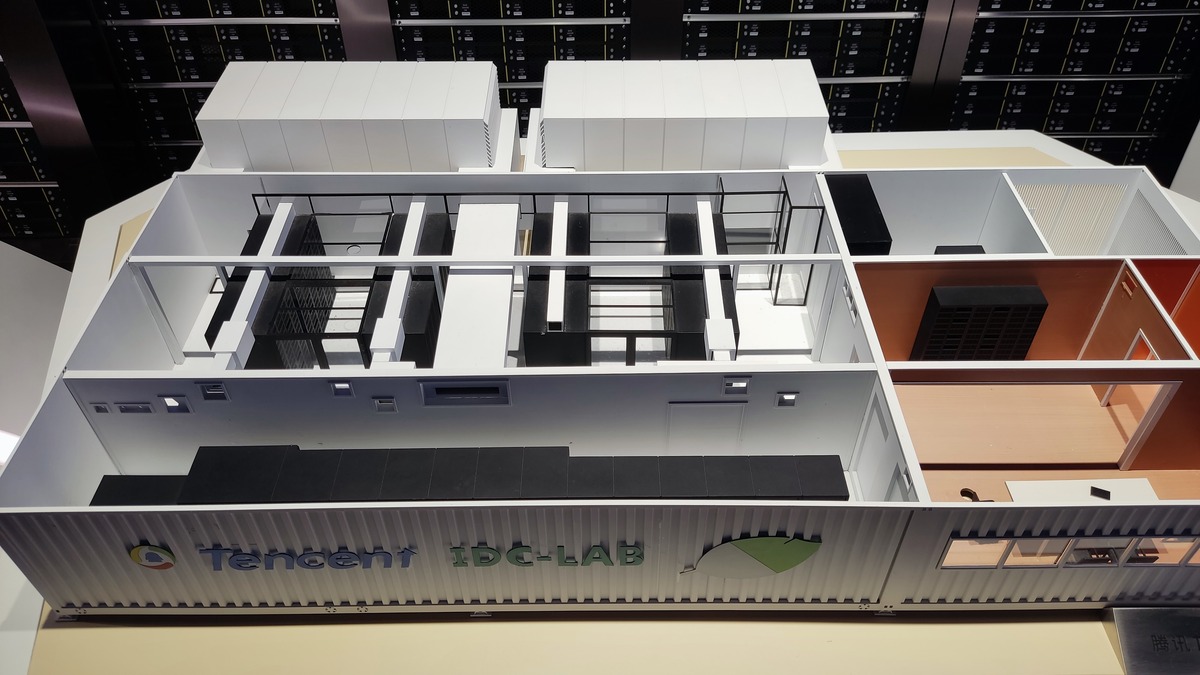 Tencent's Seafront Towers campus in Nanshan District, Shenzhen. The company employs over 100,000 people across its gaming, social, and cloud businesses.
Source: commons.wikimedia.org
Tencent's Seafront Towers campus in Nanshan District, Shenzhen. The company employs over 100,000 people across its gaming, social, and cloud businesses.
Source: commons.wikimedia.org
What the Numbers Say
Chips Are the Binding Constraint
Tencent's Q4 capex of 19.6 billion yuan fell year-over-year. That's the direct consequence of US chip export controls cutting access to Nvidia's most capable GPUs. Executives said on the Q3 call - and repeated the point this cycle - that the company has enough GPUs to run its own internal AI operations, but not enough to rent spare capacity to external cloud customers. Public cloud revenue took a "limited impact" from the shortage.
The company is developing in-house ASIC alternatives with domestic partners as a hedge, but those chips won't be ready at scale for at least 18 months. In parallel, Tencent is navigating export rules that have constrained every Chinese AI lab's ability to run the training runs that frontier models require.
WeChat as the Distribution Moat
The most watched announcement this earnings cycle isn't in the income statement. It's the WeChat AI agent.
Tencent is developing a top-secret AI agent project designed to connect into WeChat's mini-program ecosystem - letting users complete real-world tasks like ride-hailing and food delivery through AI-driven automation. Grey testing is targeted for mid-2026, with a broader rollout in Q3 if testing goes smoothly.
A more limited version is already live: QClaw, built on Nvidia's OpenClaw agent framework, launched as a WeChat mini-program in mid-March. It lets users control a PC agent remotely from their phone and supports file transfer, with more task automation features in development.
The difference between Tencent and every other company building AI agents is the distribution. WeChat has 1.4 billion monthly active users and 4+ million mini-programs covering every commercial service in China. That's not a user acquisition problem - it's infrastructure at a scale no other agent platform currently has. For context, this is why China restricted OpenClaw use in government agencies and banks last week: the agentic access model creates security exposure that regulators are still figuring out how to manage.
"We will at least double the amount of investment this year," said Martin Lau, Tencent President, at Wednesday's Shenzhen media briefing.
Business Services Starting to Pull Weight
For most of the last two years, Tencent's cloud and enterprise AI division underperformed relative to its consumer apps. Q4's 22% growth in business services suggests the enterprise AI cycle is starting to pick up - later than Alibaba Cloud's acceleration, but on the same trajectory. Whether that reflects genuine enterprise AI adoption or just customers pre-buying compute before further export restrictions tighten is harder to tell from the aggregate.
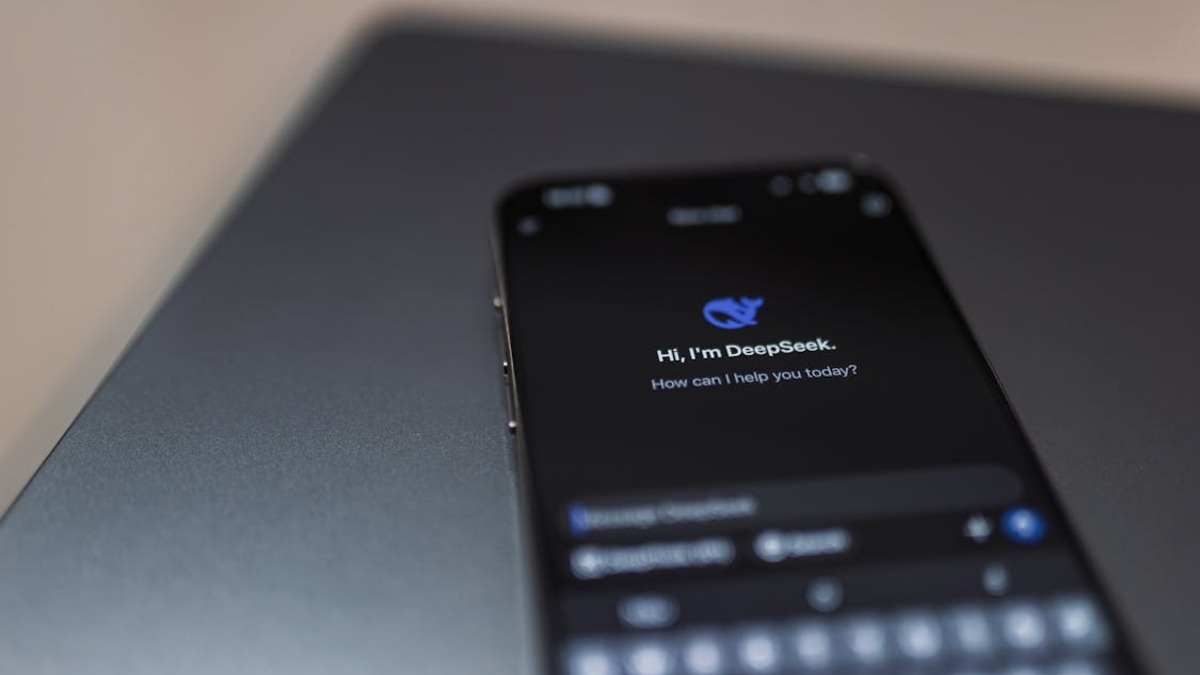 AI chat interfaces on smartphones are proliferating across Chinese tech platforms, with Tencent targeting WeChat's 1.4 billion monthly users as the distribution layer for its AI agent rollout.
Source: pexels.com
AI chat interfaces on smartphones are proliferating across Chinese tech platforms, with Tencent targeting WeChat's 1.4 billion monthly users as the distribution layer for its AI agent rollout.
Source: pexels.com
What the Numbers Don't Say
The 18 billion yuan AI spend figure is specifically for AI product development, not total capex. Tencent doesn't break out AI research separately from product engineering, so it's not an apples-to-apples comparison with, say, Meta's AI capex or Anthropic's funding. The "at least double" commitment is also a floor, not a ceiling - Martin Lau gave no upper bound.
The GPU constraint story cuts both ways. On one reading, Tencent is limited by hardware it can't buy. On another, it's managing capital efficiently: spending what it can deploy effectively rather than overbuilding like some Western peers. The fact that Q4 AI product spend (7 billion yuan) was 39% of the full-year total suggests spending is accelerating even within constraint. That's the real signal - not the annual number, but the path within it.
Finally, the WeChat agent numbers are projections. Tencent hasn't shipped a consumer AI product that's found mass adoption yet. Hunyuan, its flagship model, doesn't have the mindshare of Doubao (ByteDance) or Qwen (Alibaba) among Chinese developers. The mini-program agent is a credible strategy, but it's still Q3 2026 before it reaches broad availability.
So What?
For anyone tracking the AI investment race, Tencent's results confirm two things. First, Chinese tech companies are spending at scale on AI even under chip supply pressure - the doubling of AI product spend to $5 billion, constrained as it is, isn't a company hedging its bets. Second, the distribution advantage matters more than the model. Tencent's leverage over any consumer AI deployment is WeChat, not Hunyuan. If the agent lands, it lands for 1.4 billion people at once.
The question is whether Tencent can execute on the agent before ByteDance - which already has Doubao's momentum and its own OpenClaw integration on Feishu - extends its lead in the Chinese AI consumer market.
Sources: SCMP - Tencent Q4 2025 earnings | TechNode - WeChat AI agent project | SCMP - QClaw WeChat mini-program

