
Starcloud Raises $170M to Put AI Compute in Orbit
The 15-person startup that launched an H100 GPU into space last November just became the fastest Y Combinator company ever to reach unicorn status.
 Updated
7 min read
Updated
7 min read
TL;DR
- $170M Series A at a $1.1B valuation, led by Benchmark Capital and EQT Ventures
- Fastest Y Combinator company to reach unicorn status - 17 months after demo day
- Starcloud-1, launched November 2025, carries a NVIDIA H100 in low Earth orbit - the first data-center-class GPU in space
- Starcloud-2 launches October 2026 with a Blackwell GPU, an AWS server blade, and bitcoin mining hardware
- Long-term thesis: orbital solar power and passive space cooling undercut terrestrial data center economics - once Starship drives launch costs down
Fifteen employees. One satellite in orbit. And now $170 million more to prove that the next generation of AI data centers belongs in space.
Starcloud announced its Series A today, with unicorn status - a $1.1 billion post-money valuation that makes it the fastest Y Combinator company in history to cross that threshold. The Redmond, Washington startup got there just 17 months after its Summer 2024 demo day, a record in a program that has produced Airbnb, Stripe, and Dropbox.
The round was led by Benchmark Capital - General Partner Chetan Puttagunta, a six-time Midas lister, joins the board - and EQT Ventures, a firm managing more than $100 billion in assets that already operates more than 70 data centers. That EQT, a company deep in the terrestrial data center business, is backing a startup positioning itself to make terrestrial data centers obsolete is a meaningful signal about where sophisticated infrastructure money sees the long-term economics heading.
The Deal
| Metric | Detail |
|---|---|
| Round size | $170M Series A |
| Post-money valuation | $1.1B |
| Total funding to date | ~$200M |
| Lead investors | Benchmark Capital, EQT Ventures |
| Co-investors | Macquarie Capital, NFX, YC Continuity, 776 Ventures, Fuse Ventures, Manhattan West, Nebular, Adjacent |
| Standout angels | Dennis Muilenburg (former Boeing CEO), Kevin Johnson (former Starbucks CEO) |
| Employees | 15 |
| Founded | January 2024 |
The seed round - roughly $34 million across two tranches in 2024 and 2025 - was backed by Sequoia and a16z scout funds with In-Q-Tel, the CIA's venture arm. The Defense Innovation Unit also put Starcloud through its accelerator program. The presence of national security money this early in a satellite computing company isn't incidental.
What Starcloud Has Actually Done
Before weighing the thesis, it's worth being precise about what this company has achieved.
On November 2, 2025, Starcloud launched Starcloud-1 on a SpaceX Falcon 9. The satellite - roughly the size of a refrigerator, around 60 kilograms - carried a NVIDIA H100, the first data-center-class GPU ever deployed in orbit. One A6000 GPU failed during launch; the H100 survived and is still operating. NVIDIA described it as "100x more powerful GPU compute than any previous space-based operation."
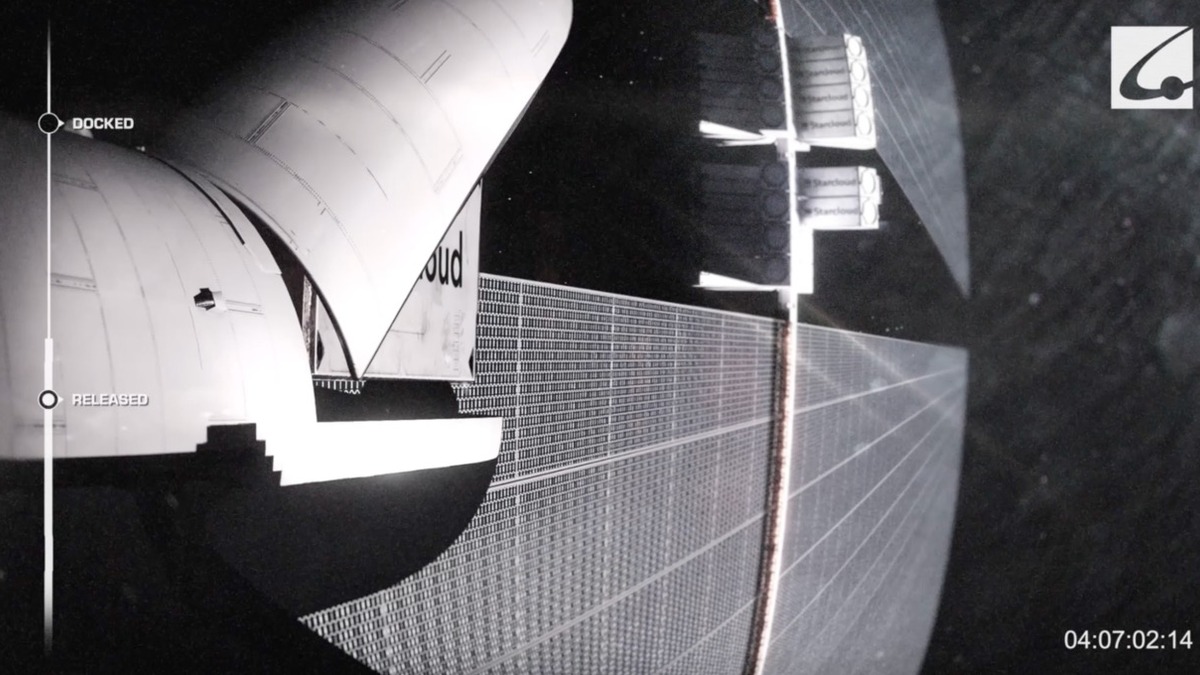 Starcloud-1 in low Earth orbit, carrying the first NVIDIA H100 GPU deployed in space. The satellite launched November 2025 on a SpaceX Falcon 9.
Source: blogs.nvidia.com
Starcloud-1 in low Earth orbit, carrying the first NVIDIA H100 GPU deployed in space. The satellite launched November 2025 on a SpaceX Falcon 9.
Source: blogs.nvidia.com
By December 2025, the company had run Google DeepMind's Gemma model in orbit, trained nanoGPT on Shakespeare in space, and processed commercial synthetic-aperture radar data from Capella Space. None of this is economically competitive with a terrestrial server rack. It wasn't meant to be.
CEO Philip Johnston is direct about the trade-off: "An H100 is probably not the best chip for space, to be honest, but the reason we did it is we wanted to prove that we could run state-of-the-art terrestrial chips in space."
It worked. The satellite proved the concept. The $170 million is the market's answer.
Who Benefits
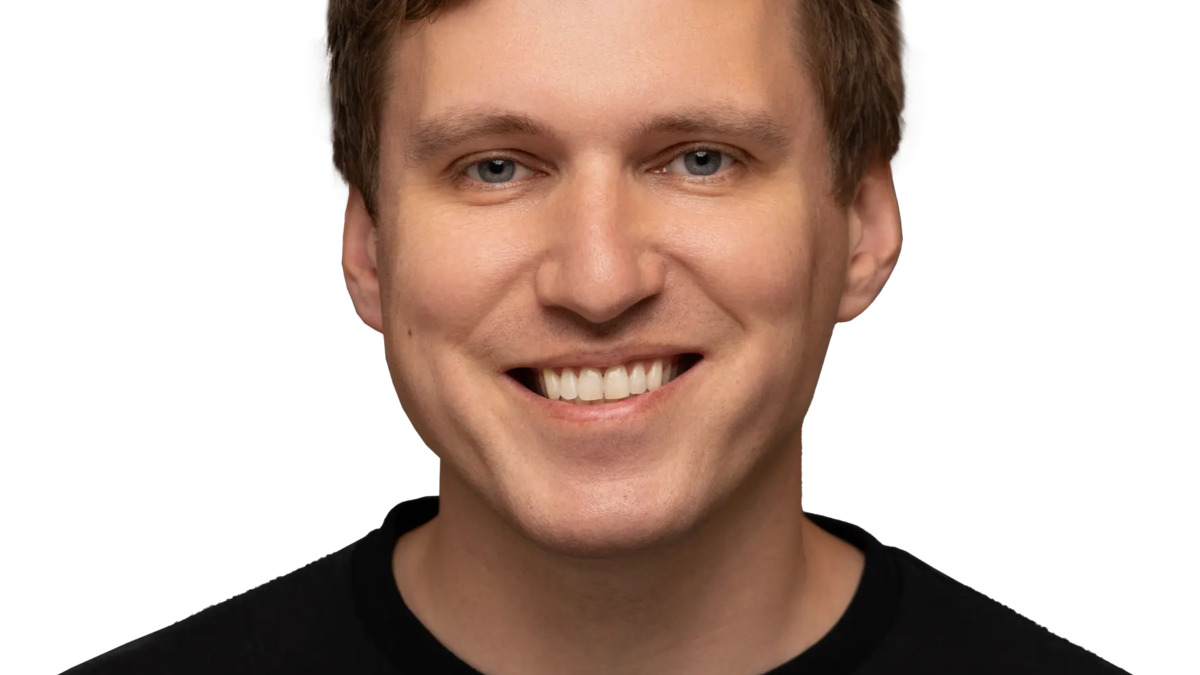 Philip Johnston, Starcloud CEO and co-founder, previously consulted for national space agencies at McKinsey before founding the company in January 2024.
Source: starcloud.com
Philip Johnston, Starcloud CEO and co-founder, previously consulted for national space agencies at McKinsey before founding the company in January 2024.
Source: starcloud.com
The investors in this round aren't betting on Starcloud's current revenue - they're betting on a structural argument: terrestrial data center expansion will hit hard constraints before AI compute demand does.
That argument has three parts. First, power. Dawn-to-dusk sun-synchronous orbit gives a satellite more than 95% capacity factor on solar energy, with near-zero marginal cost. Second, cooling. Deep space is -270°C; a satellite radiates heat passively, with no water, no cooling infrastructure, no energy overhead. Third, permitting. A new ground-based data center takes 18 to 36 months to permit in most jurisdictions. A satellite requires none of that.
The early customer traction supports the demand side. Crusoe - whose 900MW data center agreement with Microsoft drew attention earlier this year - has signed up to resell Starcloud's orbital GPU capacity through Crusoe Cloud. Amazon Web Services is contributing a server blade to Starcloud-2. Both partnerships confirm the thesis beyond the pitch deck.
The broader backdrop matters here. The surge in physical AI infrastructure investment hit $11 billion in a single quarter earlier this year, driven largely by compute scarcity. Starcloud is positioning itself as a supply-side answer to that scarcity, at the infrastructure layer rather than the software layer.
"We believe that we are in the early innings of a decades-long buildout of AI infrastructure. Starcloud is pioneering a solution to the challenges of scaling AI infrastructure on Earth with orbital data centers." - Chetan Puttagunta, General Partner, Benchmark Capital
Who Pays
The $170 million goes toward accelerating Starcloud-2's development for an October 2026 launch, engineering hires (the company is at 15 people and growing), manufacturing expansion, launch contracts, and early work on Starcloud-3 - a 200-kilowatt, 3-tonne spacecraft designed for SpaceX Starship deployment.
That last item is where the risk concentrates. The entire economic case for orbital compute rests on launch costs falling dramatically. Starcloud projects energy costs of $0.002 to $0.005 per kWh currently, targeting roughly $0.05 per kWh once Starship commercial operations bring launch costs to around $500 per kilogram. Johnston doesn't pretend the economics are there yet: "We're not going to be competitive on energy costs until Starship is flying frequently."
Starship isn't flying frequently. Commercial operations remain years away. Investors in this round are effectively underwriting the assumption that launch costs collapse on Elon Musk's schedule.
The competitive landscape adds pressure on a second front. Starcloud filed with the FCC in February 2026 for a constellation of up to 88,000 satellites. In the same period, SpaceX and xAI combined into a $1.25 trillion entity and filed for one million orbital compute satellites. Starcloud is competing with SpaceX for orbital spectrum and launch slots while depending on SpaceX's Starship to make its economics work. That's a structurally awkward position.
Johnston addressed it directly: "They are mainly planning on serving Grok and Tesla workloads. What I think they are unlikely to do is what we're doing - an energy and infrastructure player."
A reasonable distinction today. Whether it holds as SpaceX scales is a different question.
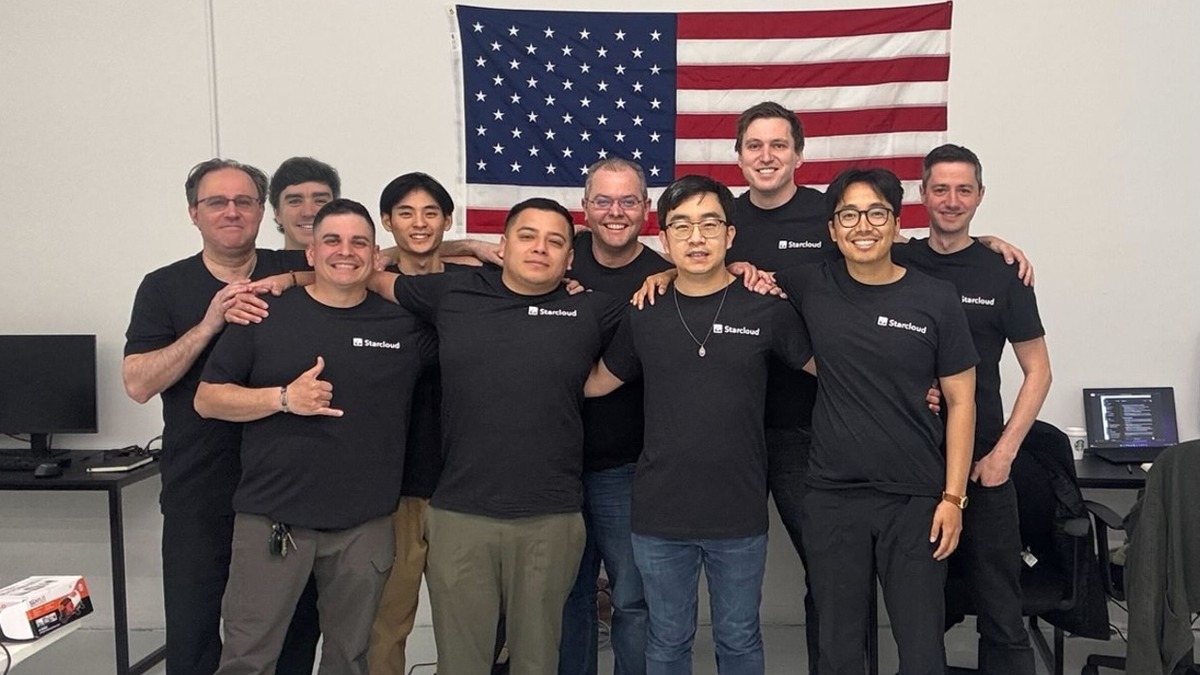 The Starcloud team includes a former SpaceX Starlink network engineer (Adi Oltean), a decade-long Airbus satellite designer (Ezra Feilden, CTO), and a McKinsey space consultant (Philip Johnston, CEO).
Source: blogs.nvidia.com
The Starcloud team includes a former SpaceX Starlink network engineer (Adi Oltean), a decade-long Airbus satellite designer (Ezra Feilden, CTO), and a McKinsey space consultant (Philip Johnston, CEO).
Source: blogs.nvidia.com
The Bitcoin Sidebar
Starcloud-2 will also carry bitcoin mining ASICs. The company intends to be the first to mine a coin in space. This isn't central to the AI compute thesis, but it says something about how Johnston thinks about near-term cash flow. A Blackwell GPU and an AWS server blade alone won't make Starcloud-2 cash-positive on its first orbit. Mining helps bridge the gap while the company waits for the larger infrastructure market to mature.
A $1.1 billion valuation for 15 people and one working satellite comes down to a single bet: that the constraints on terrestrial AI infrastructure are structural, not cyclical, and that the right team to build the alternative has former SpaceX engineers, Airbus satellite designers, and McKinsey space consultants in the same room. Whether Starship delivers on schedule will determine whether that bet pays off in years or decades.
Sources:
Last updated

