
SpaceX S-1 Reveals Anthropic's $15B Annual Compute Deal
SpaceX's IPO filing discloses that Anthropic will pay $1.25 billion per month for compute across both Colossus data centers through May 2029, totaling roughly $45 billion.
 6 min read
SpaceX filed its S-1 registration statement with the SEC on May 20, 2026, and buried inside the financial disclosures is the clearest picture yet of what Anthropic is actually paying for compute. The number is $1.25 billion per month - $15 billion per year - through May 2029.
Key Contract Terms
| Detail | Value |
|---|---|
| Monthly payment | $1.25 billion |
| Annual commitment | $15 billion |
| Total contract value | ~$45 billion over 36 months |
| Facilities covered | Colossus and Colossus II (Memphis) |
| Contract end | May 2029 |
| Exit clause | 90 days notice, either party |
| Ramp-up discount | Applies May - June 2026 |
When Anthropic announced the SpaceX partnership on May 6, the company framed it as a capacity expansion - Claude Code limits doubled, peak-hour throttling removed for Pro and Max subscribers. The financial terms were not disclosed. That gap is now closed.
The Contract Terms
What the Filing Actually Says
The S-1 language is direct: "In May 2026, we entered into Cloud Services Agreements with Anthropic PBC...with respect to access to compute capacity across COLOSSUS and COLOSSUS II."
Two facilities, not one. The original announcement referenced Colossus 1 specifically. The filing clarifies Anthropic gets access to both Memphis clusters - the legacy H100/H200 site and the newer GB200 cluster that xAI uses for its own training.
SpaceX notes it "has sufficient capacity to provide compute for our own AI models, including support of our training and inference demands, and to satisfy the obligations under these agreements," and says it "expects to enter into additional similar services contracts." The door is open for more customers.
Why This Number Matters Now
The deal was announced at Anthropic's Code with Claude developer conference. No dollar amount was attached. What changed: SpaceX's public S-1 filing is a legal document that requires accurate financial disclosure, which means the $1.25 billion figure now carries the weight of SEC oversight rather than a press release.
# What Anthropic is paying per GPU-hour at Colossus
monthly_cost_usd = 1_250_000_000   # $1.25B/month
gpu_count = 220_000                 # 220K+ GPUs across both clusters
hours_per_month = 24 * 30          # ~720 hours

cost_per_gpu_hour = monthly_cost_usd / (gpu_count * hours_per_month)
print(f"Implied cost: ${cost_per_gpu_hour:.2f}/GPU-hour")
# Output: ~$7.92/GPU-hour

# For context: this includes power, cooling, networking, and hardware amortization.
# Cloud spot pricing for H100 typically runs $2-4/GPU-hour without those embedded costs.
The implied $7.92 per GPU-hour is not a direct apples-to-apples comparison to cloud spot rates, since the Colossus deal includes 300 megawatts of power and full data center infrastructure. But it gives a concrete floor for what large-scale, exclusive compute access costs when you bypass hyperscaler margins.
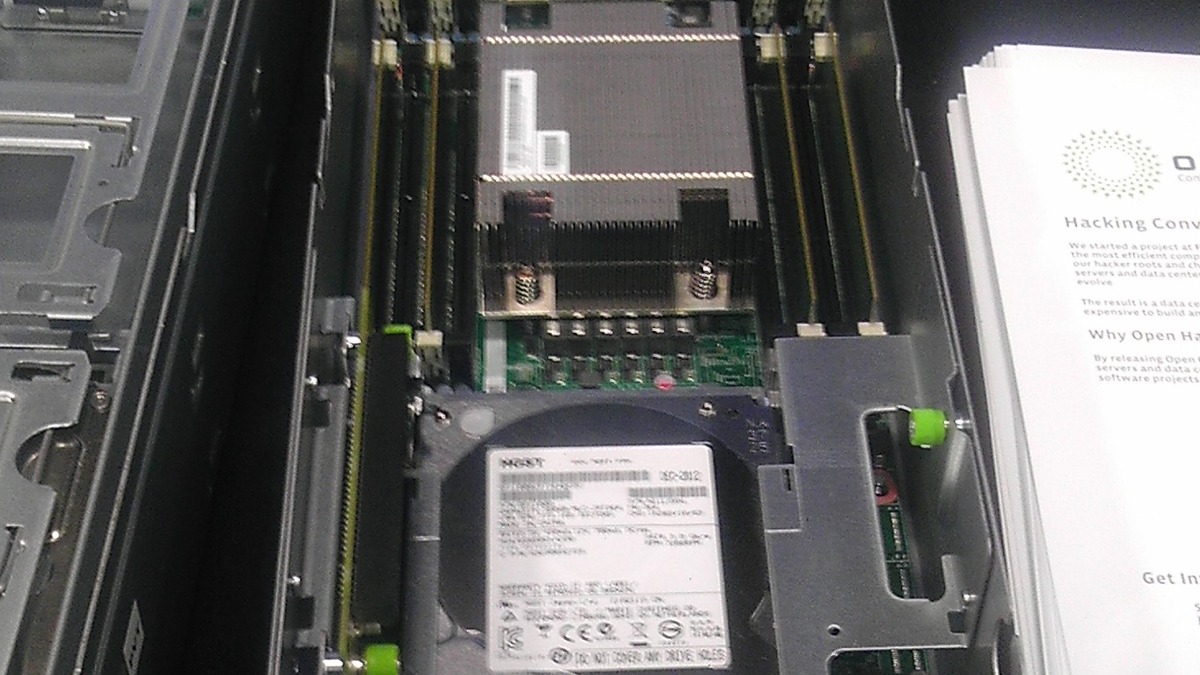 High-density server infrastructure similar to what runs inside the Colossus facilities - over 220,000 NVIDIA GPUs across H100, H200, and GB200 generations.
Source: commons.wikimedia.org
High-density server infrastructure similar to what runs inside the Colossus facilities - over 220,000 NVIDIA GPUs across H100, H200, and GB200 generations.
Source: commons.wikimedia.org
The Hardware Anthropic Is Renting
Colossus 1: Built for Grok, Now Running Claude
Colossus 1 occupies a former Electrolux factory at 3231 Riverport Rd in South Memphis. xAI built the initial 100,000-GPU cluster in 122 days, then doubled it to 200,000 within three months. The facility holds over 220,000 NVIDIA GPUs - a mix of H100, H200, and GB200 accelerators - drawing more than 300 megawatts. It was built to train Grok.
After the SpaceX-xAI merger gave SpaceX ownership of xAI's infrastructure, xAI migrated its own training workloads to Colossus 2. That migration is what freed Colossus 1 for external lease. Grok's usage dropping "significantly in recent months" - per reporting from TechCrunch - accelerated the decision to rent rather than sit on excess capacity.
Colossus 2: The GB200 Cluster
The S-1 language covering "COLOSSUS II" wasn't part of the original announcement. The second facility, in Southwest Memphis, is where xAI is building out its next-generation GB200 NVL72 infrastructure. Anthropic co-founder Tom Brown confirmed in May that Anthropic is "scaling up on GB200 capacity in Colossus 2 throughout June."
The GB200 architecture matters here. Blackwell NVL72 racks deliver up to 30 times the inference throughput of H100 per rack, with 8 TB/s of memory bandwidth per GPU. If Anthropic's inference workloads for Claude Opus 4.7 and its API customers are shifting to GB200, that's a meaningful change in what $1.25 billion per month actually buys month over month.
The Neocloud Business Model
SpaceX's framing for this arrangement is deliberate. The S-1 describes a "dual monetization strategy" - SpaceX builds infrastructure for xAI's internal use, and when that use falls short of full capacity, it sells the excess to other AI companies.
The AI segment produced $3.2 billion in revenue in 2025 and lost $1.24 billion at the EBITDA line. xAI consumed $12.7 billion of SpaceX's $20.7 billion total capital expenditures that year. Against that backdrop, a $15 billion annual commitment from Anthropic isn't just compute revenue - it's a mechanism to turn an infrastructure deficit into a profitable line item ahead of an IPO.
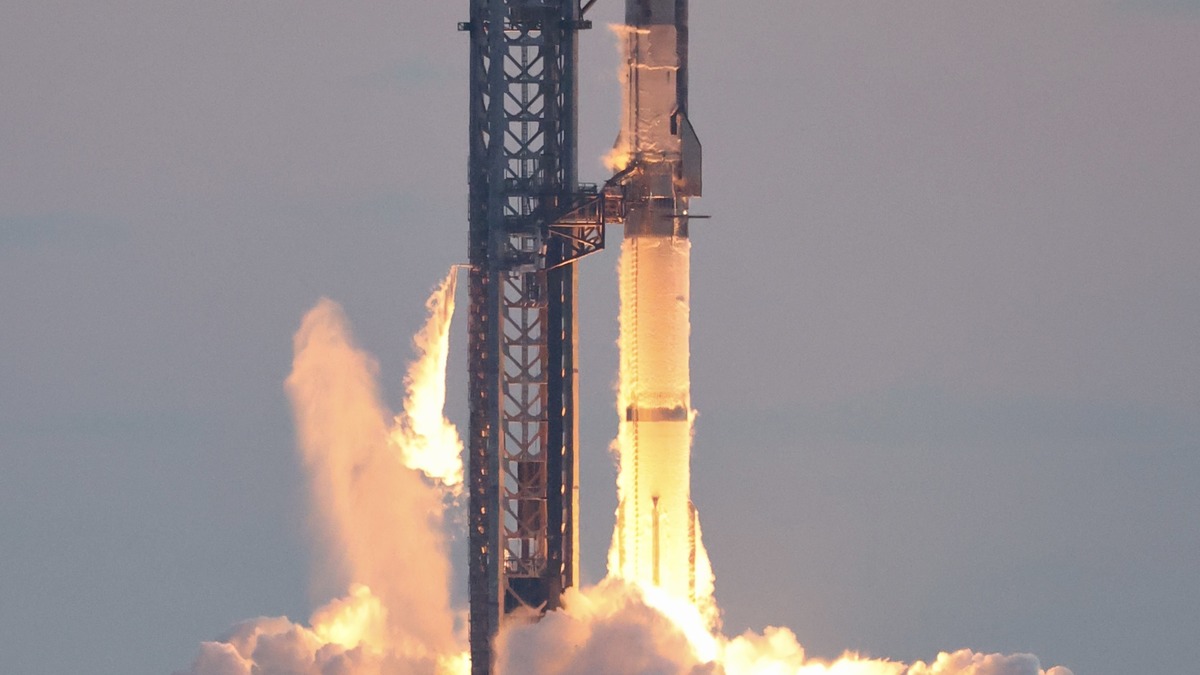 SpaceX during IFT-5 in October 2024. The company now positions GPU compute alongside launch services as a core business.
Source: commons.wikimedia.org
SpaceX during IFT-5 in October 2024. The company now positions GPU compute alongside launch services as a core business.
Source: commons.wikimedia.org
The model has a name in infrastructure circles: neocloud. An AI company builds data center capacity, uses it internally, and then is a cloud provider to competitors when its own demand falls short. NVIDIA's Thinking Machines Lab deal follows a similar pattern. SpaceX expects more contracts like this one.
Anthropic isn't relying only on SpaceX. The company has parallel commitments: a separate $40 billion Google deal, a $200 billion Google Cloud framework, and multi-gigawatt arrangements with Amazon and Broadcom. Colossus adds to that stack rather than replacing it.
Where It Falls Short
The 90-Day Exit Clause Is Real Risk in Both Directions
Either party can stop with 90 days' notice. On paper that's flexibility. In practice, Anthropic is ramping Claude Code infrastructure around Colossus capacity - it's not a commitment you can cleanly unwind in three months. The clause protects SpaceX more than it protects Anthropic.
If xAI's Grok usage rebounds - say, after a major product launch - SpaceX faces a genuine conflict between its own inference demand and Anthropic's reserved capacity. The contract terms don't address priority resolution in that scenario.
Colossus 2 Is xAI's Active Growth Site
Anthropic is getting GB200 access at Colossus 2, but xAI is still building there. xAI has stated plans to scale toward one million GPUs. That expansion will happen at Colossus 2, not Colossus 1 - and as xAI adds capacity for its own training runs, Anthropic's share of Colossus 2 may become a smaller fraction of a larger cluster, with capacity allocation decisions made by a company whose primary obligations are to its own models and investors.
Colossus 1 Won't Get New Hardware
xAI's hardware investment is going into Colossus 2. Colossus 1's H100/H200 mix is major, but it won't receive further GPU additions. Anthropic is leasing a fleet in maintenance mode. As the gap between Hopper-generation and Blackwell-generation inference efficiency widens over the next two years, Colossus 1's economics may shift.
Sources:
- TechCrunch - Anthropic will pay xAI $1.25 billion per month for compute
- NPR - Elon Musk's SpaceX IPO plans reveal blockbuster spending on rockets and AI
- The Next Web - SpaceX's public IPO filing confirms Musk and insiders retain dominant voting control
- Dave Manuel - SpaceX S-1 IPO Filing Analysis
- Wikipedia - Colossus (supercomputer)

