
Project Apex: SpaceX Files for Record $1.75T IPO
SpaceX filed a confidential S-1 targeting a $1.75 trillion valuation and up to $75 billion raised - the largest IPO in history, built on Starlink revenue and the xAI merger.
 6 min read
SpaceX filed a confidential registration statement with the SEC on April 1, targeting a $1.75 trillion valuation in what would be the largest initial public offering in history. The listing, codenamed Project Apex internally, has assembled a 21-bank syndicate and could raise between $50 billion and $75 billion when it prices for a planned late-summer debut.
TL;DR
- SpaceX filed a confidential S-1 with the SEC on April 1, 2026, targeting a $1.75 trillion valuation
- Project Apex seeks to raise $50-75 billion - more than double Saudi Aramco's $29.4B record from 2019
- 21 banks are managing the deal, led by Morgan Stanley, Goldman Sachs, and JPMorgan Chase
- Starlink has 10 million subscribers creating an estimated $12 billion in annual revenue
- Filing follows the February merger with xAI, creating a combined space-plus-AI platform
The filing comes two months after SpaceX completed its acquisition of xAI, combining Starlink's satellite network with xAI's Grok models under a single corporate roof. That merger was valued at $1.25 trillion at close. The new IPO target - $1.75 trillion - represents a 40% premium over where the company traded in secondary markets just six weeks ago.
The Deal in Numbers
No public offering comes close on the raise side. Saudi Aramco set the prior record at $29.4 billion in 2019. SpaceX is targeting more than double that figure. Alibaba's 2014 listing ($21.8 billion) and Meta's 2012 debut ($16 billion) are distant comparisons.
| IPO | Year | Valuation at Offer | Target Raise |
|---|---|---|---|
| SpaceX / Project Apex | 2026 (planned) | $1.75T | $50-75B |
| Saudi Aramco | 2019 | ~$1.7T | $29.4B |
| Alibaba | 2014 | $168B | $21.8B |
| Meta | 2012 | $104B | $16B |
The 21-bank syndicate is itself unusual in scale. Morgan Stanley, Goldman Sachs, and JPMorgan Chase are active bookrunners, meaning they control allocation and pricing. Bank of America and Citigroup round out the top five. Another 16 banks serve in supporting roles. Underwriting fees on a deal this size are expected to reach into the hundreds of millions of dollars before the first share trades.
The filing is confidential, as permitted for companies that qualify as emerging growth companies or that file before going public. SpaceX doesn't have to release the document publicly until at least 15 days before the road show. The listing window is expected to open in late summer 2026.
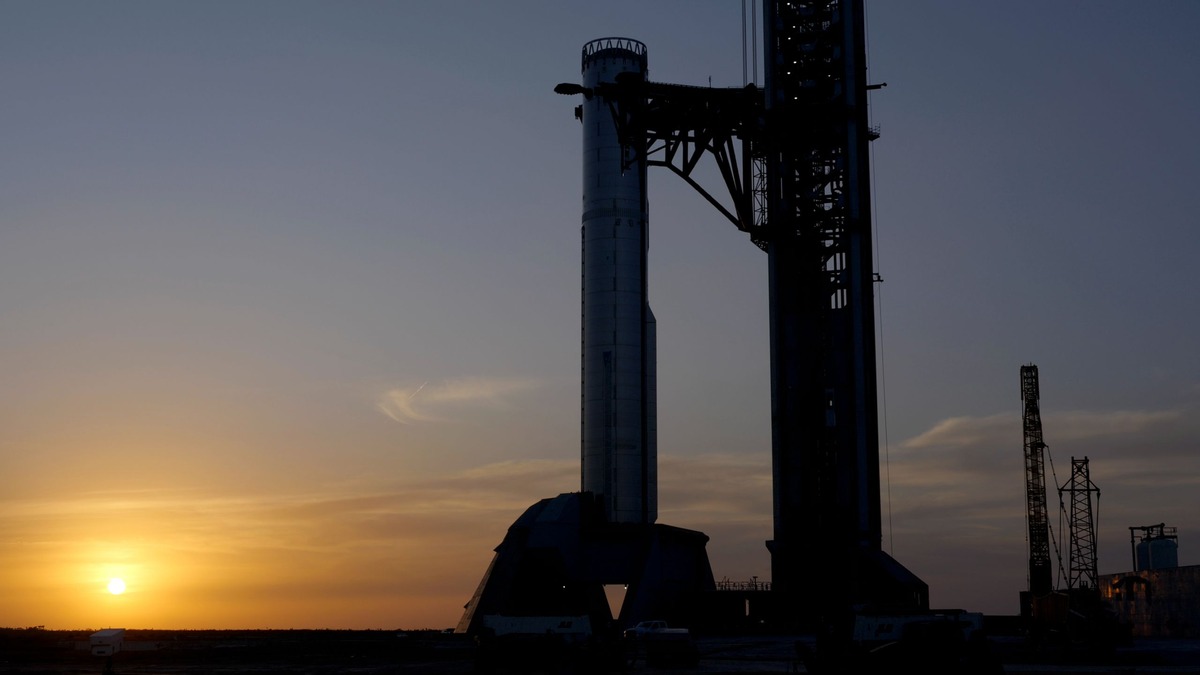 SpaceX's Starship V3 booster at Pad 2 in Boca Chica, Texas, completing its initial activation campaign in March 2026. The new Starship architecture can carry over 100 tons to low Earth orbit.
Source: space.com
SpaceX's Starship V3 booster at Pad 2 in Boca Chica, Texas, completing its initial activation campaign in March 2026. The new Starship architecture can carry over 100 tons to low Earth orbit.
Source: space.com
What Drives the Valuation Case
Starlink is the engine. The satellite internet business hit 10 million subscribers in February 2026 and generates roughly $12 billion in annual revenue. SpaceX controls 65% of all active satellites in orbit. The FAA approved up to 44 annual Starship launches from Kennedy Space Center in January 2026, giving the company a regulatory runway for rapid constellation expansion.
The xAI merger adds a second thesis. SpaceX describes the combined entity as an "Orbital Intelligence" platform - Starlink's low-latency satellite network paired with Grok models running in orbital data centers. Nvidia is the named chip provider for that buildout, which gives the AI angle some hardware credibility. Whether orbital compute becomes a real revenue line in the next three years, or stays a capital story, is a question the S-1 will have to address directly.
How Secondary Prices Got Here
Internal SpaceX share prices rose from roughly $112 in mid-2024 to an implied $850 based on the $1.75 trillion target - a 7x move in under two years. Secondary market trading in private SpaceX stock has been active, with demand consistently outstripping supply. The confidential filing formalizes that trajectory. When the road show begins, institutional investors will decide whether the public price reflects the business or just secondary market enthusiasm.
Who Benefits
The Banks
The fee economics are straightforward. Bookrunners on a $75 billion deal take a percentage of the gross proceeds; even at compressed rates for a trophy mandate, the absolute dollar amounts are substantial. Morgan Stanley and Goldman Sachs will use this deal in every pitch deck for the next decade.
Employees and Early Backers
SpaceX employees holding equity will have a liquid exit for the first time. Early venture investors who have held SpaceX positions for over a decade will book returns that dwarf most funds' entire return profiles. The implied $850 share price represents a significant multiple on entry prices from SpaceX's early funding rounds.
Nvidia
Named as sole AI chip provider for the orbital data center buildout, Nvidia gets a new institutional buyer at scale. The relationship also verifies the orbital compute concept for other potential customers.
 SpaceX's Starbase launch and production complex in Boca Chica, Texas - the operational center for Starship manufacturing and testing.
Source: Wikimedia Commons
SpaceX's Starbase launch and production complex in Boca Chica, Texas - the operational center for Starship manufacturing and testing.
Source: Wikimedia Commons
Who Pays
Governance-Conscious Investors
Elon Musk holds a substantial controlling stake in SpaceX. Public investors who buy into Project Apex acquire financial exposure to a company whose strategic direction they can't meaningfully influence. Musk has moved capital between his companies before - the xAI acquisition itself involved structures that raised questions about related-party terms. Institutional investors with fiduciary duties will have to model a governance discount, and whatever that discount is, it will come out of the public offering price.
Competing Launch and Satellite Operators
A $75 billion raise extends SpaceX's capital lead over every competitor in commercial launch and satellite broadband. Rocket Lab, which has been building a credible Starlink alternative in its Neutron rocket, faces a rival that can now accelerate on multiple fronts simultaneously. Boeing's Starliner program and Lockheed Martin's satellite businesses will be competing against a company with a newly refilled treasury.
The Broader IPO Calendar
Institutional allocators have finite capital at any given moment. A $75 billion offering absorbs a significant share of what funds can deploy in a single quarter. Other companies planning IPOs in the summer window will find themselves competing for attention - and allocation - against Project Apex.
The S-1 filing turns Project Apex from rumor into a scheduled event with a bank syndicate, a SEC clock, and a valuation that leaves little margin for disappointment. OpenAI's $122 billion funding round earlier this year showed that investors will price AI-adjacent companies at levels that would have seemed absurd two years ago. SpaceX is now asking whether the same logic applies to a company that's both an aerospace operator and an orbital AI platform. The road show will be the first real test of that combined thesis at public market prices.
Sources:
- SpaceX Lines up 21 Banks for Mega IPO, Code-Named Project Apex - CNBC
- SpaceX files confidentially for IPO in mega listing potentially valued at $1.75 trillion - TechCrunch
- SpaceX files confidentially for IPO at $1.75 trillion valuation - TechStartups
- The $1.75 Trillion Orbit: SpaceX Files for Historic IPO as Market Braces for Project Apex - FinancialContent
- PitchBook: US venture funding surges to record $267B - SiliconAngle

