
SpaceX Secures $60B Option to Acquire Cursor This Year
SpaceX disclosed a deal granting it the right to buy AI coding platform Cursor for $60 billion in 2026, or pay $10 billion for shared development work, deepening Elon Musk's grip on the developer toolchain.
 Updated
6 min read
Updated
6 min read
On April 21, SpaceX posted on X that it now works "closely together" with Cursor to "create the world's best coding and knowledge work AI." Buried in the announcement: SpaceX holds a formal option to acquire Cursor for $60 billion later in 2026, or to pay the startup $10 billion for development work the two companies are already doing together.
The deal wasn't a surprise to anyone watching the past six weeks closely.
TL;DR
- SpaceX holds an option to buy Cursor for $60B or pay $10B for joint development work - a binary outcome for Cursor's founders
- Two of Cursor's top product engineers joined xAI in March 2026, reporting directly to Musk, weeks before this announcement
- Cursor is training its Composer 2.5 model on "tens of thousands" of xAI Colossus GPUs
- Cursor was already raising at a $50B valuation; the acquisition option represents a 20% premium to that figure
- No one at Cursor or SpaceX will say what happens to its Claude and GPT integrations if xAI takes over
A Binary Deal With No Exit Ramp
What SpaceX Actually Said
The announcement landed via SpaceX's X account in a single post: "SpaceXAI and @cursor_ai are now working closely together to create the world's best coding and knowledge work AI." The framing was partnership language. The substance buried in following reporting was harder to characterize that way.
According to Bloomberg and TechCrunch, SpaceX can exercise an option to acquire Cursor outright for $60 billion at some point before the end of 2026. If it doesn't, SpaceX will instead pay $10 billion for "our work together" - effectively a floor payment that compensates Cursor for the time and model training it contributes.
The official SpaceX statement offered the strategic rationale: combining "Cursor's leading product and distribution to expert software engineers with SpaceX's million H100 equivalent Colossus training supercomputer." For its part, Cursor said the partnership would "accelerate our model training efforts" and resolve a longstanding problem. "We've wanted to push our training efforts much further," the company said, "but we've been bottlenecked by compute."
What the $10 Billion Alternative Means
There is a way to read the $10B option charitably - as a termination fee that protects Cursor's founders if SpaceX walks away. There is a less charitable reading: it's a price for cooperation that makes saying no to the full acquisition economically difficult. Cursor's founders raise $2 billion at a time from investors; $10 billion for a year's development work is a number that changes the calculus on staying independent.
The valuation math matters here. Cursor raised at a $29.3 billion post-money valuation in its November 2025 Series D, and was in talks for a new round at $50 billion pre-money before this announcement. The $60 billion acquisition price is a 20% premium to that figure. Not a dramatic premium for a company that has tripled its valuation in under six months.
 Cursor 3 shifted its primary interface from a code editor to an agent management console. Its developer distribution is the asset SpaceX most wants.
Source: cursor.com
Cursor 3 shifted its primary interface from a code editor to an agent management console. Its developer distribution is the asset SpaceX most wants.
Source: cursor.com
The Six Weeks Nobody Announced
March 12: Two Quiet Departures
The first signal was quiet. On March 12, Andrew Milich and Jason Ginsberg - who co-led product engineering at Cursor together, holding dual titles as Heads of Engineering and Product - announced they were leaving for xAI and SpaceX. Both would report directly to Elon Musk. No press release. No Cursor blog post.
Musk's reason for wanting them was explicit. He had written publicly that xAI "wasn't built right the first time" and needed to be rebuilt from its foundations. He expected xAI to "catch up and exceed our competitors" in coding by mid-2026. Milich and Ginsberg, who had built the product that defined AI coding for hundreds of thousands of developers, were the people he brought in to do it.
Early April: The Compute Alliance
Before the acquisition option was public, xAI had already begun funneling compute to Cursor. According to reporting from TechWire Asia, xAI is providing Cursor with "tens of thousands" of GPUs drawn from the Colossus cluster in Memphis - the same facility that currently operates 200,000 Nvidia units (150,000 H100s, 50,000 H200s, and 30,000 GB200s) and targets one million GPU-equivalents at full buildout.
Cursor is using this infrastructure to train Composer 2.5, its next model. The technical foundation involves an open-source system developed by Moonshot AI - the same team behind Kimi K2.6 - combined with Cursor's proprietary usage data from millions of developer sessions. It's a reasonable approach: Moonshot's architecture, Colossus's compute, Cursor's distribution. The pieces fit together whether the acquisition closes.
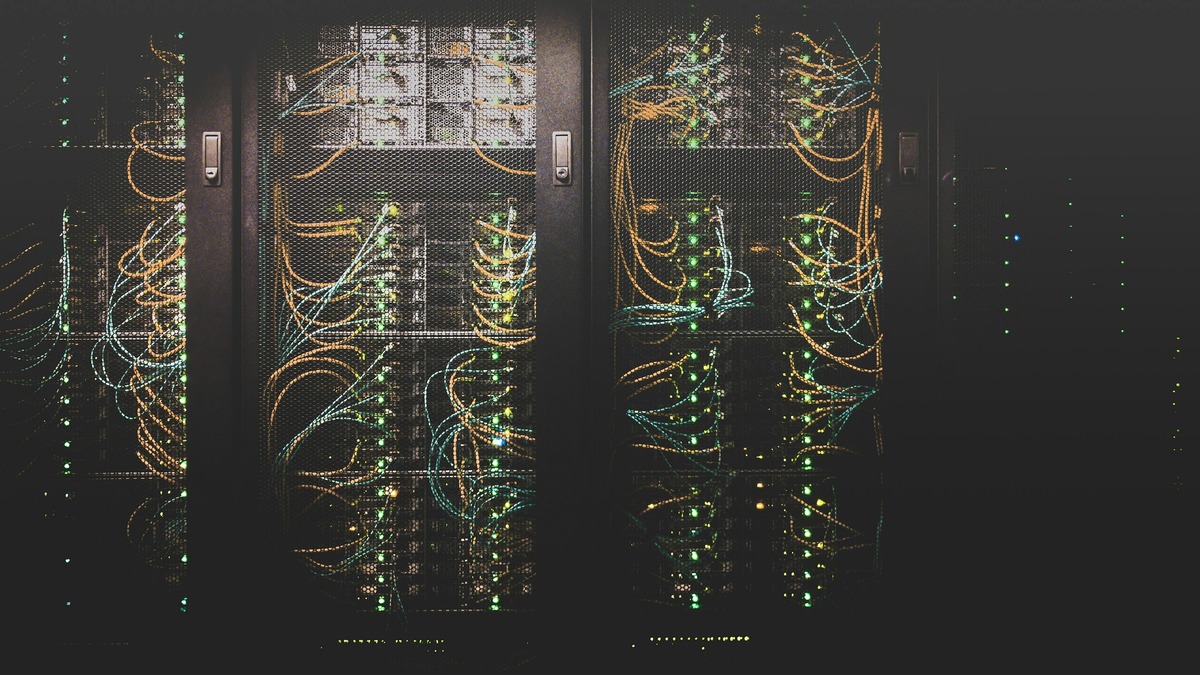 xAI's Colossus cluster in Memphis currently runs 200,000 Nvidia GPUs and is expanding toward one million. Cursor says this resolves its training compute bottleneck.
Source: unsplash.com
xAI's Colossus cluster in Memphis currently runs 200,000 Nvidia GPUs and is expanding toward one million. Cursor says this resolves its training compute bottleneck.
Source: unsplash.com
The Question Nobody Is Answering
Cursor's Model Dependencies
Cursor's business today runs on integrations it doesn't own. The editor lets developers route requests to Claude, GPT-4o, Gemini, and a growing list of third-party models. That flexibility is part of its appeal: you're not locked into one provider's capabilities.
If xAI acquires Cursor, that arrangement is up for renegotiation. Anthropic and OpenAI both have financial incentives to see their models remain the primary options in Cursor's interface. If Cursor pivots toward Grok or a proprietary SpaceX-trained model, both companies lose a significant distribution channel - one that reaches professional developers who are among the highest-value AI users.
What Anthropic and OpenAI Stand to Lose
Cursor had over $2 billion in ARR as of its last reported figures, with 60% from enterprise clients. A meaningful share of that revenue flows partly from API usage billed to Anthropic and OpenAI. Neither company commented on the deal when contacted by major news outlets covering the announcement.
The silence is understandable. Objecting to Cursor's choices before any acquisition is finalized would strain a commercial relationship that currently benefits both sides. But the competitive read is clear enough: Cursor inside Musk's empire, training on Colossus and prioritizing its own models, is a Cursor that has less reason to default users toward Claude.
Project Apex and the AI Coding Trophy
SpaceX filed a confidential S-1 last month targeting a $1.75 trillion valuation and up to $75 billion raised in what would be the largest IPO in history. The filing was built on Starlink revenue and the xAI merger that valued the combined entity at $1.25 trillion. An AI coding business with Cursor's distribution profile adds a third revenue story to that prospectus - one that investors currently assign major multiples to.
The $10 billion development payment, if SpaceX exercises that option instead of the full acquisition, would show up as an operating expense in Cursor's accounts and investment income in SpaceX's. Either way, SpaceX's books capture a share of the story before IPO day.
The sequence of this deal ran in one direction. Cursor's two most senior product engineers joined xAI in March. Colossus GPUs started flowing to Cursor's model training weeks later. The formal acquisition option was disclosed last. At each stage, Cursor's independence narrowed - the financial upside of the deal grew, and the institutional cost of walking away grew with it. Whether this ends in acquisition or the $10 billion alternative, the trajectory has been consistent from the start.
Sources:
- SpaceX and Cursor partnership announcement - TechCrunch
- SpaceX has option to acquire Cursor for $60 billion - Reuters via TradingView
- SpaceX and Cursor partnership - Engadget
- xAI GPU infrastructure to Cursor - TechWire Asia
- xAI hires senior Cursor leaders Andrew Milich and Jason Ginsberg - The Information via Techmeme
- xAI poaches two senior Cursor AI leaders - Basenor
- SpaceX acquires Cursor for $60 billion - SSBCrack News
Last updated

