
SpaceX AI Device - Real Prototype or Investor Theater?
The WSJ says SpaceX showed investors a Grok-powered AI handset before its IPO. Musk called it false. We examine the hardware stack and what the denial actually means.
 6 min read
On July 1, The Wall Street Journal reported that SpaceX showed investors a handheld AI device prototype before its June 12 IPO. The device was described as slimmer than an iPhone, running a proprietary operating system, powered by a Qualcomm Snapdragon chip, and integrated with technology from xAI - the AI company SpaceX absorbed in a $1.25 trillion merger in February. Elon Musk replied on X the same day with two words: "Utterly false."
No elaboration. No formal SpaceX press release. No clarification of which specific part was wrong.
TL;DR
- WSJ reported SpaceX showed investors a Grok-powered AI handset - Snapdragon chip, proprietary OS, slimmer than an iPhone - before its IPO
- Musk's denial was brief and untargeted; SpaceX issued no official statement, and QCOM shares fell as much as 4.5% in afternoon trading before partially recovering
- Every component in the described stack exists inside SpaceX's corporate structure right now; what doesn't exist is any public evidence the device will ship
What They Showed
According to two people familiar with the matter cited by the Journal, SpaceX brought the prototype to investor meetings ahead of the IPO. SpaceX told those investors the project was early-stage, the design could still change, and there was no certainty the device would ever reach production.
That disclaimer matters. "We showed investors something that might not ship" is a different claim than "we're launching a consumer product." Companies regularly use concept hardware in roadshows to signal total addressable market. The prototype could be as much a valuation artifact as an engineering commitment.
What SpaceX left out of those presentations matters as much as what it showed: no launch timeline, no target price point, no carrier agreement discussions, no FCC filing. If this were a real product roadmap, those details would exist even in rough form. Their absence points to either an unusually early prototype or a physical prop attached to a slide deck.
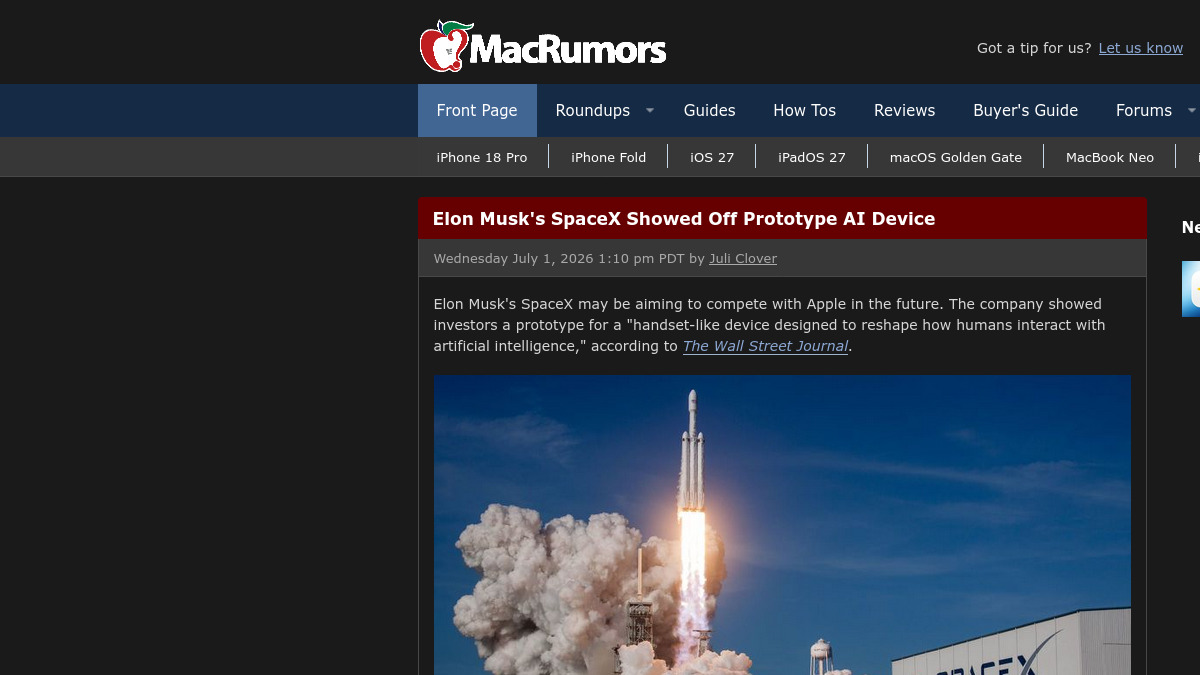 MacRumors coverage of the WSJ report - SpaceX declined to comment officially on the story.
Source: macrumors.com
MacRumors coverage of the WSJ report - SpaceX declined to comment officially on the story.
Source: macrumors.com
What We Tried
There's no public device. No SDK, no developer preview, no FCC filing, no Qualcomm press release naming SpaceX as a handset customer. Independent testing is impossible because nothing in publicly accessible form exists to test.
What we can do is check each layer of the described stack against what actually exists inside SpaceX's corporate structure today:
| Component | What WSJ Reported | What Exists Inside SpaceX |
|---|---|---|
| Processor | Qualcomm Snapdragon | Qualcomm is a Starlink terminal hardware supplier; no phone partnership announced |
| AI model | xAI / Grok integration | Grok 4.5 is in private beta at SpaceX and Tesla |
| Operating system | Proprietary SpaceX OS | Not publicly announced; SpaceX has no shipping consumer OS |
| Connectivity | Starlink direct-to-cell | Live on T-Mobile network, FCC spectrum approved in May 2026 |
| Manufacturing | Unspecified | SpaceX has no consumer hardware production history |
The infrastructure and AI model layers are real. The consumer-facing software and manufacturing layers aren't public. The gap between those two things is where the disagreement lives.
The Gap
AI-first hardware has one of the worst product-market fit records in recent tech. Humane raised $240 million before shutting down within a year of its AI Pin launch. Rabbit R1 moved 100,000 units at launch on pre-order enthusiasm, then quietly faded as buyers discovered the device couldn't outperform free smartphone apps. Both had coherent narratives and real funding. Neither found a market that wanted a separate device over a phone.
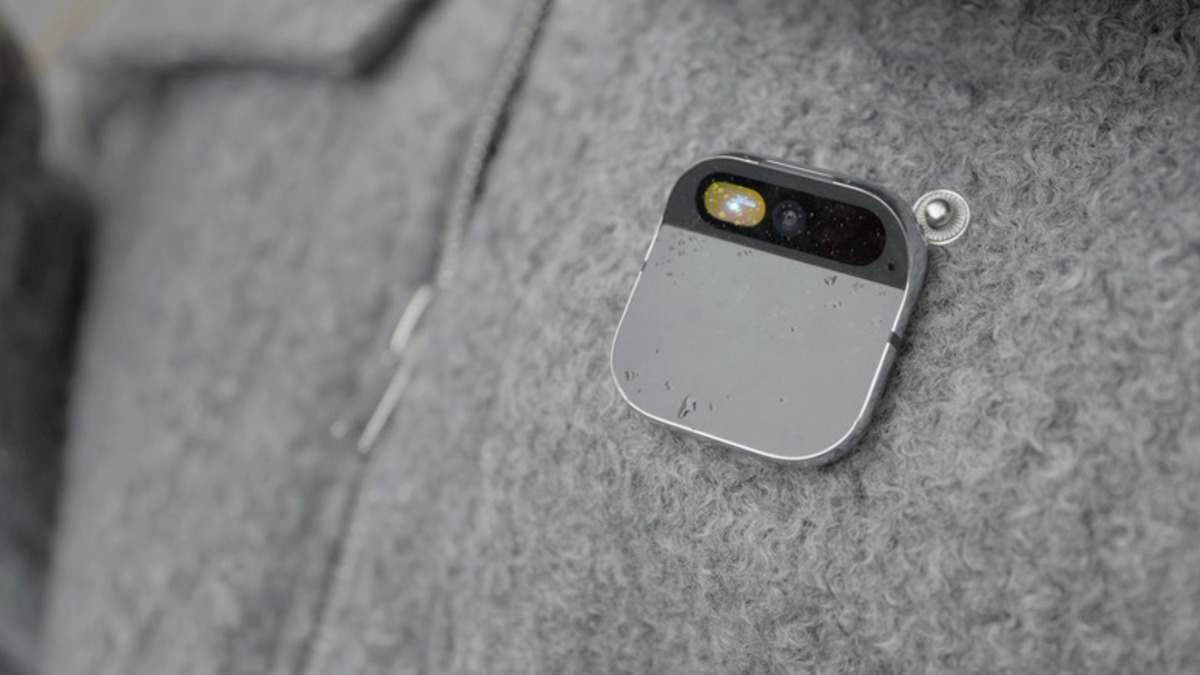 The Humane AI Pin launched at $699 in April 2024 and shut down within a year - a useful reference point for what AI hardware looks like when the software isn't ready for the form factor.
Source: engadget.com
The Humane AI Pin launched at $699 in April 2024 and shut down within a year - a useful reference point for what AI hardware looks like when the software isn't ready for the form factor.
Source: engadget.com
SpaceX has things neither of those companies could offer: a satellite network providing genuine connectivity differentiation in areas without cellular coverage, an AI model with real enterprise users at SpaceX and Tesla, and a brand that can generate pre-orders before benchmarks exist. Those are real advantages.
But SpaceX also inherits Musk's track record on hardware timelines. Cybertruck shipped years behind schedule. Full Self-Driving still isn't fully autonomous. Optimus has been "shipping soon" since 2022. The gap between announced and shipped at Musk's companies is a documented pattern, not just pessimism.
The IPO context adds a layer worth taking seriously. SpaceX's record IPO was targeting a $1.75 trillion valuation, which required growth stories beyond rocket launches and satellite subscriptions. An AI device - even one explicitly framed as early-stage and uncertain - is exactly the kind of forward-looking narrative that justifies aggressive AI-era valuations. Investors saw the SpaceX-xAI stack and valued it partly on the premise that future consumer products could emerge from it. The device, real or not, makes that premise tangible.
Musk denied similar phone rumors in February 2026 when they first surfaced after the xAI merger. Then denied them again in July. Two denials, no corporate correction through official channels, and sources the Journal described as people who were actually in those investor meetings.
The QCOM stock slide on Musk's denial - shares fell as much as 4.5% in afternoon trading before partially recovering - tells you something: the market didn't treat it as fabrication. It treated it as ambiguity. If the story were clearly false, Qualcomm would have issued a denial too. It didn't.
Verdict
The WSJ's sources described a real prototype shown to real investors, with explicit caveats about early-stage development and no guarantee of commercialization. Musk called that "utterly false" without specifying which element was false. Both can be accurate at once: a concept prototype was shown to investors, and Musk doesn't want it described as a product roadmap item, because it isn't one - yet.
The technical stack is more coherent than anything Humane or Rabbit assembled from scratch. Starlink connectivity is the one differentiation neither of those could offer. But a coherent stack and a shipped consumer product are separated by years of work - manufacturing partnerships, device certification, carrier negotiations, app ecosystem development - none of which appear to have started in any public or regulatory way.
The most honest read of this story is that SpaceX has the pieces to build this device, showed investors those pieces in physical form, and hasn't committed to building it. Whether that prototype becomes a product depends on whether post-IPO SpaceX decides consumer hardware is worth the focus. Musk's "utterly false" was accurate in one narrow sense: what investors saw isn't a product announcement. It's an option SpaceX is quietly keeping open.
Sources:

