
South Korea Commits $518B to Samsung and SK Hynix Fabs
South Korea announced an 800 trillion won chip investment plan to build four new fabs with Samsung and SK Hynix in the country's southwest, targeting AI memory dominance through 2035.
 6 min read
South Korea just placed the biggest infrastructure bet in its history. President Lee Jae-myung stood alongside Samsung Chairman Jay Y. Lee and SK Group Chairman Chey Tae-won at the Blue House on Monday to announce a combined 800 trillion won - roughly $518 billion - in new chip manufacturing investments. That sum covers four new fabrication plants, split two each between Samsung and SK Hynix, all slated for the country's underdeveloped southwest.
TL;DR
- Samsung and SK Hynix will build two chip fabs each in southwestern South Korea (Gwangju-Jeonnam region)
- Combined direct company investment: 800 trillion won (~$518B)
- Full national plan including packaging, data centers, and government: passes $1 trillion
- SK Hynix surpassed Samsung as South Korea's most valuable company; both control ~2/3 of global memory supply
- Completion timelines are long - SK Hynix's existing Gyeonggi cluster took nine years to establish
The announcement is bigger than the chip numbers suggest. When you add in a separate $52.5 billion advanced packaging cluster in the Chungcheong area and $356 billion in AI data center commitments from SK Group, GS Group, and Naver - with plans to build 18.4 gigawatts of data center capacity by 2035 - the full effort crosses $1 trillion. President Lee framed all of it around a single axis: "We must secure the core elements of AI faster than any other country."
The National Plan
The plan has three distinct layers, each targeting a different piece of the AI supply chain.
Southwest Fabs
Samsung confirmed Gwangju as the site for its two new production clusters. SK Hynix hasn't yet finalized its location within the southwest, with Chairman Chey citing the need to "secure infrastructure" before committing. Both companies' existing operations are concentrated in Gyeonggi Province south of Seoul, where capacity is near full use. The southwest expansion doubles as an economic policy move - President Lee has made reducing regional inequality outside the Seoul metro area a core political priority.
Four fabs is a lot of concrete. SK Hynix's Chairman pointed out that building out their previous Gyeonggi cluster required nine years. No completion dates were announced for the new southwest sites.
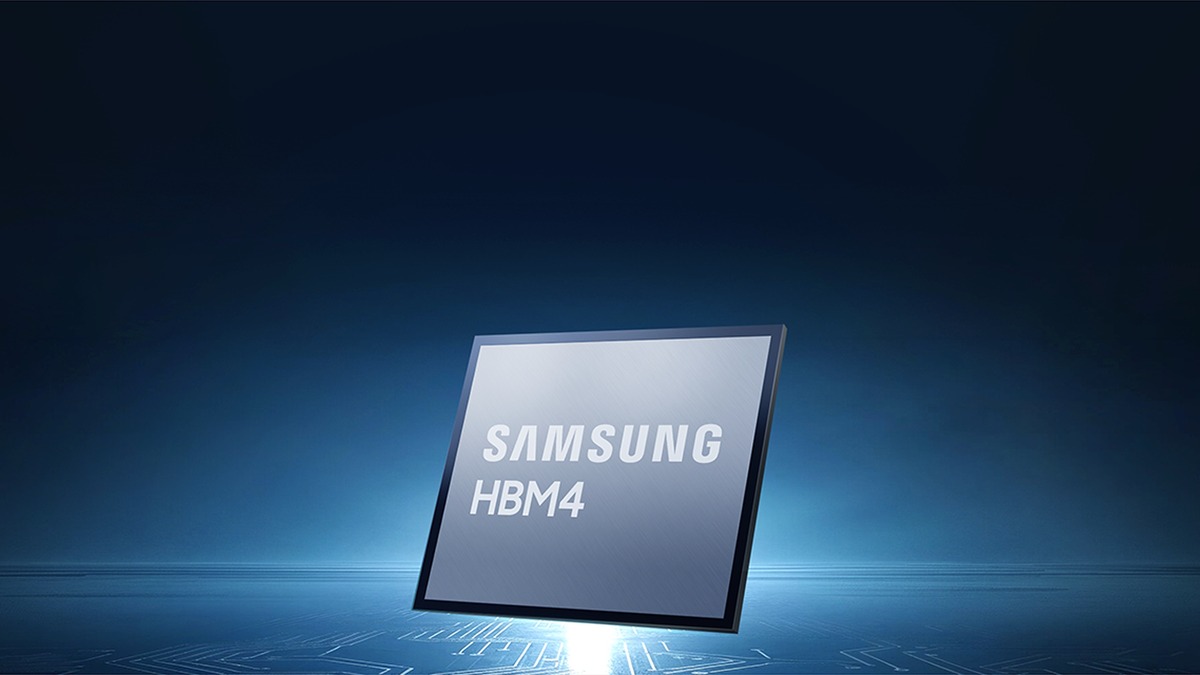 Samsung's HBM4 memory chip, designed for AI accelerators like NVIDIA's Rubin GPU series. The southwest fabs will target exactly this product line.
Source: semiconductor.samsung.com
Samsung's HBM4 memory chip, designed for AI accelerators like NVIDIA's Rubin GPU series. The southwest fabs will target exactly this product line.
Source: semiconductor.samsung.com
Advanced Packaging Cluster
Near-Seoul infrastructure stays relevant for advanced packaging. The Chungcheong area gets a dedicated $52.5 billion packaging cluster - a separate bet from the fab investment. Advanced packaging (stacking HBM dies, integrating memory with logic) is where the margin is, and where Samsung has historically been weaker than SK Hynix. This cluster aims to close that gap.
Data Center Build-Out
The data center component is the most speculative part. SK Group, GS Group, and Naver collectively committed $356 billion, with a 18.4-gigawatt AI data center buildout targeted for 2035. That's a long time horizon for commitments that have no detailed plans attached yet. But it signals where South Korea sees the demand coming from: not just selling memory to US hyperscalers, but hosting AI workloads directly.
| Component | Investor | Amount |
|---|---|---|
| 4 new chip fabs (southwest) | Samsung + SK Hynix | $518B (800 trillion won) |
| Advanced packaging cluster (Chungcheong) | Samsung (primary) | $52.5B |
| AI data centers | SK Group, GS Group, Naver | $356B |
| Local government contribution (Gwangju-Jeonnam) | Regional government | $3.2B-$12.9B |
The HBM Race
The deeper story here is that this announcement reflects a shift in who's driving it. SK Hynix recently became South Korea's most valuable company by market cap - overtaking Samsung for the first time - driven entirely by its lead in high bandwidth memory. The company holds 53% of the global HBM market. Samsung sits at 35%. Micron, the only non-Korean player with meaningful HBM production, is at 11%.
AI demand made this happen. The Anthropic-Micron HBM supply deal and similar agreements across the industry have pressure-tested existing capacity limits. When we wrote about the AI memory chip shortage last year, the question was whether supply could catch up with demand. This announcement is part of the answer - but a slow one.
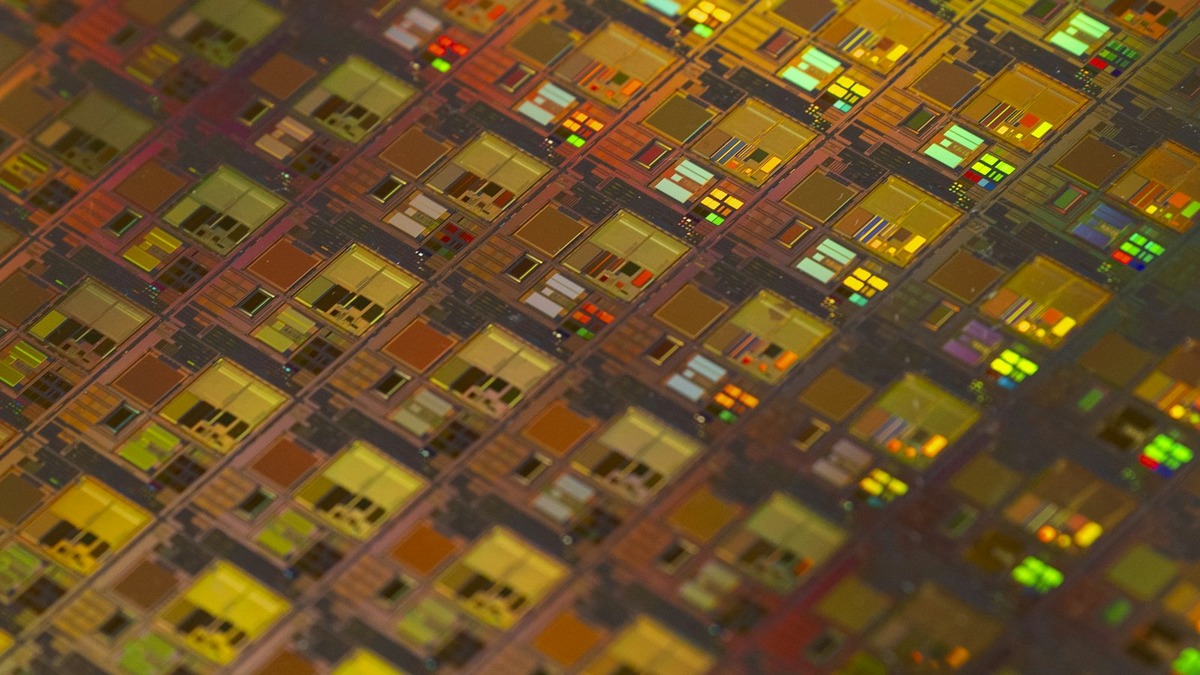 A semiconductor wafer at the stage before die separation. Each new fab announced today will produce wafers like these, specialized for HBM and advanced DRAM.
Source: unsplash.com
A semiconductor wafer at the stage before die separation. Each new fab announced today will produce wafers like these, specialized for HBM and advanced DRAM.
Source: unsplash.com
SK Hynix's Unexpected Lead
SK Hynix got to HBM4 production first. Its M15X facility in Cheongju is targeted for production by mid-2027, dedicated completely to HBM4 for NVIDIA's Rubin accelerator. The co-located P&T7 packaging and testing facility - 231,000 square meters, construction starting this year - closes the loop on die-to-package operations at the same site. That's a tightly integrated operation Samsung doesn't yet match at scale.
For the Stargate project, both Samsung and SK Hynix committed to supplying 900,000 DRAM wafers per month combined. The fact that both companies needed to be included suggests neither could cover the demand alone.
Samsung's Comeback Strategy
Samsung is expanding HBM production capacity by roughly 50% in 2026. Its P5 facility in Pyeongtaek is expected to come online in 2028. Samsung co-CEO Jun Young-hyun recently told investors that "customers have even stated that Samsung is back" on HBM4, but the company has acknowledged it needs to close SK Hynix's lead. Gwangju is partly about adding capacity, partly about adding credibility - a visible, large-scale commitment that the company's HBM output will eventually match its DRAM market dominance.
Where It Falls Short
The southwest expansion is real, but the timelines are truly uncertain. Building a semiconductor fab from scratch in a region without existing chip infrastructure is slower than expanding an existing cluster. The local government in Gwangju-Jeonnam is contributing between $3.2 billion and $12.9 billion - a range that wide suggests the funding structure isn't fully settled.
SK Hynix still hasn't confirmed its exact site. "Securing infrastructure" in the southwest context means power, water, and clean room supply chains that don't currently exist there at the scale needed. This is a multi-year construction and permitting problem, not just a capital problem.
The broader $1 trillion figure includes the data center commitments, which stretch to 2035 and involve conglomerates making pledges without detailed execution plans. That's normal for this kind of government-industry announcement, but it means the headline number deserves a discount when thinking about near-term supply impact.
South Korea's play is clear: lock in the two companies that already produce two-thirds of the world's memory chips and build out an integrated AI manufacturing base around them. The South Korean chip startup ecosystem - companies like Rebellions - has been building the complementary logic chips, while Samsung and SK Hynix own the memory stack. This announcement consolidates that story into a national industrial policy. Whether the timelines hold is a different question. The $1 trillion of political will isn't in doubt.
Sources:
- Al Jazeera - South Korea announces more than $1 trillion AI, chip investment drive
- ABC News - South Korean tech giants to build $518B chipmaking hub
- Benzinga - Samsung, SK Hynix to build four new chip plants
- Daily Sabah - South Korea unveils $576B AI chip drive
- Seoul Economic Daily - Samsung, SK to build new chip cluster in Gwangju
- Tom's Hardware - SK Hynix $13B HBM memory assembly plant
- Korea Herald - SK Hynix advanced packaging investment

