
SoftBank Commits €75B to French AI Data Centers
SoftBank will build 5 GW of AI data center capacity in France for up to €75 billion, a phased commitment that would create the largest AI compute cluster in Europe.
 Updated
7 min read
Updated
7 min read
SoftBank Group announced it will build 5 gigawatts of AI data center capacity in France, with a first phase of €45 billion targeting 3.1 GW in the Hauts-de-France region by 2031. The full commitment reaches up to €75 billion once all phases are complete.
The announcement came at the Choose France Summit at Versailles on May 30, where SoftBank chairman Masayoshi Son stood alongside French officials to sign what the government describes as the single largest foreign investment commitment in French history.
TL;DR
- SoftBank commits up to €75 billion (~$87B) to build 5 GW of AI data center capacity in France
- Phase 1 is €45B for 3.1 GW in Hauts-de-France (Dunkirk, Bosquel, Bouchain) by 2031
- France's nuclear power grid was named as the decisive factor over Germany, the UK, or the US
- Son and Macron brokered the deal personally during the French president's May visit to Tokyo
- At full buildout, the French footprint would exceed the entire Northern Virginia data center corridor in capacity
What €75 Billion Actually Buys
The headline figure is a commitment range, not a single transfer. Phase 1, confirmed at €45 billion, targets three sites in the Hauts-de-France region: Dunkirk (at the Loon-Plage port), Bosquel near Amiens, and Bouchain near Cambrai. Phase 2 carries the remaining ~€30 billion to reach 5 GW total, with timelines not yet specified.
Surpassing Silicon Valley's Biggest Cluster
France had approximately 1.5 GW of data center capacity at the end of 2025. Phase 1 alone more than doubles that. The full 5 GW build would more than triple it. The Northern Virginia data center corridor - the densest concentration of compute infrastructure on Earth - runs at roughly 4.5 GW combined. SoftBank is proposing to build something larger inside a single country.
Partners named in the official press release include Schneider Electric, which will operate a robotized manufacturing plant at the Dunkirk hub; EDF at Bouchain; the Port of Dunkirk Authority; and SoftBank's own energy subsidiary SB Energy. Schneider CEO Olivier Blum described it as "the largest ever undertaken in France" in the data center sector.
Site Selection Logic
The Hauts-de-France region wasn't chosen by accident. It sits on the northern coast with direct port access - useful for importing the heavy cooling equipment that large data centers require - and has existing industrial infrastructure from decades of manufacturing. Dunkirk's Loon-Plage site in particular already houses major industrial facilities. All three sites connect to EDF's grid at a point where France exports surplus nuclear power toward Belgium and the UK.
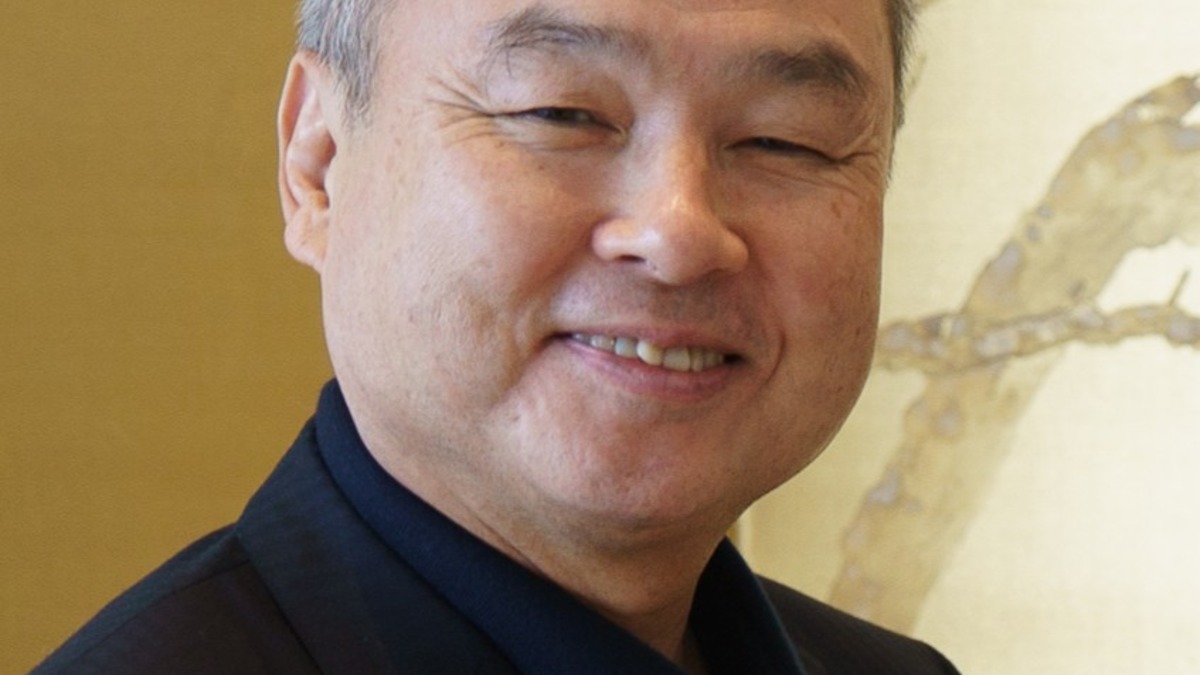 Masayoshi Son at a meeting with EU Commissioner Henna Virkkunen in Tokyo, May 2025.
Source: wikimedia.org
Masayoshi Son at a meeting with EU Commissioner Henna Virkkunen in Tokyo, May 2025.
Source: wikimedia.org
Why France and Not Germany, the UK, or the US
SoftBank's choice of France over other large European markets wasn't primarily about tax incentives or labor costs. Son named the energy infrastructure explicitly.
The Nuclear Grid Argument
"The fact that the country is an energy producer and exporter is absolutely crucial for infrastructure investments in artificial intelligence," Son said at Versailles. France creates around 70% of its electricity from nuclear power, giving it the most stable large-scale baseload grid in Western Europe and among the lowest carbon intensities in Europe. Data centers at gigawatt scale consume power equivalent to small cities, and operators need supply that doesn't follow the wind.
Germany's energy volatility since the post-2022 gas supply disruptions made it a harder sell. The UK runs at higher electricity costs and has its own grid capacity constraints. France, by contrast, is a net electricity exporter. The argument closed itself.
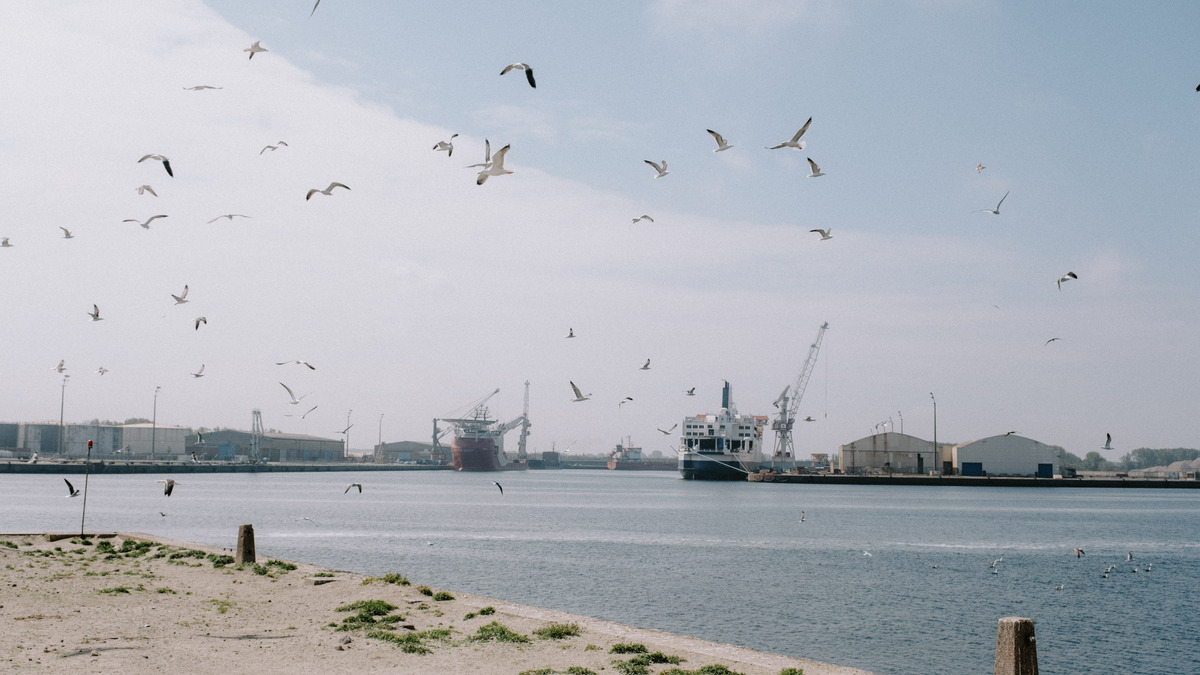 Dunkirk's port complex in Hauts-de-France, one of three planned SoftBank data center locations.
Source: wikimedia.org
Dunkirk's port complex in Hauts-de-France, one of three planned SoftBank data center locations.
Source: wikimedia.org
The Macron Factor
The deal's origin is unusual at this scale. Macron flew to Tokyo in May and personally pitched Son - an approach Son described as remarkable precisely because a head of state came to him directly rather than sending a company executive. Son said he "started reviewing the matter in earnest" after that meeting.
"I was very impressed by the fact that Emmanuel Macron is so personally committed to ensuring France's economic success, even though our investments have so far been concentrated mainly in the US, as well as in Japan and Asia." - Masayoshi Son, May 30
French Economic Minister Roland Lescure framed the announcement in terms of national AI strategy: "SoftBank's decision to invest massively in AI datacenters in France - a first for the group in Europe - is testament to President Emmanuel Macron's ambition to position France as a leading destination all along the AI value chain."
SoftBank's previous European footprint was close to zero. That changes fast if the construction timeline holds.
SoftBank's Wider Infrastructure Blitz
The France commitment doesn't sit in isolation. SoftBank has been making continent-scale infrastructure pledges at a pace that would have looked absurd 18 months ago.
Ohio: 10 GW on a Former Uranium Site
In March 2026, SoftBank announced a $500 billion data center campus in Piketon, Ohio, on a former uranium enrichment complex covering 3,700 acres. Phase 1 targets 800 MW; full buildout reaches 10 GW. A new 9.2 GW natural gas plant - a $33 billion project in its own right - will power the campus. Commerce Secretary Howard Lutnick described it as "the largest construction project in the country."
The contrast with France is stark. Ohio runs on new gas infrastructure; France runs on existing nuclear. Son made no attempt to reconcile the carbon logic when both announcements were made within weeks of each other - and nobody on the Versailles stage seemed to ask. US hyperscalers are making similar pledges on energy use, with comparably fuzzy timelines.
OpenAI Stake and the Supply Chain Question
SoftBank holds an 11% stake in OpenAI - over $60 billion committed - and is simultaneously an investor in and a customer of the company whose models need compute to run. The French data centers, if completed on schedule, would give SoftBank something OpenAI currently lacks: first-party compute infrastructure in Europe at a scale comparable to what US hyperscalers have built domestically.
That matters for regulatory reasons as much as commercial ones. The EU's AI Act and several member states' data residency rules create friction for US-domiciled compute. A SoftBank-owned 5 GW cluster in France would be a structurally different offering than routing European inference through Virginia or Oregon. Mistral's 830-MW Paris data center push reflects the same logic at a much smaller scale. Whether SoftBank's capacity serves its Vision Fund portfolio, OpenAI's European customers, or third-party cloud clients hasn't been specified.
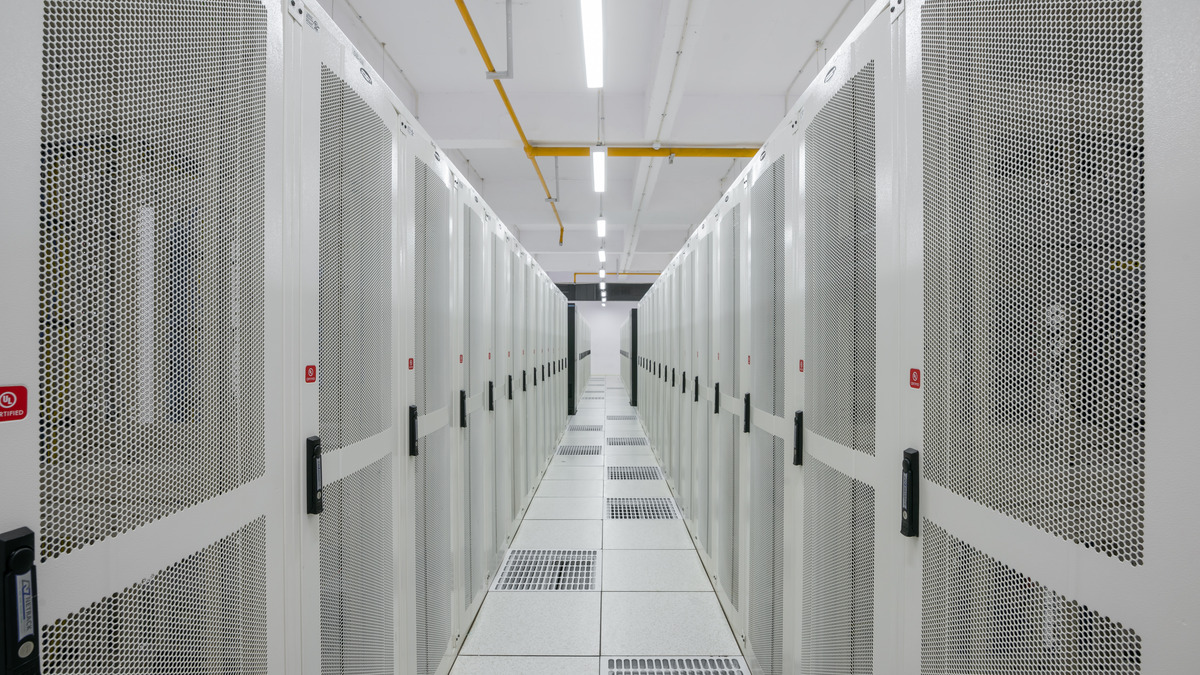 Hyperscale server infrastructure - SoftBank's French sites would dwarf anything currently operating in Europe.
Source: wikimedia.org
Hyperscale server infrastructure - SoftBank's French sites would dwarf anything currently operating in Europe.
Source: wikimedia.org
What the Numbers Don't Tell You
€75 billion is the upper bound of a phased commitment, not a guarantee. Real estate acquisition, grid permitting, equipment procurement, and construction at this scale takes years under ideal conditions - and conditions rarely stay ideal.
The Hauts-de-France sites need EDF grid connections that EDF itself must approve and build. At 5 GW, SoftBank is asking the French grid operator to provision power equivalent to five large nuclear reactors. That's not a paperwork exercise.
SoftBank's balance sheet has genuine firepower: the group's annual net profit recently quadrupled to over $32 billion, mostly on AI-related investment gains. The company isn't bluffing on capacity to spend. But the SoftBank-linked Japan AI alliance announced earlier this year offers a comparison case - investment commitments tend to be firm in their intent and flexible in their execution timelines.
Previous Choose France Summit announcements from other technology companies have had mixed delivery records. Some delivered infrastructure on schedule. Others quietly reduced scope when interest rates moved or permitting stalled. The SoftBank commitment is the largest any investor has made at a single summit, by a wide margin.
The most concrete fact in the announcement is the partner list. Schneider Electric doesn't build robotized manufacturing plants for promises. EDF doesn't sign site agreements for press releases. Those are operational commitments, not diplomacy. The question is whether 3.1 GW of French capacity exists by 2031 - or whether Hauts-de-France joins a long list of announced data center expansions that took an extra five years to close the gap between ribbon-cutting and compute online.
Sources:
Last updated

