
SK Hynix Nasdaq IPO: $28B HBM Bet Prices Thursday
SK Hynix's $28B Nasdaq IPO prices Thursday, putting the dominant supplier of AI high-bandwidth memory in reach of US investors for the first time.
 6 min read
The chip inside every NVIDIA Blackwell server rack is about to get its own Nasdaq ticker. SK Hynix, the South Korean memory maker that controls more than half the global market for high-bandwidth memory, prices its US listing Thursday under symbol SKHY - and if you've been building AI infrastructure at any scale, you've already been betting on this company without knowing it.
TL;DR
- Prices Thursday July 9, trades Friday July 10 on Nasdaq as SKHY
- $28B offering via 17.79 million ADRs (each equals one-tenth of a common share)
- Holds 54% of the predicted global HBM4 market; secured roughly 70% of NVIDIA's HBM4 orders for the Vera Rubin platform
- Q1 2026 revenue approximately $34 billion, up 198% year-over-year
- Proceeds fund EUV lithography equipment and South Korea fab expansion
What SK Hynix Actually Builds
Most investors know NVIDIA. Fewer know the company that supplies the memory that makes NVIDIA's GPUs useful for AI. That's SK Hynix's position in the stack - one layer below the headline-grabbing chip designer, and arguably more critical to near-term AI capacity than any individual GPU model.
HBM - The Product That Matters
High-bandwidth memory is stacked DRAM bonded directly to a GPU die. Standard DDR5 can't move data fast enough to keep a Blackwell GPU fed. HBM can, which is why every H100, H200, and GB200 ships with SK Hynix silicon inside.
The company completed the world's first HBM4 development in 2025 and showcased 16-layer, 48 GB HBM4 modules at CES 2026. Analysts forecast the revenue mix will shift to roughly 55% HBM4 and 45% HBM3E by end of year. In June 2026, SK Hynix also shipped HBM4E samples - a 12-stack next-generation product running at 16Gbps per pin with 20% better power efficiency than prior models.
| Product | Primary Use | Est. Price per Stack | SK Hynix Share |
|---|---|---|---|
| HBM4 | Current-gen AI accelerators | ~$500 | 54% (predicted) |
| HBM3E | AI servers, H200 clusters | ~$300 | ~57% (Q4 2025) |
| HBM3 | Legacy HPC, older AI systems | ~$200 | Declining |
DRAM and NAND - Everything Else
Beyond HBM, SK Hynix makes conventional DDR5 server memory and NAND flash for solid-state drives. These businesses are recovering from a 2024-2025 oversupply cycle. AI demand now absorbs so much factory output that conventional DRAM pricing has tightened sharply - as covered in our RAMmageddon piece earlier this year.
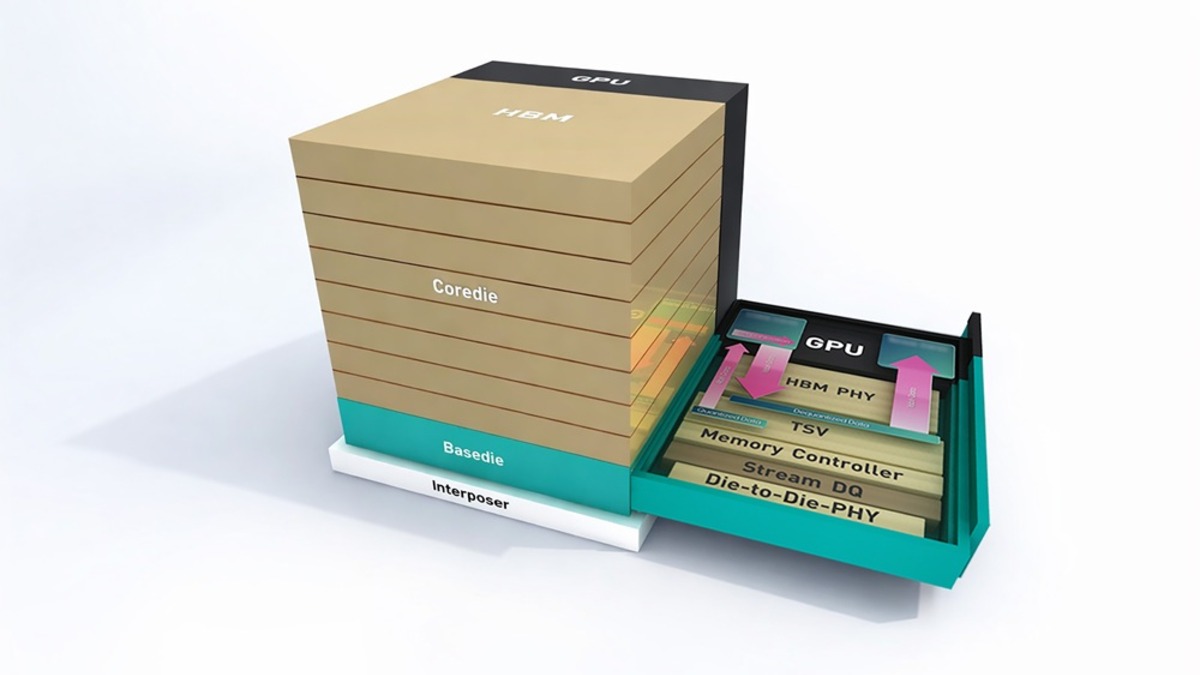 SK Hynix's 48 GB HBM4 module with 16-layer stacking, shown at CES 2026 in Las Vegas.
Source: news.skhynix.com
SK Hynix's 48 GB HBM4 module with 16-layer stacking, shown at CES 2026 in Las Vegas.
Source: news.skhynix.com
The Offering Structure
ADR Mechanics
SK Hynix already trades on the Korea Stock Exchange (ticker 000660). The Nasdaq listing uses American Depositary Receipts - each ADR equals one-tenth of a common Korean share. The company is issuing 17.79 million new ADRs for the offering, which at current Korea prices implies roughly $28 billion raised. Investors who buy SKHY own synthetic exposure to the same underlying company, not a separate US entity.
ADRs are the standard access mechanism for large Korean companies that want US liquidity without a full US-primary listing. Samsung uses the same structure through a pink-sheet OTC program, but SK Hynix is choosing a Nasdaq-listed, fully regulated ADR - a meaningful upgrade in visibility.
Timing and Demand
The book was reportedly oversubscribed before pricing. Bloomberg reviewed deal terms showing demand already exceeded available ADRs - this tracks with a company whose Korea shares are up 770% over 12 months. Analysts at Wedbush summarized the mood: "This is a positive indicator of the AI trade, with Korea chip plays now front and center. The AI trade is spreading."
Use of Proceeds
Capital goes toward two buckets: expanding production facilities in South Korea and procuring extreme ultraviolet lithography scanners from ASML. EUV is the process technology required for SK Hynix's most advanced nodes - without more scanners, there's no headroom to scale HBM4 production. This connects to the South Korea $518B chip investment plan announced in late June, where SK Hynix committed to new fabs in the country's southwest.
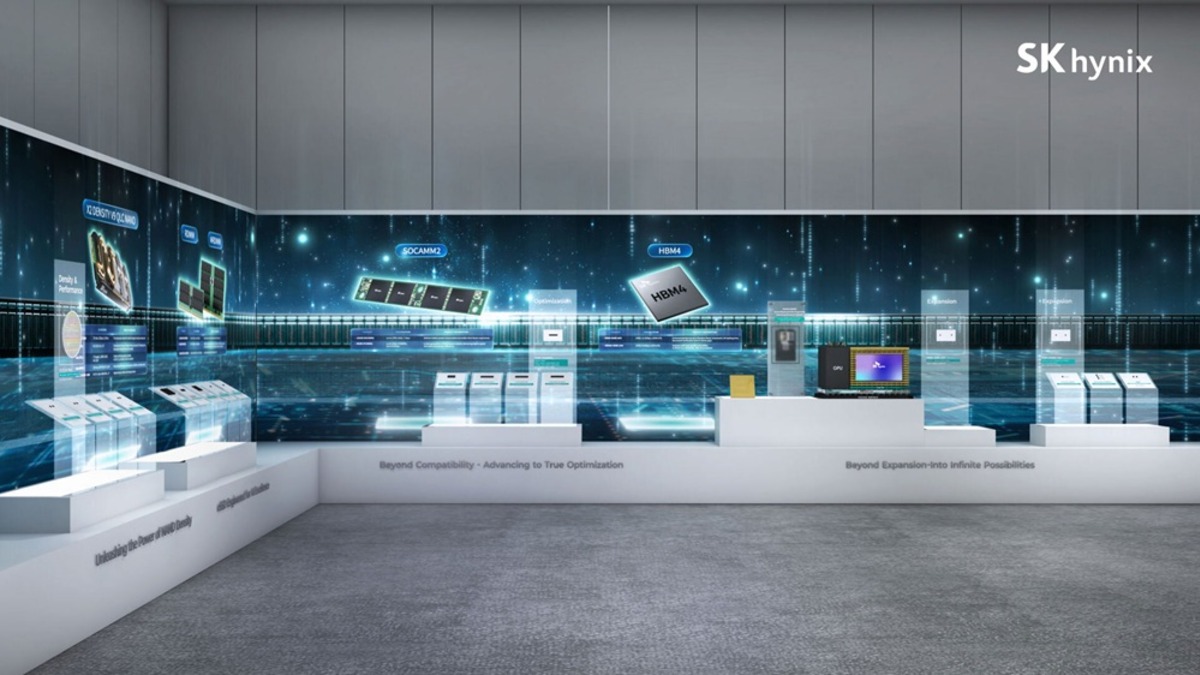 SK Hynix's CES 2026 exhibition presented HBM4, HBM3E, and LPDDR6 under the theme "Innovative AI, Sustainable Tomorrow."
Source: news.skhynix.com
SK Hynix's CES 2026 exhibition presented HBM4, HBM3E, and LPDDR6 under the theme "Innovative AI, Sustainable Tomorrow."
Source: news.skhynix.com
The Numbers Behind the Bet
SK Hynix's Q1 2026 revenue came in at roughly $34 billion, a 198% year-over-year increase. That growth rate isn't a rounding error - it's the direct result of NVIDIA's Q1 data center revenue hitting $75.2 billion, up 92% from a year earlier. Every Blackwell cluster ships with HBM, and SK Hynix reportedly supplies roughly two-thirds to 70% of NVIDIA's HBM4 orders for the Vera Rubin platform.
The company's Korean shares crossed a $1 trillion market cap in May 2026. Micron, its closest US peer, saw a 700% share gain over the same 12-month window. Dan Ives at Wedbush called the listing "a positive indicator of the AI trade, with Korea chip plays now front and center," noting that Korean stocks had been inaccessible to most US portfolios before today.
| Metric | Value |
|---|---|
| Q1 2026 Revenue | ~$34B |
| Revenue YoY Growth | +198% |
| Korean share gain (12 months) | +770% |
| Korean market cap (peak) | >$1 trillion |
| Global HBM4 market share | ~54% |
| NVIDIA HBM4 order share (Vera Rubin) | ~70% |
| IPO raise target | ~$28B |
| ADRs offered | 17.79 million |
The NVIDIA Dependency
Seventy percent of NVIDIA's HBM4 orders going to one supplier is good news for SK Hynix today. It becomes a structural risk the moment the relationship sours, NVIDIA diversifies, or GPU demand slows. Anthropic's HBM supply chain runs partly through Micron - see our Anthropic-Micron HBM deal for context - which shows that large customers prefer multi-supplier strategies.
Samsung is scaling its HBM4 capacity hard, targeting 28% market share. Micron has 18% and is ramping its US-based production with CHIPS Act funding. Neither is a near-term threat to SK Hynix's dominance, but the competitive moat is narrower than headline market share numbers suggest.
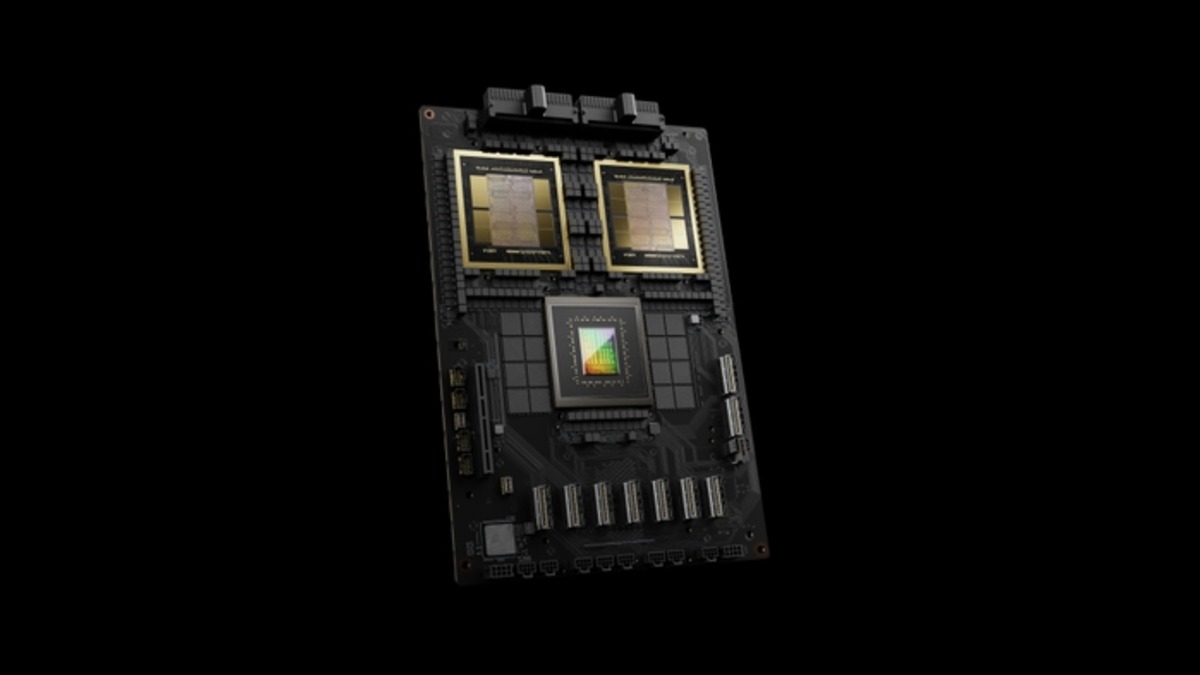 NVIDIA's GB200 Grace Blackwell Superchip - each unit ships with SK Hynix HBM, making memory supply a direct constraint on AI server capacity.
Source: nvidianews.nvidia.com
NVIDIA's GB200 Grace Blackwell Superchip - each unit ships with SK Hynix HBM, making memory supply a direct constraint on AI server capacity.
Source: nvidianews.nvidia.com
Where It Falls Short
Customer concentration is the sharpest risk. NVIDIA drives a disproportionate share of HBM revenue. A production delay, design change, or even an inventory digestion quarter at NVIDIA flows straight through to SK Hynix's top line.
Oversupply timing is the second concern. South Korea, Taiwan, and the US have all committed to massive new fab capacity. SK Hynix and Samsung alone announced $518 billion in new Korean facilities earlier this year. If AI capex cools before 2028, that supply comes online into a softer market.
ADR premium erosion is specific to this listing. Korean shares have run 770% in 12 months. US investors entering at IPO are not getting in early - they're getting in at a price that already reflects extraordinary AI demand. If AI infrastructure spend decelerates even slightly, the ADR won't be insulated from the same correction hitting the Korean listing.
EUV equipment backlog is a practical constraint. SK Hynix needs more ASML scanners to scale HBM4 production, and ASML's delivery queues are full. Using IPO proceeds for scanners is the right call, but it doesn't compress the delivery timeline.
The IPO puts a US market price on a component that AI infrastructure has depended on for two years. Pricing Thursday, trading Friday - the memory inside your AI cluster gets its Nasdaq debut.
Sources:
- TechCrunch - US investors will soon get access to SK Hynix
- SiliconANGLE - Memory chip maker SK Hynix seeks to raise $28B through US IPO
- Electronics For You - SK Hynix plans $28B US listing
- Leverage Shares - SK Hynix is coming to Nasdaq: the bull case
- TrendForce - SK Hynix reportedly to supply about two-thirds of NVIDIA HBM4
- Korea Times - CES 2026: SK Hynix unveils 16-high 48GB HBM4

