
SK Group Warns AI Memory Fight Is Turning Geopolitical
SK Group Chairman Chey Tae-won says customers want 60-100% more AI memory in 2027 than in 2026, and warns governments are starting to treat chip access as a matter of economic security.
 5 min read
An hourglass, photo by Towfiqu Barbhuiya. Source: pexels.com
SK Group Chairman Chey Tae-won told reporters at the Korea Chamber of Commerce and Industry's Jeju Forum on July 19 that customers are now asking SK hynix for 60 to 100 percent more AI memory in 2027 than they're buying this year. Then he said the part that matters more: governments, not just companies, are starting to fight over who gets it.
"Right now, companies absorb the pressure," Chey said. "Governments will start pressuring other governments soon." That's not a hypothetical from an analyst deck. It's the chairman of the company that controls more than half the world's high-bandwidth memory supply, saying the quiet part out loud.
TL;DR
- SK Group Chairman Chey Tae-won says customers want 60-100% more AI memory in 2027 than in 2026
- SK hynix holds 58% of global HBM revenue share; Micron and Samsung split the rest at 21% each
- SK hynix moved its Yongin cluster's first clean room up to February 2027 and committed an extra 21.6 trillion won ($14.52 billion) in March
- Chey warns foreign governments are starting to treat memory access as "economic security," not just a supply-chain problem
The Claims on the Table
Chey didn't release a white paper. He answered questions at a business forum on Jeju Island, and two Korean outlets, The Korea Herald and The Investor, independently reported matching quotes and figures. Both put AI at more than half of total semiconductor consumption already, with demand for AI memory specifically set to grow by a minimum of 50 to 60 percent industry-wide next year.
The table below lays out what he claimed, separate from what's independently verifiable.
| Claim | Source | Verifiable? |
|---|---|---|
| Customers want 60-100% more AI memory in 2027 | Chey Tae-won, SK Group | Anecdotal, not a published forecast |
| SK hynix holds 58% of global HBM revenue | Counterpoint Research, Q1 2026 | Yes, third-party market data |
| Micron and Samsung each hold 21% of HBM revenue | Counterpoint Research, Q1 2026 | Yes, third-party market data |
| No company has meaningful new capacity coming online next year | Chey Tae-won, SK Group | Directionally consistent with public fab timelines |
| SK hynix committed an extra $14.52B in March 2026 | SK hynix disclosures | Yes, corporate filing |
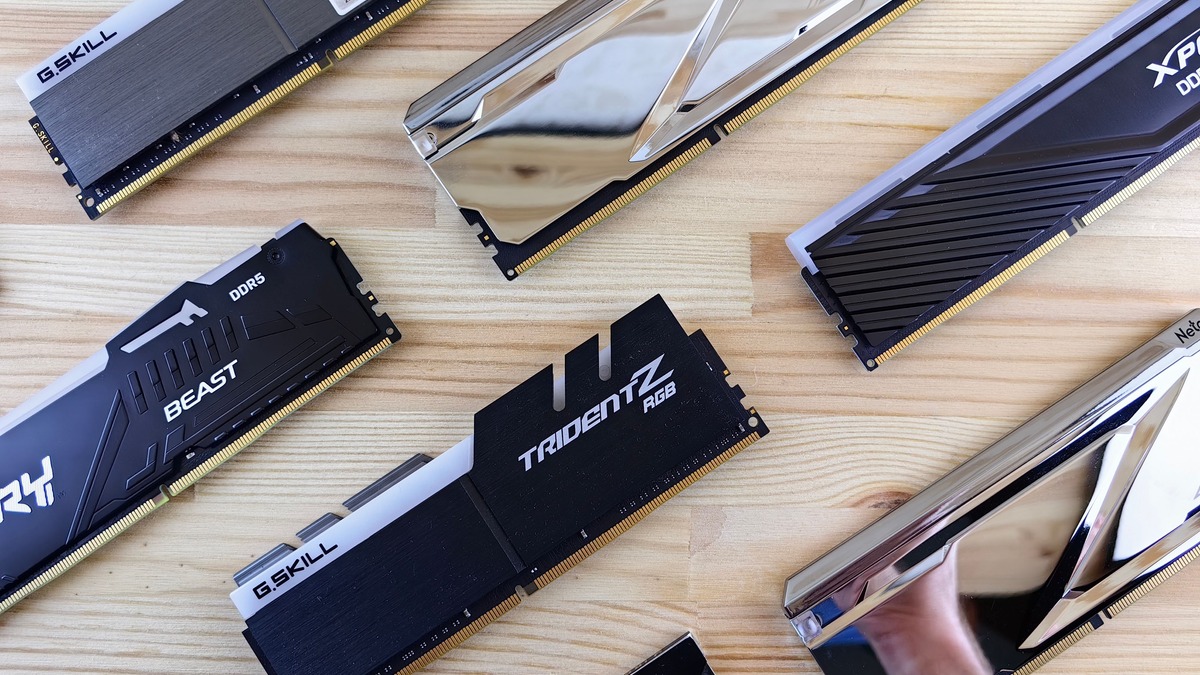 Standard DRAM modules. The shortage Chey is describing sits one tier up, in the high-bandwidth memory that stacks DRAM dies for GPU-adjacent bandwidth.
Source: pexels.com
Standard DRAM modules. The shortage Chey is describing sits one tier up, in the high-bandwidth memory that stacks DRAM dies for GPU-adjacent bandwidth.
Source: pexels.com
The Counterpoint Research numbers aren't in dispute. They match figures previously cited by Seoul Economic Daily and by trackers following the same Q1 2026 revenue split. What can't be independently checked is the 60-100 percent demand figure. It comes from one company's order book, relayed by that company's chairman, at an event with no slide deck and no methodology behind it.
What He Measured, and What He Didn't
The Demand Number
Chey's 60-100 percent range describes customer requests SK hynix is fielding for 2027 delivery, not a market-wide survey. It's the kind of number a chip supplier is well positioned to know, since hyperscalers reserve HBM allocation years ahead. It's also the kind of number that benefits SK hynix to publicize. Scarcity signals justify the price increases already working through the market: DRAM prices are up 80-90 percent this quarter alone, according to Counterpoint Research figures cited in our earlier coverage of the broader memory crunch.
The Supply Response
What's checkable: SK hynix's own capital commitments. The company pulled the first clean room at its Yongin cluster forward to February 2027 from an earlier May 2027 target, and added 21.6 trillion won ($14.52 billion) to its investment plan in March. That capacity doesn't fully offset a 60-100 percent demand jump. Chey's own line, "no company has meaningful new capacity coming online next year," matches the industry's public fab timelines, which run three to four years from construction start to volume output.
"Right now, companies absorb the pressure. Governments will start pressuring other governments soon."
What He Didn't Say
Chey didn't mention that SK hynix went public on the Nasdaq less than two weeks earlier, on July 10, in a $28 billion listing that turned HBM scarcity into the company's core pitch to US investors. A supply-constrained product makes a better IPO story than an oversupplied one. That doesn't make his warning false. It does mean the chairman explaining why memory is scarce has a direct financial interest in it staying that way.
He also didn't address South Korea's own government response. Five weeks before the Jeju Forum, President Lee Jae Myung announced an 800 trillion won ($518 billion) fab investment plan with Samsung and SK hynix, calling it "a contest between countries, one that combines astronomical corporate investment with government support." Seoul is already treating memory as state strategy. Chey's Jeju Forum comments describe other governments catching up to a game Korea started playing months ago.
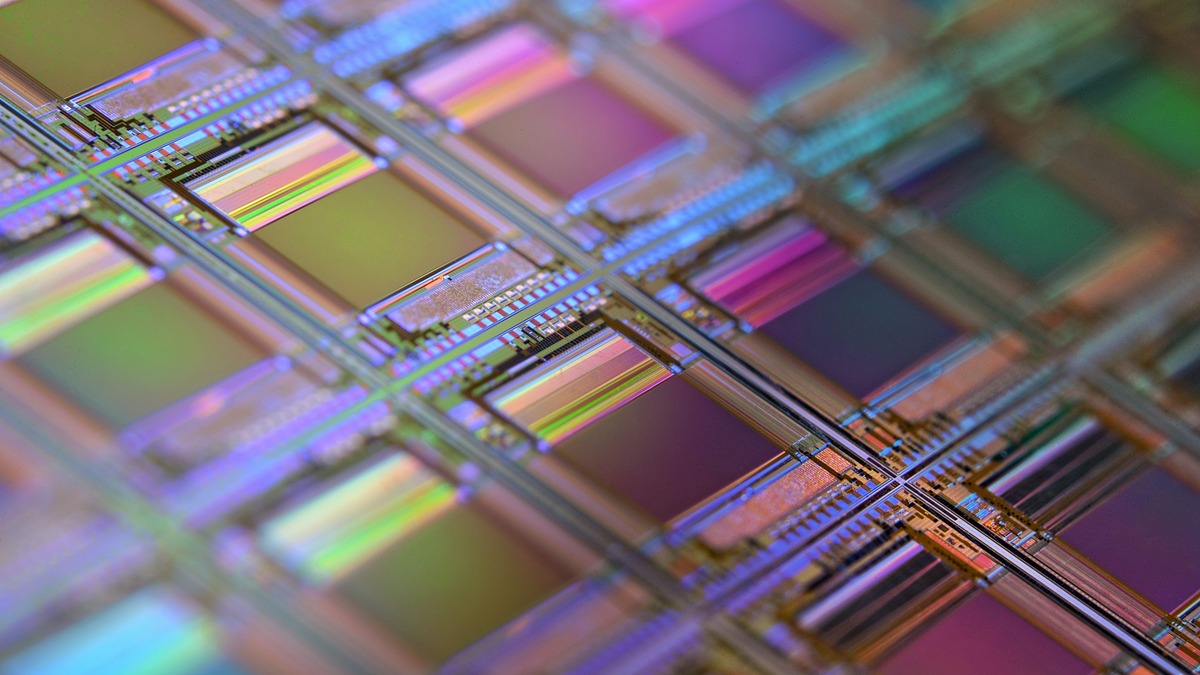 Each square on a wafer like this becomes one chip. HBM stacks several such dies vertically, which is why adding capacity takes years, not quarters.
Source: unsplash.com
Each square on a wafer like this becomes one chip. HBM stacks several such dies vertically, which is why adding capacity takes years, not quarters.
Source: unsplash.com
Should You Care?
If you're buying GPUs or renting cloud instances with them attached, yes, indirectly. HBM cost and availability feeds into the price of every H200, Blackwell, or MI400 instance on the market. See Anthropic's multi-year supply lock-in with Micron: the biggest AI labs already treat memory allocation as scarce enough to contract years ahead.
If you're not buying at hyperscaler volume, the geopolitical framing matters less than the plain arithmetic: three companies control nearly all HBM production, one of them just told a room full of reporters that demand could double, and none of them has meaningful new capacity before 2027. Whether or not governments start "pressuring other governments," as Chey put it, the price signal is already moving. It moved before he opened his mouth on Jeju Island, and his comments are as much a justification for it as a warning about it.
Sources:
- SK chief warns AI memory shortage could turn geopolitical - The Korea Herald
- SK chief warns AI memory shortage could turn geopolitical - The Investor
- Samsung Defends DRAM, NAND Lead; SK hynix Holds 58% of HBM - Seoul Economic Daily
- Global memory chip shortage fuels race between Korea, the United States and China - Korea JoongAng Daily

