
Sierra's $950M Round and the End of the Call Center
Sierra raised $950M at a $15.8B valuation to put AI agents in charge of customer service for some of the world's largest insurers and banks - and the safety questions are just beginning.
 7 min read
Bret Taylor is simultaneously the chairman of OpenAI and the CEO of a company that is routing hundreds of millions of customer interactions through AI agents built on top of OpenAI and Anthropic models. On Monday, that company - Sierra - closed a $950 million funding round at a $15.8 billion valuation, turning an 18-month-old startup into one of the most richly valued AI businesses in the world.
The round was led by Tiger Global and Google's GV, with participation from Benchmark, Sequoia, and Greenoaks.
TL;DR
- Sierra raised $950M at $15.8B valuation, up from $4.5B just 18 months ago
- The company's AI agents handle insurance claims, mortgage refinancing, and charity donations for 40%+ of the Fortune 50
- Taylor estimates the customer service market at $400B annually - Sierra's bet is that AI eats most of it
- Ghostwriter, launched in April, auto-creates and rolls out specialized agents from plain-language instructions
- Sierra uses a "constellation of models" - OpenAI and Anthropic - while Taylor chairs OpenAI's board
The Fastest Valuation Climb in Enterprise AI
Sierra's arc reads like a case study in how quickly AI valuations can compound right now. In October 2024, the company was worth $4.5 billion. By November 2025, it had crossed $100 million in annual recurring revenue. By February 2026, that figure had climbed to $150 million. The new round prices the company at $15.8 billion - a 3.5x increase in under 18 months.
For context: it took Salesforce, where Taylor previously served as co-CEO, nine years to reach a comparable scale of enterprise ARR.
Investors
Tiger Global and GV led the round. Earlier backers Benchmark, Sequoia, and Greenoaks all participated, a sign that existing investors weren't looking for an exit. The company now has over $1 billion in total capital to deploy.
The valuation reflects a broader dynamic. Enterprise software investors are paying a premium for any company that can credibly claim to be building the next generation of business software infrastructure - and Sierra's $150 million ARR across a client list that includes Prudential, Cigna, Blue Cross Blue Shield, and Rocket Mortgage gives it more credible claims than most.
What Sierra Actually Builds
Sierra is in the business of replacing call centers. Its platform builds and deploys conversational AI agents that handle customer interactions end-to-end: answering questions, processing claims, managing returns, completing refinancing applications, and fielding donations for nonprofits.
Taylor told CNBC that Sierra has "digitized the last remaining analog channel, which is the telephone line." He estimates companies spend roughly $400 billion a year on customer service, with AI agents now capturing a growing fraction of that budget.
The Constellation of Models
Sierra doesn't build its own foundation models. Instead, it combines commercially available models from OpenAI and Anthropic with proprietary fine-tuning and orchestration layers that Taylor calls a "constellation of models" approach. The company wraps its agents in guardrails and pre-built workflows designed to reduce errors - an approach it markets as safer and more reliable than raw model APIs.
This matters for at least two reasons. First, Sierra is commercially dependent on the companies whose models it uses. Second, Taylor chairs the board of OpenAI while running a company that relies on OpenAI's models as commercial infrastructure. Both companies say there is no conflict; Sierra's deployment sits below the level where Taylor has visibility into OpenAI's internal roadmaps.
Ghostwriter
In April, Sierra launched Ghostwriter, an agent-building tool that accepts plain-language descriptions and autonomously creates and deploys specialized agents. No code required. Taylor cited a Nordstrom deployment completed in roughly four weeks as a benchmark. The speed of deployment is a core competitive argument: traditional software implementation cycles for enterprise call center tooling run six to twelve months.
 Sierra's agent platform handles customer interactions for some of America's largest insurers and banks.
Source: sierra.ai
Sierra's agent platform handles customer interactions for some of America's largest insurers and banks.
Source: sierra.ai
The Customers and What They're Doing With It
Sierra's enterprise roster covers industries where customer service failures carry real consequence. Cigna and Blue Cross Blue Shield are processing insurance claims. Rocket Mortgage is handling refinancing applications. Prudential is fielding questions about retirement accounts.
Uber provides one of the few quantified data points available: the company's CTO noted that agentic AI tools now autonomously create roughly 10% of Uber's code. That's a different use case from customer service, but it shows the degree to which these large enterprises are comfortable letting AI systems take autonomous action at scale.
The company says it now serves over 40% of Fortune 50 companies - a figure that, if accurate, represents a concentration of critical enterprise infrastructure that has built up almost completely outside public scrutiny.
From 4 Partners to 40% of the Fortune 50
Sierra started with four design partners. It now claims more than 40% of the Fortune 50 as customers. That growth happened in roughly three years, and the Ghostwriter launch in April was explicitly positioned to compress the remaining barriers to adoption for mid-size enterprises that can't afford bespoke implementation cycles.
Taylor's argument for why Sierra wins this market is straightforward: "Most companies don't want to make software. They want solutions to their problems." The implication is that companies will pay a premium for a fully managed system over a raw model API or a developer framework that still requires internal engineering to deploy.
The Conflict Worth Examining
Bret Taylor's dual role is unusual even by Silicon Valley standards. He chairs the board of OpenAI - the most closely watched AI company in the world, whose models underpin a large share of the AI industry - while running a company that builds commercial products on top of those same models.
Taylor and OpenAI have both said publicly that there's no conflict of interest. OpenAI's governance structure keeps board members at a strategic remove from day-to-day model development. Sierra's use of OpenAI's APIs is the same commercial relationship any other enterprise customer has.
That may be true in a narrow legal sense. But Taylor has visibility into OpenAI's strategic direction that Sierra's competitors don't have, and OpenAI benefits commercially from Sierra's success in a way that creates at least the appearance of alignment beyond arms-length. The situation is not a scandal - it's a structural ambiguity that the board of OpenAI, which spent 2023 showing that its governance structures don't always work as intended, hasn't addressed publicly.
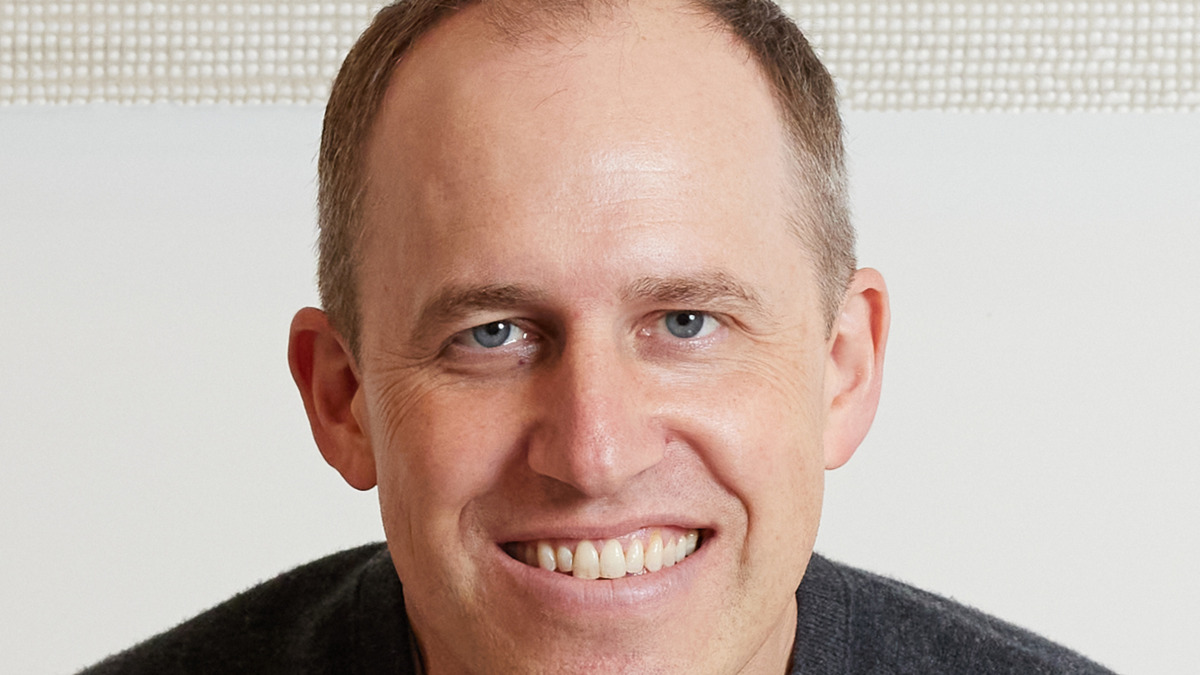 Bret Taylor, Sierra CEO and OpenAI board chairman, as seen on Sierra's official blog.
Source: sierra.ai
Bret Taylor, Sierra CEO and OpenAI board chairman, as seen on Sierra's official blog.
Source: sierra.ai
What the Valuation Assumes
A $15.8 billion valuation on $150 million in ARR is a roughly 105x revenue multiple. That's not unusual for fast-growing enterprise AI companies right now - Cursor's $50 billion valuation in April came at similarly steep multiples - but it prices in an enormous amount of continued execution.
The implicit model is that Sierra becomes the default platform for enterprise customer service AI, that the $400 billion customer service market shifts toward AI agents faster than anyone currently models, and that the company's guardrails and workflow layers are durable competitive advantages rather than features that any well-funded competitor can reproduce.
On the other side: Sierra uses third-party foundation models, meaning it has no control over the underlying capabilities it sells on. OpenAI could change its API pricing, restrict commercial deployment terms, or release a competing product. Anthropic faces similar commercial pressures after its own joint venture with Blackstone and Goldman Sachs.
The market Sierra is going after is real. The execution question is whether "constellation of models" plus guardrails is a durable product or a wrapper that gets commoditized as foundation model providers move closer to the application layer themselves.
Sierra's customers - insurers, banks, mortgage lenders - are also operating in regulated industries where an AI agent error on an insurance claim or a refinancing application is not a product bug. It's a compliance event. The liability questions that come with autonomous agents handling financial and healthcare decisions at scale are not resolved by a $15.8 billion valuation.
For now, the money is flowing. Whether the oversight catches up is a separate question.
Sierra's round comes the same week that Anthropic and OpenAI both launched rival enterprise AI joint ventures with Wall Street backing, signaling that the fight for enterprise AI infrastructure is accelerating across every layer of the stack. Customers who want AI phone agents for their own businesses now have more options than ever - and more questions about who's accountable when those agents get something wrong.
Sources:

