
Scout AI's Fury Turns ChatGPT-Style Agents Into Battlefield Weapons
Defense startup Scout AI demonstrated its Fury Autonomous Vehicle Orchestrator directing drones and ground vehicles to find and destroy a target using natural language commands and a 100B+ parameter foundation model.
 Updated
6 min read
Updated
6 min read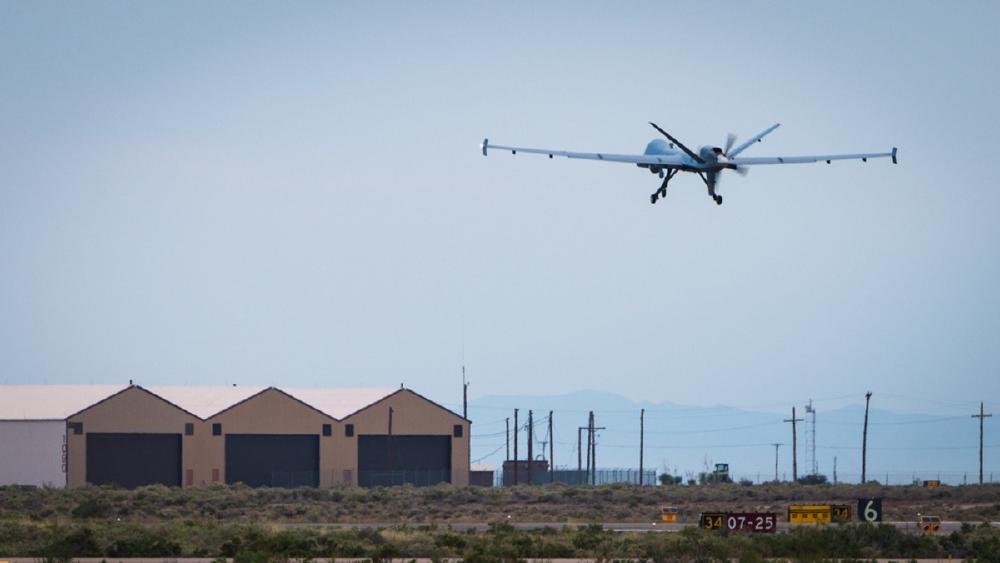
A Sunnyvale defense startup just showed what happens when you take the same transformer architectures powering ChatGPT and Gemini and point them at a truck in the California desert. Scout AI's live-fire demonstration of its Fury Autonomous Vehicle Orchestrator marks the first public test of a system that uses large language model agents to coordinate lethal drone strikes from a single natural language command.
TL;DR
| Spec | Detail |
|---|---|
| System | Fury Autonomous Vehicle Orchestrator |
| Base Model | 100B+ parameter foundation model (undisclosed open-source) |
| Edge Models | ~10B parameter agents per vehicle |
| Demo Assets | 1 unmanned ground vehicle + 2 strike drones |
| Input Method | Natural language mission command |
| Funding | $15M seed (Booz Allen Ventures, Align Ventures, Draper Associates) |
| DoD Contracts | 4 active |
How It Works
The Fury demo, filmed at an undisclosed military base in central California, started with a single command fed into Scout AI's C2 interface:
Fury Orchestrator, send 1 ground vehicle to checkpoint ALPHA.
Execute a 2 drone kinetic strike mission.
Destroy the blue truck 500m East of the airfield
and send confirmation.
From there, a hierarchical agent architecture took over. A base model with more than 100 billion parameters - reportedly a modified open-source model with safety restrictions removed - interpreted the commander's intent and delegated tasks to smaller ~10 billion parameter models running on each vehicle. Each edge node functioned as an independent AI agent, issuing sub-commands to drive systems and flight controllers.
The Agent Stack
Unlike traditional military autonomy stacks built on hand-engineered conditional logic, Fury works as what Scout AI calls an "agentic interoperability layer." The orchestrator reads platform documentation and tool definitions, then generates structured JSON instructions native to each vehicle's API without adjusting underlying flight controllers or mobility stacks.
This is a familiar pattern if you've worked with any modern agent framework - a planning model that breaks high-level goals into tool calls. The difference is that the "tools" here are explosive-carrying drones.
Mission Execution
Within minutes of receiving the command, the ground vehicle maneuvered to its waypoint, rolled out two drones, and directed them toward the target - a unarmed test truck. One drone received computational clearance to detonate an explosive charge on impact. The system then conducted a battle damage assessment and reported back.
Scout AI highlighted that the commander approved the mission plan before execution began, and the system maintained human supervisory control throughout. But the actual target identification, route planning, timing coordination, and strike sequencing were handled autonomously by the agent hierarchy.
The Architecture Under the Hood
Fury's design reveals how commercial AI infrastructure is being repurposed for defense. The system continuously fuses telemetry, video feeds, and command-and-control data to maintain operational awareness. It adjusts plans in real-time as conditions change.
| Component | Role | Scale |
|---|---|---|
| Fury Orchestrator | Mission planning, task delegation, fleet coordination | 100B+ params |
| Vehicle Agents | Per-platform autonomy, movement control, sensor fusion | ~10B params each |
| C2 Interface | Natural language input, commander approval loop | Web-based |
| Interop Layer | JSON instruction generation per vehicle API | API-agnostic |
The system is designed to work in degraded communications environments and launches at the edge - meaning the models run on hardware aboard the vehicles, not in a data center.
What It Borrows From Commercial AI
The parallels to consumer AI agent architectures are unmistakable. A large reasoning model breaks down a complex goal into subtasks. Smaller specialist models execute those subtasks using tool calls. The orchestrator monitors progress and replans when conditions shift.
Scout AI CEO Colby Adcock put it bluntly:
"AI agents are becoming mainstream in the digital world. We're bringing that same agentic intelligence into the physical world for the U.S. warfighter."
The Company Behind It
Scout AI was founded in August 2024 by Colby Adcock and Collin Otis. The company emerged from stealth in April 2025 with a $15 million oversubscribed seed round led by Align Ventures and Booz Allen Ventures, with participation from Draper Associates, Perot Jain, and others. The company describes itself as building "the AGI brain for defense robotics."
It now holds four Department of Defense contracts and is competing for additional funding to develop swarmed UAV control systems. The trajectory is clear: from single-vehicle autonomy to multi-vehicle swarms, all coordinated by foundation models.
This comes against the backdrop of escalating tensions between the Pentagon and Anthropic over military AI guardrails. While Anthropic refuses to let Claude be used for autonomous weapons, Scout AI is building its stack specifically for that purpose - using open-source models with restrictions stripped out.
Where It Falls Short
The demo was impressive engineering, but the gap between a controlled California test and battlefield deployment is enormous.
Reliability and Hallucinations
Michael Horowitz, a University of Pennsylvania professor and former Pentagon defense policy expert, offered a measured warning:
"We shouldn't confuse demonstrations with fielded capabilities that have military-grade reliability and cybersecurity."
He noted that large language models are inherently unpredictable - the same property that makes them flexible also makes them unreliable. AI agents can malfunction on routine tasks. When the "routine task" involves explosive ordnance, the failure modes are absolutely different from a chatbot producing a bad summary.
The Human-in-the-Loop Question
Scout AI insists humans remain in supervisory control, but the demo showed a system where the commander's role was essentially approval of an AI-created plan followed by autonomous execution. The line between "human-supervised" and "fully autonomous" gets blurry when the human's job is to rubber-stamp a machine's decisions in real time.
Cybersecurity Surface
Running a 100B+ parameter model as the brain of a weapons system introduces a massive attack surface. Adversarial inputs, model manipulation, and supply chain vulnerabilities in the open-source base model are all open questions. The company's choice to use a modified open-source model with safety restrictions removed adds another layer of concern - those restrictions existed for reasons that don't disappear when you strap the model to a drone.
Legal and Ethical Framework
Scout AI says its software operates under defined rules of engagement aligned with the Geneva Conventions. But international law on autonomous weapons remains unsettled. The same AI safety challenges that apply to consumer AI - alignment, interpretability, failure prediction - are hugely more consequential when the output is kinetic force rather than text.
Scout AI's Fury is a technical milestone, but treat it as exactly that - a milestone, not a finish line. The same transformer architectures that autocomplete your emails are now being adapted to coordinate lethal strikes. Whether the regulatory, ethical, and engineering frameworks can keep pace with the technology is the question that matters. Based on the current trajectory, the answer isn't encouraging.
Sources:
- Scout AI Introduces Fury Autonomous Vehicle Orchestrator - PR Newswire
- This Defense Company Made AI Agents That Blow Things Up - DNYUZ
- Scout AI Demos Lethal Autonomous Weapons Powered by AI Agents - TechBuzz AI
- Scout AI Pulls Off Live Drone Strike Using Natural-Language AI Commands - The Defense Post
- Scout AI Emerges from Stealth with $15M Seed Round - PR Newswire
- Scout AI's Fury: Revolutionizing Autonomous Drone Combat - New Atlas
Last updated

