
SAP Acquires Prior Labs in $1.16B European AI Push
SAP buys German tabular AI startup Prior Labs and commits €1B to build Europe's first frontier AI lab, while also acquiring data lakehouse Dremio in a two-front push on structured enterprise data.
 6 min read
SAP announced two acquisitions in a single week. On Sunday, the German enterprise software giant agreed to buy Prior Labs, a 18-month-old Freiburg startup that has built the highest-performing models for structured business data. That same week, SAP also acquired Dremio, an open-format data lakehouse platform designed to unify data from SAP and non-SAP systems. The simultaneous move is the clearest signal yet that SAP intends to own the enterprise data AI stack before hyperscalers commoditize it.
TL;DR
- SAP commits €1B ($1.16B) over four years to scale Prior Labs into an European frontier AI lab; acquisition price undisclosed, founder payout cited as "well over $500M" in cash upfront
- Prior Labs' TabPFN-2.6 tops the TabArena benchmark - matching the accuracy of a four-hour AutoML pipeline in a single model pass, with no training required
- SAP bought data lakehouse Dremio the same week, building a two-layer structured data strategy (inference model + data platform)
- Prior Labs raised only €9M pre-seed 15 months ago; angel backers included Robin Rombach (Black Forest Labs) and Thomas Wolf (Hugging Face)
- Yann LeCun is a Prior Labs advisor; NVIDIA's NemoClaw is now one of only two approved AI agent frameworks for SAP data
What Prior Labs Actually Built
Prior Labs isn't a general-purpose AI company. Founded by Frank Hutter - a Full Professor for Machine Learning at the University of Freiburg and one of the researchers who shaped modern automated machine learning - the startup has focused completely on what it calls Tabular Foundation Models (TFMs): AI systems trained to reason over structured data stored in rows and columns.
TabPFN and the TabArena Benchmark
The flagship product, TabPFN, works differently from conventional machine learning on tabular data. Most production systems for enterprise analytics rely on gradient-boosted tree ensembles - models that require dataset-specific training, hyperparameter tuning, and sometimes hours of compute. TabPFN-2.6 handles all of this in a single forward pass, with no task-specific training, and reaches accuracy that matches a four-hour AutoML pipeline instantly.
That claim is verifiable: TabPFN-2.6 currently tops TabArena, the first continuously maintained benchmark for machine learning on tabular data. The original TabPFN paper was published in Nature and has been cited over 1,000 times. The open-source version has been downloaded more than three million times. The founders aren't building on hype.
Prior Labs raised €9 million in a pre-seed round in February 2025, led by Balderton Capital and XTX Ventures. Angel backers included Robin Rombach, co-founder of Black Forest Labs, and Thomas Wolf, co-founder of Hugging Face. Yann LeCun, who spent a decade as Meta's chief AI scientist, joined as an advisor. The startup attracted a credible list of supporters despite - or because of - working on a problem that most of the frontier AI industry considers unglamorous.
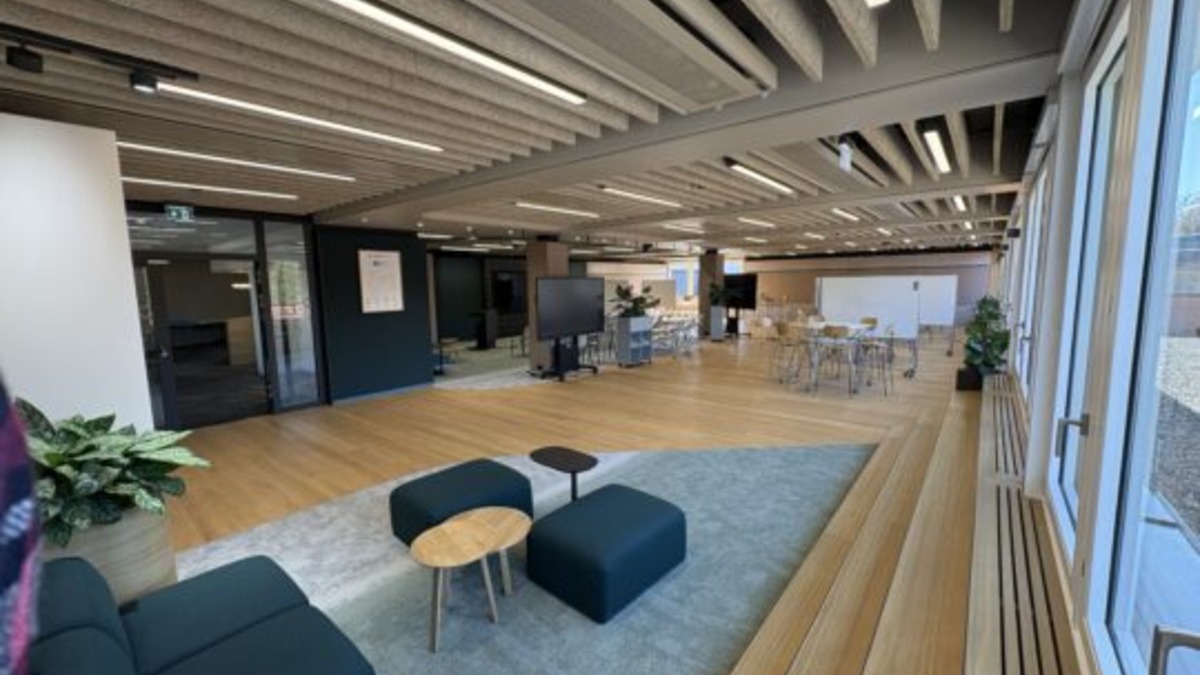 SAP's AppHaus in Walldorf, Germany, recently renovated in early 2026. Prior Labs will remain headquartered in Freiburg under the deal terms.
Source: news.sap.com
SAP's AppHaus in Walldorf, Germany, recently renovated in early 2026. Prior Labs will remain headquartered in Freiburg under the deal terms.
Source: news.sap.com
The Deal at a Glance
| Metric | Detail |
|---|---|
| Acquirer | SAP SE |
| Target | Prior Labs (Freiburg, Germany) |
| Acquisition price | Undisclosed |
| Founder payout (reported) | "Well over $500M" in cash upfront |
| Investment commitment | €1B ($1.16B) over four years |
| Pre-seed raised | €9M (February 2025) |
| Expected close | Q2-Q3 2026, pending regulatory approval |
| Prior Labs retains | Freiburg HQ, brand, open-source commitments |
The acquisition price remains undisclosed. Sources cited by Pathfounders called it an "almost all cash" deal with founder payments "well over half a billion dollars" upfront - implying a return of at least 55x on the €9M raised. Balderton partner James Wise described it as "one of Germany's biggest ever venture outcomes."
SAP CTO Philipp Herzig put the strategic reason plainly: "The greatest untapped opportunity in enterprise AI wasn't large language models; it was AI built for the structured data that runs the world's businesses."
Who Benefits
SAP gets a team it couldn't have built internally. The company controls accounting, HR, procurement, and supply chain data for a large share of the Global 2000, but has lagged behind Salesforce and Microsoft in turning that data into AI capabilities that users can actually apply. Prior Labs gives SAP a model that works natively on the data format that enterprise software produces: spreadsheets, transaction tables, ERP outputs. SAP also picks up an European AI research brand at a moment when the EU is increasingly invested in developing sovereign AI capabilities outside US hyperscaler control.
Prior Labs founders and investors walk away with one of the largest returns in European AI history. The startup turned €9M into a nine-figure founder payout in roughly 15 months. Balderton Capital, Atlantic Labs, and XTX Ventures all exit profitably; so do the angel backers.
NVIDIA benefits from the NemoClaw connection. SAP's updated API policies now restrict which AI agents can access SAP business data - NVIDIA's NemoClaw framework is among the approved architectures, giving it a major endorsement in the enterprise market just months after launch.
European AI gets a proof point. Germany has struggled to produce frontier AI lab exits at the scale of UK or French counterparts. This deal gives German founders and investors a benchmark outcome.
 Prior Labs' core bet: most enterprise AI fails not on reasoning, but on structured data that standard LLMs can't reliably interpret.
Source: unsplash.com
Prior Labs' core bet: most enterprise AI fails not on reasoning, but on structured data that standard LLMs can't reliably interpret.
Source: unsplash.com
Who Pays
SAP shareholders are absorbing a valuation that's difficult to justify on current revenue. Prior Labs is a research lab with strong academic credentials and an open-source product. It does not have an enterprise sales track record. SAP is paying what amounts to a research acquisition premium - hoping the Prior Labs team produces models that SAP's sales force can actually close deals around. The €1B investment over four years adds further risk: the AI market in 2029 may look nothing like the one SAP is betting on today.
Enterprise customers face a new form of vendor lock-in. SAP's approval of only NemoClaw and its own Joule Agents as authorized AI agent frameworks for SAP data is a significant restriction. Companies that have built workflows on other agent platforms - OpenClaw alternatives, third-party integrations - will need to rebuild or renegotiate. The deal strengthens SAP's grip on enterprise data pipelines at the exact moment when interoperability has become the top concern in enterprise AI procurement.
Open AI ecosystem absorbs a loss. Prior Labs committed to maintaining open-source models and its Freiburg headquarters under the deal terms. But the team's future roadmap will inevitably be shaped by SAP's enterprise priorities. Whether TabPFN-3 gets released openly - or becomes a proprietary component of SAP Business Data Cloud - will be the real test of those commitments.
The Dremio Layer
The simultaneous acquisition of Dremio completes the picture. Dremio is an Apache Iceberg-native data lakehouse platform that federates access across SAP and non-SAP data sources in real time, without data movement or format conversion. Combined with Prior Labs' inference capability, SAP is assembling a stack: Dremio unifies the data, TabPFN reasons over it. The Nebius-Eigen AI deal last week framed inference optimization as the durable moat in enterprise AI. SAP is making the same bet at the application layer.
SAP has the most extensive structured data footprint on earth - if Prior Labs can actually unlock it, the deal looks cheap at twice the price.
Sources:
- SAP press release: SAP to Acquire Prior Labs
- TechCrunch: SAP bets $1.16B on 18-month-old German AI lab
- Sifted: SAP agrees to acquire Prior Labs
- The Next Web: SAP buys Prior Labs to anchor a European frontier AI lab
- SAP press release: SAP to Acquire Dremio
- TabArena: Living Benchmark for Tabular ML
- Prior Labs website

