
Socher's AI Lab Signs $410M AWS Deal, No Strings
Richard Socher's Recursive Superintelligence signed a $410 million multi-year AWS compute deal with no equity stake, a rare cash-only structure in an industry built on circular financing.
 6 min read
TL;DR
- Recursive Superintelligence signed a $410 million multi-year compute agreement with AWS on July 28, 2026, its first cloud deal since emerging from stealth in May.
- No equity, no warrants, no revenue-share. AWS gets a paying customer; Recursive gets no dilution.
- The company is worth $4.65 billion on $650 million raised two months ago, and CEO Richard Socher calls this "one of the smallest compute deals" it'll ever sign.
- Recursive's automated research system already broke a two-year-old human record on a widely-used AI training benchmark, using compute it'll now draw from AWS.
Richard Socher's newest startup just spent nearly two-thirds of everything it has raised on cloud computing, and it didn't have to give up a single share to get it.
Recursive Superintelligence announced a $410 million multi-year compute agreement with Amazon Web Services on Tuesday. The company will run its automated AI research system on AWS infrastructure that the two sides say they'll co-design together. Socher told TechCrunch the arrangement is likely "one of the smallest compute deals we're going to sign in the next few years," a claim that would sound like typical startup bravado from most CEOs, except Recursive has already put its money where its mouth is once this year.
What AWS Actually Signed Up For
The deal has no investment component. AWS isn't taking equity, and Recursive isn't handing over a warrant in exchange for a discount. It is, in Socher's words, a straightforward compute purchase, and that alone sets it apart from most of the headline AI infrastructure deals of the past year.
"Partnering with AWS gives us the infrastructure to run self-improving AI research at a scale very few teams in the world are capable of," Socher said.
Jason Bennett, AWS's VP and global head of startups and venture capital, framed the deal around speed rather than raw scale: AWS would give Recursive "the elasticity to run those loops in parallel at massive scale, and the reliability, security, and purpose-built compute to turn months of sequential research into days of parallel discovery."
Who Recursive Actually Is
Recursive emerged from stealth in May 2026 with $650 million in funding from GV, Greycroft, AMD Ventures and NVIDIA, at a $4.65 billion valuation. The founding roster reads like a greatest-hits list of the last decade of AI research: Socher, a former Salesforce chief scientist and founder of You.com, is joined by Peter Norvig, Cresta co-founder Tim Shi, former DeepMind open-endedness lead Tim Rocktäschel, and Josh Tobin, an early OpenAI employee who later ran its Codex and deep research teams.
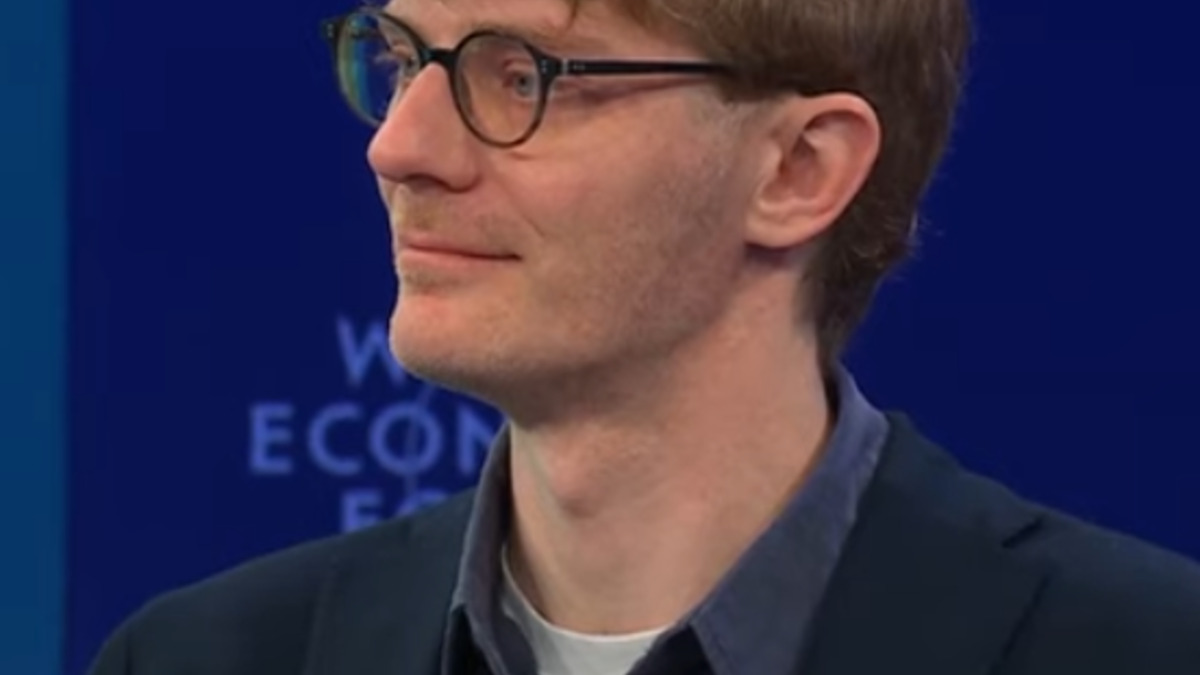 Richard Socher, Recursive Superintelligence's CEO and co-founder, previously served as Salesforce's chief scientist and founded You.com.
Source: commons.wikimedia.org
Richard Socher, Recursive Superintelligence's CEO and co-founder, previously served as Salesforce's chief scientist and founded You.com.
Source: commons.wikimedia.org
The company's pitch is that most of its money doesn't go to headcount. It goes to compute, because the product Recursive is building is a system that runs its own research loops with minimal human involvement. "For us, it's less about headcount and more about agent count," Socher said.
Deal Snapshot
| Item | Figure |
|---|---|
| AWS compute deal (this week) | $410 million |
| Prior funding raised (May 2026) | $650 million |
| Current valuation | $4.65 billion |
| Equity given to AWS | None |
| Time since stealth launch | 2.5 months |
The Benchmark Numbers Behind the Bet
Socher's claim that Recursive can do serious research work isn't just a pitch deck line. The company published results from its automated system across three benchmarks, and the numbers are specific enough to check.
On NanoGPT Speedrun, a leaderboard that measures how fast a model can reach a fixed 3.28 validation loss on a single 8-GPU node, the previous best time stood at 79.7 seconds, the product of 83 successive community submissions built up over two years. Recursive's system found further optimizations, including FP8 attention projections and a fused MLP kernel, and brought it down to 77.5 seconds. That is a small absolute gap, but it's a record that had resisted two years of dedicated human tinkering.
On NanoChat, an autoresearch benchmark scored by validation bits-per-byte, Recursive's system beat the previous best of 0.9372 BPB with a result of 0.9109, a change the company describes as equivalent to a 1.3x speedup to reach the same loss. On SOL-ExecBench, which scores GPU kernel efficiency against a theoretical maximum across 235 kernels, the system moved the mean score from 0.699 to 0.754, an 18% cut in the remaining gap to optimal.
Recursive says it added "increasingly strict automated checks" to rule out reward hacking, the risk that an automated system finds a shortcut that games the benchmark's scoring rather than genuinely improving performance. That caveat matters more here than it would for a static model release, since the entire premise of the company is a system that keeps changing its own approach with limited oversight.
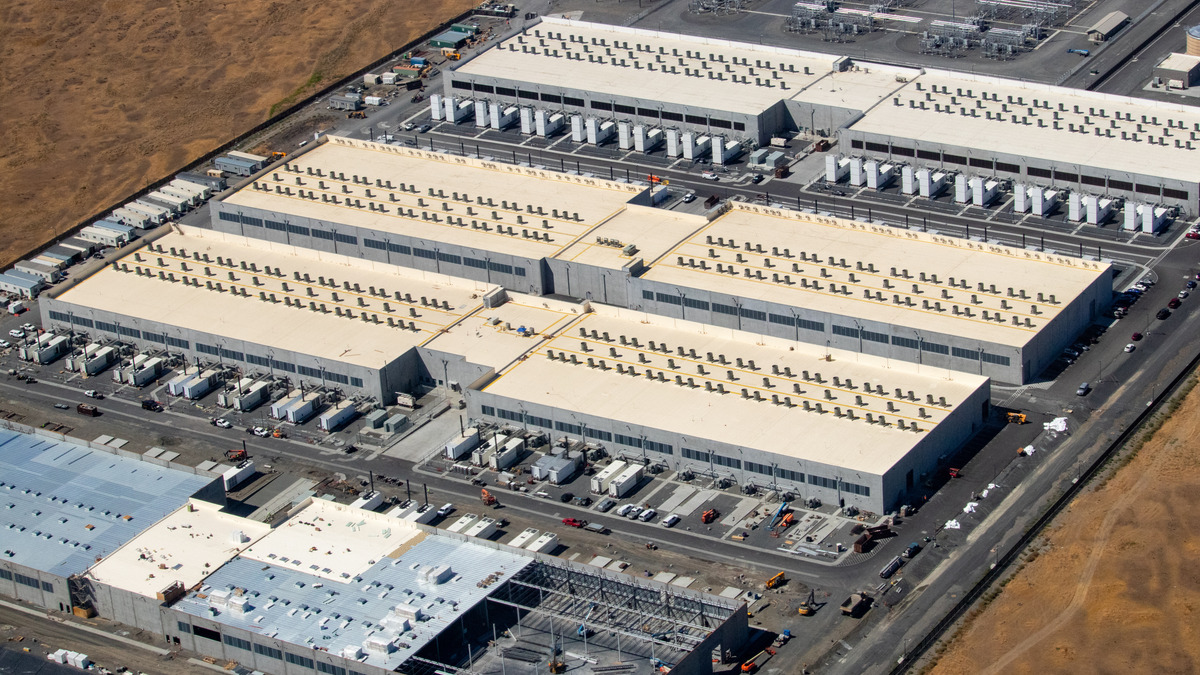 One of AWS's data center campuses. Recursive will run its automated research system on AWS infrastructure the two companies plan to co-design.
Source: commons.wikimedia.org
One of AWS's data center campuses. Recursive will run its automated research system on AWS infrastructure the two companies plan to co-design.
Source: commons.wikimedia.org
Who Benefits
AWS gets a customer with unusually predictable, front-loaded demand. Recursive's entire model depends on running compute-hungry research loops around the clock, and a multi-year agreement locks in revenue AWS can plan capacity around, something Amazon has been chasing as it competes with Google Cloud and Microsoft Azure for every AI lab's cloud spend.
Recursive gets infrastructure without diluting a cap table that's barely two months old. Socher's team walked away from a $650 million round at a $4.65 billion valuation with a lot of leverage, and spending $410 million of it on a straight cloud contract, rather than trading equity for compute the way some rivals have, keeps that leverage intact for whatever comes next.
Who Pays
In practice, it's Recursive's own investors. Two-thirds of the capital GV, Greycroft, AMD Ventures and NVIDIA put in during May is now committed to AWS bills rather than salaries, lab space, or a cash cushion. If the self-improving research system doesn't produce a product Socher can point to by the timeline he's promised, that's a lot of runway spent on compute with nothing to show beyond three benchmark wins.
There's also a structural bet AWS is making that most of its bigger AI customers didn't require: that Recursive's research actually compounds. The Reflection AI-Nebius deal and others like it buy raw training capacity for a known workload. AWS is selling compute to a system whose whole premise is that it will need less human-directed compute over time as it gets better at directing itself, an outcome nobody can verify yet.
A Deal That Looks Almost Old-Fashioned
Compare this to the circular financing arrangements that have defined 2026's biggest AI infrastructure news, chipmakers guaranteeing debt so labs can buy their chips, cloud providers taking equity in exchange for compute credits, and the picture gets clearer. Recursive paid cash for a service. AWS sold a service for cash. Neither side's balance sheet depends on the other succeeding.
That simplicity is itself the story. In an industry where the biggest deals increasingly require a flowchart to explain who actually owes whom, a startup writing a $410 million check for compute and walking away with nothing but server access is the exception, not the rule.
Sources:

