
Qualcomm Hits Record High as AI Device Bet Pays Off
Qualcomm stock surged 12% to an all-time high on May 22 and is now up 75% in a month, driven by an OpenAI smartphone deal, a Stellantis car contract, and a data center chip push - forcing Wall Street to rethink a company it had written off.
 6 min read
Qualcomm shares hit an all-time high of $247.62 on Friday, up 12% on the day and 75% over the past month. The company that missed the GPU boom and watched NVIDIA run away with the data center AI market is now being repriced by investors who had, until recently, written it off as a smartphone chip company with a NVIDIA problem.
The repricing is happening across multiple fronts simultaneously, which is what makes it credible rather than speculative.
TL;DR
- Stock up 12% Friday to record high of $247.62; up 75% in one month
- OpenAI partnership (April 27) targets AI-native smartphone with 300-400M annual units by 2028
- Stellantis deal puts Snapdragon into full vehicle compute (cockpit, connectivity, driver assistance)
- Data center entry with AI200/AI250 inference chips, competing on memory capacity against NVIDIA
- Risks remain: guidance missed this quarter, Apple modem business exits in 2027
How Three Bets Moved at Once
The rally isn't one catalyst - it's three converging.
On April 27, Qualcomm disclosed a partnership with OpenAI to co-develop the custom chip for OpenAI's planned AI-native smartphone. Analyst Ming-Chi Kuo projected the device could ship 300 to 400 million units annually, numbers that would put OpenAI's hardware ambitions in iPhone territory. Qualcomm is sharing the work with MediaTek; Luxshare is reportedly handling device manufacturing. Mass production is targeted for 2028, with final supplier selections expected by late 2026 or early 2027. For more context on OpenAI's broader plan to replace the app-based smartphone model, see our earlier coverage at openai-phone-ai-agents-replace-apps.
The second catalyst arrived Thursday, when Qualcomm announced a deal with Stellantis to put Snapdragon processors across the entire vehicle - not just the infotainment screen but cockpit systems, connectivity, and advanced driver assistance. Stellantis is the parent company of Chrysler, Jeep, Ram, Dodge, and Peugeot, among others. A full-stack vehicle design win with a major automaker is the kind of sticky, long-duration revenue that analysts value differently from handset chipsets, which refresh every two years.
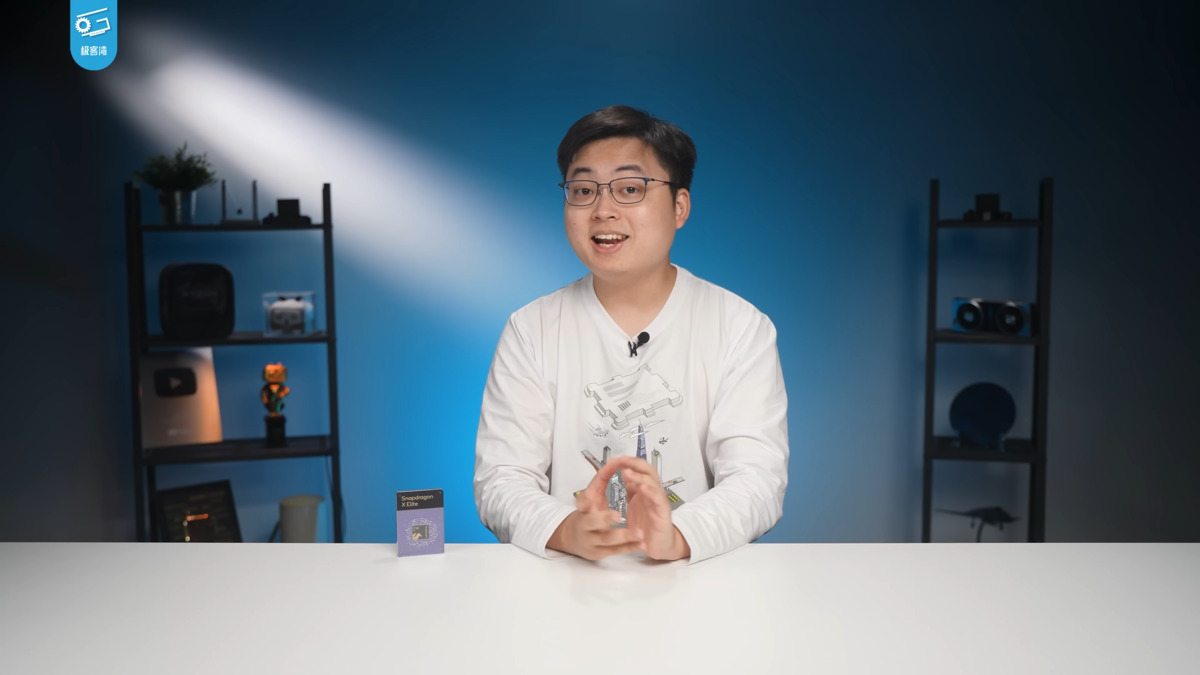 Qualcomm's Snapdragon X Elite chip, part of the company's broader push into AI-intensive computing beyond smartphones.
Source: commons.wikimedia.org
Qualcomm's Snapdragon X Elite chip, part of the company's broader push into AI-intensive computing beyond smartphones.
Source: commons.wikimedia.org
The third spark is longer-dated but potentially the largest in total addressable market: Qualcomm's data center chip push. The company unveiled the AI200 and AI250 inference accelerators in October 2025, now approaching commercial availability. The AI200 offers 768GB of LPDDR memory per card with direct liquid cooling; the AI250 delivers 10x higher effective memory bandwidth at lower power consumption. Neither chip tries to out-GPU NVIDIA on peak training performance. Instead, Qualcomm is competing on inference efficiency, memory footprint, and total cost of operation - the metrics that matter when you're running billions of inference calls per day rather than training a frontier model.
The Data Behind the Move
| Development | Date | Significance |
|---|---|---|
| AI200/AI250 data center chips announced | Oct 2025 | Re-entry into server-grade compute after a decade out |
| Daiwa Securities upgrade (Neutral to Outperform) | May 8, 2026 | Price target raised from $140 to $225 |
| OpenAI smartphone chip partnership | Apr 27, 2026 | 300-400M unit potential; shared with MediaTek |
| Stellantis full-vehicle Snapdragon deal | May 21, 2026 | Multi-year cockpit, connectivity, ADAS contract |
| Q2 FY2026 revenue: $10.6B, EPS: $2.65 | May 2026 | Beat on earnings; missed on forward guidance |
| Stock record high: $247.62 | May 22, 2026 | All-time peak; up 75% in 30 days |
Why Wall Street Took So Long
For the past two years, Qualcomm's investors worried about two things: the declining premium smartphone market in China, and the expected loss of Apple's modem business when the current licensing arrangement ends in 2027. Both concerns are real. Neither has gone away. Qualcomm's forward guidance for the current quarter, $9.2-10 billion in revenue, came in below the $10.27 billion analyst estimate. Guidance misses from a company trying to reposition itself aren't encouraging.
"There are some secret form factors that I cannot tell you about. But I think we're working with pretty much all of them."
That's CEO Cristiano Amon speaking to Fortune earlier this month, referring to AI hardware projects with OpenAI, Meta, and undisclosed others. The devices he described - smart glasses with forward-facing cameras, connected earbuds, jewelry and pins that run AI agents - are not products Wall Street has modeled into Qualcomm's revenue.
Ivan Feinseth, analyst at Tigress Financial Partners, put it directly in a CNBC interview on Friday: investors are "waking up" to the realization that Qualcomm is positioned for a much broader computing wave than the one it missed.
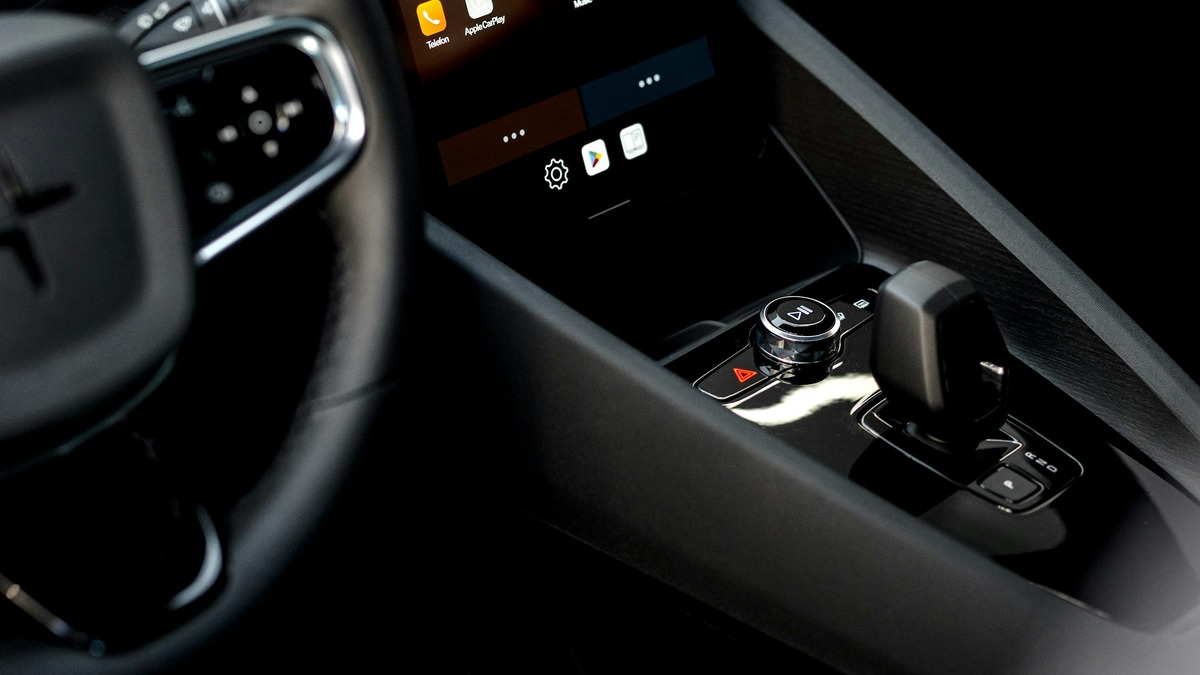 Vehicle cockpit compute is an increasingly contested market. Qualcomm's Stellantis deal covers cockpit, connectivity, and driver assistance systems across Stellantis's entire brand portfolio.
Source: unsplash.com
Vehicle cockpit compute is an increasingly contested market. Qualcomm's Stellantis deal covers cockpit, connectivity, and driver assistance systems across Stellantis's entire brand portfolio.
Source: unsplash.com
Counter-Argument
The skeptical case isn't trivial.
Qualcomm has announced ambitions to re-enter the data center before - most recently with the Centriq server CPU in 2017, which it cancelled in 2018 after failing to win enterprise adoption. The AI200 and AI250 have the same problem every new inference chip faces: NVIDIA's software ecosystem (CUDA) is deeply embedded in ML workflows, and switching costs are high. Qualcomm's Hexagon NPUs are optimized for mobile inference, not the scale-out training and dense inference workloads that cloud hyperscalers run.
The OpenAI phone, at 300-400 million units, would be the largest consumer hardware launch in history. But mass production is 2028. A lot changes in two years - OpenAI's hardware plans, the competitive device market, and Qualcomm's own ability to deliver custom silicon at that scale.
The Apple modem departure in 2027 will remove a meaningful revenue stream that Qualcomm has held for years. The company says it has a plan to offset that loss with new customers, but the offset is not yet visible in reported numbers.
What the Market Is Missing
The broader repricing question isn't whether Qualcomm executes on any single deal. It's whether the AI device market - phones, cars, glasses, earbuds, robots, industrial sensors - is large enough to matter relative to the data center opportunity that the chip industry has been focused on for three years.
Qualcomm's CEO argues the control point of the computing industry is changing: it's no longer about who owns the operating system and the app store. If AI agents run natively on edge hardware and respond to what users see, hear, and say in real time, the chip inside the device becomes the platform. Qualcomm, with its Snapdragon franchise across phones, PCs, and now cars, is better positioned for that world than almost any other semiconductor company outside NVIDIA.
The 75% monthly gain prices in some of that optionality. How much, and whether the execution follows, is what the next 18 months will answer.
Sources:
- Qualcomm's stock pop shows investors are 'waking up' to boom in AI devices - CNBC
- Qualcomm Stock Hits Record High as AI Data-Center Bet Forces Wall Street Rethink
- Qualcomm Lands OpenAI as AI-Native Smartphone Chip Customer - Gurufocus
- Qualcomm CEO is working with 'pretty much all' major AI players on top-secret devices - Fortune
- Qualcomm Unveils AI200 and AI250 inference accelerators - Tom's Hardware
- Qualcomm up 7% on report it's partnering with OpenAI on smartphone AI chip - CNBC

